

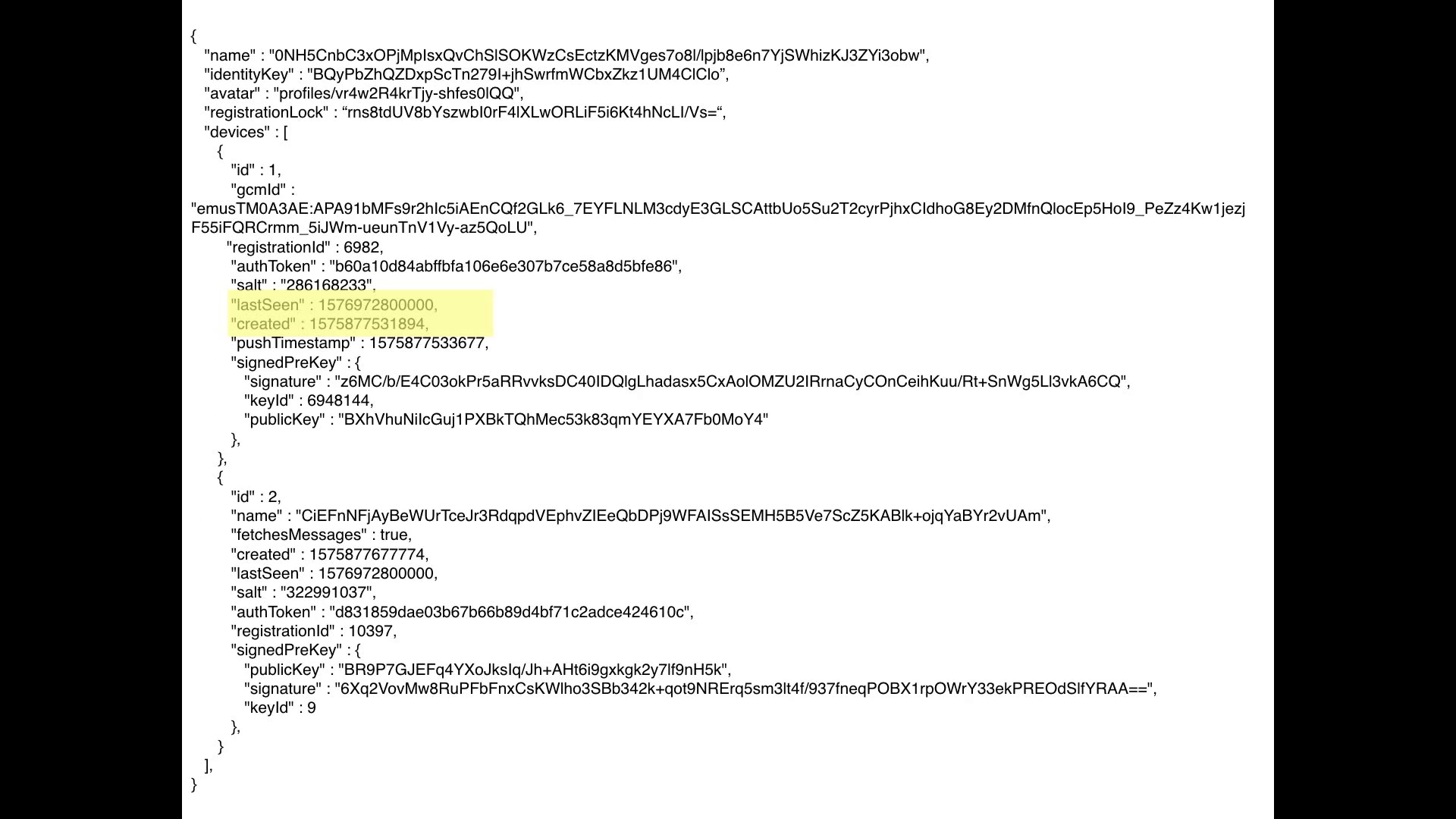
Considerations for distributed and decentralized technologies from the perspective of a product that many would like to see decentralize....
Ecosystem Review
A review of decentralized social media ecosystems published by Twitter's "bluesky" team on the 21st January 2021

Minimum viable decentralization – John Backus – Medium
If you want people to use your product, decentralize the bare minimum. Lessons from Freenet, I2P, Darknet markets, and Reddit.

Protocol: How Control Exists after Decentralization
How Control Exists after DecentralizationIs the Internet a vast arena of unrestricted communication and freely exchanged information or a regulated, highly

Practical Decentralization
The point of decentralization is to guarantee the rights of individuals and communities on the Internet. Pulling that off is a balancing act between practicality and ideology.
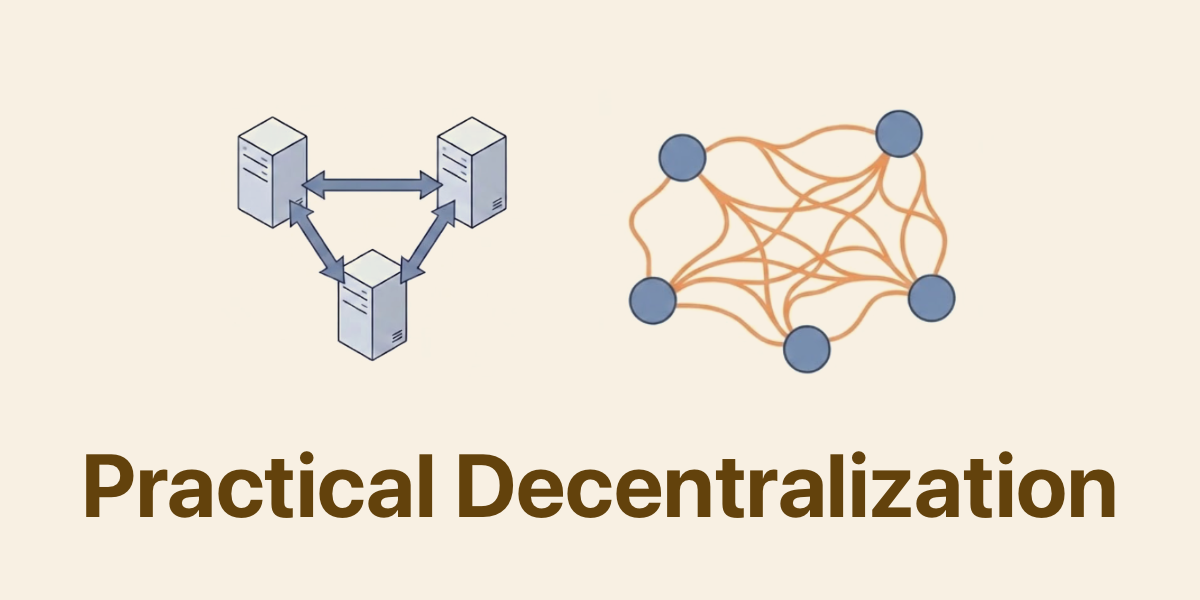
Practical Decentralization
The point of decentralization is to guarantee the rights of individuals and communities on the Internet. Pulling that off is a balancing act between practicality and ideology.
The Debate Over DWeb vs. Web3 & The Decentralized Elephant in the Room | FFDW
Comparing DWeb and Web3's approaches to decentralization, focusing on the key question: who designs, controls, and benefits from these technologies?

Networked Cooperative Ecosystems
Research TeamAndi Argast (Researcher), Nick Houde (Researcher), Dana Salama, (Researcher & Designer), Samuel Young (Network Mapping), Rithikha Rajamohan (Research Lead).
Decentralization enables permissionless innovation
I’ve just started reading Inventing the Internet by Janet Abbate. The opening chapters are great, narrating Paul Baran’s efforts at RAND to design a nationwide communication network. Baran had one design goal for this network—survivability. Specifically, survivability in the face of nuclear catastrophe.

The Web3 Decentralization Debate Is Focused on the Wrong Question
Fixating on the degree—rather than the type—of decentralization is leading us astray.

An ecological perspective to master the complexities of the digital economy
Economic and social interactions are shifting to digital platforms which grow into vast ecosystems where user engagement creates value for members while ecosystem orchestrators harvest massive revenue. The digital ecosystem business model succeeds by adeptly navigating fast-changing environments, including new technologies and volatile demands, through dynamic innovation in a decentralized decision-making setting. This renders digital platform ecosystems complex adaptive systems. Recognizing that natural ecosystems are a prime example of complex adaptive systems, we propose a systematic hierarchical framework for describing and understanding digital ecosystems, rooted in ecology and evolution. Our framework compares digital ecosystems hosted by societies to natural ecosystems embedded in biomes, products to species, and technologies and elements of business strategy to the genetic makeup of a species. As digital platforms face heightened scrutiny about their socio-economic power and societal value, our approach contributes to the development of deeper understanding and sustainable governance of the digital economy.
Nobody cares about decentralization until they do
A recurring line in discussion of federated, decentralized social media is that no one cares about it. They just want their Twitter without the Nazis. Which is okay. But how it looks on the backend matters. When the illusion of a unified user experience breaks, how accessible the escape pod
Are We Decentralized Yet?
Statistics on how concentrated user accounts and data are across the Fediverse, the Atmosphere, web hosting, email, and other Internet infrastructure.
Ecosystem Plugins - Wesley's notes
Bridging the interop gap and addressing the long-tail of user needs
Centralization, Decentralization, and Internet Standards
This document discusses aspects of centralization that relate to Internet standards efforts. It argues that, while standards bodies have a limited ability to prevent many forms of centralization, they can still make contributions that assist in the decentralization of the Internet.
Actually I don't think #atproto is about decentralization. It's more about indexing over distributed data. @bsky.app and @tangled.org are actually a centralized service just like general web search engines are. But just like search engines, we don't own your content and this is the important part. 🧵

Theo
👀👀 To be clear I’m very into decentralized tech and atproto is very cool, I just don’t love shoving it into everything and don’t see it as valuable in a use case like GitHub I’m down to be convinced
Decentralization is more than just a buzzword. Looking at the AT Protocol, it’s clear: the future belongs to systems that decouple identity and data from the provider. For sweep-it and my other tools, this means focusing on interoperability rather than closed silos. #atproto #decentralization

