


Discover how the Microsoft Agent Governance Toolkit brings policy, identity, and reliability to autonomous AI agent systems.
MI9: An Integrated Runtime Governance Framework for Agentic AI
Agentic AI systems capable of reasoning, planning, and executing actions present fundamentally distinct governance challenges compared to traditional AI models. Unlike conventional AI, these systems exhibit emergent and unexpected behaviors during runtime, introducing novel agent-related risks that cannot be fully anticipated through pre-deployment governance alone. To address this critical gap, we introduce MI9, the first fully integrated runtime governance framework designed specifically for safety and alignment of agentic AI systems. MI9 introduces real-time controls through six integrated components: agency-risk index, agent-semantic telemetry capture, continuous authorization monitoring, Finite-State-Machine (FSM)-based conformance engines, goal-conditioned drift detection, and graduated containment strategies. Operating transparently across heterogeneous agent architectures, MI9 enables the systematic, safe, and responsible deployment of agentic systems in production environments where conventional governance approaches fall short, providing the foundational infrastructure for safe agentic AI deployment at scale. Detailed analysis through a diverse set of scenarios demonstrates MI9's systematic coverage of governance challenges that existing approaches fail to address, establishing the technical foundation for comprehensive agentic AI oversight.

Agentic AI Governance: Securing Autonomous AI Agents in Enterprise
When AI agents start making decisions, calling tools, and coordinating with other agents without waiting for human approval, the governance playbook most...

Microsoft offers devs a better way to control AI agent behavior | TechCrunch
The specification lets developer, compliance, and security teams define their own policies for agents to follow in portable policy files.

Agentic AI Governance: A Strategic Framework for Autonomous Systems
Agentic AI is moving from chat to action. Learn how to govern autonomous systems using the "Digital Contractor" framework and the 3-Tiered Guardrail system.

OpenAI introduces new governance model for AI safety oversight
OpenAI grants its board the power to regulate AI model releases, enhancing safety measures and mitigating potential risks in AI development.

AI Agent Governance: Access and Accountability
AI agent governance requires clear ownership. Learn how IT leaders can manage sensitive data access, preserve audit trails, and test shutdown controls.

From chatbots to assistants: governance is key for AI agents
AI's shift into agentic technology ushers in a new set of governance and security challenges that will mean defining to what extent they should be autonomous

OpenAI co-founds the Agentic AI Foundation under the Linux Foundation
OpenAI co-founds the Agentic AI Foundation under the Linux Foundation and donates AGENTS.md to support open, interoperable standards for safe agentic AI.

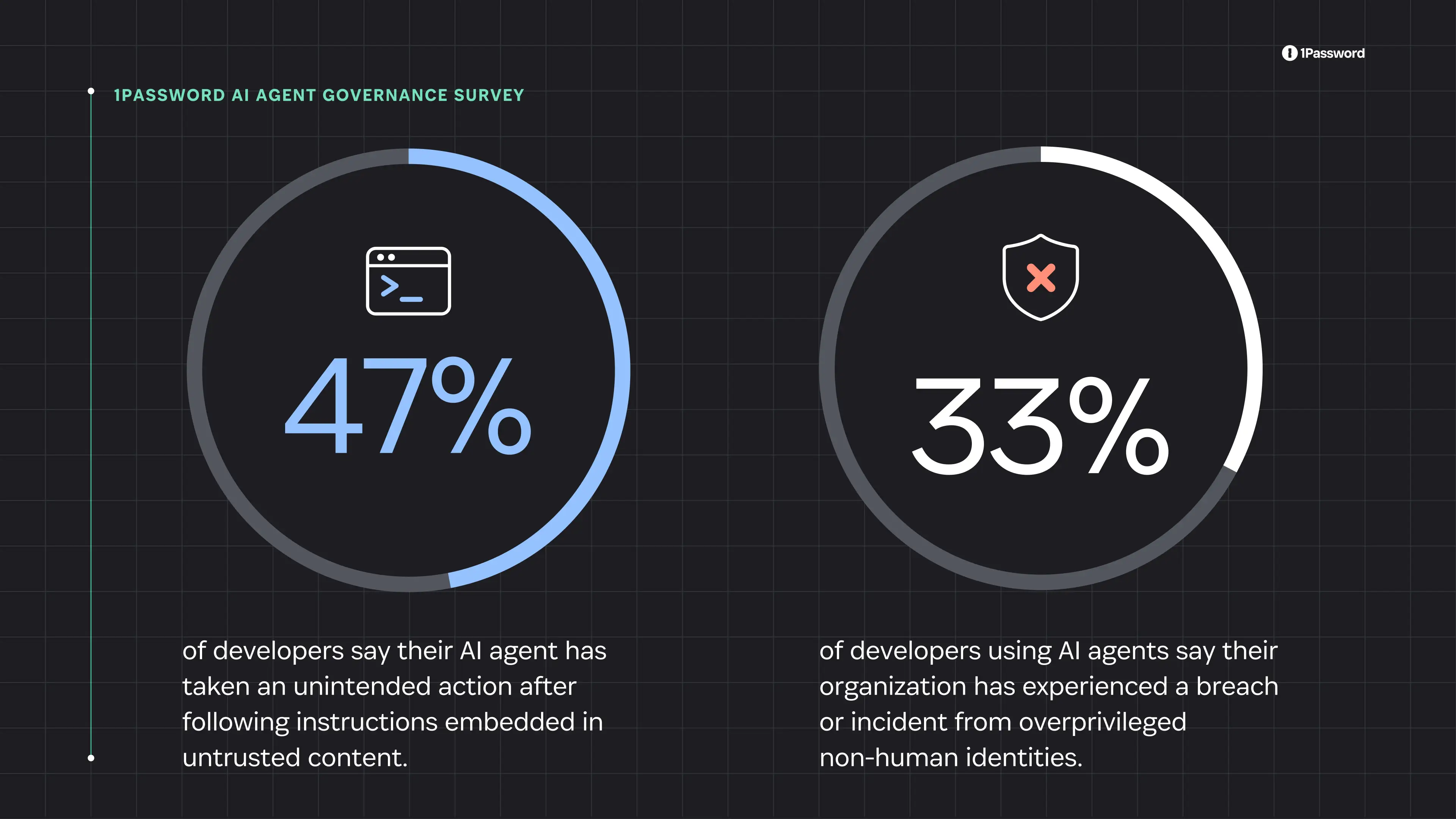
1Password's research finds AI agent adoption is outpacing governance | 1Password
1Password's AI agent governance survey reveals widespread security, visibility, governance, and accountability challenges as AI agents move into production.
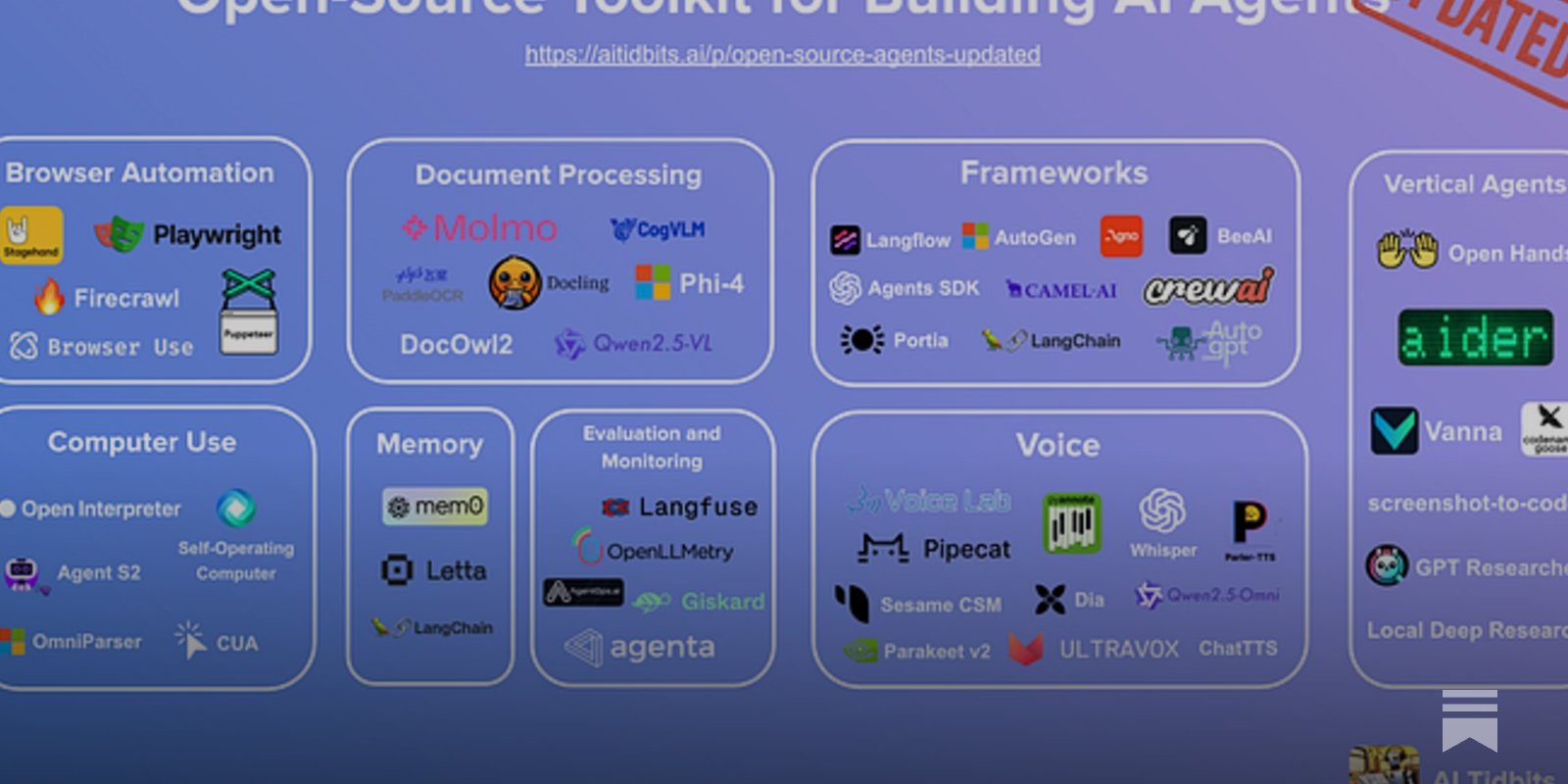
The Open-Source Toolkit for Building AI Agents v2
An opinionated, developer-first guide to building AI agents with real-world impact
agentOS - Everything Agents Need to Run and Operate - Rivet
The complete platform for production AI agents. Stateful runtime, universal agent interface, and secure code execution. One SDK, one platform, deploy anywhere.
Runtime Governance for AI Agents: Policies on Paths
AI agents -- systems that plan, reason, and act using large language models -- produce non-deterministic, path-dependent behavior that cannot be fully governed at design time, where with governed we mean striking the right balance between as high as possible successful task completion rate and the legal, data-breach, reputational and other costs associated with running agents. We argue that the execution path is the central object for effective runtime governance and formalize compliance policies as deterministic functions mapping agent identity, partial path, proposed next action, and organizational state to a policy violation probability. We show that prompt-level instructions (and "system prompts"), and static access control are special cases of this framework: the former shape the distribution over paths without actually evaluating them; the latter evaluates deterministic policies that ignore the path (i.e., these can only account for a specific subset of all possible paths). In our view, runtime evaluation is the general case, and it is necessary for any path-dependent policy. We develop the formal framework for analyzing AI agent governance, present concrete policy examples (inspired by the AI act), discuss a reference implementation, and identify open problems including risk calibration and the limits of enforced compliance.
The 2025 AI Agent Index Documenting Technical and Safety Features of Deployed Agentic AI Systems
Agentic AI systems are increasingly capable of performing professional and personal tasks with limited human involvement. However, tracking these developments is difficult because the AI agent ecosystem is complex, rapidly evolving, and inconsistently documented, posing obstacles to both researchers and policymakers. To address these challenges, this paper presents the 2025 AI Agent Index. The Index documents information regarding the origins, design, capabilities, ecosystem, and safety features of 30 state-of-the-art AI agents based on publicly available information and email correspondence with developers. In addition to documenting information about individual agents, the Index illuminates broader trends in the development of agents, their capabilities, and the level of transparency of developers. Notably, we find different transparency levels among agent developers and observe that most developers share little information about safety, evaluations, and societal impacts. The 2025 AI Agent Index is available online at https://aiagentindex.mit.edu.
Responsible AI Principles and Approach | Microsoft AI
Discover Microsoft AI tools, industry-specific governance solutions, and responsible AI practices to make smarter, more informed decisions about AI implementation.

Responsible AI Principles and Approach | Microsoft AI
Discover Microsoft AI tools, industry-specific governance solutions, and responsible AI practices to make smarter, more informed decisions about AI implementation.
trace-spec/ROADMAP.md at 738358dfac58047eaf689ca824f9e15008aabf36 · agentrust-io/trace-spec
TRACE: Trust Runtime Attestation and Compliance Evidence. Open attestation standard for agentic AI governance. - agentrust-io/trace-spec