

Paul Feyerabend (b.1924, d.1994), having studied science at theUniversity of Vienna, moved into philosophy for his doctoral thesis,made a name for himself both as an expositor and (later) as a critic ofKarl Popper's “critical rationalism”, and went on to becomeone of the twentieth century's most famous philosophers of science. Animaginative maverick, he became a critic of philosophy of scienceitself, particularly of “rationalist” attempts to lay downor discover rules of scientific method.

Famed Physicist Richard Feynman Was Known as an Odd Genius. Was He Also an Abuser?
He was my hero as an undergrad studying science.
‘I became an optimist the night my wife died’: a science writer on loss and letting go of rationalism
Sumit Paul-Choudhury had always prided himself on his critical thinking, until his wife was diagnosed with cancer and he was forced to rethink his life from scratch

John Dewey
John Dewey was an American philosopher, psychologist, and educational reformer. He was one of the most prominent American scholars in the first half of the twentieth century.

Claude-shaped science
Matthew Schwartz describes what happened when he stopped fighting Claude and allowed Claude to find “Claude-shaped” problems. This led him to build BootLoops, a toolkit for exact calculations in quantitative science, which he has been applying across scientific fields alongside experts.
Philosophy of Science 101: What Is the Problem of Induction? | TheCollector
What can the old philosophical problem known as “the problem of induction” tell us about how contemporary philosophers conceive of science?

The Philosophical Implications of the Second Scientific Revolution
Notes from my history of philosophy course lecture on Darwin, Maxwell, Einstein, and Bohr
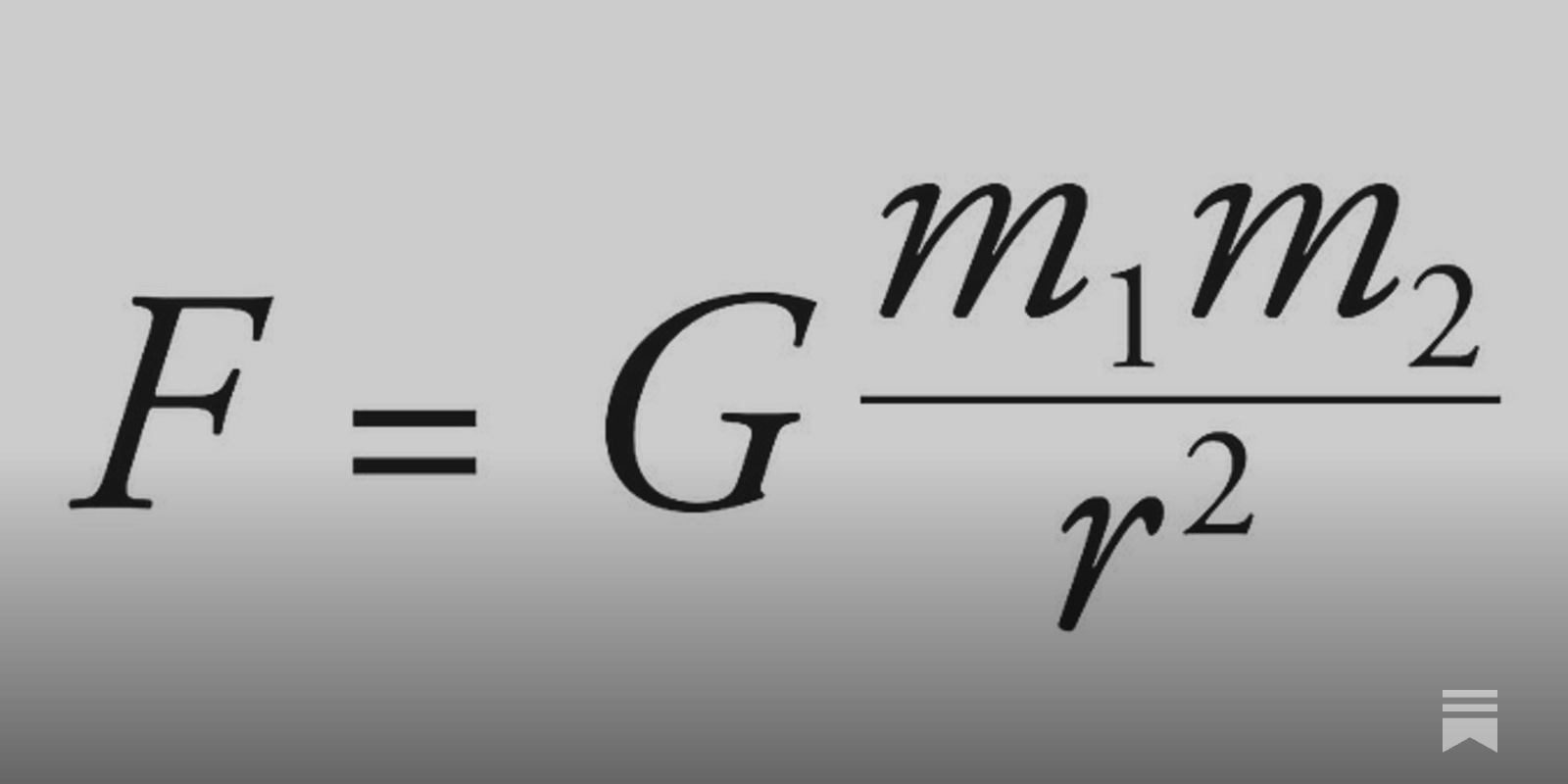
Newton's "Absurdity"
A look at the history of scientific progress through an often unused perspective: the people that actually lived it.
Marxist Astronomy: The Milky Way According to Anton Pannekoek
Can a person’s experiences on earth alter how they perceive the stars? Lauren Collee peers through the telescope of Anton Pannekoek, the Dutch astronomer whose politics informed his human approach to studying the cosmos.

Guest post: If you’re going to critique science, be scientific about it
Loren K. Mell Editor’s note: This post responds to a Feb. 13 article in The Atlantic, “The Scientific Literature Can’t Save Us Now,” written by Retraction Watch cofounders Adam Marcus and Ivan Oran…
Johannes Kepler
Johannes Kepler was a German polymath who was an astronomer, mathematician, astrologer, natural philosopher and music theorist. He is a key figure in the 17th-century Scientific Revolution, best known for his laws of planetary motion, and his books Astronomia nova, Harmonice Mundi, and Epitome Astronomiae Copernicanae. The variety and impact of his work made Kepler one of the founders and fathers of modern astronomy, the scientific method, natural science, and modern science. He has been described as the "father of science fiction" for his novel Somnium.

annotations: Le débat sur la science économique, encore et encore
traduction française du billet de blog "The economics debate, again and again" de Dani Rodrik
Claude Science (beta)
Claude Science is your AI workbench for scientific research. Works through your research like a skilled scientist, running the analysis and tracing every step. Spend less time stitching pipelines together, and more time on the science.
Benoit Mandelbrot
Benoit B. Mandelbrot was a Polish-born French-American mathematician and polymath with broad interests in the practical sciences, especially regarding what he labeled as "the art of roughness" of physical phenomena and "the uncontrolled element in life". He referred to himself as a "fractalist" and is recognized for his contribution to the field of fractal geometry, which included coining the word "fractal", as well as developing a theory of "roughness and self-similarity" in nature.

Ernst Chladni
Ernst Florens Friedrich Chladni was a German physicist and musician. His most important work, for which he is sometimes labeled the father of acoustics, included research on vibrating plates and the calculation of the speed of sound for different gases. He also undertook pioneering work in the study of meteorites and is regarded by some as the father of meteoritics.

In Medias Res: Peter Sloterdijk's Spherological Poetics of Being | JSTOR
In recent years, Peter Sloterdijk has become one of Germany's most influential thinkers. His diverse body of work includes a Heideggerian project to think…