On being a researcher in the strategy industry. And reflections on how care becomes a valuable scarcity in a world where speed and ego erode the sincerity of knowledge.
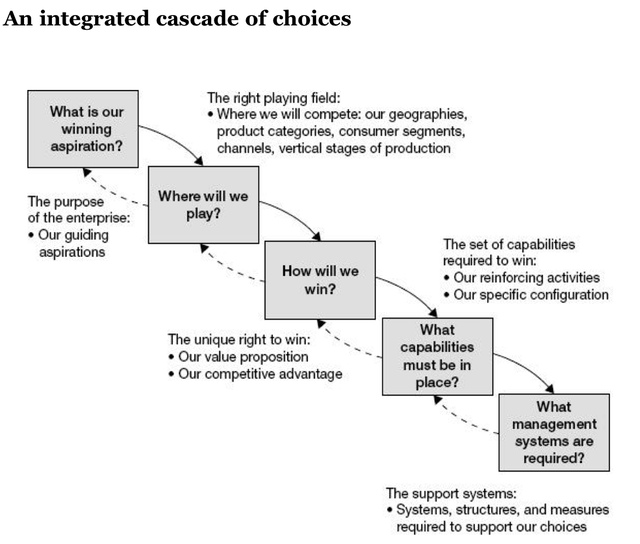
Playing to Win: How Strategy Really Works
How Strategy Really Works. This approach grew out of the strategy practice at Monitor Company and subsequently became the standard process at P&G.
Deep research requires a slower pace than tech industry work
Anyone working in an industry for a while will become accustomed to that culture—its processes, its norms, its values, its tacit knowledge. Much of this is incredibly valuable, of course, but these ideas can also represent constraints. There are some important impedances here between tech industry culture and research culture. In particular, tech culture is calibrated to a much faster pace. This can lead to impatience or early abandonment when confronting problems which require a researcher’s pace.
Research – Open Heart Mind
We’re developing Metavaluation — a participatory framework for recognising and rewarding the value of diverse contributions, from creative work and care to logistics and leadership.
Organisation Ecosystem: The Theory and the Practice | Sergio Caredda
Explores the organizational ecosystem concept, emphasizing interdependence, value creation, and the distinction between intentionality and emergence.

Being a curious leader
Being a curious leader, by Emma Wilson, explores how curiosity can reshape leadership in research environments. Drawing on personal experience, this piece highlights the value of listening, asking questions, and embracing uncertainty as strengths rather than weaknesses. It reflects on how curiosity, reflexivity, and openness to different perspectives can foster more inclusive, collaborative, and supportive research cultures.
Identity, positionality and reflexivity: relevance and application to research paramedics
This article introduces the reader to the concepts of identity, positionality and reflexivity and outlines their relevance to research paramedics. We outline how a researcher’s identity and positionality can influence all aspects of research, including the research question, study design, data collection and data analysis. We discuss that the ‘insider’ position of paramedics conducting research with other paramedics or within their specific clinical setting has considerable benefits to participant access, understanding of data and dissemination, while highlighting the difficulties of role duality and power dynamics. While positionality is concerned with the researcher clearly stating their assumptions relating to the research topic, the research design, context and process, as well as the research participants; reflexivity involves the researcher questioning their assumptions and finding strategies to address these. The researcher must reflect upon the way the research is carried out and explain to the reader how they moved through the research processes to reach certain conclusions, with the aim of producing a trustworthy and honest account of the research. Throughout this article, we provide examples of how these concepts have been considered and applied by a research paramedic while conducting their PhD research studies within a pre-hospital setting, to illustrate how they can be applied practically.
Shaping a Profession, Building a Community
Exploring how practitioners define public interest technology, and what it takes to sustain and grow the field.

Impact, agency, and taste
understand + work backwards from the root goal • don’t rely too much on permission or encouragement • make success inevitable • find your angle • think real hard • reflect on your thinking
Meta Research News | Meta Research
At Meta, research permeates everything we do. We believe the most interesting research questions are derived from real world problems.

Prompting Science Report 4: Playing Pretend: Expert Personas Don't Improve Factual Accuracy
<span> <p><span>This is the fourth in a series of short reports that help business, education, and policy leaders understand the technical details of working w

Prompting Science Report 4: Playing Pretend: Expert Personas Don't Improve Factual Accuracy
<span> <p><span>This is the fourth in a series of short reports that help business, education, and policy leaders understand the technical details of working w
The Power of Effective Agenda-Setting — Renaissance Philanthropy – A brighter future for all through science, technology, and innovation (V2)
Tom Kalil Renaissance Philanthropy believes in the power of effective agenda-setting. In this Q&A, Tom Kalil discusses what we mean by that, how agenda-setting can create positive, self-fulfilling prophesies, and the role of field strategists in agenda-setting.

The Strategic Foresight Book — IFRC Solferino Academy
Ready to shape the future? Download the Foresight Book This book will help you engage with uncertainty, navigate complex challenges, and build more resilient organisations and communities.

Having a Growth Mindset Makes It Easier to Develop New Interests
Much innovation happens when people combine knowledge from different disciplines. But some people are more likely to reach outside of their areas of interest and expertise than others. Researchers investigated why by studying people’s “mindsets” about interest and their impact. They found people vary — some people lean more toward the view that interests are inherent in a person, simply waiting to be awakened or found (a fixed mindset of interest). Others lean more toward the view that interests can be developed and that, with commitment and investment, they can grow over time (a growth mindset of interest). They reasoned that these mindsets might affect how open people are to new or different interests, whether they be in arts, science, business, athletics, or other areas. In studies, they found that students with a stronger growth mindset reported being more open to areas outside of their interests than those with a stronger fixed mindset. Their research also suggests that a growth mindset may promote resilience in maintaining interest when a subject becomes challenging and that a growth mindset may be cultivated.

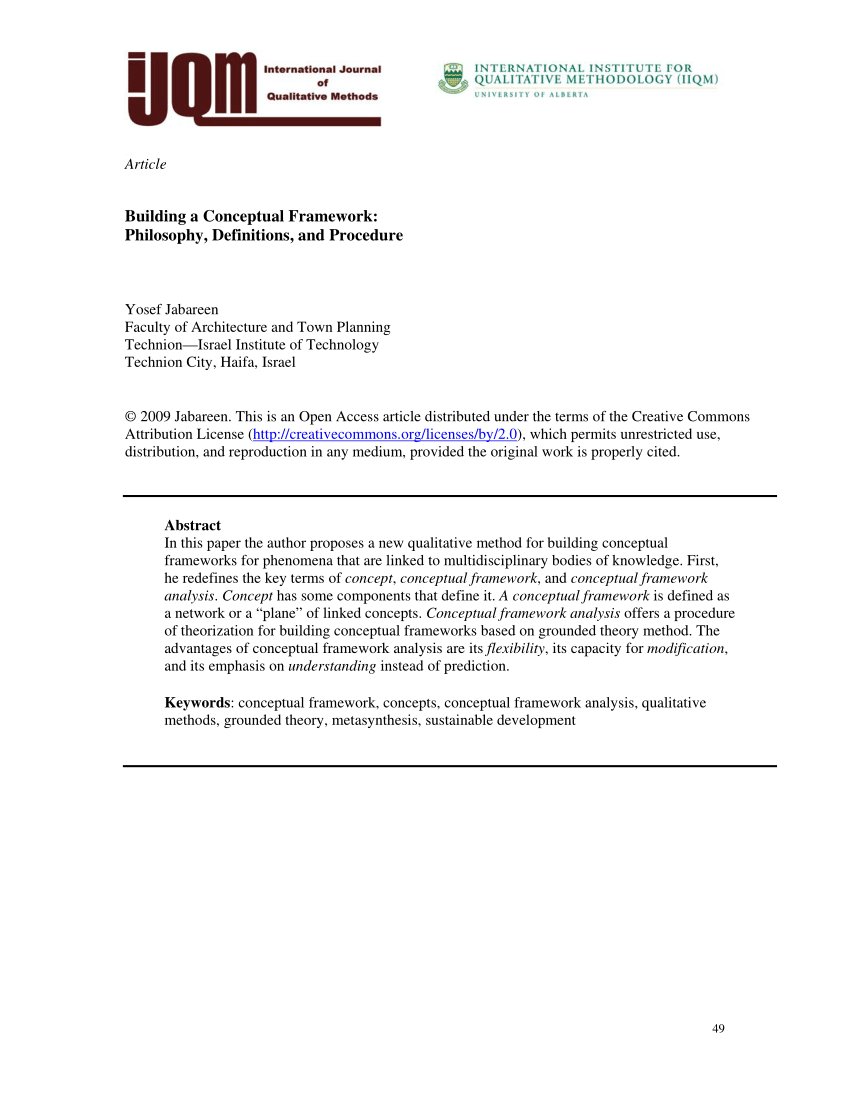
(PDF) Building a Conceptual Framework: Philosophy, Definitions, and Procedure
PDF | In this paper the author proposes a new qualitative method for building conceptual frameworks for phenomena that are linked to multidisciplinary... | Find, read and cite all the research you need on ResearchGate