"As Indigenous scientist and author of Braiding Sweetgrass Robin Wall Kimmerer harvests serviceberries alongside the birds, she considers the ethic of reciprocity that lies at the heart of the gift economy. How, she asks, can we learn from Indigenous wisdom and the plant world to reimagine what we value most? Our economy is rooted in scarcity, competition, and the hoarding of resources, and we have surrendered our values to a system that actively harms what we love. Meanwhile, the serviceberry's relationship with the natural world is an embodiment of reciprocity, interconnectedness, and gratitude. The tree distributes its wealth -- its abundance of sweet, juicy berries -- to meet the needs of its natural community. And this distribution ensures its own survival. As Kimmerer explains, 'Serviceberries show us another model, one based upon reciprocity, where wealth comes from the quality of your relationships, not from the illusion of self-sufficiency.'" -- Publisher's description
The Serviceberry: An Economy of Abundance – Robin Wall Kimmerer
As Robin Wall Kimmerer harvests serviceberries alongside the birds, she considers the ethic of reciprocity that lies at the heart of the gift economy.
Wendell Berry spent his life farming and writing – his legacy is an ethic of care for the natural world
Every reader, farmers and non-farmers alike, can learn from his broader ethics of care, attention and negotiation with the natural world.

Sweat Equity — FARMore
The Sweat Equity Program is a volunteer-driven initiative providing hands-on assistance to farmers who need it most. More than just lending a hand, it shows how vital, soulful, and impactful farming is for all of us. This program bridges the gap between urban and rural communities through meaningful service and education. Together, we are building relationships based on reciprocity and inspiring:
Exploring the Frontier of Feeds - The Open Garden
Reorienting distribution and monetization in the attention economy.
Exploring the Frontier of Feeds - The Open Garden
Reorienting distribution and monetization in the attention economy.
New to the Commons? | David Bollier
If you’re coming to the commons for the first time, it can be difficult to grok the idea because there are so many different ways to understand the commons. That’s because the commons is not so much a fixed, universal thing as a general concept describing durable, dynamic sets of social relationships for managing resources -- all sorts of resources: digital, urban, natural, indigenous, rural, cultural, scientific, to use some crude categories.
The Cooperative Account of the Rise of Virtues
This chapter presents an account of how virtues evolve. The primary challenge any such account must address is why different societies regard different traits as virtues and why these views change over time. The account developed here builds on the theory of Morality as Cooperation, which identifies seven core types of cooperation that correspond to seven universally valued virtues—filial piety, loyalty, fair-mindedness, courage, deference, justice, and respect for property. The chapter argues that virtues are stable character traits that dispose individuals to perform cooperative actions in response to recurrent social interaction problems. Different societies at different times face different problems of cooperation, which leads to different virtues. The chapter concludes with humility as a test case for this account of the evolution of virtues.

Gifthood — an open gifting community
Neighbors giving freely. Free things, offered and asked for by the people who live near you, on an open network you actually own. No money, no marketplace, no catch.
Berry Blackmail (#662277)
Deep purple secret, sticky as blackberry juice and just as hard to wash off. A berry is a small, pulpy, and often edible fruit. Typically, berries are…

A compass for a Life-Affirming Economy
This is an invitation to stand at the intersection of Self, Culture, and Science and imagine what flourishing in a life-affirming economy…

Tightwads and spendthrifts: An interdisciplinary review
Consumers rely on a “pain of paying” to help deter their spending. While this is beneficial for some consumers, others experience levels of pain that create problems. “Tightwads” experience too much pain when considering spending and therefore spend less than they would ideally like to spend. By contrast, “spendthrifts” experience too little pain and therefore spend more than they would ideally like to spend. Neither are happy with how they handle money. In the decade since the tightwad‐spendthrift construct was introduced, much has been learned about what it is and is not (e.g., frugality, greed), what contextual factors are likely to reduce its importance, how it plays a role within romantic relationships, and when it might first emerge in childhood. This paper reviews the wide range of interdisciplinary research relevant to the tightwad‐spendthrift construct and proposes several directions for new research.

Seven Key Elements of an Economy of Abundance
Our present economy is an economy of scarcity – only scarce commodities have economic value. Therefore there are strong incentives to make everything into a scarce commodity - first by making it into a commodity, and then by assuring that the demand for that commodity exceeds its supply, either by controlling supplies or by inflating demand, or doing both at the same time. This economy of scarcity leads to environmental destruction because the natural environment is treated as a “free” good to consume or pollute until it becomes scarce enough to commodify and monopolize. It also leads to social inequality because the major avenue to wealth is to control key assets and then make them scarce for everyone else, thus extracting profits.
Serving the For You Feed - AT Protocol
How the maintainer of the popular For You feed serves it from their living room!

Beneficial Plant Research Association
Medicinal, useful, and nutritious plants hold the potential to restore both human health and ecological balance.

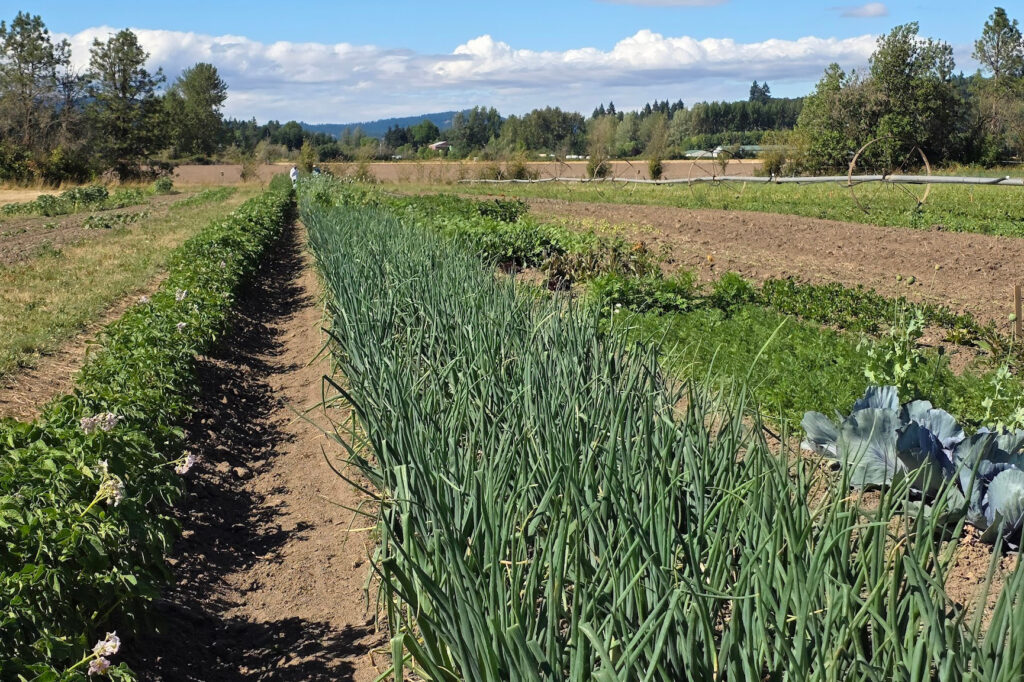
We started a farming club. Why you should start one too
We are long overdue for a return to growing our own food, and the farming club offers a promising way to reconnect with that tradition.
My own private basic income
One person’s experience becoming a business owner shows how our economy is based on luck rather than merit and how it rewards people who own stuff rather than people who do stuff.