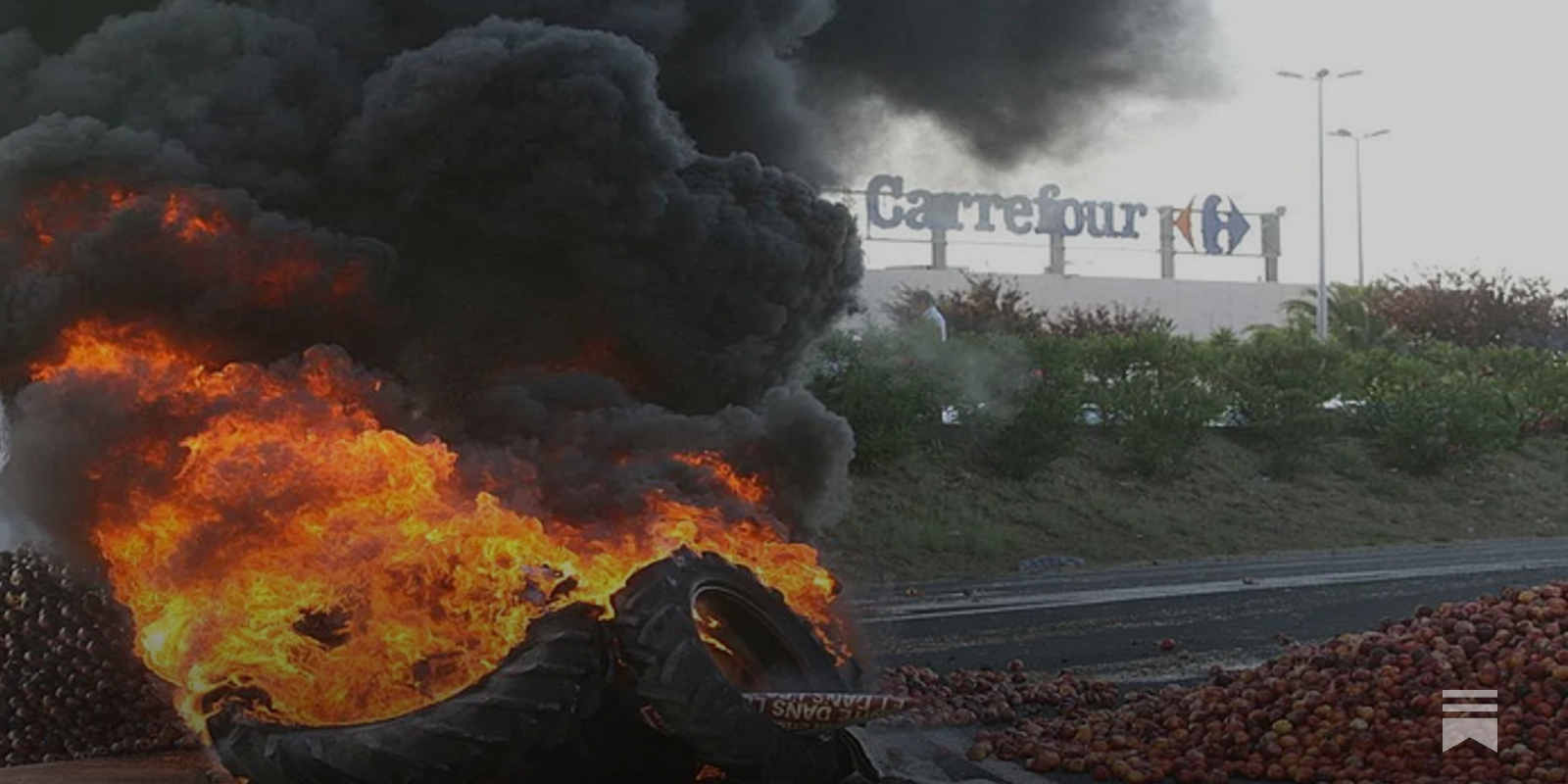
There is a touch of destiny with this one. We have real…
How ergodicity reimagines economics for the benefit of us all | Aeon Ideas
A radical concept called ergodicity at the heart of economics could change our approach to risk for the benefit of all
Power: A Primer for Perplexed Economists
Let's Assume an Unfettered Marketplace of Ideas! Or Actually, Let's Not.

What Else Matters?
Here’s what happened to a bunch of big economies over the last 30 years…
The Joy of Becoming Worthless…except to each other — Douglas Rushkoff
My last piece, The Intentional Collapse, seems to have agitated a few people. I know it came off a bit dark. I talked about how the Uber wealthy believe the world as we know it is ending and that there won’t be enough essential resources to go around, so they need to take control of as much money and stuff and land as possible in order to position themselves for the end of days.
Beyond GDP: Measuring and Valuing What Really Matters
Rethinking the UN’s “beyond GDP” agenda and the case for putting wealth at the centre
Can We Have Prosperity Without Growth?
The critique of economic growth, once a fringe position, is gaining widespread attention in the face of the climate crisis.

Denizen
What are some of the fundamental flaws of capitalism? How might we instantiate a market-based economy that is growth agnostic?
Le capitalisme de la finitude : pessimisme et bellicisme
Traduction française de « Capitalism of finitude: pessimism and bellicosity. Review of Arnaud Orain’s "Le Monde Confisqué" » de Branko Milanovic

Opinion | Be Afraid of Economic ‘Bigness.’ Be Very Afraid. (Published 2018)
In the 1930s it contributed to the rise of fascism. Alarmingly, we are experimenting again with a monopolized economy.

Choosing a path for wealth redistribution | willowbl00
We’re all suffering under capitalism. There are lots of efforts out there to shift the world to a better place. And yet, it doesn’t yet feel like enough, at least to me. So I want to start logging what I’m seeing out there in the world, so far as fighting back. I know it’s there. Hell, I know a lot of people doing the actual work. I take small steps in my own life to help create a more just world. But I truly feel like we’re on the cusp of something different. As Saul Williams opened with when I saw him last year, we are the death doulas of empire.
1% for the People
Capitalism is the undisputed powerplant of global prosperity. Since Adam Smith first described the “invisible hand” that allows economies to be efficiently self-organizing and self-renewing, every attempt to supplant it with a competing system has failed spectacularly.

Three views on economic power
We investigate the concept of economic power in the three main paradigms of economic thinking in the 20th century: neoclassical, marxist and institutionalist. We propose a reconstruction, based on a new taxonomy, of the various forms of power conceptualized by each of them. In particular, we claim that the neoclassical paradigm contains a consistent although often implicit theory of power. We then show that many controversies between these paradigms were debates on power and that some shifts in mainstream economics in the 1970s and 1980s are a reaction to the criticisms leveled against the neoclassical conceptualization of power.
The Limits to Growth: A report for the Club of Rome's project on the predicament of mankind
"I do not wish to seem overdramatic, but I can only conclude from the information that is available to me as Secretary–General, that the Members of the United Nations have perhaps ten years left in which to subordinate their ancient quarrels and launch a global partnership to curb the arms race, to improve the human environment, to defuse the population explosion, and to supply the required momentum to development efforts. If such a global partnership is not forged within the next decade, then I very much fear that the problems I have mentioned will have reached such staggering proportions that they will be beyond our capacity to control."
The End of Cheap Nature
Trump's Defeat, Europe's Protests, and the Crisis of Capitalist Abundance