

This groundbreaking collection explores the profound power of Social Reproduction Theory to deepen our understanding of everyday life under capitalism. While many Marxists tend to focus on the productive economy, this book focuses on issues such as child care, health care, education, family life and the roles of gender, race and sexuality, all of which are central to understanding the relationship between economic exploitation and social oppression. In this book, leading writers such as Lise Vogel, Nancy Fraser, David McNally and Susan Ferguson reveal the ways in which daily and generational reproductive labour, found in households, schools, hospitals and prisons, also sustains the drive for accumulation. Presenting a more sophisticated alternative to intersectionality, these essays provide ideas which have important strategic implications for anti-capitalists, anti-racists and feminists attempting to find a path through the seemingly ever more complex world we live in.
Fighting for women’s liberation – Victorian Socialists
Women’s oppression is part of the fabric of capitalism. We’re fighting for free, accessible abortion, expanded paid parental leave, and free childcare.
Intersectional Antifeminism, or: What is a White Feminist, Anyway?
Regarding the most famous social theory no one has actually read.

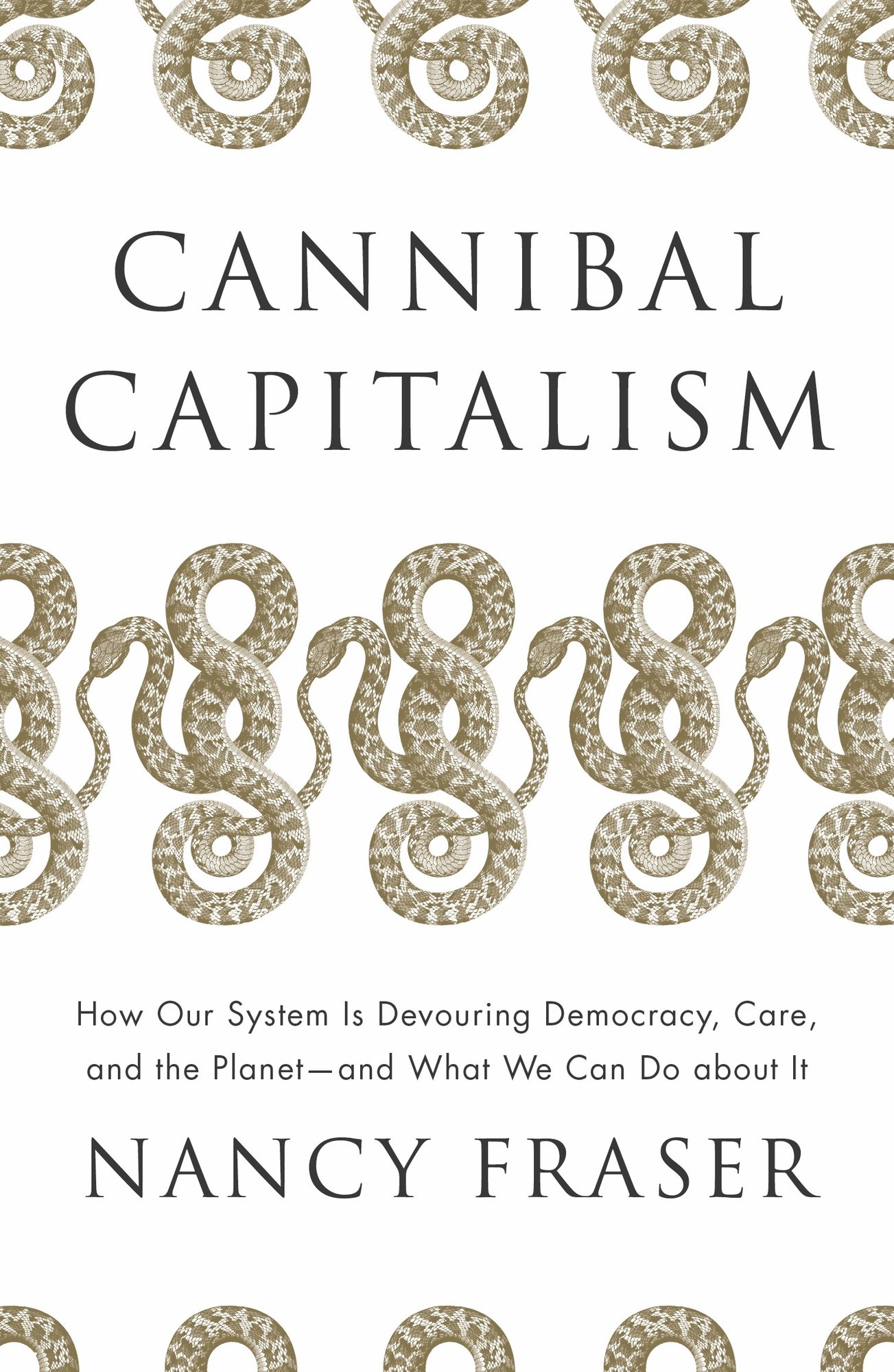
Cannibal Capitalism: How our System is Devouring Democracy, Care, and the Planetand What We Can Do About It
A trenchant look at contemporary capitalism’s insatiable appetite—and a rallying cry for everyone who wants to stop it from devouring our world Capital is currently cannibalizing every sphere of life–guzzling wealth from nature and racialized populations, sucking up our ability to care for each other, and gutting the practice of politics. In this tightly argued and urgent volume, leading Marxist feminist theorist Nancy Fraser charts the voracious appetite of capital, tracking it from crisis point to crisis point, from ecological devastation to the collapse of democracy, from racial violence to the devaluing of care work. These crisis points all come to a head in Covid-19, which Fraser argues can help us envision the resistance we need to end the feeding frenzy. What we need, she argues, is a wide-ranging socialist movement that can recognize the rapaciousness of capital—and starve it to death.
Left of Karl Marx: The Political Life of Black Communist Claudia Jones - Carole Boyce Davies | Are.na
doi.org/10.1215/9780822390329

Anti-Natalism | The Paper Pilot
The Paper Pilot's digital garden of thoughts on philosophy, politics, and sociology
Cannibal Capitalism
Shortlisted for the Deutscher Memorial Prize 2023 Capital is currently cannibalizing every sphere of life-guzzling wealth from nature and racialized populations, sucking up our ability to care for each other, and gutting the practice of politics. In this tightly argued and urgent volume, leading Marxist feminist theorist Nancy Fraser charts the voracious appetite of capital, tracking it from crisis point to crisis point, from ecological devastation to the collapse of democracy, from racial violence to the devaluing of care work. These crisis points all come to a head in Covid-19, which Fraser argues can help us envision the resistance we need to end the feeding frenzy. What we need, she argues, is a wide-ranging socialist movement that can recognize the rapaciousness of capital - and starve it to death.
Re-enchanting the world : feminism and the politics of the commons
xviii, 227 pages ; 23 cm; "Silvia Federici is one of the most important contemporary theorists of capitalism and feminist movements. In this collection of her work spanning over twenty years, she provides a detailed history and critique of the politics of the commons from a feminist perspective. In her clear and combative voice, Federici provides readers with an analysis of some of the key issues and debates in contemporary thinking on this subject. Drawing on rich historical research, she maps the connections between the previous forms of enclosure that occurred with the birth of capitalism and the destruction of the commons and the "new enclosures" at the heart of the present phase of global capitalist accumulation. Considering the commons from a feminist perspective, this collection centers on women and reproductive work as crucial to both our economic survival and the construction of a world free from the hierarchies and divisions capital has planted in the body of the world proletariat. Federici is clear that the commons should not be understood as happy islands in a sea of exploitative relations but rather autonomous spaces from which to challenge the existing capitalist organization of life and labor"--; Foreward by Peter Linebaugh; Includes bibliographical references (pages198-216) and index; On primitive accumulation, globalization, and reproduction -- Introduction to the new enclosures -- The debt crisis, Africa, and the new enclosures -- China: breaking the iron rice bowl -- From commoning to debt: financialization, microcredit, and the changing architecture of capital accumulation -- Beneath the United States, the Commons -- Commons against and beyond Capitalism -- The University: a knowledge common? -- Feminism and the politics of the commons in an era of primitive accumulation -- Women's struggles for land in Africa and the reconstruction of the commons -- Women's struggles for land and the common good in Latin America -- Marxism, feminism, and the commons -- From crisis to commons: reproductive work, affective labor and technology, and the transformation of everyday life -- Re-enchanting the world: technology, the body, and the construction of the commons

Opposing racism – we’re stronger together – Victorian Socialists
Racism serves the rich and powerful by dividing workers. We’re fighting for working-class unity against racism so we can build a better society for everyone.
Feminism | The Paper Pilot
The Paper Pilot's digital garden of thoughts on philosophy, politics, and sociology
We Do This 'Til We Free Us
New York Times Bestseller “Organizing is both science and art. It is thinking through a vision, a strategy, and then figuring out who your targets are, always being concerned about power, always being concerned about how you’re going to actually build power in order to be able to push your issues, in order to be able to get the target to actually move in the way that you want to.” What if social transformation and liberation isn’t about waiting for someone else to come along and save us? What if ordinary people have the power to collectively free ourselves? In this timely collection of essays and interviews, Mariame Kaba reflects on the deep work of abolition and transformative political struggle. With a foreword by Naomi Murakawa and chapters on seeking justice beyond the punishment system, transforming how we deal with harm and accountability, and finding hope in collective struggle for abolition, Kaba’s work is deeply rooted in the relentless belief that we can fundamentally change the world. As Kaba writes, “Nothing that we do that is worthwhile is done alone.”

Deep Care by Angela Hume | East Bay Booksellers
The story of the radical feminist networks who worked outside the law to defend abortion. Starting in the 1970s, small groups of feminist activists met regularly to study anatomy, practice pelvic exams on each other, and learn how to safely perform a procedure known as menstrual extraction, which can end a pregnancy, using equipment easily bought and assembled at home.
Black Schoolgirls at the Intersection of Consent and Property: Mapping a Socio-Historical Analysis for Anti-Rape Education Futures in Schooling
This article examines how the concept of consent, persons as property, with its links to the convergence of law, imperial governance and schooling reveal the fragility and possibilities of consent ...

Marxism & the Global South
A critical history of imperialism and dependency theory, from Marx on colonialism and Eurocentrism to Baran, Frank, Wallerstein, and Samir Amin.

Marxism & the Global South
A critical history of imperialism and dependency theory, from Marx on colonialism and Eurocentrism to Baran, Frank, Wallerstein, and Samir Amin.
The Myth of Class Reductionism
The fight for racial and gender justice has always been about economic inequality, too.
