


AI pacing agreements aim to slow frontier AI development for safety but raise major antitrust risks and require careful structuring, oversight and safe harbors.
Pacing the Frontier
A statement from over 1000 employees of frontier AI companies

Pacing model development in an era of cyber-critical capabilities
OpenAI is strengthening monitoring, alignment, and security for frontier AI models. See how new safeguards are guiding the pace of model development.

Agentic AI Governance: Securing Autonomous AI Agents in Enterprise
When AI agents start making decisions, calling tools, and coordinating with other agents without waiting for human approval, the governance playbook most...

Clear, Compelling Arguments: Rethinking the Foundations of Frontier AI Safety Cases
This paper contributes to the nascent debate around safety cases for frontier AI systems. Safety cases are structured, defensible arguments that a system is acceptably safe to deploy in a given context. Historically, they have been used in safety-critical industries, such as aerospace, nuclear or automotive. As a result, safety cases for frontier AI have risen in prominence, both in the safety policies of leading frontier developers and in international research agendas proposed by leaders in generative AI, such as the Singapore Consensus on Global AI Safety Research Priorities and the International AI Safety Report. This paper appraises this work. We note that research conducted within the alignment community which draws explicitly on lessons from the assurance community has significant limitations. We therefore aim to rethink existing approaches to alignment safety cases. We offer lessons from existing methodologies within safety assurance and outline the limitations involved in the alignment community's current approach. Building on this foundation, we present a case study for a safety case focused on Deceptive Alignment and CBRN capabilities, drawing on existing, theoretical safety case "sketches" created by the alignment safety case community. Overall, we contribute holistic insights from the field of safety assurance via rigorous theory and methodologies that have been applied in safety-critical contexts. We do so in order to create a better foundational framework for robust, defensible and useful safety case methodologies which can help to assure the safety of frontier AI systems.

The EU AI Act Is Ready – Interdependent Thoughts
A final draft of the European AI Regulation is circulating (here’s an almost 900 page PDF). The coming days I will read it with curiosity.
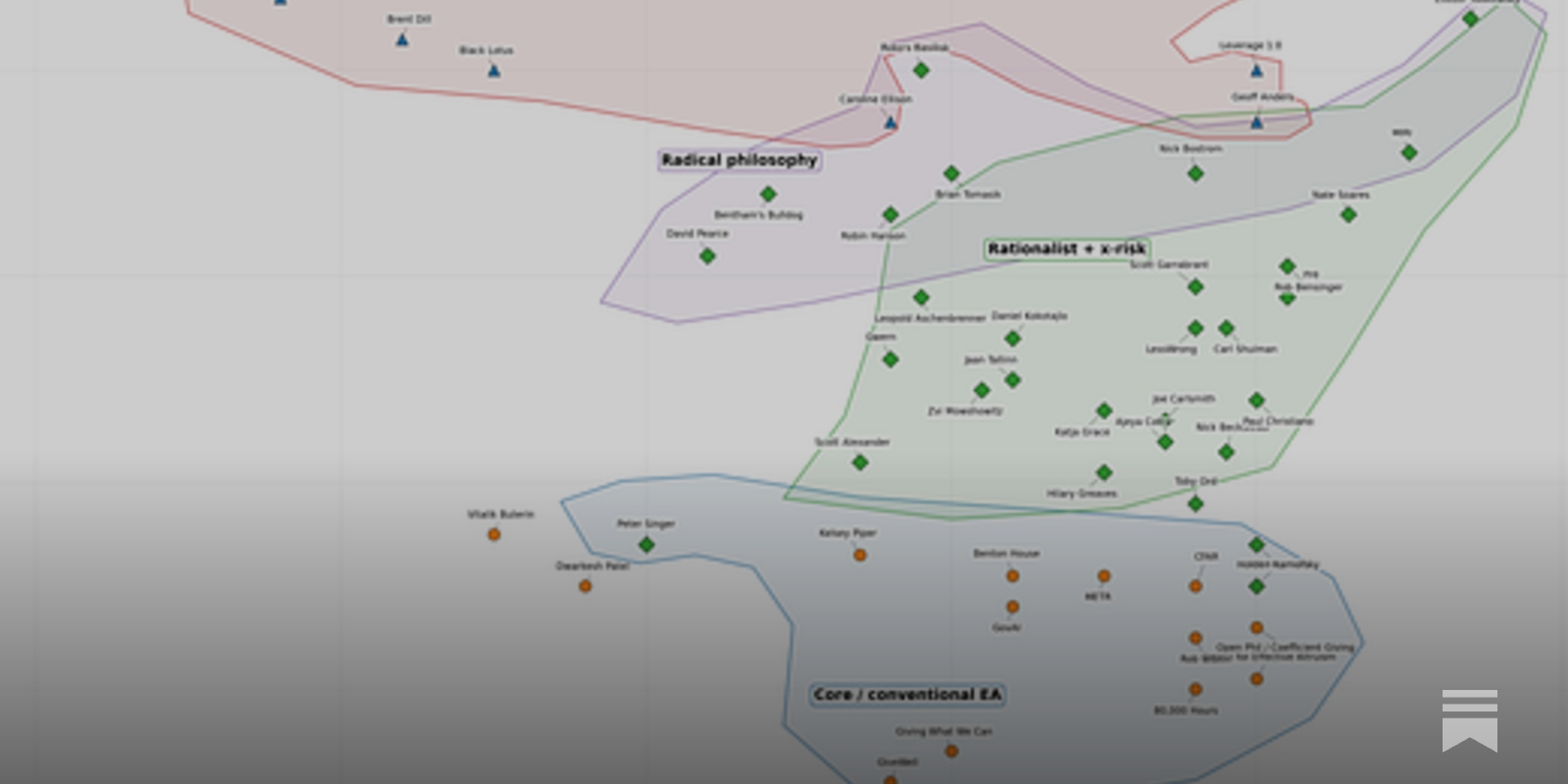
The State of Sovereign AI Adoption (Research) | Cohere
Understand the key drivers and barriers for adopting sovereign AI across critical industries, based on an IDC InfoBrief commissioned by Cohere.

Debates On Frontier Artificial Intelligence Governance: The AI Triad
Analytical Paper Optional: All enrolled students have the option of completing a research paper of at least 20-25 pages, with faculty and peer review of a substantially complete draft. This paper can be used to satisfy the analytical paper requirement for J.D. students. Prerequisite: This course is intended for students intending to work in the […]

Responsible Innovation at the Frontier - Americans for Responsible Innovation
ARI’s blueprint for federal AI governance is designed to promote safe frontier AI development in America. The blueprint is built around three governance functions any federal proposal should incorporate.

AI Act
The AI Act is the first-ever legal framework on AI, which addresses the risks of AI and positions Europe to play a leading role globally.
AI alliance Cohere and Aleph Alpha
Cohere and Aleph Alpha, two trusted sovereign AI providers for governments and regulated industries, today announce their plan to join forces. This transatlantic alliance would combine Cohere’s global AI scale with Aleph Alpha’s strong research excellence and deep institutional relationships, forging a globally competitive AI champion backed by their Canadian and German ecosystems. The initiative reflects a shared vision: To provide the world with an independent, enterprise-grade sovereign alternative in an era of growing AI concentration and to ensure that organizations do not need to relinquish control over their own AI stack.

Pacing the Frontier | Gillian K. Hadfield
The Pacing the Frontier letter calls on the US government to support an international effort to build the technical and governance tools needed to protect our option to pace AI development. I and others have been working on the problem of how to build such infrastructure for ten years, including participating in dialogues on AI safety with Chinese academic colleagues during the past three. Here are my suggestions: 1. Don’t rely on off-the-shelf models like FINRA and the FDA which were built for 20th Century single-domain government expertise. They’re not fit for purpose. 2. Don’t act like no-one’s thought about the AI governance problem before. We’ve spent two years refining a regulatory markets design into working legislative language, for example, and it’s now in AI governance bills in five states and in Congress. 3. Don’t try to write an exhaustive set of rules for AGI first. 4. Pick a domain that can achieve widespread global consensus to start. Mine would be recursive self-improvement: models should not build models. Build the technology that verifies that. 5. Focus relentlessly on building flexible verification infrastructure that is able to enforce whatever rules we can ultimately agree on. 6. Don’t assume we already know how to do this and governments can just write tests into law. Technology needs to be built and by the private sector. 7. Don’t wait for the infrastructure to emerge first. The components and people are there and the ecosystem can scale fast with the right incentives. 8. Incentivize large-scale investment in verification technology by building a governance structure and industry funding that creates a market for private verification organizations. 9. Use licensing and public oversight to ensure verifiers are independent of the frontier labs. 10. Protect sovereignty by enabling each government to license its own verifiers from a global market of verifiers recognized by other countries. 11. Leverage the incentive of global trade for models and model services by requiring verification for market access. 12. Just start. Sources in comments.

Americans for Responsible Innovation on Twitter / X
NEW: Today ARI released a blueprint for federal AI governance, including three pillars that promote safe frontier AI development: ✅ Standards set by the government ✅ Independent assurance they are met ✅ Transparency into frontier AI development https://t.co/s2mlUP27Wm pic.twitter.com/X6IhBS9jKF— Americans for Responsible Innovation (@americans4ri) August 10, 2026

Licensing is neither feasible nor effective for addressing AI risks
Non-proliferation only benefits incumbents
Introducing the Agent Governance Toolkit: Open-source runtime security for AI agents | Microsoft Open Source Blog
Discover how the Microsoft Agent Governance Toolkit brings policy, identity, and reliability to autonomous AI agent systems.

1000+ scientists at frontier AI companies are speaking out to warn that the current commercial race leads to unacceptable security risks. I agree with their call for an international effort to develop technical and governance guardrails to ensure a safer way forward. pacingthefrontier.com

Pacing the Frontier
www.pacingthefrontier.com