

Increasingly, algorithms are supplanting human decision-makers in pricing goods and services. To analyze the possible consequences, we study experimentally the behavior of algorithms powered by Artificial Intelligence (Q-learning) in a workhorse oligopoly model of repeated price competition. We find that the algorithms consistently learn to charge supracompetitive prices, without communicating with one another. The high prices are sustained by collusive strategies with a finite phase of punishment followed by a gradual return to cooperation. This finding is robust to asymmetries in cost or demand, changes in the number of players, and various forms of uncertainty.
How to Develop An AI Pricing Model | Salesforce Ventures
Your guide to developing an effective and scalable AI pricing strategy.

Simple Pricing | Machine Learning Infrastructure | Deep Infra
We provide only pay-what-you-use pricing with no long-term contracts or upfront costs for our machine learning models and infrastructure. Learn more!

Deep mechanism design: Learning social and economic policies for human benefit
Human society is coordinated by mechanisms that control how prices are agreed, taxes are set, and electoral votes are tallied. The design of robust and effective mechanisms for human benefit is a core problem in the social, economic, and political sciences. Here, we discuss the recent application of modern tools from AI research, including deep neural networks trained with reinforcement learning (RL), to create more desirable mechanisms for people. We review the application of machine learning to design effective auctions, learn optimal tax policies, and discover redistribution policies that win the popular vote among human users. We discuss the challenge of accurately modeling human preferences and the problem of aligning a mechanism to the wishes of a potentially diverse group. We highlight the importance of ensuring that research into “deep mechanism design” is conducted safely and ethically.

Promoting User Data Autonomy During the Dissolution of a Monopolistic Firm
The deployment of AI in consumer products is currently focused on the use of so-called foundation models, large neural networks pre-trained on massive corpora of digital records. This emphasis on scaling up datasets and pre-training computation raises the risk of further consolidating the industry, and enabling monopolistic (or oligopolistic) behavior. Judges and regulators seeking to improve market competition may employ various remedies. This paper explores dissolution -- the breaking up of a monopolistic entity into smaller firms -- as one such remedy, focusing in particular on the technical challenges and opportunities involved in the breaking up of large models and datasets. We show how the framework of Conscious Data Contribution can enable user autonomy during under dissolution. Through a simulation study, we explore how fine-tuning and the phenomenon of "catastrophic forgetting" could actually prove beneficial as a type of machine unlearning that allows users to specify which data they want used for what purposes.

The economics of agents - Marginal REVOLUTION
From Patrick Collison: Assorted things I’ve been mulling over regarding agents in the economy: • Companies are in some sense the original superintelligence. It’s often the case that they can use their amortized cognitive surplus to advance their interests against those of certain consumers: relative to the optimization capacity of companies, consumers can be inattentive, […]

An Instrumental Value for Data Production and its Application to Data Pricing
We develop a framework for capturing the instrumental value of data production processes, which accounts for two key factors: (a) the context of the agent’s decision-making; (b) how much data or information the buyer already possesses. We "micro-found" our data valuation function by establishing its connection to classic notions of signals and information design in economics. When instantiated in Bayesian linear regression, our value naturally corresponds to information gain. Applying our proposed data value in Bayesian linear regression for monopoly pricing, we show that if the seller can fully customize data production, she can extract the first-best revenue (i.e., full surplus) from any population of buyers, i.e., achieving first-degree price discrimination. If data can only be constructed from an existing data pool, this limits the seller’s ability to customize, and achieving first-best revenue becomes generally impossible. However, we design a mechanism that achieves seller revenue at most $\log(\kappa)$ less than the first-best, where $\kappa$ is the condition number associated with the data matrix. As a corollary, the seller extracts the first-best revenue in the multi-armed bandits special case.
Why Are We Using Black Box Models in AI When We Don’t Need To? A Lesson From an Explainable AI Competition · Issue 1.2, Fall 2019
In 2018, a landmark challenge in artificial intelligence (AI) took place, namely, the Explainable Machine Learning Challenge. The goal of the competition was to create a complicated black box model for the dataset and explain how it worked. One team did not follow the rules. Instead of sending in a black box, they created a model that was fully interpretable. This leads to the question of whether the real world of machine learning is similar to the Explainable Machine Learning Challenge, where black box models are used even when they are not needed. We discuss this team’s thought processes during the competition and their implications, which reach far beyond the competition itself.

Learning to accept welfare-enhancing policies: an experimental investigation of congestion pricing
Welfare-enhancing policies such as congestion pricing are argued to improve efficiency in situations with externalities. Unfamiliarity and lack of any personal experience with such policies, however, can hinder their implementation; particularly the ex-ante uncertainties of incidences of gains and losses as well as debates regarding equity concerns and how to recycle revenues often stymies implementation. This paper employs a laboratory experiment with heterogeneous users to investigate the effectiveness and acceptability of a toll in a six-player-two-route congestion game. To measure acceptability and how it is affected by experience with the toll, we conduct referenda before, during, and after subjects experience a congestion problem and a toll. The experiment employs a 2×2 design that varies two treatments: the rate of revenue reallocation and the level of information before the final vote. After an experiential learning phase, congestion pricing is found to curb congestion effectively, and although some subjects do not vote in their monetary self-interest initially, the majority does so after experiencing the congestion pricing policy. Data on worldviews and beliefs are collected and matched to voting behavior to examine the evolution of how experience determines acceptability. Some worldviews and beliefs can predict voting behavior and the timing of when an individual finds a toll (un)acceptable.

The Game of Oligarchy | Brewster Kahle's Blog
I just invented and played a game today with my family, and it worked great– it was fun and we learned an important lesson. Similar to the game “Monopoly” which shows that one person ends up monopolizing even though you think the rules are “fair,” the game of Oligarchy shows that the “free market” leads inexorably to one person getting all the money and everyone else going broke. And fast.
An Economy of AI Agents
In the coming decade, artificially intelligent agents with the ability to plan and execute complex tasks over long time horizons with little direct oversight from humans may be deployed across the economy. This chapter surveys recent developments and highlights open questions for economists around how AI agents might interact with humans and with each other, shape markets and organizations, and what institutions might be required for well-functioning markets.
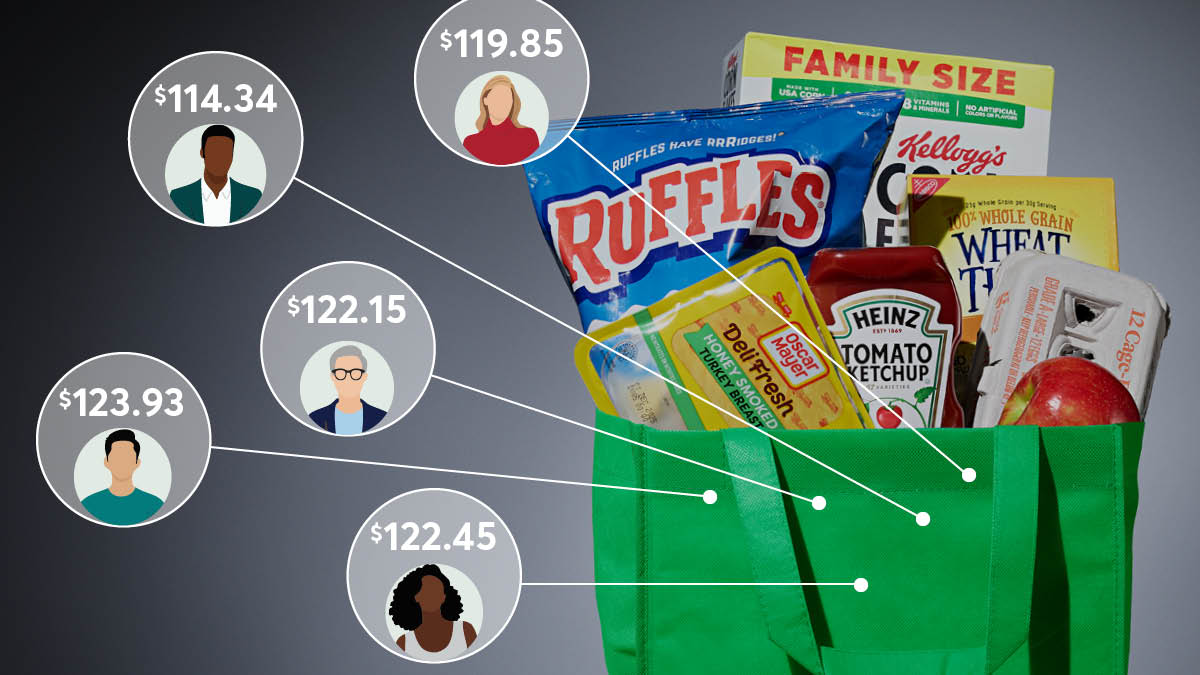
Instacart’s AI-Enabled Pricing Experiments May Be Inflating Your Grocery Bill, CR and Groundwork Collaborative Investigation Finds via @ConsumerReports
Exclusive: Instacart’s AI pricing may be inflating your grocery bill.
The Machines of Capital
The Machines of Capital As Benjamin Graham famously articulated, in the short run the markets are a voting machine; in the long run the markets are a weighing machine. Price exists in both machines, but the deterministic mechanisms are different. During the voting machine phase, price is a funct...

Society-in-the-loop: programming the algorithmic social contract
Recent rapid advances in Artificial Intelligence (AI) and Machine Learning have raised many questions about the regulatory and governance mechanisms for autonomous machines. Many commentators, scholars, and policy-makers now call for ensuring that algorithms governing our lives are transparent, fair, and accountable. Here, I propose a conceptual framework for the regulation of AI and algorithmic systems. I argue that we need tools to program, debug and maintain an algorithmic social contract, a pact between various human stakeholders, mediated by machines. To achieve this, we can adapt the concept of human-in-the-loop (HITL) from the fields of modeling and simulation, and interactive machine learning. In particular, I propose an agenda I call society-in-the-loop (SITL), which combines the HITL control paradigm with mechanisms for negotiating the values of various stakeholders affected by AI systems, and monitoring compliance with the agreement. In short, ‘SITL = HITL + Social Contract.’

AI 'surveillance pricing' under scrutiny from U.S. lawmakers
(The Center Square) – In a rare instance of bipartisanship, Congress is taking a closer look at AI surveillance pricing, where corporations will charge some consumers higher prices based on

Dynamic pricing

Both AI and non-AI
AI 'surveillance pricing' under scrutiny from U.S. lawmakers

Canada Has a Precedent to Regulate Surveillance Pricing
Instacart’s AI-Enabled Pricing Experiments May Be Inflating Your Grocery Bill, CR and Groundwork Collaborative Investigation Finds via @ConsumerReports
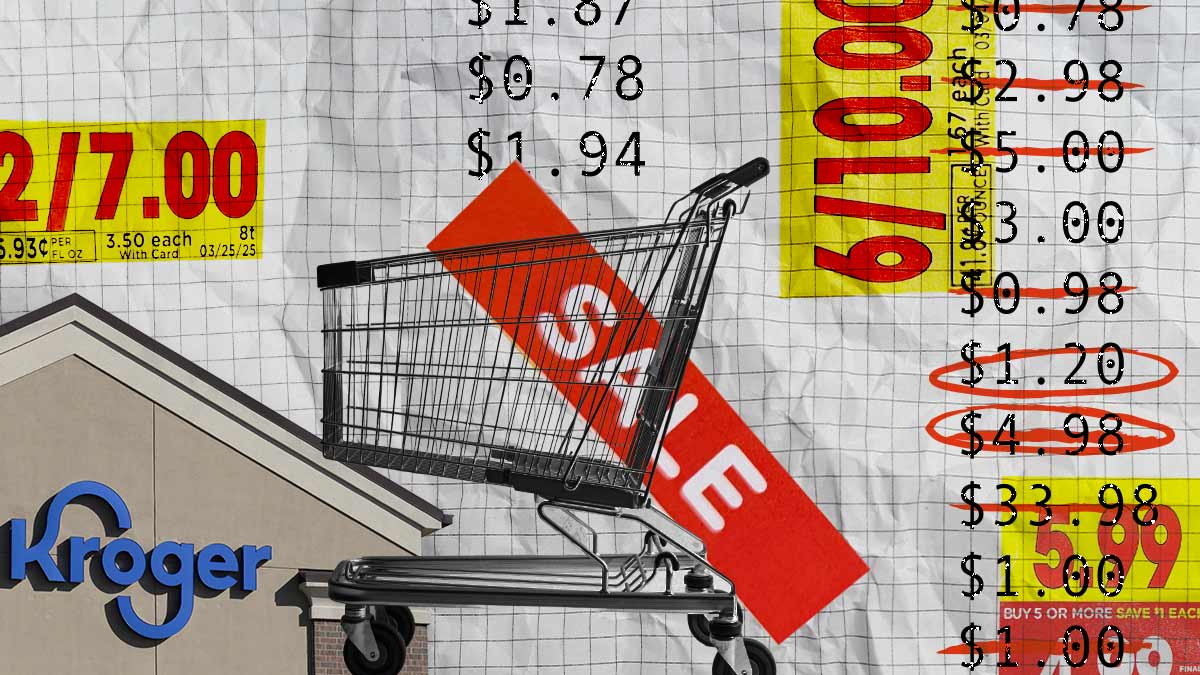
Kroger Stores Overcharging Shoppers on Sale Items, CR Price Check Finds via @ConsumerReports
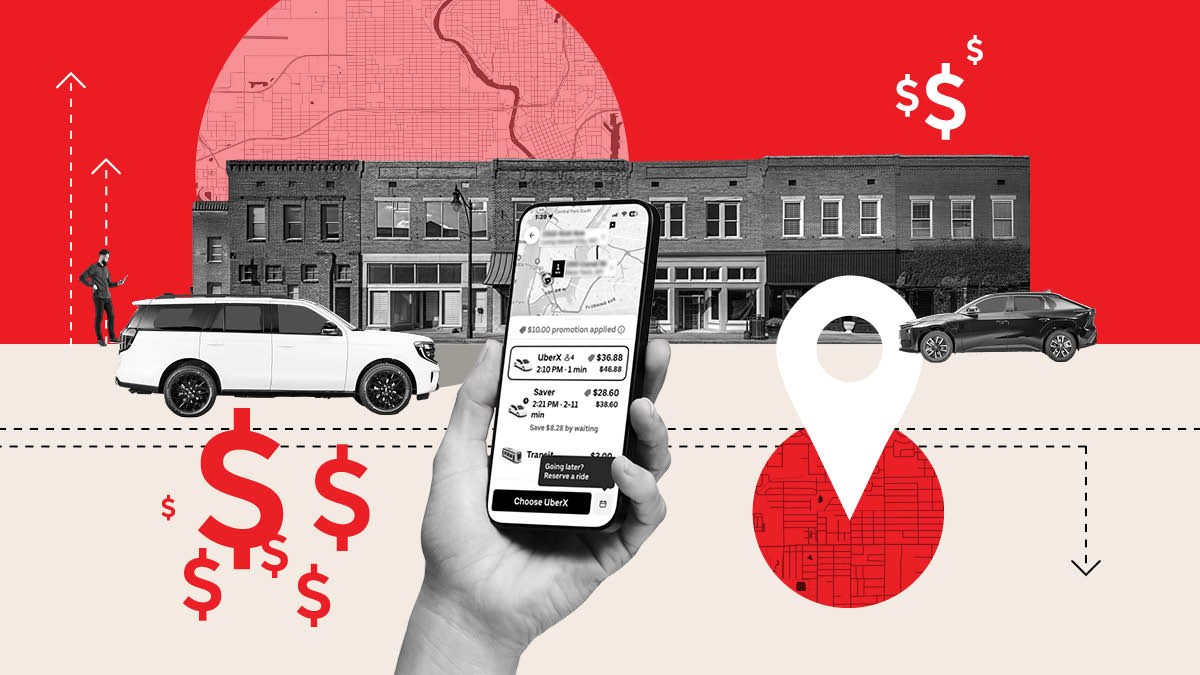
Different Prices for the Same Ride: How Uber and Lyft Use AI to Get More Money Out of You via @ConsumerReports