

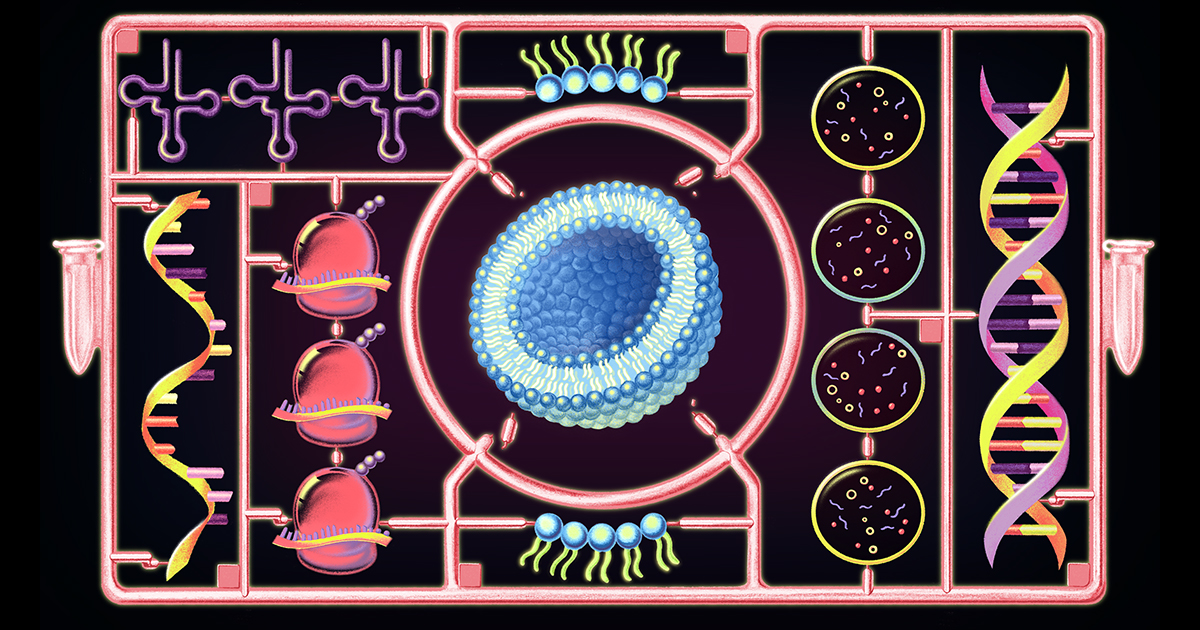
Scientists built a synthetic cell that combines more lifelike properties than ever before — proof of concept that it’s possible to bring nonliving materials to life, or something close to it, in the lab.
For the First Time, a Cell Built From Scratch Grows and Divides | Quanta Magazine
Scientists built a synthetic cell that combines more lifelike properties than ever before — proof of concept that it’s possible to bring nonliving materials to life, or something close to it, in the lab.
b.next: rebuilding biology for engineering
A Cell So Minimal That It Challenges Definitions of Life | Quanta Magazine
The newly described microbe represents a world of parasitic, intercellular biodiversity only beginning to be revealed by genome sequencing.
How Life Works: A User’s Guide to the New Biology
“Bold and intriguing.”—Wall Street Journal • “Penetrating. . . . Provocative and profound.”—Publishers Weekly (starred review) • “Offers plenty of food for thought.”—Kirkus Reviews (starred review) “Ball’s marvelous book is both wide-ranging and deep. . . . I could not put it down.”—Siddhartha Mukherjee, author of The Song of the Cell and the Pulitzer Prize–winning The Emperor of All Maladies A new, cutting-edge vision of biology that revises our understanding of what life itself is, how to enhance it, and what possibilities it offers. Biology is undergoing a quiet but profound transformation. Several aspects of the standard picture of how life works—the idea of the genome as a blueprint, of genes as instructions for building an organism, of proteins as precisely tailored molecular machines, of cells as entities with fixed identities, and more—have been exposed as incomplete, misleading, or wrong. In How Life Works, Philip Ball explores the new biology, revealing life to be a far richer, more ingenious affair than we had guessed. Ball explains that there is no unique place to look for an answer to this question: life is a system of many levels—genes, proteins, cells, tissues, and body modules such as the immune system and the nervous system—each with its own rules and principles. How Life Works explains how these levels operate, interface, and work together (most of the time). With this knowledge come new possibilities. Today we can redesign and reconfigure living systems, tissues, and organisms. We can reprogram cells, for instance, to carry out new tasks and grow into structures not seen in the natural world. As we discover the conditions that dictate the forms into which cells organize themselves, our ability to guide and select the outcomes becomes ever more extraordinary. Some researchers believe that ultimately we will be able to regenerate limbs and organs, and perhaps even create new life forms that evolution has never imagined. Incorporating the latest research and insights, How Life Works is a sweeping journey into this new frontier of the life sciences, a realm that will reshape our understanding of life as we know it.
Summary of "Improvising to cellular playgrounds in Realtalk", Aug 2023
THE ADJACENT POSSIBLE | Edge.org
An autonomous agent is something that can both reproduce itself and do at least one thermodynamic work cycle. It turns out that this is true of all free-living cells, excepting weird special cases. They all do work cycles, just like the bacterium spinning its flagellum as it swims up the glucose gradient. The cells in your body are busy doing work cycles all the time.
The Multiple Paths to Multiple Life
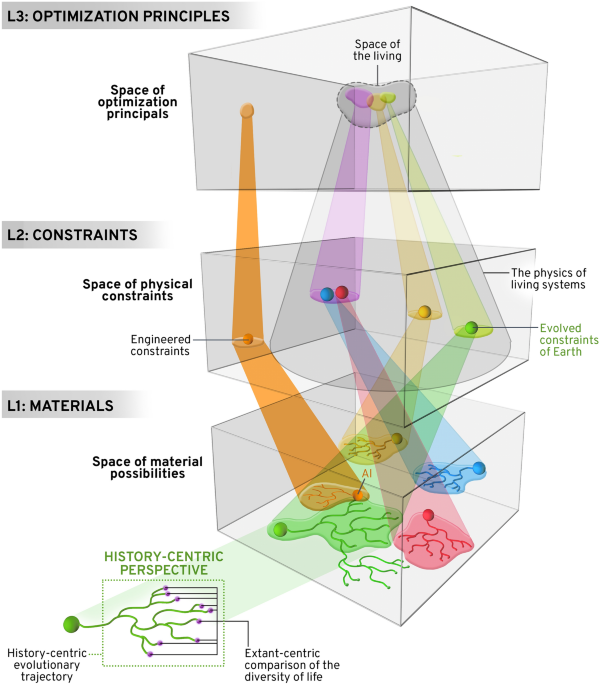
We argue for multiple forms of life realized through multiple different historical pathways. From this perspective, there have been multiple origins of life on Earth—life is not a universal homology. By broadening the class of originations, we significantly expand the data set for searching for life. Through a computational analogy, the origin of life describes both the origin of hardware (physical substrate) and software (evolved function). Like all information-processing systems, adaptive systems possess a nested hierarchy of levels, a level of function optimization (e.g., fitness maximization), a level of constraints (e.g., energy requirements), and a level of materials (e.g., DNA or RNA genome and cells). The functions essential to life are realized by different substrates with different efficiencies. The functional level allows us to identify multiple origins of life by searching for key principles of optimization in different material form, including the prebiotic origin of proto-cells, the emergence of culture, economic, and legal institutions, and the reproduction of software agents.
Synthetic Biology of Plants and Microbes for Agriculture, Environment, and Future Applications
Agriculture is under pressure to provide food for a growing population and the feedstock required to drive the bioeconomy. Methods to breed and genetically modify plants are inadequate to keep pace. When engineering crops, traits are painstakingly introduced into plants one-at-a-time, combine unpredictably, and are continuously expressed. Synthetic biology is changing these paradigms with new genome construction tools, computer aided design (CAD), and artificial intelligence (AI). “Smart plants” contain circuits that respond to environmental change, alter morphology, or respond to threats. Further, the plant and associated microbes (fungi, bacteria, archaea) are now being viewed by genetic engineers as a holistic system. Historically, plant health has been enhanced by many natural and laboratory-evolved soil microbes marketed to enhance growth or provide nutrients, or pest/stress resistance. Synthetic biology has expanded the number of species that can be engineered, increased the complexity of engineered functions, controlled environmental release, and can assemble stable consortia. New CAD tools will manage genetic engineering projects spanning multiple plant genomes (nucleus, chloroplast, mitochondrion) and the thousands of genomes of associated bacteria/fungi. This review covers advanced genetic engineering techniques to drive the next agricultural revolution, as well as push plant engineering into new realms for manufacturing, infrastructure, sensing, and remediation.

Rabrg/artificial-life
A simple (300 lines of code) reproduction of Computational Life: How Well-formed, Self-replicating Programs Emerge from Simple Interaction
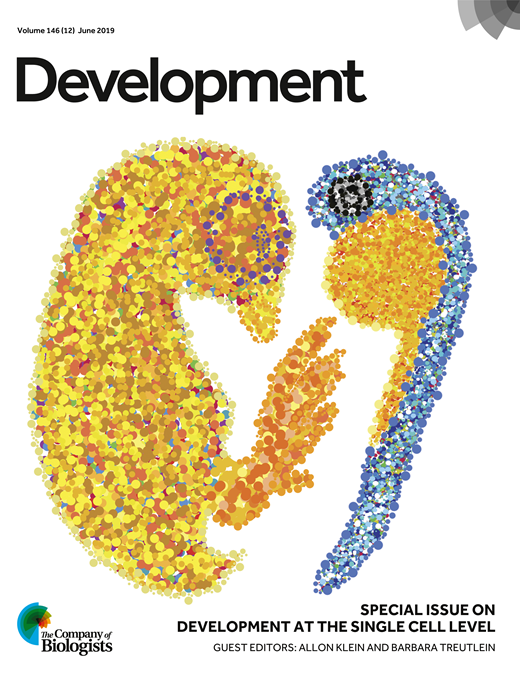
A periodic table of cell types
Summary: This Hypothesis proposes a periodic table that aligns cell types according to their developmental stages, connecting them to one another according to the universal axis from stem cells to differentiated cells.
The Octopus: An Alien Among Us
Self-replicating, bacterial life first appeared on Earth about 4 billion years ago. For most of Earth’s history, life remained at the single-celled level, and nothing like a nervous system existed …

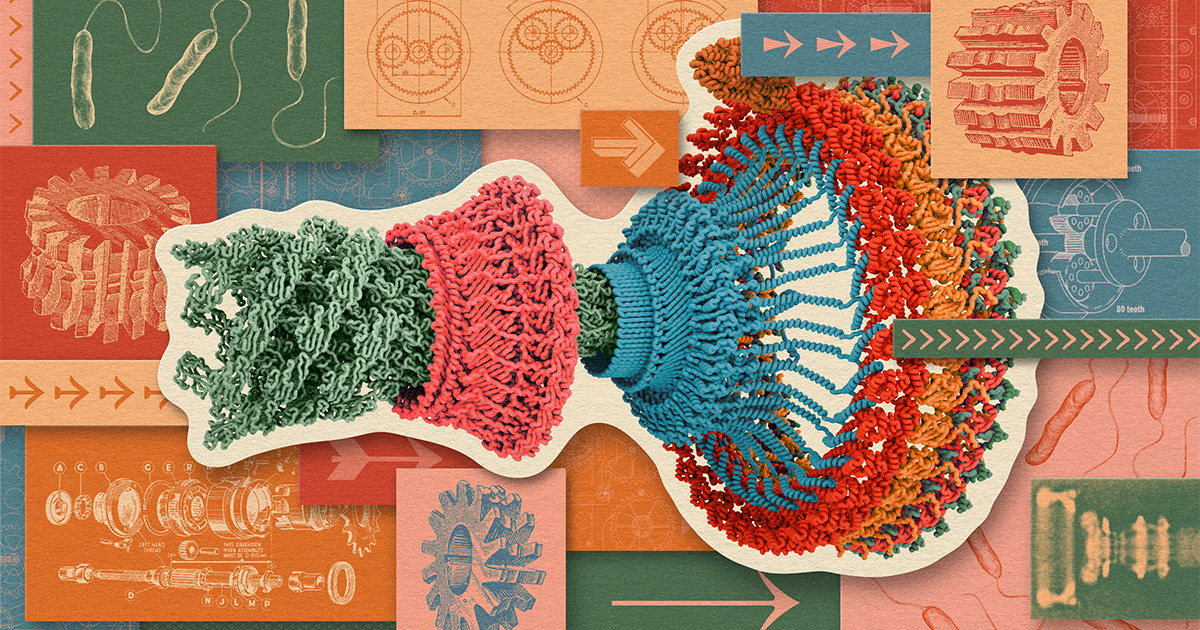
What Physical ‘Life Force’ Turns Biology’s Wheels? | Quanta Magazine
The bacterial flagellar motor is finally understood after 50 years. In its workings, columnist Natalie Wolchover finds the essence of life.
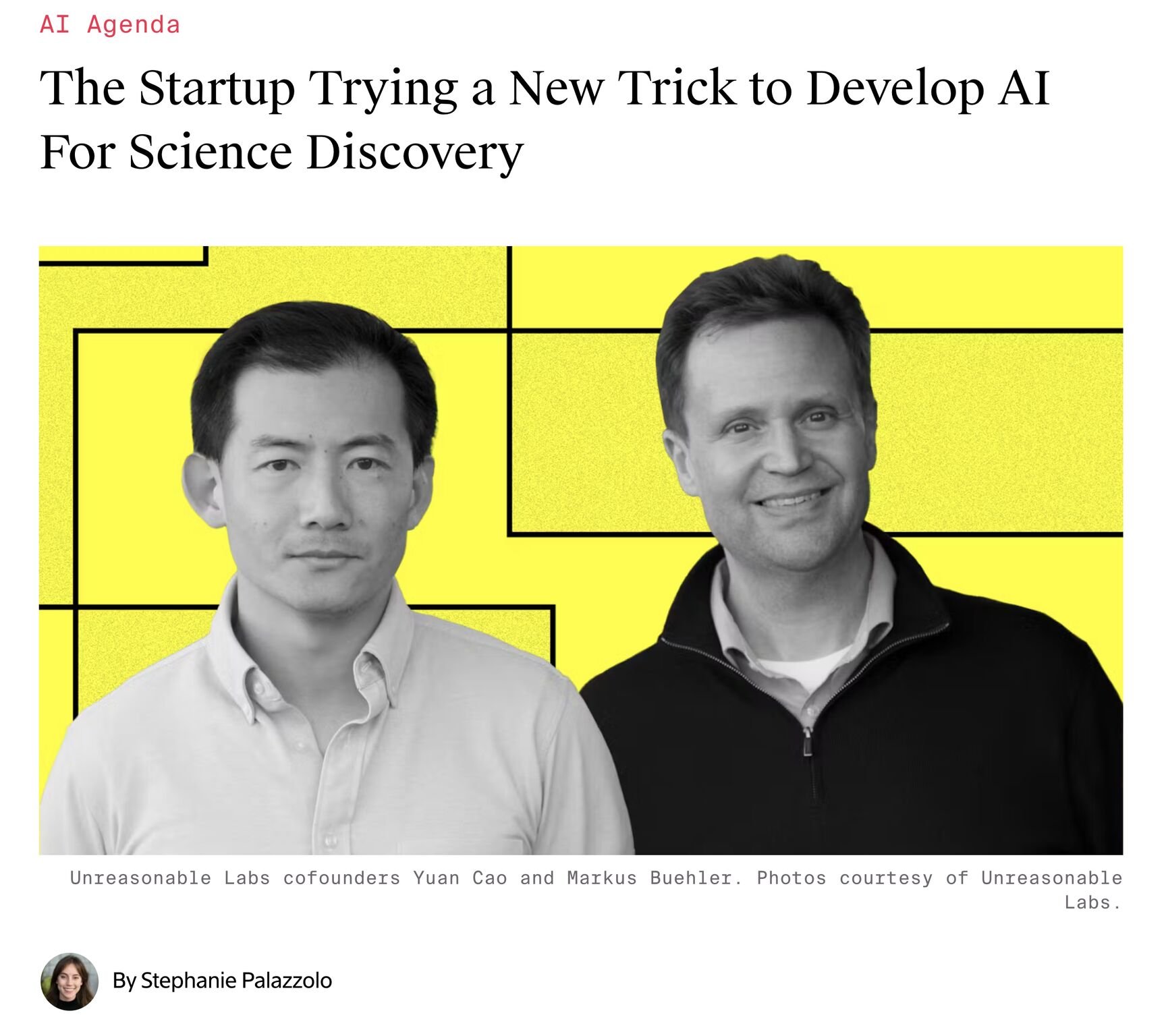
Markus J. Buehler on Twitter / X
After decades at MIT studying how nature builds - from spider silk to bone to nacre - I've become convinced of something: the biggest barrier to scientific progress isn't knowledge, it's connection. The insights we need already exist, scattered across millions of papers and… pic.twitter.com/EHUomaFyPj— Markus J. Buehler (@ProfBuehlerMIT) March 10, 2026
Design in The Age of Biology: Shifting From a Mechanical-Object Ethos to an Organic-Systems Ethos
In the early twentieth century, our understanding of physics changed rapidly; now, our understanding of biology is undergoing a similar rapid change.