


Request PDF | On Jan 1, 2013, Jessica McCallum Breen and others published Civic, Citizen and Grassroots Science: Towards a Transformative Scientific Research Model | Find, read and cite all the research you need on ResearchGate
Connecting Research with Community - Civic Innovation Lab
Welcome to Civic Innovation Lab, where we drive social impact through collaborative solutions and empower communities. Join us in fostering sustainable development, co-creating initiatives, and advancing inclusive governance for a better future.

Why Do We Call It Participatory Science? | Smithsonian Environmental Research Center
How can citizen science reduce psychological distance to science? Insights from three projects in contested environmental contexts
Citizen science (CS) is a participatory mode of knowledge production, enabling non-scientific actors to contribute to and sometimes contest scientific agendas and interpretations, making it a way to bridge science and society. This paper examines how that potential unfolds by analysing the individual perspectives of citizen scientists through the lens of Psychological Distance to Science (PSYDISC). Drawing on three case studies of contested environmental CS, we identify which contextual aspects of CS shape citizen scientists' experiences of social, spatial, temporal, or hypothetical distance to relevant science, and how these experiences may relate to trust. Our findings underscore the role of science communication as both a channel for dissemination, and as a constitutive element of participatory research; crucial for reducing psychological distance and enabling socially robust knowledge production, especially in contested, policy-relevant science settings.
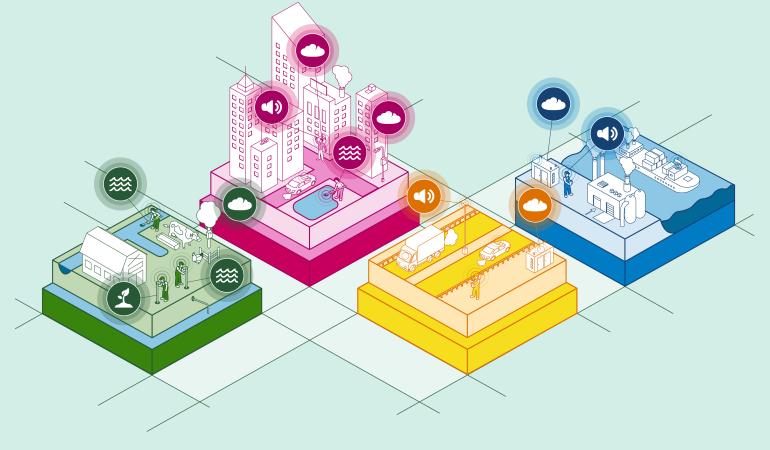
Grand Challenges for the Convergence of Computational and Citizen Science Research Workshop Report
This report is an outcome of a Computing Community Consortium (CCC) visioning workshop on Grand Challenges for the Convergence of Computational and Citizen Science Research conducted on April 8-9, 2025, in Washington, D.C. as well as through several precursor virtual input-gathering sessions. These events brought together experts across relevant disciplines to develop a research agenda that brings to fruition the above vision on how humans and machines may team up to solve some of the world's most pressing scientific problems. Citizen science delivers measurable economic and national value. Public participation in scientific research generates millions of dollars in volunteer labor value, extends government agency capacity, and directly supports federal priorities in areas such as disaster management, public health, water, energy, workforce development, and many more. At the same time, 21st-century scientific infrastructure requirements for citizen science (from hardware and cyberinfrastructure to data and computational frameworks) mirror those for computational science more generally. The distributed, collaborative, long-term, and contextual nature of citizen science makes it a demanding real-world use case for a novel robust research infrastructure that accounts for security, privacy, resource adaptability, and transparency. In this report, we outline the key findings, future research directions, and recommendations that emerged from the April 2025 CCC Grand Challenges for the Convergence of Computational and Citizen Science Research Workshop.

An epistemology for democratic citizen science
Abstract. More than ever, humanity relies on robust scientific knowledge of the world and our place within it. Unfortunately, our contemporary view of scie
Empowering science communities with open, democratic, researcher-owned infrastructure.
We’re building communities and tech for publishing, curating, sharing, and discussing research online using ATProto and other decentralized protocols.
Empowering science communities with open, democratic, researcher-owned infrastructure.
We’re building communities and tech for publishing, curating, sharing, and discussing research online using ATProto and other decentralized protocols.
The Citizen Lab - The Citizen Lab
The Citizen Lab is an interdisciplinary research unit at the Munk School of Global Affairs & Public Policy, University of Toronto. We apply our collective expertise in the fields of law, computer science, cybersecurity, political science, and social sciences to investigate complex issues of the 21st century. Explore focus areas Get the latest research in […]
No shortcuts to research information citizenship - Digital Science
Being open isn't enough - true "research information citizenship" requires a robust, genuinely open research infrastructure.

Citizen science in environmental and ecological sciences
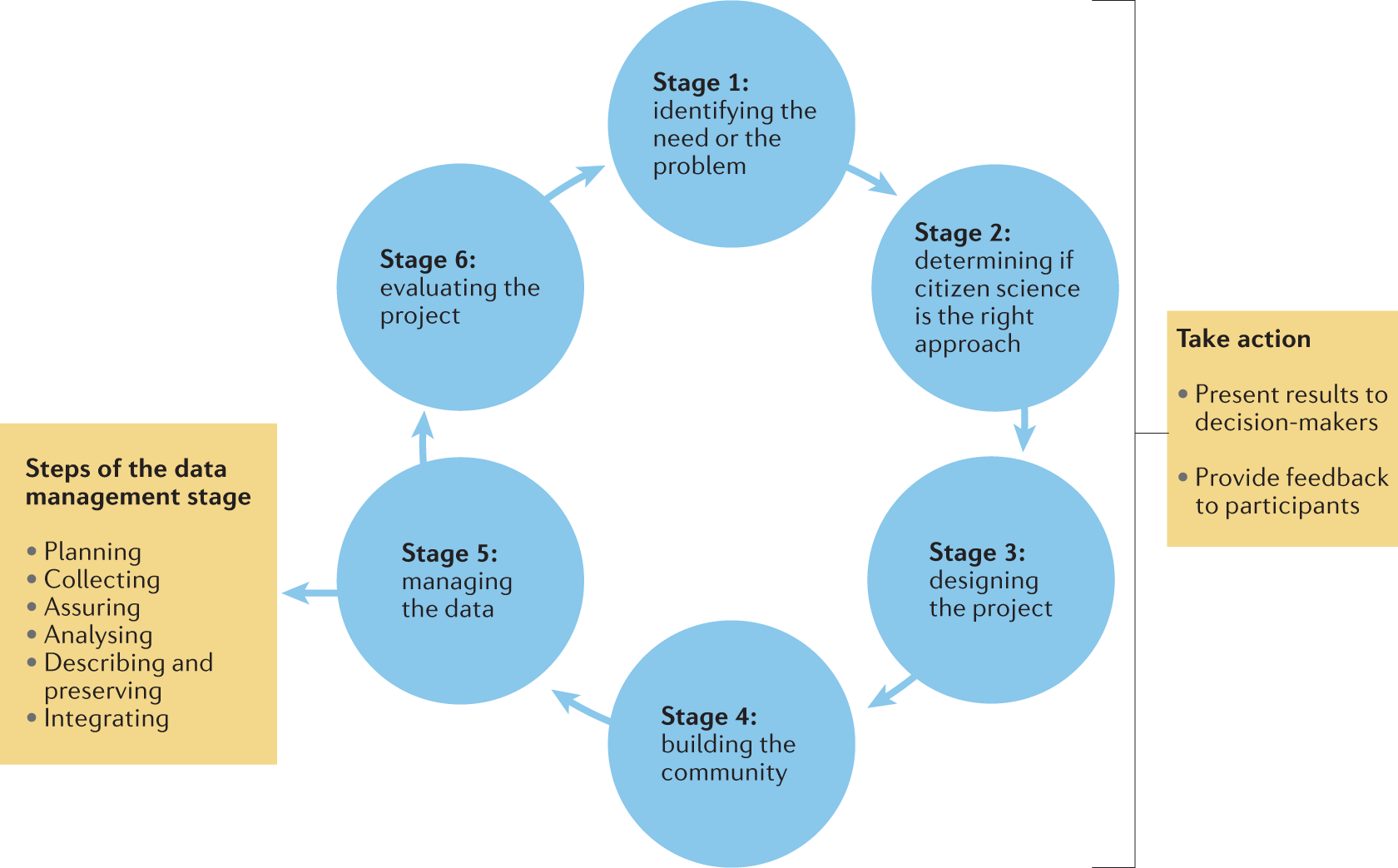
Citizen science is an increasingly acknowledged approach applied in many scientific domains, and particularly within the environmental and ecological sciences, in which non-professional participants contribute to data collection to advance scientific research. We present contributory citizen science as a valuable method to scientists and practitioners within the environmental and ecological sciences, focusing on the full life cycle of citizen science practice, from design to implementation, evaluation and data management. We highlight key issues in citizen science and how to address them, such as participant engagement and retention, data quality assurance and bias correction, as well as ethical considerations regarding data sharing. We also provide a range of examples to illustrate the diversity of applications, from biodiversity research and land cover assessment to forest health monitoring and marine pollution. The aspects of reproducibility and data sharing are considered, placing citizen science within an encompassing open science perspective. Finally, we discuss its limitations and challenges and present an outlook for the application of citizen science in multiple science domains.
A Vision of Metascience
How does the culture of science change and improve? Many people have identified shortcomings in core social processes of science, such as peer review, how grants are awarded, how people are selected to become scientists, and so on. Yet despite often compelling criticisms, strong barriers inhibit widespread change in such social processes. The result is near stasis, and apathy about the prospects for improvement. People sometimes start new research institutions intended to do things differently; unfortunately such institutions are often changed more by the existing ecosystem than they change it. In this essay we sketch a vision of how the social processes of science may be rapidly improved. In this vision, metascience plays a key role: it deepens our understanding of which social processes best support discovery; that understanding can then help drive change. We introduce the notion of a metascience entrepreneur, a person seeking to achieve a scalable improvement in the social processes of science. We argue that: (1) metascience is an imaginative design practice, exploring an enormous design space for social processes; (2) that exploration aims to find new social processes which unlock latent potential for discovery; (3) decentralized change must be possible, so outsiders with superior ideas can't be blocked by established power centers; (4) ideally, change would align with what is best for science and for humanity, not merely what is fashionable, politically popular, or media-friendly; (5) the net result would be a far more structurally diverse set of environments for doing science; and (6) this would enable crucial types of work difficult or impossible within existing environments. For this vision to succeed metascience must develop and intertwine three elements: an imaginative design practice, an entrepreneurial discipline, and a research field. Overall, it is a vision in which metascience is an engine of improvement for the social processes and ultimately the culture of science.
Cool example of participatory research from The Long Haul. Different from many citizen science projects where scientists bring the questions, in the Appalachian land study people chose the question, learned the method, did the work, and found answers to problems that mattered to their community

Ronen Tamari
Weekend reading: "Long Haul" by Myles Horton, have a feeling it's going to be a real banger. (on the Highlander Folk School for social change) highlandercenter.org/product/the-long-haul-an-auto…
"The convergence of computational and citizen science research represents a generational opportunity to reimagine how we conduct research, involve the public, and deliver scientific value to society."

Grand Challenges for the Convergence of Computational and Citizen Science Research Workshop Report
arxiv.org👀 "Rather than viewing citizen science merely as crowdsourced data collection or computational tools as autonomous infrastructure, we advocate for human-machine systems in which citizen scientists, including distributed publics, participate as monitors, interpreters...and co-producers of knowledge."
Science Nonprofit Leaders

People leading nonprofits involved in the science infrastructure/ecosystem/tool-building
Extreme Citizen Science

Inspiration and existing efforts where citizens drive the whole scientific cycle, from problem definition through to interpretation of results. This level of citizen science has been called "extreme" in this paper: link.springer.com/article/10.1140/epjst/e2012-0… I love this term! :) Esp. interested in concepts/approaches that help with the construction and maintenance of local/individual knowledge (vs. aggregates only)
www.linkedin.com
We live in a golden age of biology. So why are people still dying from disease? Because discovery and development move slower than they should. Today, we’re partnering with Incyte to change… | Samuel G. Rodriques | 491 comments

Ronen Tamari
Travis Rich

Kirstie Whitaker
Kari Jordan, Ph.D.

Nova Scotia’s Experiment in Research That Solves Real Problems
Brandon Yates on Twitter / X
Civic, Citizen and Grassroots Science: Towards a Transformative Scientific Research Model | Request PDF
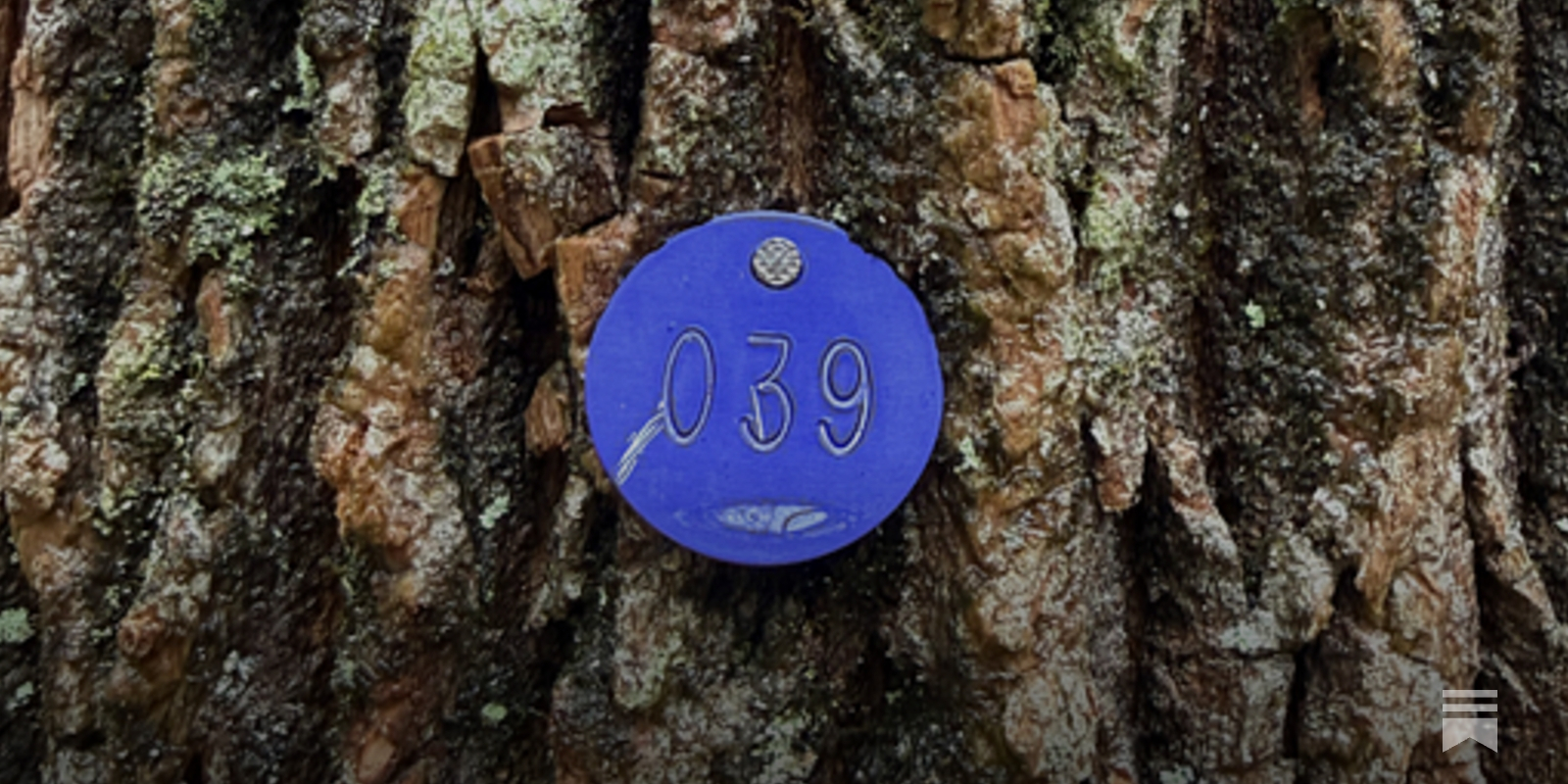
TreeKIT: Measuring, Mapping, and Collaboratively Managing Urban Forests
www.degruyterbrill.com
Individual Experience vs. The Cochrane Review