

Find out more about relearn Leadership here - https://myfastestmile.com/mark-upton/relearn-leadership/
Against optimization
One of the most inescapable edicts when leading a team is the order to optimize the system towards the organization’s goals.

(PDF) Leadership Failure in the Eyes of Subordinates: Perception, Antecedents, and Consequences *
PDF | Effective leaders and leadership behaviors and practices are well-researched areas in the domain of leadership and management. However,... | Find, read and cite all the research you need on ResearchGate

Don't solve problems if you want to be a great manager.
What makes a great manager isn't the problems they solve, but the questions they ask. Start with these 16 questions here.

Metrics for the unmeasurable.
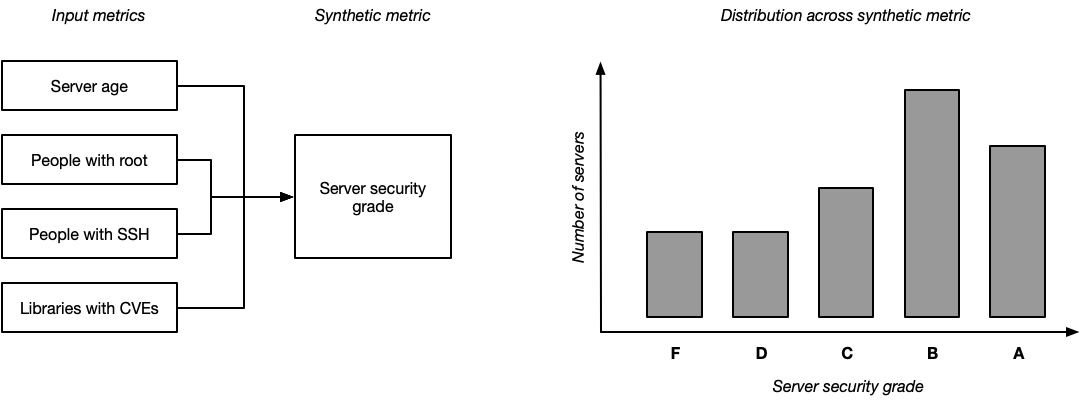
As organizations grow more complex, the folks running them interface with reality through increasingly incorporeal abstractions. On the smallest teams, leadership might be deep in the code on a daily basis. A bit larger, and you’re talking about tasks in sprints. Larger still, and you’re talking about collections of tasks, and adopting fancy terminology like ’epics.’ At a hundred plus engineers, you’re likely talking primarily in themes of work with focus on several key initiatives. Next, you might be talking about the investment frameworks for making prioritization decisions.
Is Your Team Caught in the Solution Fixation Trap?
In the face of escalating complexities, organizations are increasingly relying on teams to tackle these intricate issues and drive pivotal organizational decisions. To extract maximum value from team dynamics, leaders must remain mindful of potential biases that may impact team dynamics and to actively steer and fine-tune team processes. Specifically, the authors urge leaders to address a decision-making bias they call the solution fixation trap, which emerges when a team rushes into discussing possible solutions before fully understanding the problem at hand. The authors discuss the study that helped them uncover this bias, explain what the solution fixation trap looks like, and discuss what leaders can do to protect their teams from it.

A beautiful constraint – summary
A beautiful constraint. How to transform your limitations into advantages. By Adam Morgan & Mark Barden. Summarised by paul_arnold@me.com – Strategic facilitator, planner and trainer. Th…

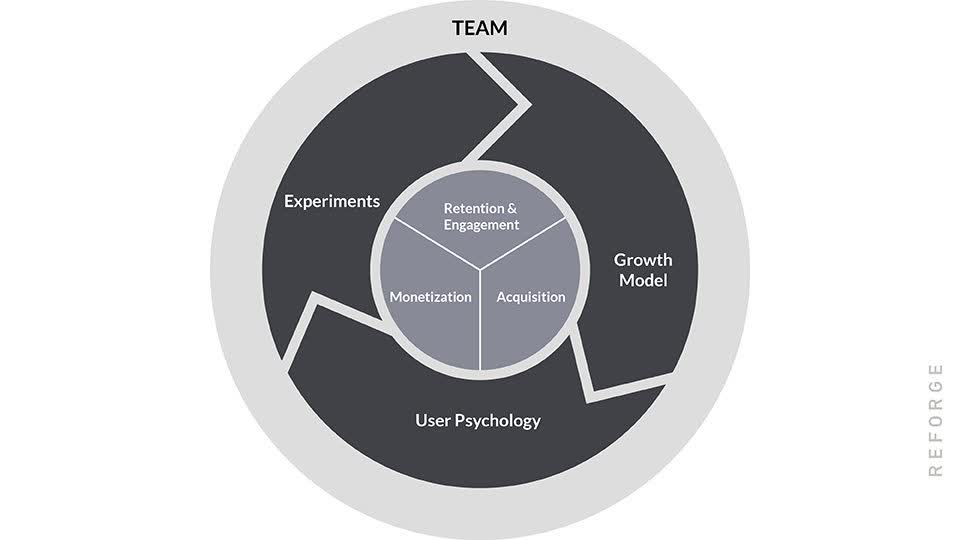
Building Growth: Product, Process, and Team | Reforge Blog
Reforge drives team performance, with the most actionable learning from vetted operators that your team will actually use and apply.
Harness Engineering for Self-Improvement
The concept of recursive self-improvement (RSI) dates back to I. J. Good (1965), where he defined an “ultraintelligent machine” as a system that can surpass humans in all intellectual activities and design better machines to improve itself. Yudkowsky (2008) used the phrase “recursive self-improvement” for a specific feedback loop: an AI uses its current intelligence to improve the cognitive machinery that produces its intelligence. This feedback loop in modern AI may indicate the model rewriting its own weights directly, or more broadly the model improves the training pipeline and the deployment system, which in turn enables a better successor model with improved performance across economically valuable tasks. The speed of research development in AI has been shown to drastically accelerated in frontier labs (Anthropic; OpenAI).
The Product Strategy Stack | Reforge Blog
Reforge drives team performance, with the most actionable learning from vetted operators that your team will actually use and apply.

Growth Wins When Built On A Solid Foundation of Retention & Engagement | Reforge Blog
Reforge drives team performance, with the most actionable learning from vetted operators that your team will actually use and apply.

AI-Generated “Workslop” Is Destroying Productivity
Despite a surge in generative AI use across workplaces, most companies are seeing little measurable ROI. One possible reason is because AI tools are being used to produce “workslop”—content that appears polished but lacks real substance, offloading cognitive labor onto coworkers. Research from BetterUp Labs and Stanford found that 41% of workers have encountered such AI-generated output, costing nearly two hours of rework per instance and creating downstream productivity, trust, and collaboration issues. Leaders need to consider how they may be encouraging indiscriminate organizational mandates and offering too little guidance on quality standards. To counteract workslop, leaders should model purposeful AI use, establish clear norms, and encourage a “pilot mindset” that combines high agency with optimism—promoting AI as a collaborative tool, not a shortcut.

The Optimization Trap: Why Too Much Efficiency Makes Us Fragile with Olivier Hamant
7 leadership lessons over 2.5 years
Over the past 2.5 years, I’ve interviewed 49 leaders for our podcast on leadership, The Heartbeat. These are the leadership lessons that have influenced me the most, personally. “What are the …

Manage your priorities and energy.
Back when I was managing at Uber, I latched onto a thinking tool that I drilled into the teams I worked with: reach the right outcomes by prioritizing the company first, your team second, and yourself third. This “company, team, self” framework proved a helpful decision-making tool, and at the time I felt it almost always led to the correct decision. It also helped me articulate why I disagreed with some of my peers’ decisions, which violated this hierarchy by placing individual or team preferences over the company’s priorities.

How Priorities Make Things Happen
Editor: Project manager and writer Scott Berkun knows how to get things done when you've got a team of people, a to-do list, and a deadline. Today h
