

Hey everyone! Thanks so much for watching another episode of the Weaviate Podcast! Dive into the fascinating world of structured outputs with Will Kurt and Cameron Pfeiffer, the brilliant minds behind Outlines, the revolutionary open-source library from .txt.ai that's changing how we interact with LLMs. In this episode, we explore how constrained decoding enables predictable, reliable outputs from language models—unlocking everything from perfect JSON generation to guided reasoning processes. Will and Cameron share their journey to founding .txt.ai, explain the technical magic behind Outlines (hint: it involves finite state machines!), and debunk misconceptions around structured generation performance. You'll discover practical applications like knowledge graph construction, metadata extraction, and report generation that simply weren't possible before this technology. Whether you're building AI systems or curious about where the field is heading, you'll gain valuable insights on how structured outputs integrate with inference engines like vLLM, why multi-task inference outperforms single-task approaches, and how this technology enables scalable agent systems that could transform software architecture forever. Join us for this mind-expanding conversation about one of AI's most important but underappreciated innovations—and discover why the future might belong to systems that combine freedom with structure. Links: dottxt AI: https://dottxt.co/ Making LLMs Reliable: Building an LLM-powered Web App to Generate Gift Ideas: https://blog.dottxt.co/gifter.html Say What You Mean: A Response to 'Let Me Speak Freely': https://blog.dottxt.co/say-what-you-mean.html Coalescence: making LLM inference 5x faster: https://blog.dottxt.co/coalescence.html StructuredRAG: JSON Response Formatting with Large Language Models: https://arxiv.org/abs/2408.11061 Chapters 0:00 Welcome Will and Cameron! 1:42 What lead you to dottxt? 7:20 Structured Outputs for Beginners 9:00 Metadata Extraction 17:36 Structured Reasoning 23:00 Report Generation 28:25 Multi-Task Inference 30:55 How does Outlines work? 35:55 Integration with vLLM and Inference Engines 43:55 Let Me Speak Freely: A Rebuttal 56:35 Distribution Alignment 1:04:10 Exciting Directions for AI
The control layer for AI
The industry spent two years teaching LLMs to speak JSON. That work mattered: free-form text was unusable in production. Today, every serious inference provider uses some implementation (often open-source) of structured output. Structured output has become essential infrastructure that the team at .txt is proud to have spearheaded. Even as the ecosystem evolves, and open-source alternatives emerged, our engine remains the state of the art.
Systems programming the model
This paper examines the status of the language model object in generative AI, arguing that what we call a ‘model’ is inseparable from the systems deploying it. I first theorize how these objects emerge from systems-level interactions between trained artifacts, prompting mechanisms, and sampling methods, drawing on the philosophy of digital objects as well as software studies to show how models gain their objective character. Such interactions converge on programming, not prompting, language models, and I illustrate how critical code studies can therefore track these dynamics. In an overview of language model programming approaches, I discuss how prompt and program converge, demonstrating how this confluence tends toward the production of new feedback loops wherein models become models of and for themselves. Understanding these feedback loops is essential in view of recent efforts to infrastructuralize AI, in which multiple models cascade into compound systems that abstract toward a unified model of models. Thus the need, I argue, for a systems-level view that can address this new order of abstraction and complexity by identifying where and how the model emerges from the system.

MainPage8
The InfoCentral project has historically been focused more heavily upon the symbolic (human-meaningful) side of AI. This included derivatives of Semantic Web and related knowledge representation research, which were dependent on human effort to curate and categorize structured data. The symbolic approach to AI has largely lost the race to the neuro/neuro-symbolic (opaque vectors, statistical) side of AI research, notably the success of the Large Language Model (LLM) paradigm. Due to its faculties with natural language, remarkably little human involvement is needed to infer structure and meaning from traditional (mostly unstructured) information. As such, some of the approaches previously explored in the InfoCentral project have lost relevance. That said, LLM-based tools can perhaps help us finish the symbolic side of the grand AI project, by doing the tedious work that humans were reluctant to do! It has long been theorized that a combination of approaches will ultimately provide the most robust and performant systems, able to work with messy transient unstructured information while also building networks of verifiable persistent structured information that both humans and machines can cross-verify. This may prove useful in both ensuring that future AI systems remain aligned to human goals and values and that inevitable abuses and failures can be easily recovered from. To that end, some research results of this project may be re-usable in a new context.
Eliciting Reasoning in Language Models with Cognitive Tools
The recent advent of reasoning models like OpenAI's o1 was met with excited speculation by the AI community about the mechanisms underlying these capabilities in closed models, followed by a rush of replication efforts, particularly from the open source community. These speculations were largely settled by the demonstration from DeepSeek-R1 that chains-of-thought and reinforcement learning (RL) can effectively replicate reasoning on top of base LLMs. However, it remains valuable to explore alternative methods for theoretically eliciting reasoning that could help elucidate the underlying mechanisms, as well as providing additional methods that may offer complementary benefits. Here, we build on the long-standing literature in cognitive psychology and cognitive architectures, which postulates that reasoning arises from the orchestrated, sequential execution of a set of modular, predetermined cognitive operations. Crucially, we implement this key idea within a modern agentic tool-calling framework. In particular, we endow an LLM with a small set of "cognitive tools" encapsulating specific reasoning operations, each executed by the LLM itself. Surprisingly, this simple strategy results in considerable gains in performance on standard mathematical reasoning benchmarks compared to base LLMs, for both closed and open-weight models. For instance, providing our "cognitive tools" to GPT-4.1 increases its pass@1 performance on AIME2024 from 32% to 53%, even surpassing the performance of o1-preview. In addition to its practical implications, this demonstration contributes to the debate regarding the role of post-training methods in eliciting reasoning in LLMs versus the role of inherent capabilities acquired during pre-training, and whether post-training merely uncovers these latent abilities.

The AI Operating System: Stateful Agents with Letta | Cameron Pfiffer, AI By the Bay25
DevReal: Simple Knowledge Graphs with Outlines, neo4j, and Modal, Cameron Pfiffer
Self-Instruct: Aligning Language Models with Self-Generated Instructions
Large "instruction-tuned" language models (i.e., finetuned to respond to instructions) have demonstrated a remarkable ability to generalize zero-shot to new tasks. Nevertheless, they depend heavily on human-written instruction data that is often limited in quantity, diversity, and creativity, therefore hindering the generality of the tuned model. We introduce Self-Instruct, a framework for improving the instruction-following capabilities of pretrained language models by bootstrapping off their own generations. Our pipeline generates instructions, input, and output samples from a language model, then filters invalid or similar ones before using them to finetune the original model. Applying our method to the vanilla GPT3, we demonstrate a 33% absolute improvement over the original model on Super-NaturalInstructions, on par with the performance of InstructGPT-001, which was trained with private user data and human annotations. For further evaluation, we curate a set of expert-written instructions for novel tasks, and show through human evaluation that tuning GPT3 with Self-Instruct outperforms using existing public instruction datasets by a large margin, leaving only a 5% absolute gap behind InstructGPT-001. Self-Instruct provides an almost annotation-free method for aligning pre-trained language models with instructions, and we release our large synthetic dataset to facilitate future studies on instruction tuning. Our code and data are available at https://github.com/yizhongw/self-instruct.
Model Collapse Ends AI Hype
Your LLM Knows the Future: Uncovering Its Multi-Token Prediction Potential
Autoregressive language models are constrained by their inherently sequential nature, generating one token at a time. This paradigm limits inference speed and parallelism, especially during later stages of generation when the direction and semantics of text are relatively certain. In this work, we propose a novel framework that leverages the inherent knowledge of vanilla autoregressive language models about future tokens, combining techniques to realize this potential and enable simultaneous prediction of multiple subsequent tokens. Our approach introduces several key innovations: (1) a masked-input formulation where multiple future tokens are jointly predicted from a common prefix; (2) a gated LoRA formulation that preserves the original LLM's functionality, while equipping it for multi-token prediction; (3) a lightweight, learnable sampler module that generates coherent sequences from the predicted future tokens; (4) a set of auxiliary training losses, including a consistency loss, to enhance the coherence and accuracy of jointly generated tokens; and (5) a speculative generation strategy that expands tokens quadratically in the future while maintaining high fidelity. Our method achieves significant speedups through supervised fine-tuning on pretrained models. For example, it generates code and math nearly 5x faster, and improves general chat and knowledge tasks by almost 2.5x. These gains come without any loss in quality.
MemOS: An Operating System for Memory-Augmented Generation (MAG) in Large Language Models
Large Language Models (LLMs) have emerged as foundational infrastructure in the pursuit of Artificial General Intelligence (AGI). Despite their remarkable capabilities in language perception and generation, current LLMs fundamentally lack a unified and structured architecture for handling memory. They primarily rely on parametric memory (knowledge encoded in model weights) and ephemeral activation memory (context-limited runtime states). While emerging methods like Retrieval-Augmented Generation (RAG) incorporate plaintext memory, they lack lifecycle management and multi-modal integration, limiting their capacity for long-term knowledge evolution. To address this, we introduce MemOS, a memory operating system designed for LLMs that, for the first time, elevates memory to a first-class operational resource. It builds unified mechanisms for representation, organization, and governance across three core memory types: parametric, activation, and plaintext. At its core is the MemCube, a standardized memory abstraction that enables tracking, fusion, and migration of heterogeneous memory, while offering structured, traceable access across tasks and contexts. MemOS establishes a memory-centric execution framework with strong controllability, adaptability, and evolvability. It fills a critical gap in current LLM infrastructure and lays the groundwork for continual adaptation, personalized intelligence, and cross-platform coordination in next-generation intelligent systems.
Andrej Karpathy on Twitter / X
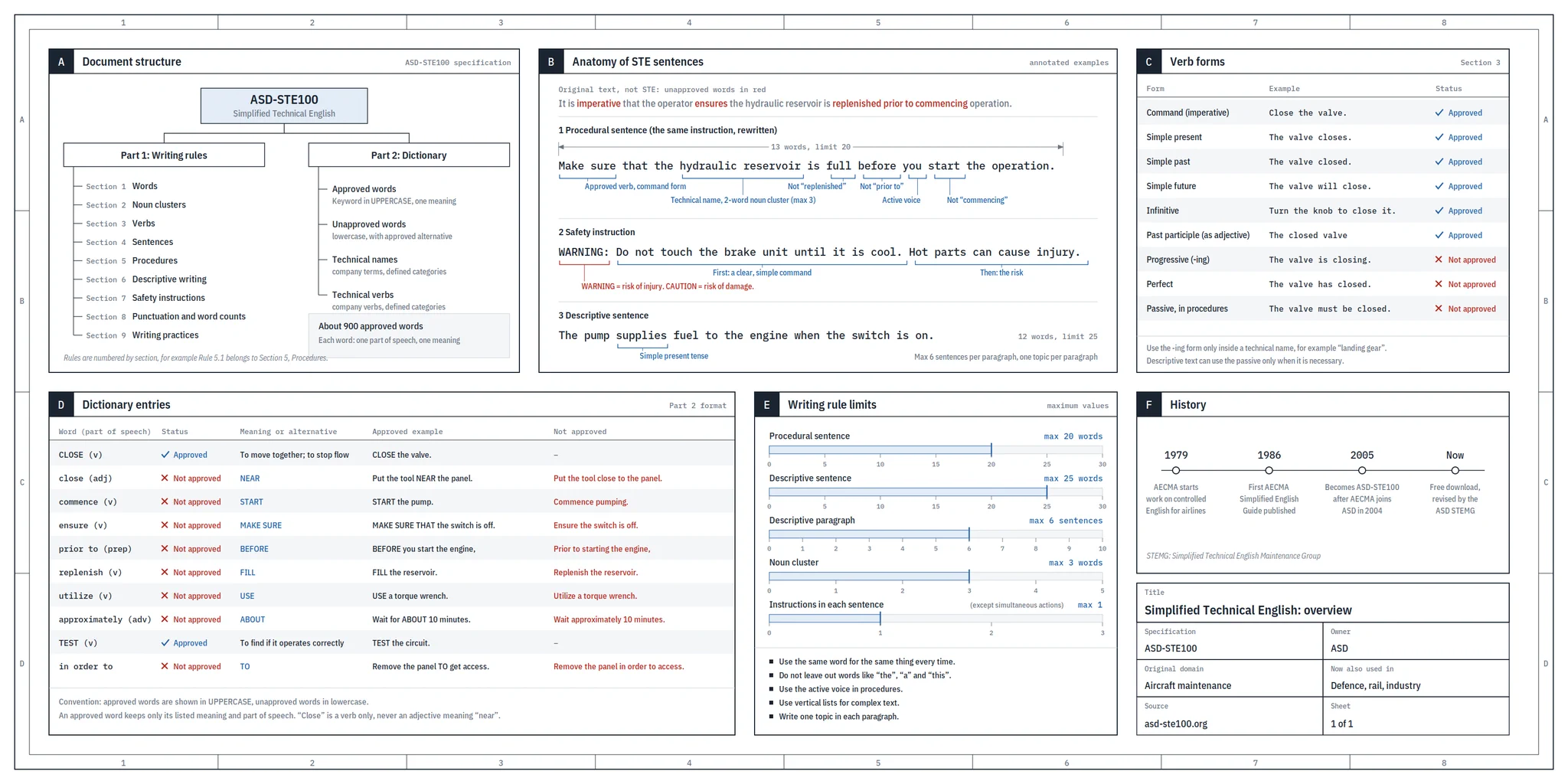
We'll be spending a lot more time trying to understand the outputs of language models. A few thoughts, tips & tricks:Writing. Something I've had success with: Ask your LLM to explain something in ASD-STE100, it's a controlled language specification originally developed for… pic.twitter.com/uMFWTcBCsl— Andrej Karpathy (@karpathy) October 2, 2026
Knowledge Collapse in LLMs: When Fluency Survives but Facts Fail under Recursive Synthetic Training
Large language models increasingly rely on synthetic data due to human-written content scarcity, yet recursive training on model-generated outputs leads to model collapse, a degenerative process threatening factual reliability. We define knowledge collapse as a distinct three-stage phenomenon where factual accuracy deteriorates while surface fluency persists, creating "confidently wrong" outputs that pose critical risks in accuracy-dependent domains. Through controlled experiments with recursive synthetic training, we demonstrate that collapse trajectory and timing depend critically on instruction format, distinguishing instruction-following collapse from traditional model collapse through its conditional, prompt-dependent nature. We propose domain-specific synthetic training as a targeted mitigation strategy that achieves substantial improvements in collapse resistance while maintaining computational efficiency. Our evaluation framework combines model-centric indicators with task-centric metrics to detect distinct degradation phases, enabling reproducible assessment of epistemic deterioration across different language models. These findings provide both theoretical insights into collapse dynamics and practical guidance for sustainable AI training in knowledge-intensive applications where accuracy is paramount.
Why LLM Wiki? 🧠 Future Of Knowledge For Agentic AI & Humans
Turn 10,994 Notes Into Memory - Paul Iusztin, Decoding AI & Louis-François Bouchard, Towards AI