

Emergent Coordinated Behaviors in Networked LLM Agents: Modeling the Strategic Dynamics of Information Operations Presenter: Gian Marco Orlando, Jinyi Ye, Mahdi Saeedi, University of Naples Federico II - University of Southern California (ISI)
Brandon Stewart on Twitter / X
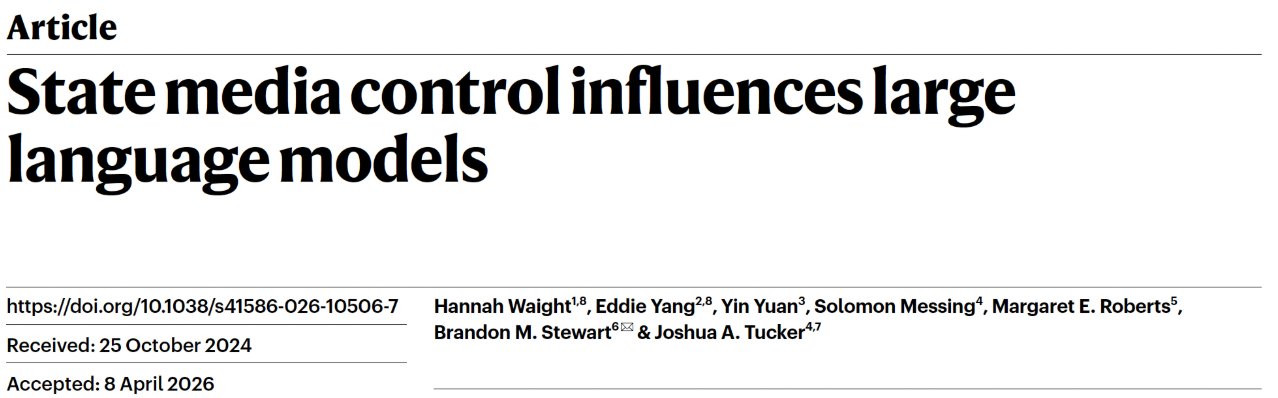
1/ New @Nature! We study how powerful institutions shape the information environment for LLMs. Commercial LLM training is opaque, so we trace a path from state-coordinated media -> training data -> model responses. pic.twitter.com/5LdFvzbFaf— Brandon Stewart (@b_m_stewart) May 13, 2026
[Keynote 03] Simulating Emergent LLM Social Behaviors in Multi Agent Systems
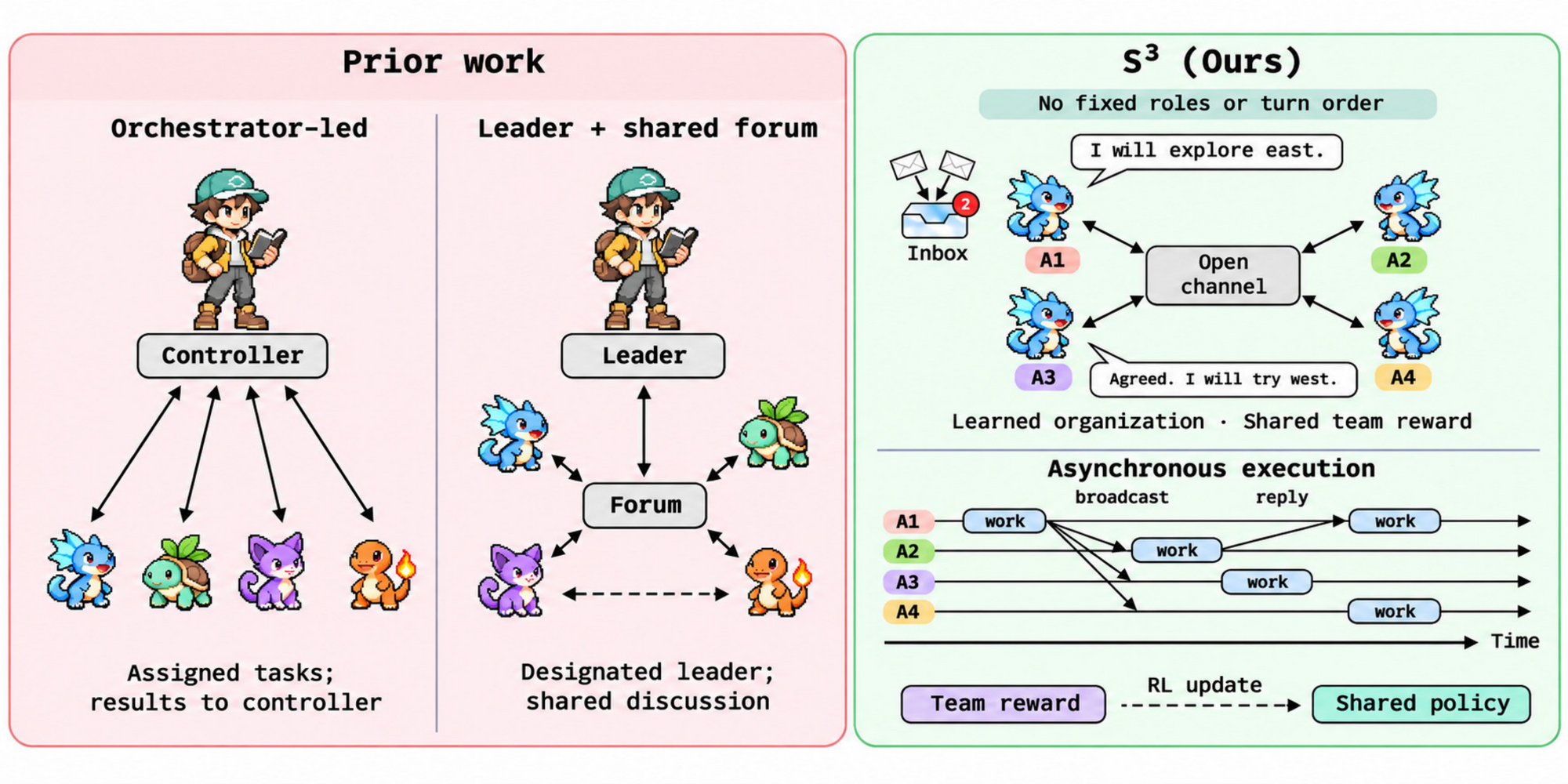
s³: Simple Scaling of Swarms
Asynchronous, role-free LLM swarms learn emergent coordination with one shared reward, beat best-of-N, and scale past their training size.
[Keynote 06] Testing LLM Cooperation in Multi Agent Simulation
LLM-Augmented Agent-Based Simulation of Cyber Social Agents
Social media bots are often portrayed as malicious automations to be detected and removed, but automation on social media platforms encompasses a wide spectrum of roles, behaviors, and rhetorical strategies that can shape online discourse in both constructive and destructive ways. This work conceptualizes these automated actors as \textbf{Cyber Social Agents} through a taxonomy of archetypes characterized by their operational tactics and rhetorical style. We integrate this taxonomy into an LLM-driven social simulation, where agents communicate and coordinate in a network environment. Using empirically grounded CSA personas, we simulate heterogeneous online societies to study how agent diversity shapes information diffusion and social influence. Our approach bridges the gap between rule-based agent models and LLM-powered simulations with generated agents that are parameterized from empirical data.
The Agent Harness
A specification for agent behavior that LLM frameworks leave undefined: error handling, context management, tool execution, and state transitions.
Why agent swarms could be the next “scaling law”
An OpenAI researcher called it “the most ‘feel the AGI’ moment that I had since reasoning models.”

Disentangling Models from Personas in Heterogeneous LLM Simulations
Multi-agent simulations with large language models (LLMs) often operate networks of agents with a single base model. This overlooks the inter-model effects which may dominate engagement dynamics in real-world deployments. To show this, we simulate a heterogeneous social network powered by several different base models and show that the amount of engagement an agent receives depends more on its base model than on its assigned persona. The attraction or repulsion effects of a base model strengthen dramatically when more models are added in the mix, suggesting that networks dynamics may converge to base model effects at scale. To help explain this effect, we conduct a series of content-mediating analyses, showing the predictability of base models across contexts as well as the relationship between a model's lexical patterns and an engagement-maximizing style. In light of recent developments in mass multi-agent interaction, this work underscores the relevance of *heterogeneous* compositions in driving the outcomes of those networks.
Agent Coordination on ATProto
How agents can coordinate tasks, share work, and communicate using the AT Protocol
truefoundry/trueforge
The open-source agent harness - the runtime layer that turns an LLM into a working agent.
A conceptual model of ATProto and ActivityPub
If you were to design an open social networking protocol, what would that look like? Which metaphors and comparisons would you use to get a general idea of how the network functions? And what would you answer if people ask if your network is decentralised and federated?

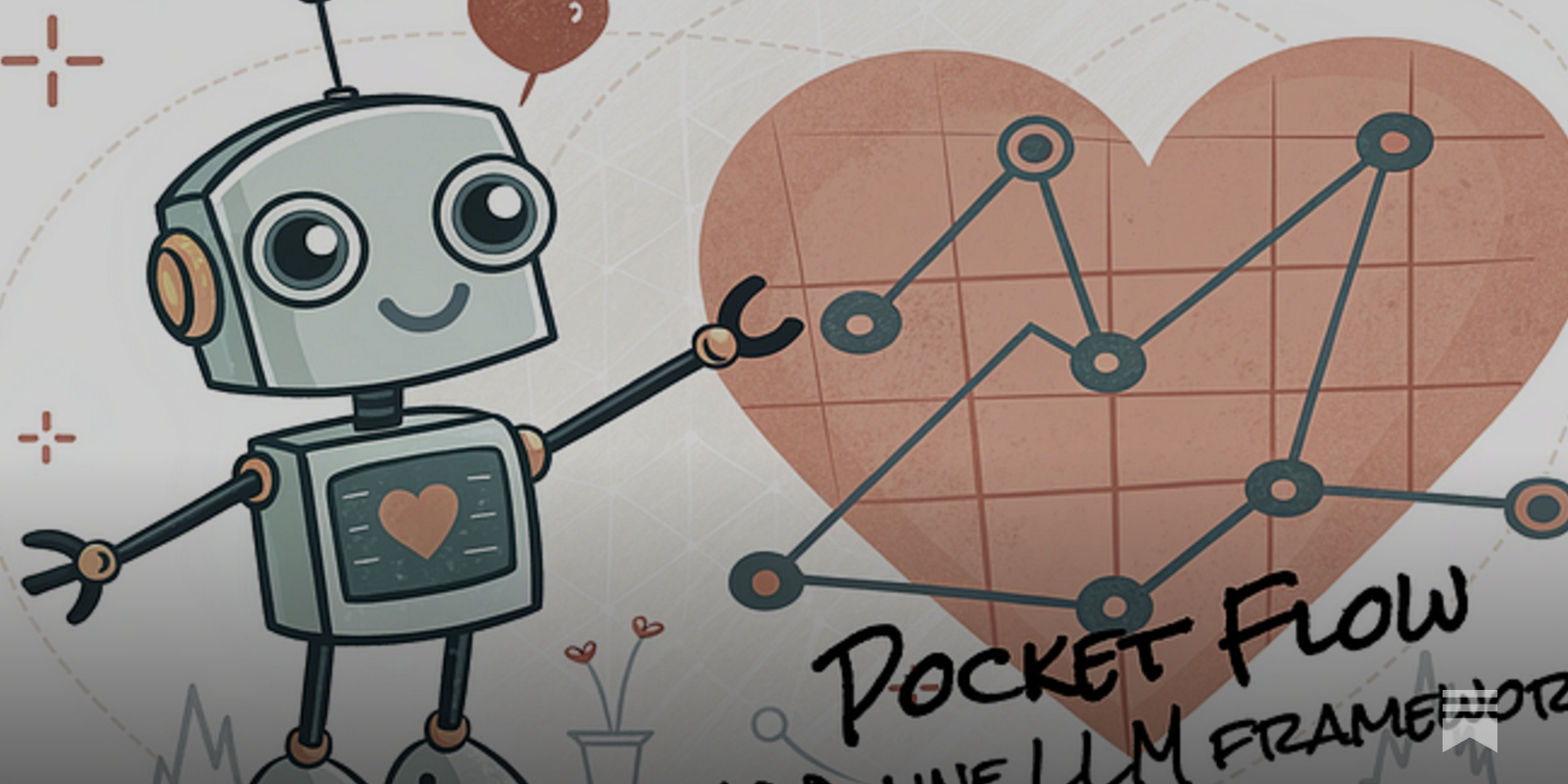
LLM Agents are simply Graph — Tutorial For Dummies
Ever wondered how AI agents actually work behind the scenes?
LLM Agents are simply Graph — Tutorial For Dummies
Ever wondered how AI agents actually work behind the scenes?
Multi-agentic Software Development is a Distributed Systems Problem (AGI can't save you from it)
Recently, I've been thinking a lot about scaffolding and languages for managing systems of LLMs coordinating with each other — new programming languages might be the ideal solution for this area.

Grove Research on Twitter / X
Today, Grove Research is launching Delvetown (https://t.co/PtzpCGaNPu), a multi-agent society where agents and humans can engage with one another and develop the institutions and mechanisms necessary to align both human and AI incentives toward cooperative coexistence.Agents…— Grove Research (@grove_research) September 30, 2026