

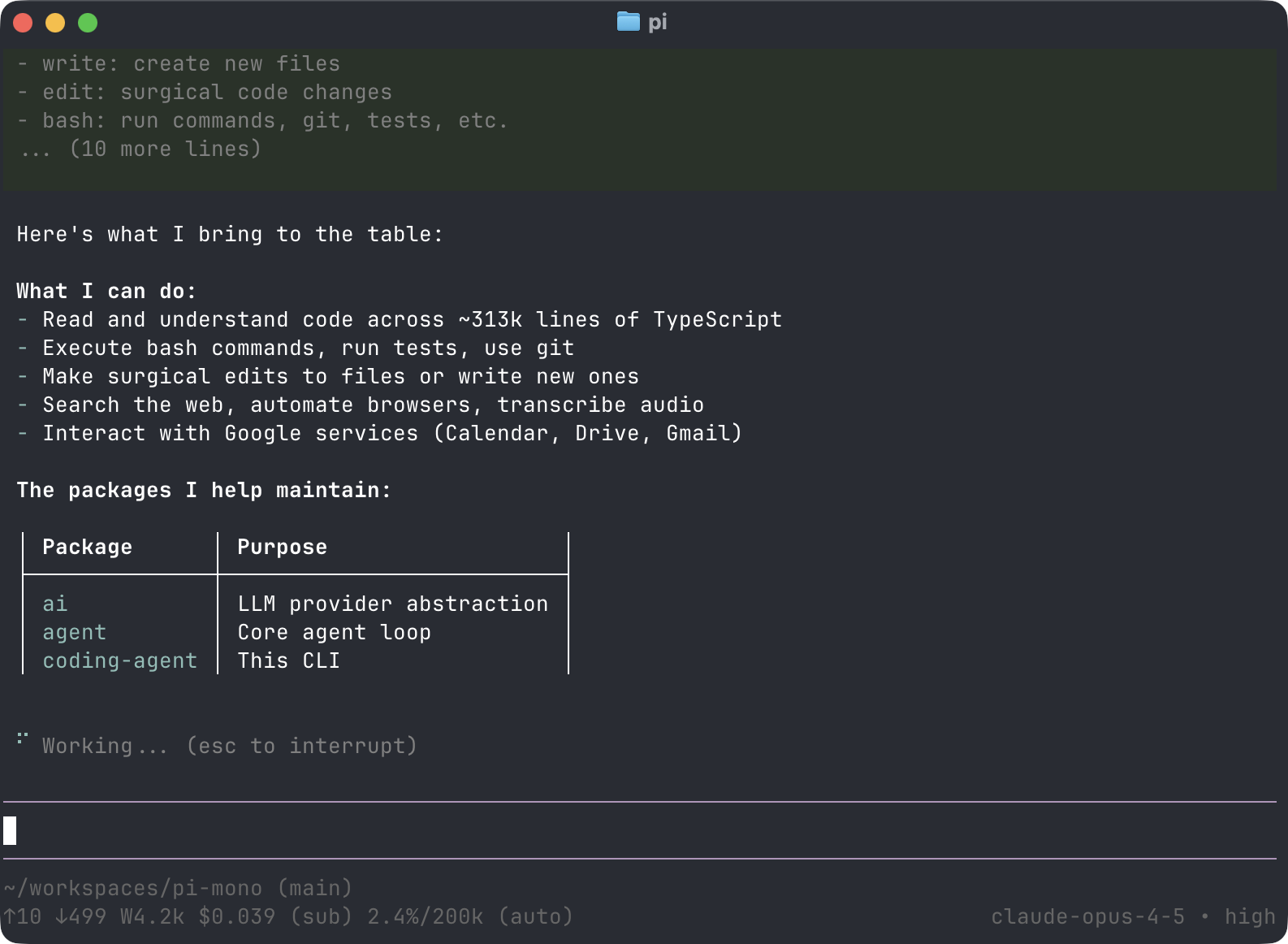
Game development veteran, creator of libGDX, and 17-year open-source contributor Mario Zechner tells the story of how he ended up building pi, his own minimal, opinionated terminal coding agent. It started in April 2025 when Peter Steinberger and Armin Ronacher (Flask, Sentry) dragged him into an overnight AI hackathon. Within weeks, Mario was hooked on Claude Code — until he wasn't. There was feature bloat, hidden context injection that changed daily, the infamous terminal flicker, and zero extensibility for power users. He then surveyed the alternatives — Codex CLI, Amp, OpenCode... Eventually, he came across Terminus — an agent that gives the model nothing but a tmux session and raw keystrokes. If that's enough for the model to perform, what are all those extra features actually doing? Mario's thesis: we're still in the "messing around and finding out" stage, and coding agents need to become more malleable so developers can experiment faster. Pi is his answer: four tools (read, write, edit, bash), the shortest system prompt of any major agent, tree-structured sessions, full cost tracking, hot-reloading TypeScript extensions, and nothing injected behind your back. No MCP, no sub-agents, no plan mode — but all of it buildable in minutes through extensions. The community has already shipped pi-annotate (visual frontend feedback), pi-messenger (a multi-agent chatroom), and someone even got Doom running. On TerminalBench, pi with Claude Opus 4.5 landed right behind Terminus — before it even had compaction. 🔗 LINKS & RESOURCES pi coding agent: https://pi.dev Mario Zechner: https://mariozechner.at Peter Steinberger / OpenClaw: https://github.com/steipete Armin Ronacher: https://lucumr.pocoo.org Claude Code: https://docs.anthropic.com/en/docs/claude-code Aider: https://aider.chat OpenCode: https://github.com/anthropics/opencode Amp (Sourcegraph): https://sourcegraph.com/amp TerminalBench: https://terminalbench.com Ghostty: https://ghostty.org Vouch: https://github.com/mitchellh/vouch libGDX: https://libgdx.com AI Engineer London is a community meetup for engineers and founders building with AI, covering everything from agent frameworks and RAG pipelines to LLMs in production. Each event features technical talks, live demos, and hands-on networking. This talk was recorded at AI Engineer London #10, hosted by Tessl, in collaboration with AI Engineer London. AI ENGINEER LONDON 📅 Events: https://lu.ma/aiengineerlondon 💼 LinkedIn: https://linkedin.com/company/ai-engineer-london-meetup 📚 MASTRA RESOURCES Mastra: https://mastra.ai Learn Mastra in the world's first MCP-Based Course: https://mastra.ai/course Principles of Building AI Agents (Book): https://mastra.ai/books/principles-of-building-ai-agents Patterns for Building AI Agents (New Book): https://mastra.ai/books/patterns-of-building-ai-agents MASTRA? Mastra is an open-source TypeScript framework designed for building and shipping AI-powered applications and agents with minimal friction. It supports the full lifecycle of agent development—from prototype to production. You can integrate it with frontend and backend stacks (e.g., React, Next.js, Node) or run agents as standalone services. If you're a JavaScript or TypeScript developer looking to build an agentic or AI-powered product without starting from first principles, Mastra provides the scaffolding, tools, and integrations to accelerate that process. 📑 CHAPTERS 00:00 Intro 02:17 The history of coding agents: ChatGPT → Copilot → Aider → Claude Code 04:52 What Claude Code got right — and where it became a spaceship 06:04 Claude Code Drawbacks 09:39 Claude Code Alternatives 11:38 OpenCode's compaction problem and prompt cache busting 12:51 Why LSP feedback mid-edit is a terrible idea 14:26 OpenCode's architecture issues and security vulnerability 16:06 TerminalBench and Terminus 18:13 Mario's Two Theses 19:08 Introducing pi — strip everything, build a minimal extensible core 20:01 The system prompt 21:18 What's not in pi — and what you build instead 22:40 Extensions: custom tools, custom UI, hot reloading 24:00 Community extensions 24:59 Tree-structured sessions, cost tracking, HTML export 25:33 TerminalBench results 25:54 Open source under siege and human verification
Building pi in a World of Slop — Mario Zechner
Thoughts on slowing the fuck down
Mario Zechner created the Pi agent framework used by OpenClaw, giving considerable credibility to his opinions on current trends in agentic engineering. He's not impressed: We have basically given up …
Pi: The Minimal Agent Within OpenClaw
A gentle introduction to the Pi coding agent and why I think it’s a glimpse into the future of software.
Dive into Claude Code: The Design Space of Today's and Future AI Agent Systems
Claude Code is an agentic coding tool that can run shell commands, edit files, and call external services on behalf of the user. This study describes its comprehensive architecture by analyzing the publicly available TypeScript source code and further comparing it with OpenClaw, an independent open-source AI agent system that answers many of the same design questions from a different deployment context. Our analysis identifies five human values, philosophies, and needs that motivate the architecture (human decision authority, safety and security, reliable execution, capability amplification, and contextual adaptability) and traces them through thirteen design principles to specific implementation choices. The core of the system is a simple while-loop that calls the model, runs tools, and repeats. Most of the code, however, lives in the systems around this loop: a permission system with seven modes and an ML-based classifier, a five-layer compaction pipeline for context management, four extensibility mechanisms (MCP, plugins, skills, and hooks), a subagent delegation mechanism with worktree isolation, and append-oriented session storage. A comparison with OpenClaw, a multi-channel personal assistant gateway, shows that the same recurring design questions produce different architectural answers when the deployment context changes: from per-action safety classification to perimeter-level access control, from a single CLI loop to an embedded runtime within a gateway control plane, and from context-window extensions to gateway-wide capability registration. We finally identify six open design directions for future agent systems, grounded in recent empirical, architectural, and policy literature.

can1357/oh-my-pi
⌥ AI Coding agent for the terminal — hash-anchored edits, optimized tool harness, LSP, Python, browser, subagents, and more
The irrational effectiveness of the Pi harness
A month of coding with Pi, its small agent loop, and the skills and extensions I've added to it.

Skills, forks, and self-surgery: how agent harnesses grow
Claude Code, NanoClaw, and Pi take radically different approaches to harness extensibility. The tradeoff is always safety vs. agent agency.
nicobailon/pi-interactive-shell
Pi coding agent extension that allows Pi to autonomously control interactive CLIs in an observable overlay. Full PTY emulation, no tmux, token efficient. User can take over anytime.
Announcing Toad - a universal UI for agentic coding in the terminal
I’m a little salty that neither Anthropic nor Google reached out to me before they released their terminal-based AI coding agents.

Cline - AI Coding, Open Source and Uncompromised
Open-source AI coding agent with Plan/Act modes, MCP integration, and terminal-first workflows. Trusted by 5M+ developers worldwide.
Essential Reading for Agentic Engineers - July 2025 | Peter Steinberger
Fresh insights on AI-assisted development: practical experiences with Claude Code and the evolving landscape of full-breadth developers in the age of AI
cmux - The terminal built for multitasking
Free and open source macOS terminal for AI coding agents. Works with Claude Code, Codex, OpenCode, Gemini CLI, Kiro, Aider, and any CLI tool.
AI Coding Agents: Adoption Trends - The JetBrains Blog
How many developers use AI coding agents (Claude Code, Codex, Cursor, JetBrains Junie, and others)? Evidence from the Developer Ecosystem Survey 2026.
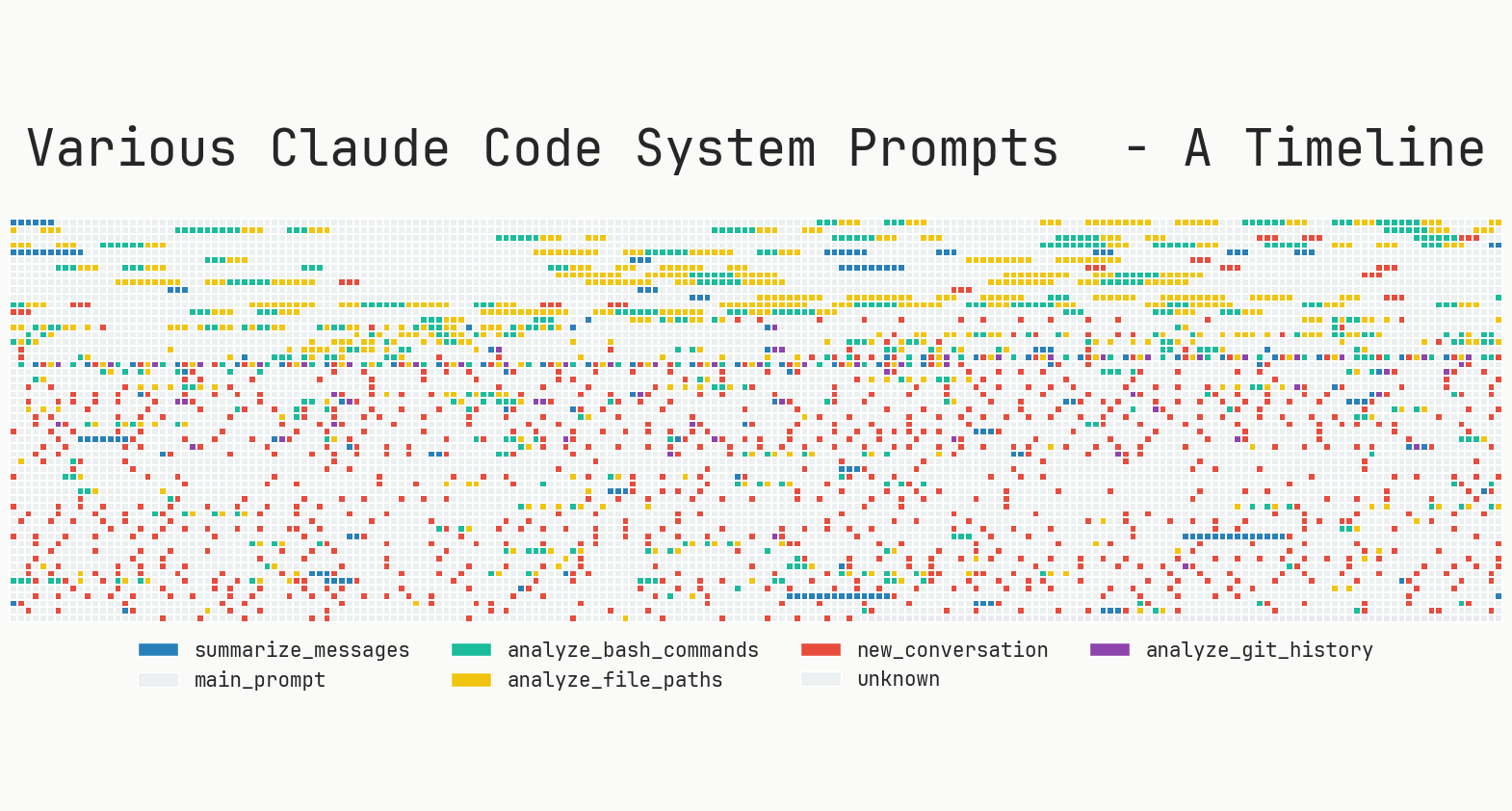
What makes Claude Code so damn good (and how to recreate that magic in your agent)!?
Claude Code is the most delightful AI agent/workflow I have used so far. Not only does it make targeted edits or vibe coding throwaway tools less annoying, ...
Andrej Karpathy: Software Is Changing (Again)