War, austerity, and a political class that offers no way out. What does an actual alternative look like — one that's already being built? Dr. Camila Vergara sits down with Eleanor Finley, author of Practicing Social Ecology (Pluto Press), to trace how democratic, ecological alternatives to capitalism move from theory into practice — from the commons of New England to the municipalities of Burlington, Vermont, to the feminist communes of Rojava in northern Syria. Drawing on Murray Bookchin's intellectual legacy — rooted in Marx, anarchism, indigenous philosophy, and Hannah Arendt — this conversation maps what it takes to build real political power from the ground up: cooperative production, direct democracy assemblies, libertarian municipalism, and the internal transformation required to sustain a movement. In this episode: • What social ecology is and where it comes from • The Burlington Greens, Bernie Sanders, and the limits of electoral politics • How the Rojava revolution built democratic confederalism under siege • Why women's liberation is central to any serious socialist project • The "revolutionary personality" — patience, hope as discipline, conflict resolution • What activists in the US can learn from movements abroad Eleanor Finley is a political ecologist and activist. Practicing Social Ecology is out now from Pluto Press. 📚 Practicing Social Ecology (Pluto Press): https://www.plutobooks.com/product/practicing-social-ecology/ 📚 Systemic Corruption (Princeton University Press) https://press.princeton.edu/books/hardcover/9780691207537/systemic-corruption 🔔 Subscribe to FREE (Forum for Real Economic Emancipation) @FreeFreeForum ❤️ Watch, learn more, and join the FREE Forum: https://freefreeforum.org 🌱 Support FREE & Help Us Grow: https://www.freefreeforum.org/donate 🎧 Listen as a Podcast Apple Podcasts: https://podcasts.apple.com/us/podcast/free-with-clara-mattei/id1828302105 Spotify: https://open.spotify.com/show/5m5xbrPzTSmdGZFQuZP7ZC ▶ Connect with FREE Linktree: https://linktr.ee/FreeFreeForum Substack: https://freefreeforum.substack.com/ X: https://x.com/freefreeforum Bluesky: https://bsky.app/profile/freefreeforum.bsky.social Instagram: https://www.instagram.com/freefreeforum/ TikTok: https://www.tiktok.com/@freefreeforum Facebook: https://www.facebook.com/FreeFreeForum 00:00:00 Introduction 00:00:39 What Is Social Ecology? 00:05:28 Murray Bookchin: Origins and Intellectual Roots 00:11:26 Theory Into Practice: Social Ecology as Praxis 00:12:24 Agroecology and the Back-to-the-Land Movement 00:17:57 Beyond the Garden: The Political Sphere 00:19:14 Libertarian Municipalism Explained 00:22:35 The Burlington Greens and the Limits of Electoral Politics 00:26:33 Rojava: How the Revolution Began 00:27:57 Democratic Confederalism: Building Counter-Power 00:33:32 Women at the Center of Revolution 00:35:51 Production for Need, Not Profit 00:37:22 Changing Ourselves to Change the World 00:38:22 The Revolutionary Personality 00:39:22 Hope as a Political Commitment 00:40:54 Responsibility, Conflict Resolution, and the Left 00:45:16 Closing Reflections #SocialEcology #DirectDemocracy #Rojava #MurrayBookchin #EleanorFinley #CamilaVergara #PoliticalEconomy #DemocraticConfederalism #FreeFreeForum
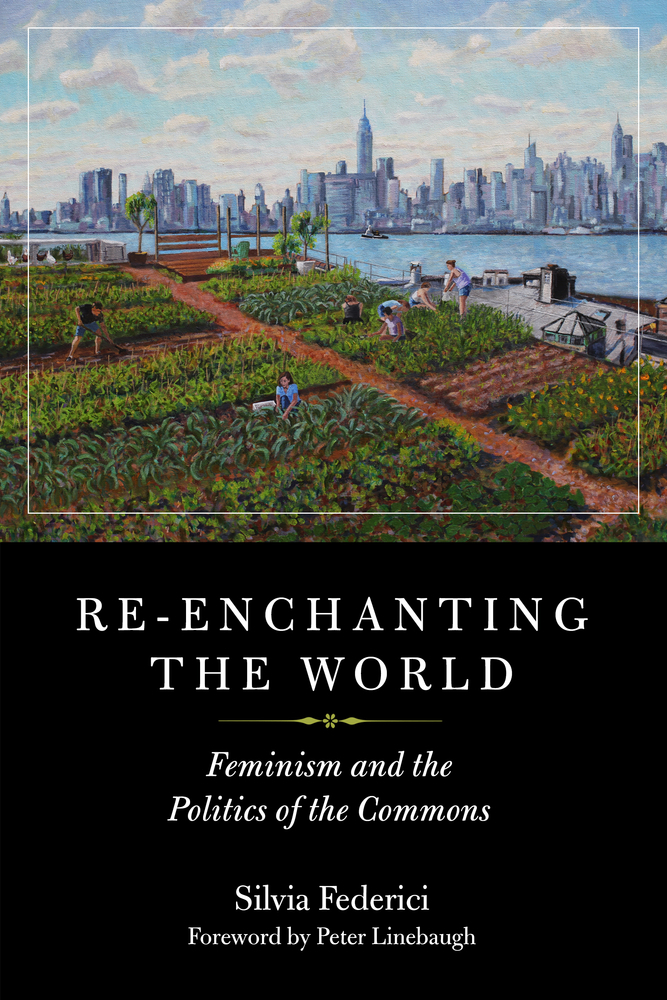
Re-enchanting the world : feminism and the politics of the commons
xviii, 227 pages ; 23 cm; "Silvia Federici is one of the most important contemporary theorists of capitalism and feminist movements. In this collection of her work spanning over twenty years, she provides a detailed history and critique of the politics of the commons from a feminist perspective. In her clear and combative voice, Federici provides readers with an analysis of some of the key issues and debates in contemporary thinking on this subject. Drawing on rich historical research, she maps the connections between the previous forms of enclosure that occurred with the birth of capitalism and the destruction of the commons and the "new enclosures" at the heart of the present phase of global capitalist accumulation. Considering the commons from a feminist perspective, this collection centers on women and reproductive work as crucial to both our economic survival and the construction of a world free from the hierarchies and divisions capital has planted in the body of the world proletariat. Federici is clear that the commons should not be understood as happy islands in a sea of exploitative relations but rather autonomous spaces from which to challenge the existing capitalist organization of life and labor"--; Foreward by Peter Linebaugh; Includes bibliographical references (pages198-216) and index; On primitive accumulation, globalization, and reproduction -- Introduction to the new enclosures -- The debt crisis, Africa, and the new enclosures -- China: breaking the iron rice bowl -- From commoning to debt: financialization, microcredit, and the changing architecture of capital accumulation -- Beneath the United States, the Commons -- Commons against and beyond Capitalism -- The University: a knowledge common? -- Feminism and the politics of the commons in an era of primitive accumulation -- Women's struggles for land in Africa and the reconstruction of the commons -- Women's struggles for land and the common good in Latin America -- Marxism, feminism, and the commons -- From crisis to commons: reproductive work, affective labor and technology, and the transformation of everyday life -- Re-enchanting the world: technology, the body, and the construction of the commons

The revolution will not be funded: beyond the non-profit industrial complex
Introduction : the revolution will not be funded / Andrea Smith -- The political logic of the non-profit industrial complex / Dylan Rodríguez -- In the shadow of the shadow state / Ruth Wilson Gilmore -- From black awakening in capitalist America / Robert L. Allen -- Democratizing American philanthropy / Christine E. Ahn -- The filth on philanthropy : progressive philanthropy's agenda to misdirect social justice movements / Tiffany Lethabo King and Ewuare Osayande -- Between radical theory and community praxis : reflections on organizing and the non-profit industrial complex / Amara H. Pérez -- Native organizing before the non-profit industrial complex / Madonna Thunder Hawk -- Fundraising is not a dirty word : community-based economic strategies for the long haul / Stephanie Guilloud and William Cordery -- "We were never meant to survive" : fighting violence against women and the fourth world war / Ana Clarissa Rojas Durazo -- Social service or social change? / Paul Kivel -- Pursuing a radical anti-violence agenda inside/outside a non-profit structure / Alisa Bierria -- The NGOization of the Palestine liberation movement : interviews with Hatem Bazian, Noura Erekat, Atef Said, and Zeina Zaatari / Andrea Smith -- Radical social change : searching for a new foundation / Adjoa Florência Jones de Almeida -- Are the cops in our heads and hearts? / Paula X. Rojas -- Non-profits and the autonomous grassroots / Eric Tang -- On our own terms : ten years of radical community building with Sista II Sista / Nicole Burrowes ... [et al.]

Fighting for women’s liberation – Victorian Socialists
Women’s oppression is part of the fabric of capitalism. We’re fighting for free, accessible abortion, expanded paid parental leave, and free childcare.
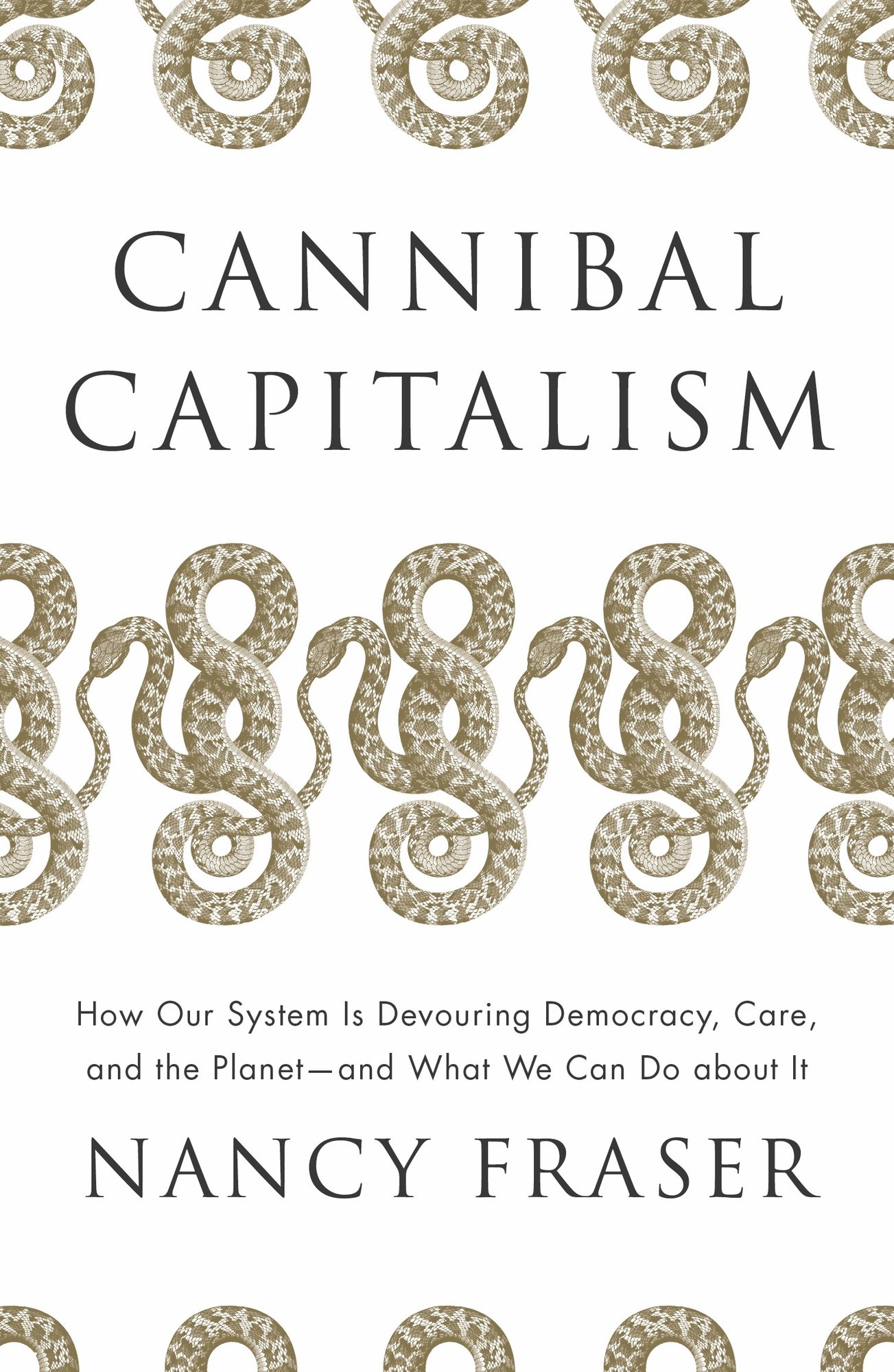
Cannibal Capitalism: How our System is Devouring Democracy, Care, and the Planetand What We Can Do About It
A trenchant look at contemporary capitalism’s insatiable appetite—and a rallying cry for everyone who wants to stop it from devouring our world Capital is currently cannibalizing every sphere of life–guzzling wealth from nature and racialized populations, sucking up our ability to care for each other, and gutting the practice of politics. In this tightly argued and urgent volume, leading Marxist feminist theorist Nancy Fraser charts the voracious appetite of capital, tracking it from crisis point to crisis point, from ecological devastation to the collapse of democracy, from racial violence to the devaluing of care work. These crisis points all come to a head in Covid-19, which Fraser argues can help us envision the resistance we need to end the feeding frenzy. What we need, she argues, is a wide-ranging socialist movement that can recognize the rapaciousness of capital—and starve it to death.
Preface | The World After Capital
Since publishing the previous version of The World After Capital, I have met with people across the political spectrum to discuss the ideas from the book. When I present these in person, I emphasize that the ideas are neither left nor right but forward (credit to Scott Santens who first used this phrase about Universal Basic Income). My writing, however, at times has alienated readers who identify as being more on the right. In this new edition, I am therefore making an extra effort to emphasize how both my diagnosis of where we are at and my suggestions for how to move forward do not map onto the existing political divides. Instead this is a new way of understanding our challenges and opportunities that can be the basis for movements and parties that are not trapped in Industrial Age ideology.
Is the BC Green Leader a Socialist? Emily Lowan Explains Her Vision
Re-enchanting the world: feminism and the politics of the commons
Silvia Federici is one of the most important contempora…
We Do This 'Til We Free Us
New York Times Bestseller “Organizing is both science and art. It is thinking through a vision, a strategy, and then figuring out who your targets are, always being concerned about power, always being concerned about how you’re going to actually build power in order to be able to push your issues, in order to be able to get the target to actually move in the way that you want to.” What if social transformation and liberation isn’t about waiting for someone else to come along and save us? What if ordinary people have the power to collectively free ourselves? In this timely collection of essays and interviews, Mariame Kaba reflects on the deep work of abolition and transformative political struggle. With a foreword by Naomi Murakawa and chapters on seeking justice beyond the punishment system, transforming how we deal with harm and accountability, and finding hope in collective struggle for abolition, Kaba’s work is deeply rooted in the relentless belief that we can fundamentally change the world. As Kaba writes, “Nothing that we do that is worthwhile is done alone.”

Neoliberalism | The Paper Pilot
The Paper Pilot's digital garden of thoughts on philosophy, politics, and sociology
The Protean Politics of Social Democracy: New Democrats at a Crossroads? | Perspectives Journal
Contemporary social democracy is not equipped to take up the first of these options without a fundamental re-foundation ideologically, programmatically, and organizationally. Is such a deep reinvention possible by Canadian social democrats?
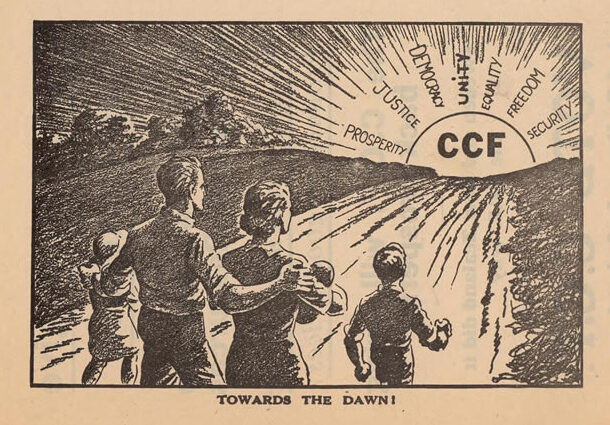
How To End Capitalism
Capitalism | The Paper Pilot
The Paper Pilot's digital garden of thoughts on philosophy, politics, and sociology
Cannibal Capitalism
Shortlisted for the Deutscher Memorial Prize 2023 Capital is currently cannibalizing every sphere of life-guzzling wealth from nature and racialized populations, sucking up our ability to care for each other, and gutting the practice of politics. In this tightly argued and urgent volume, leading Marxist feminist theorist Nancy Fraser charts the voracious appetite of capital, tracking it from crisis point to crisis point, from ecological devastation to the collapse of democracy, from racial violence to the devaluing of care work. These crisis points all come to a head in Covid-19, which Fraser argues can help us envision the resistance we need to end the feeding frenzy. What we need, she argues, is a wide-ranging socialist movement that can recognize the rapaciousness of capital - and starve it to death.
Bluesky 101: How-to Guide for Progressives
The Commons is an online library for the change makers of the world and for those interested in social change, activism, organising, advocacy and justice.

Volunteer – Socialists
We are a people-powered movement - we depend on the energy and enthusiasm of our supporters to get our message out. Every contribution, even the smallest, will make a difference.
Under Capitalism, Democracy Stops at the Economy
In Escape From Capitalism, economist Clara Mattei offers an uncompromising defense of a Marxist account of society and makes the case for democratic control of the economy.