

This talk will be a technical deep dive into RL for agentic reasoning via multi-turn tool calling, similar to OpenAI's o3 and Deep Research. In particular, we'll cover: - When, why, and how - GRPO vs PPO vs etc - Designing environments and rewards - Survey of recent research highlights - Results on example tasks - Overview of open-source ecosystem (libraries, compute requirements, tradeoffs, etc.) About Will Brown Will Brown is a Research Engineering Lead at Prime Intellect, focusing on RL for reasoning and agents. He previously held research roles at Morgan Stanley and AWS, and completed his PhD in Computer Science at Columbia University. Recorded at the AI Engineer World's Fair in San Francisco. Stay up to date on our upcoming events and content by joining our newsletter here: https://www.ai.engineer/newsletter Timestamps [00:00] Introduction to the idea that reasoning and agents are similar. [01:05] The growing effectiveness of Reinforcement Learning (RL) in AI. [03:04] The complexities and challenges of implementing RL. [04:41] The connection between popular AI products (agents) and RL fine-tuning. [07:18] The core process of Reinforcement Learning. [10:21] The importance of tools and real-world tasks for agents. [12:13] The problem of "reward hacking" and how to design better evaluations. [14:51] Future directions for agentic systems and a practical toolkit for implementation.
Building and evaluating AI Agents — Sayash Kapoor, AI Snake Oil
The Hitchhiker's Guide to Agentic AI: From Foundations to Systems
The Hitchhiker's Guide to Agentic AI is a comprehensive practitioner's reference for building autonomous AI systems. The book covers the full stack from first principles to production deployment, organized around a central thesis: building great agentic systems requires understanding every layer of the pipeline, not just one. The book opens with the LLM substrate -- transformer architecture, GPU systems, training and fine-tuning (SFT,LoRA, MoE), model compression, and inference optimization -- treated as essential foundations rather than the primary focus. It then develops the alignment and reasoning layer: reinforcement learning from human feedback (RLHF), PPO, DPO and its variants, GRPO, reward modeling, and RL for large reasoning models including chain-of-thought and test-time scaling. The second half is devoted to agentic AI proper. Topics include agentic training and trajectory-based RL, retrieval-augmented generation (RAG and Agentic RAG), memory systems (in-context, external, episodic, and semantic), agent harness design and context management, and a taxonomy of agent design patterns. Inter-agent coordination is covered in depth: the Model Context Protocol (MCP), agent skills and tool use, the Agent-to-Agent (A2A) communication protocol, and multi-agent architectures spanning centralized, decentralized, and hierarchical topologies. The book concludes with agent development frameworks, agentic UI design, evaluation methodology for agentic tasks, and production deployment. Each chapter pairs rigorous theoretical foundations with implementation guidance, code examples, and references to the primary literature.

Prime Intellect - The Open Stack for Self-Improving Agents
The compute and infrastructure platform for you to train, evaluate, and deploy your own agentic models.

Prime Intellect - The Open Stack for Self-Improving Agents
The compute and infrastructure platform for you to train, evaluate, and deploy your own agentic models.
Training AI Agents with RL | Unsloth Documentation
Learn how to train AI agents for real-world tasks using Reinforcement Learning (RL).

Eliciting Reasoning in Language Models with Cognitive Tools
The recent advent of reasoning models like OpenAI's o1 was met with excited speculation by the AI community about the mechanisms underlying these capabilities in closed models, followed by a rush of replication efforts, particularly from the open source community. These speculations were largely settled by the demonstration from DeepSeek-R1 that chains-of-thought and reinforcement learning (RL) can effectively replicate reasoning on top of base LLMs. However, it remains valuable to explore alternative methods for theoretically eliciting reasoning that could help elucidate the underlying mechanisms, as well as providing additional methods that may offer complementary benefits. Here, we build on the long-standing literature in cognitive psychology and cognitive architectures, which postulates that reasoning arises from the orchestrated, sequential execution of a set of modular, predetermined cognitive operations. Crucially, we implement this key idea within a modern agentic tool-calling framework. In particular, we endow an LLM with a small set of "cognitive tools" encapsulating specific reasoning operations, each executed by the LLM itself. Surprisingly, this simple strategy results in considerable gains in performance on standard mathematical reasoning benchmarks compared to base LLMs, for both closed and open-weight models. For instance, providing our "cognitive tools" to GPT-4.1 increases its pass@1 performance on AIME2024 from 32% to 53%, even surpassing the performance of o1-preview. In addition to its practical implications, this demonstration contributes to the debate regarding the role of post-training methods in eliciting reasoning in LLMs versus the role of inherent capabilities acquired during pre-training, and whether post-training merely uncovers these latent abilities.
Build a Reasoning Model (From Scratch)
"An exceptional deep dive into the next frontier of AI.” —Aman Chadha, Google Build a Reasoning Model (From Scratch) is a practical guide to understanding how modern reasoning-oriented LLMs work by building their core methods step by step. The book tells a clear engineering story: start with a conventional pre-trained LLM, learn how text generation works, build reliable evaluation tools, improve reasoning through inference-time methods, then move into training-based approaches such as reinforcement learning and distillation. The progression is deliberate. Early chapters establish the baseline model and explain text generation, KV caching, and evaluation with math verifiers. The middle chapters show how reasoning can be improved without changing model weights, using chain-of-thought prompting, sampling, self-consistency, response scoring, and self-refinement. Later chapters move to changing the model itself through reinforcement learning with verifiable rewards, GRPO improvements, format rewards, and finally distillation from stronger reasoning models into smaller ones. The book is especially useful because it implements the core methods from scratch rather than treating them as black-box library calls. Readers see how self-consistency, self-refinement, Best-of-N, and training-based methods actually work, including their cost and latency trade-offs. It also discusses common failure modes, including cases where refinement can make answers worse. Difficult concepts such as softmax, temperature, and top-p sampling are clarified with code-linked explanations and diagrams, and visual workflows make pipelines and scoring methods easier to follow. Reading the book feels like following a guided technical build rather than a loose survey of AI topics. Each concept is introduced because the project now needs it. Diagrams, roadmaps, code listings, exercises, and repeated workflow summaries help readers stay oriented through advanced material. This structure reflects Sebastian Raschka’s professional strength: explaining complex machine learning topics by making every detail concrete and showing exactly where each section fits in the larger story. He does not treat mechanisms like evaluation, log-probabilities, KL regularization, or distillation as isolated abstractions; he connects them to the goal of making reasoning models understandable and implementable. Physically and organizationally, the book has eight chapters and seven substantial appendixes. That design keeps the main narrative focused while moving supporting material like references, exercise solutions, model source code, larger models, batching, evaluation alternatives, and chat interfaces into ordered appendixes. The result is a logically flowing book that remains hands-on, navigable, and technically deep without constantly interrupting the central build.

The argument against AI agents and unnecessary automation
Opinion: OpenAI's Operator a solution in search of a problem

Why AI Agents are either the best or worst thing we’ve ever built
Why AI Agents are either the best or worst thing we’ve ever built
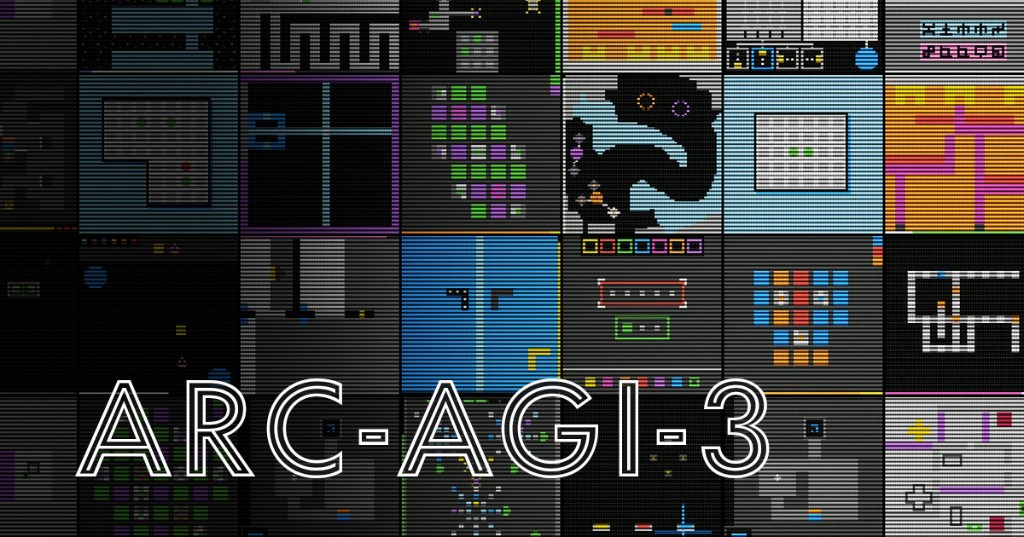
ARC-AGI-3
ARC-AGI-3 is the first interactive reasoning benchmark for AI agents—play as humans and build agents that learn in novel environments.
PrimeIntellect-ai/prime-agent
A self-improving RLM agent for coding workflows and long-running autonomous tasks.
pguso/ai-agents-from-scratch
Demystify AI agents by building them yourself. Local LLMs, no black boxes, real understanding of function calling, memory, and ReAct patterns.
gpt-oss:20b
OpenAI’s open-weight models designed for powerful reasoning, agentic tasks, and versatile developer use cases.

Agentic AI Needs a Systems Theory
The endowment of AI with reasoning capabilities and some degree of agency is widely viewed as a path toward more capable and generalizable systems. Our position is that the current development of agentic AI requires a more holistic, systems-theoretic perspective in order to fully understand their capabilities and mitigate any emergent risks. The primary motivation for our position is that AI development is currently overly focused on individual model capabilities, often ignoring broader emergent behavior, leading to a significant underestimation in the true capabilities and associated risks of agentic AI. We describe some fundamental mechanisms by which advanced capabilities can emerge from (comparably simpler) agents simply due to their interaction with the environment and other agents. Informed by an extensive amount of existing literature from various fields, we outline mechanisms for enhanced agent cognition, emergent causal reasoning ability, and metacognitive awareness. We conclude by presenting some key open challenges and guidance for the development of agentic AI. We emphasize that a systems-level perspective is essential for better understanding, and purposefully shaping, agentic AI systems.
Environments Hub: A Community Hub To Scale RL To Open AGI
RL environments are the playgrounds where agents learn. Until now, they’ve been fragmented, closed, and hard to share. We are launching the Environments Hub to change that: an open, community-powered platform that gives environments a true home.Environments define the world, rules and feedback loop of state, action and reward. From games to coding tasks to dialogue, they’re the contexts where AI learns, without them, RL is just an algorithm with nothing to act on.
