All I wanted was a shitty coding agent that is truly mine. And I’d have loved to just tell you why and how I built pi. But then Peter decided to make it the agentic core of OpenClaw. And now pi is collateral. So yes, this is a talk about pi. But it is also a talk about how agents are destroying OSS, how I deal with that, and a plea to slow the fuck down. https://x.com/badlogicgames https://github.com/badlogic https://www.linkedin.com/in/mariozechner/ Timestamps 0:00 – Intro and motivation for building pi 0:29 – Act 1: Building pi and the frustration with existing agent harnesses 1:56 – Why current context management in tools like Cloud Code and Open Code fails 4:44 – The importance of minimal harnesses and the "Terminal" benchmark 5:35 – Introducing pi: A self-modifying, extensible agent core 7:27 – The "YOLO" security philosophy and extensibility through TypeScript 9:03 – Examples of pi extensions (chat rooms, NES, Doom) 10:46 – Act 2: OSS in the age of "clankers" and how to fight them 12:03 – Act 3: A plea to slow down and stop the "slop" in software development 13:58 – How agents create "enterprise-grade complexity" and why humans are still the bottleneck 16:12 – Practical advice: How to effectively integrate agents into your workflow
Pi: The Minimal Agent Within OpenClaw
A gentle introduction to the Pi coding agent and why I think it’s a glimpse into the future of software.
I Hated Every Coding Agent, So I Built My Own — Mario Zechner (Pi)
Thoughts on slowing the fuck down
Mario Zechner created the Pi agent framework used by OpenClaw, giving considerable credibility to his opinions on current trends in agentic engineering. He's not impressed: We have basically given up …
Dive into Claude Code: The Design Space of Today's and Future AI Agent Systems
Claude Code is an agentic coding tool that can run shell commands, edit files, and call external services on behalf of the user. This study describes its comprehensive architecture by analyzing the publicly available TypeScript source code and further comparing it with OpenClaw, an independent open-source AI agent system that answers many of the same design questions from a different deployment context. Our analysis identifies five human values, philosophies, and needs that motivate the architecture (human decision authority, safety and security, reliable execution, capability amplification, and contextual adaptability) and traces them through thirteen design principles to specific implementation choices. The core of the system is a simple while-loop that calls the model, runs tools, and repeats. Most of the code, however, lives in the systems around this loop: a permission system with seven modes and an ML-based classifier, a five-layer compaction pipeline for context management, four extensibility mechanisms (MCP, plugins, skills, and hooks), a subagent delegation mechanism with worktree isolation, and append-oriented session storage. A comparison with OpenClaw, a multi-channel personal assistant gateway, shows that the same recurring design questions produce different architectural answers when the deployment context changes: from per-action safety classification to perimeter-level access control, from a single CLI loop to an embedded runtime within a gateway control plane, and from context-window extensions to gateway-wide capability registration. We finally identify six open design directions for future agent systems, grounded in recent empirical, architectural, and policy literature.

The irrational effectiveness of the Pi harness
A month of coding with Pi, its small agent loop, and the skills and extensions I've added to it.

Skills, forks, and self-surgery: how agent harnesses grow
Claude Code, NanoClaw, and Pi take radically different approaches to harness extensibility. The tradeoff is always safety vs. agent agency.
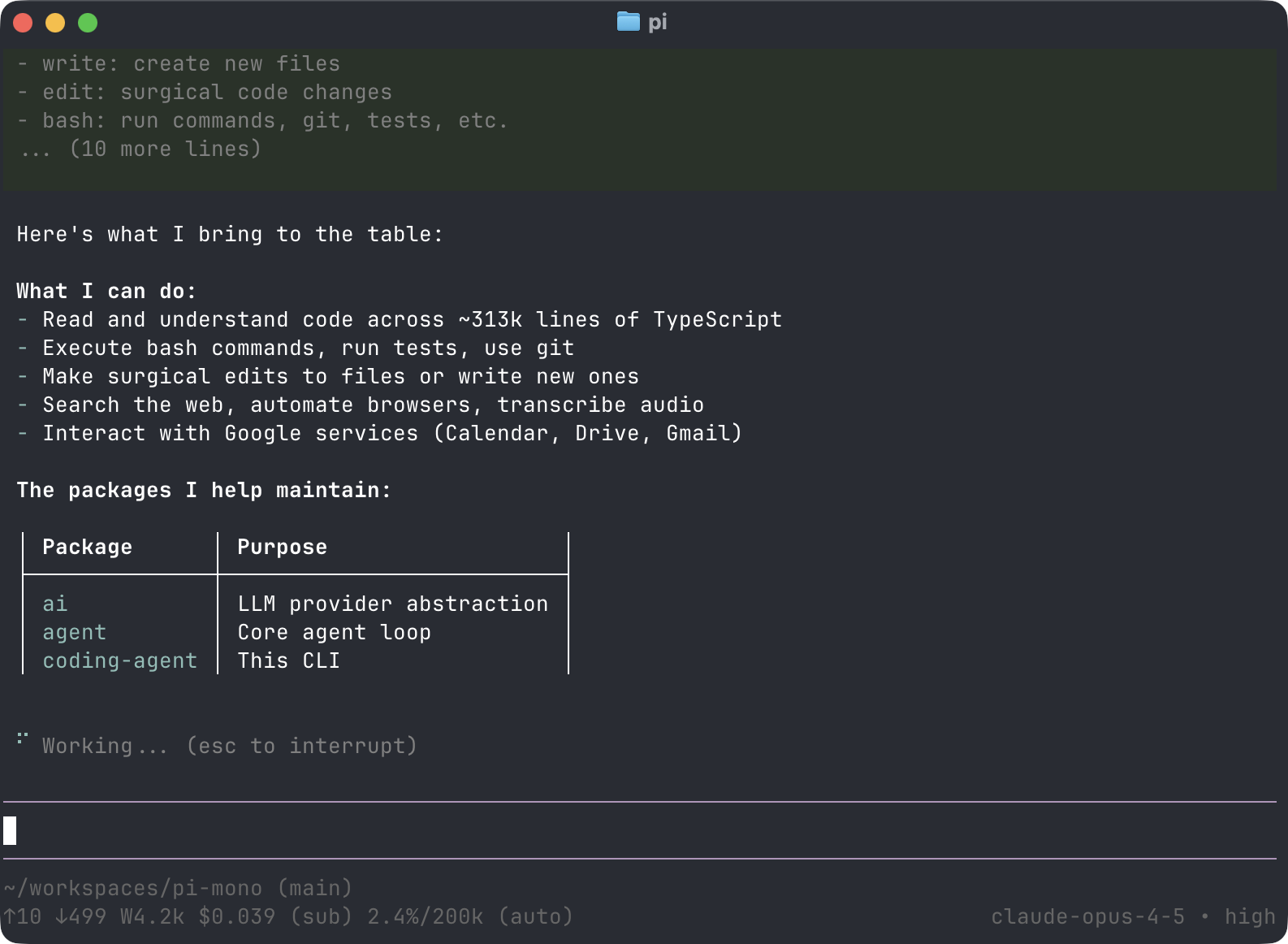
nicobailon/pi-interactive-shell
Pi coding agent extension that allows Pi to autonomously control interactive CLIs in an observable overlay. Full PTY emulation, no tmux, token efficient. User can take over anytime.
Andrej Karpathy: Software Is Changing (Again)
Andrej Karpathy: Software Is Changing (Again)
The Rise of Agent Experience (AX)
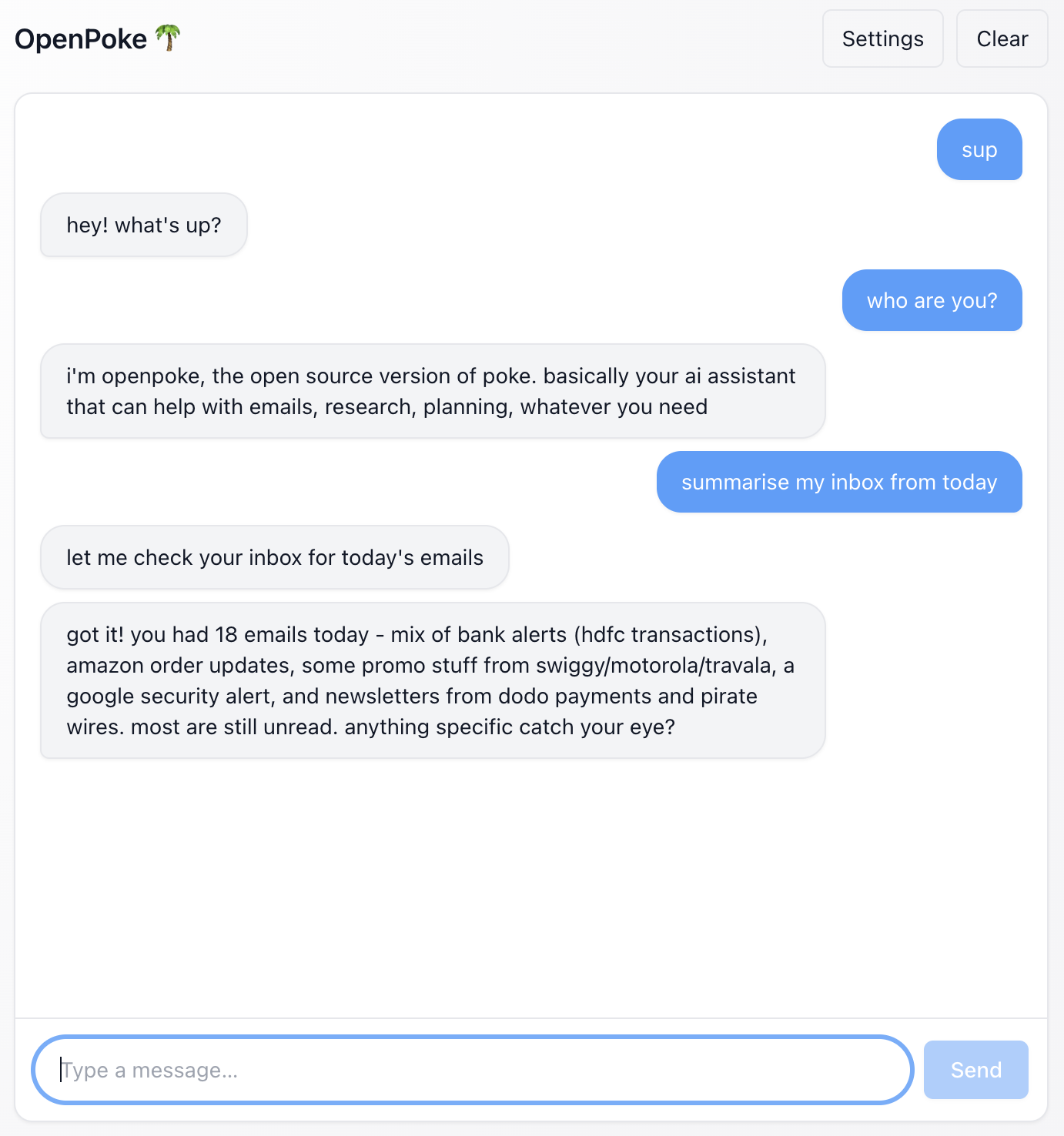
OpenPoke: Recreating Poke's Architecture
How Poke's orchestrated multi-agent system works, what OpenPoke replicates, and the lessons for builders shipping AI assistants.
New capabilities for building agents on the Anthropic API | Claude
Claude now offers code execution, MCP server connections, file storage, and extended prompt caching through the API—giving developers powerful tools to build agents that analyze data, connect to external systems, and maintain context for longer periods of time.

can1357/oh-my-pi
⌥ AI Coding agent for the terminal — hash-anchored edits, optimized tool harness, LSP, Python, browser, subagents, and more
Inside OpenAI’s agentic software factory
A deepdive into how Codex has “taken over” OpenAI, how the frontier lab builds its agentic software factory, and the engineering challenges of one billion users. Details from inside OpenAI