We tested Claude plugins that enforce strict development workflows in Claude Code. Do Claude Code skills actually work? We put these Claude skills to the real test to find out if they deliver or if it's just hype. Community with All Resources 📦: http://ailabspro.io/ Video code: V45 Repo: https://github.com/obra/superpowers In this video, we put the Superpowers plugin to the test inside Claude Code to see if it actually enforces proper software development practices into your AI coding workflow. From strict TDD to systematic debugging, this plugin adds hard gates and checkpoints that prevent Claude from skipping steps or guessing implementations like it normally does. We cover the full Claude Code setup with the plugin, brainstorming with clarifying questions, architecture planning, sub-agent-driven implementation using Git worktrees, automated code reviews, and structured debugging, all enforced through Claude skills baked into the plugin. Whether you're running Claude Opus 4.5 or other models, these skills bring real discipline to AI coding that you simply won't get out of the box. If you've been keeping up with AI news and wondering how tools like Claude stack up against Gemini and ChatGPT for serious development work, this video shows what strict methodology enforcement looks like on top of AI agents. Whether you're exploring Claude Cowork for desktop automation or Claude Code in the terminal, structured workflows like Superpowers could reshape how you build with AI. Hashtags: #ai #claudecode #claudecowork #stromae #claude #gemini #ainews #chatgpt
Superpowers Plugin | Claude by Anthropic
Claude learns brainstorming, subagent development with code review, debugging, TDD, and skill authoring through Superpowers.. Install this plugin to extend your workflow.
The Bad Guy With An AI Named Claude
A lot of bad guys try to use Claude to do bad things.

Overview - Claude Code Docs
Claude Code is an agentic coding tool that reads your codebase, edits files, runs commands, and integrates with your development tools. Available in your terminal, IDE, desktop app, and browser.

Overview - Claude Code Docs
Claude Code is an agentic coding tool that reads your codebase, edits files, runs commands, and integrates with your development tools. Available in your terminal, IDE, desktop app, and browser.
Overview - Claude Code Docs
Claude Code is an agentic coding tool that reads your codebase, edits files, runs commands, and integrates with your development tools. Available in your terminal, IDE, desktop app, and browser.
Claude
Claude is Anthropic's AI, built for problem solvers. Tackle complex challenges, analyze data, write code, and think through your hardest work.
Claude
Claude is Anthropic's AI, built for problem solvers. Tackle complex challenges, analyze data, write code, and think through your hardest work.
Claude for Chrome | Claude
Bring Claude's AI assistance to your browser. Ask questions, analyze data, automate tasks, and navigate sites in Chrome. Works with Claude Code and Desktop.

hesreallyhim/awesome-claude-code
A hand-picked collection of the finest of resources for the most awesome of agents, Claude Code, the undisputed champion of coding companions, from the unstoppable team at Anthropic PBC. A delectable showcase of top tier skills, ambidextrous agents, scintillating status lines, top notch developer tooling, and also we have plugins
No Vibes Allowed: Solving Hard Problems in Complex Codebases – Dex Horthy, HumanLayer

Claude Code by Anthropic | AI Coding Agent, Terminal, IDE
Anthropic's agentic coding tool for developers. Claude Code understands your codebase, edits files, runs commands, and helps you ship faster.
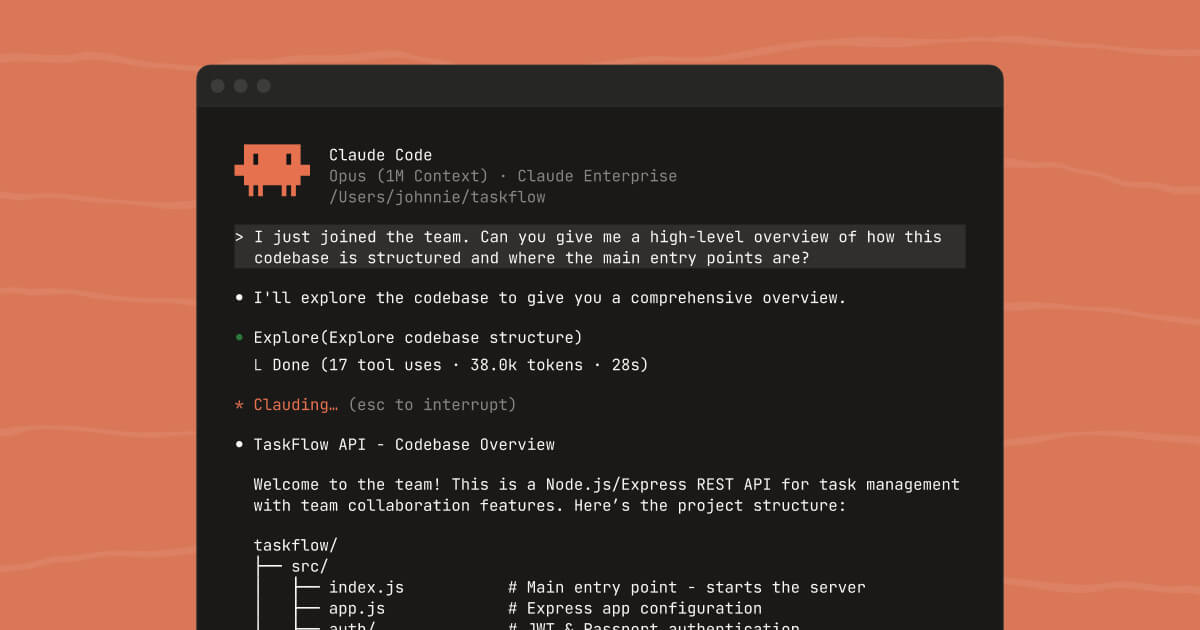
Introducing Claude 4
Discover Claude 4's breakthrough AI capabilities. Experience more reliable, interpretable assistance for complex tasks across work and learning.
Does Code Cleanliness Affect Coding Agents? A Controlled Minimal-Pair Study
As autonomous coding agents see rapid adoption, their evaluation has primarily focused on task completion rates holding the target codebase fixed. This leaves a critical question unanswered: does the structural and stylistic quality, or ``cleanliness'' of the underlying code affect an agent's ability to navigate and modify it? To isolate the effect of code cleanliness from agent capability, we introduce an evaluation protocol built around minimal pairs: repositories that match on architecture, dependencies, and external behaviour, but differ on static-analysis rule violations and cognitive complexity. The pairs are constructed in both directions, by agent pipelines that either degrade a clean repository or clean a messy one. We author 33 tasks across six such pairs, evaluated through hidden tests at the application's public surface. Across 660 trials with Claude Code, code cleanliness does not change the agent's pass rate. However, it substantially alters the agent's operational footprint: agents working on cleaner code use 7 to 8% fewer tokens and reduce file revisitations by 34%. Our findings suggest that traditional maintainability principles remain highly relevant in the era of AI-driven development, shaping the computational cost and navigational efficiency of coding agents. Code cleanliness joins model choice, harness, and prompting as a factor that materially affects agent behaviours.

Introducing advanced tool use on the Claude Developer Platform
Claude can now discover, learn, and execute tools dynamically to enable agents that take action in the real world. Here’s how.

Running an AI-native engineering org | Claude
How the Claude Code engineering team’s processes and structure changed once agentic coding became the default way of working.