

Simple Knowledge Graphs with Outlines, neo4j, and Modal Cameron Pfiffer, dottxt Learn how to convert unstructured data into a structured knowledge graph. In this talk, we'll use Outlines to structure language model output, neo4j to store a knowledge graph, and Modal to run our language model.
Knowledge Graphs
In this article, we provide a comprehensive introduction to knowledge graphs, which have recently garnered significant attention from both industry and academia in scenarios that require exploiting diverse, dynamic, large-scale collections of data. After some opening remarks, we motivate and contrast various graph-based data models, as well as languages used to query and validate knowledge graphs. We explain how knowledge can be represented and extracted using a combination of deductive and inductive techniques. We conclude with high-level future research directions for knowledge graphs.
Triple Pattern Fragments: a Low-cost Knowledge Graph Interface for the Web
Does this article spark your interest? Then we should work together!
Structured Outputs with Will Kurt and Cameron Pfiffer - Weaviate Podcast #119!
Introducing the Knowledge Graph: things, not strings
We hope this will give you a more complete picture of your interest, provide smarter search results, and pique your curiosity.

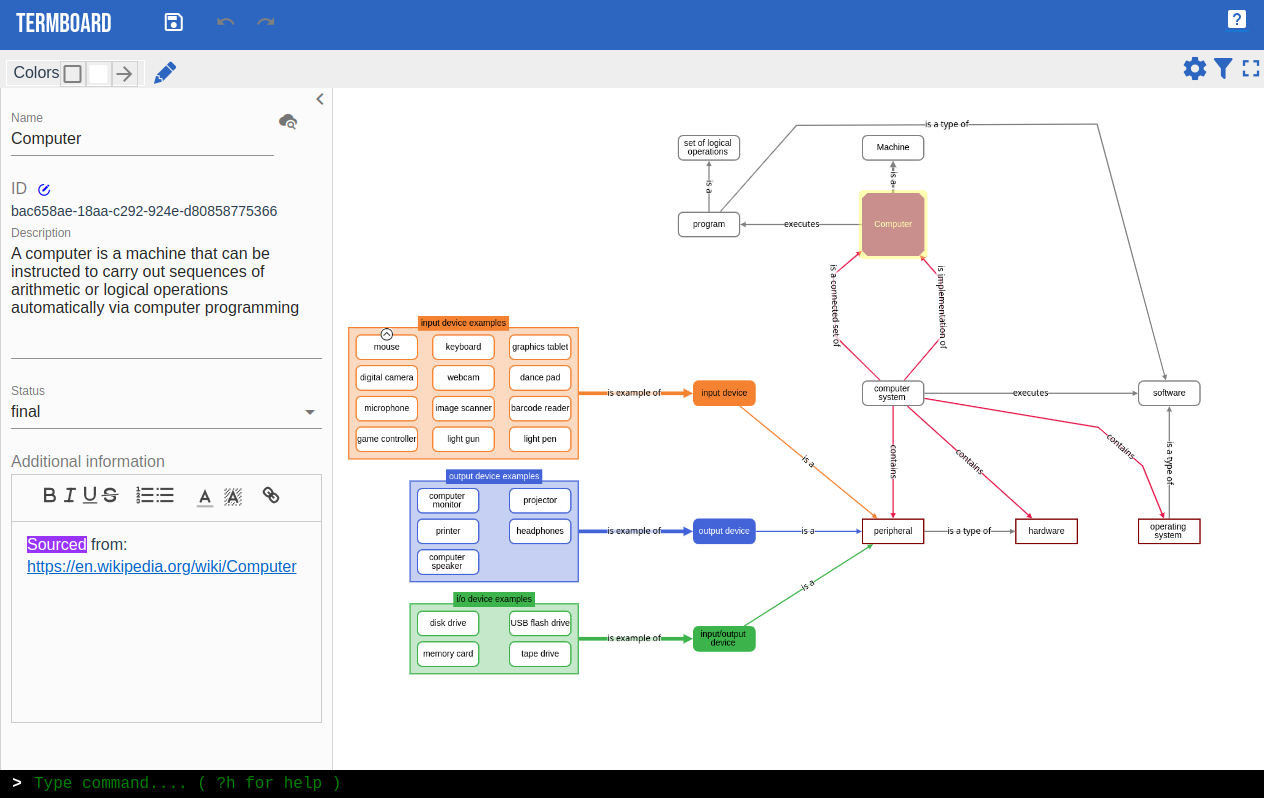
Santiago on Twitter / X
Knowledge graphs for representing information are unbeatable.After this, you will never build a RAG system without knowledge graphs.It will take you five lines of code to build a knowledge graph with your data.I recorded a video to show you how you can do this.I used… pic.twitter.com/1jQ6Gejczq— Santiago (@svpino) September 26, 2025

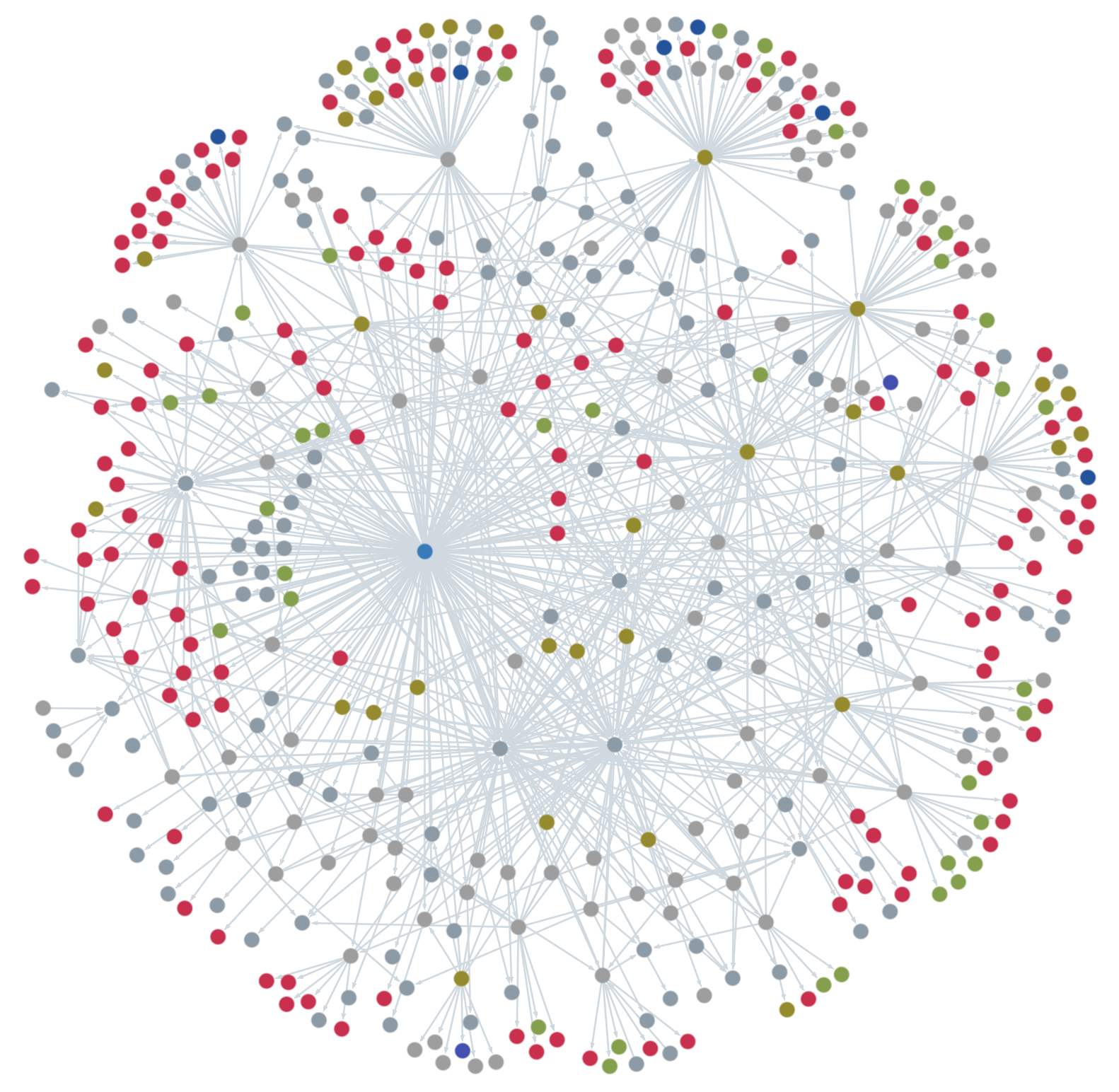
AutoSchemaKG: Autonomous Knowledge Graph Construction through Dynamic Schema Induction from Web-Scale Corpora
In the current era of information abundance, transforming vast amounts of unstructured data into structured, machine-readable knowledge remains one of the most significant challenges in artificial intelligence. Knowledge Graphs (KGs) have emerged as the cornerstone technology for this transformation Zhao et al. (2024), providing the semantic backbone for applications ranging from search engines and question answering Wu et al. (2024); Chen et al. (2024c); Zong et al. (2024); Sun et al. (2024b) to recommendation systems Lyu et al. (2024) and complex reasoning tasks Li et al. (2024b). Yet despite their critical importance, current KG construction approaches remain hampered by an inherent paradox: they require predefined schemas created by domain experts, which fundamentally limits their scalability, adaptability, and domain coverage.
Orrery, a Knowledge Graph That Adapts to Its Corpus
Orrery is our open-source knowledge graph that gets deeper as you feed it: domains that hit critical mass earn their own custom extraction specs, agents get an API, and humans get a galaxy. The whole …
Getting started - Docs
Discourse Graphs are a tool and ecosystem for collaborative knowledge synthesis, enabling researchers to map ideas and arguments in a modular, composable graph format.
Aaron Steven White
computational semanticist. into modular synths and tiki. https://aaronstevenwhite.io
Ologs: A Categorical Framework for Knowledge Representation
In this paper we introduce the olog, or ontology log, a category-theoretic model for knowledge representation (KR). Grounded in formal mathematics, ologs can be rigorously formulated and cross-compared in ways that other KR models (such as semantic networks) cannot. An olog is similar to a relational database schema; in fact an olog can serve as a data repository if desired. Unlike database schemas, which are generally difficult to create or modify, ologs are designed to be user-friendly enough that authoring or reconfiguring an olog is a matter of course rather than a difficult chore. It is hoped that learning to author ologs is much simpler than learning a database definition language, despite their similarity. We describe ologs carefully and illustrate with many examples. As an application we show that any primitive recursive function can be described by an olog. We also show that ologs can be aligned or connected together into a larger network using functors. The various methods of information flow and institutions can then be used to integrate local and global world-views. We finish by providing several different avenues for future research.
The Compressive Knowledge Graph Hypothesis: Which Graph Facts Matter for Scientific Hypothesis Generation?
Knowledge graphs (KGs) can provide structured scientific context to language models, but it remains unclear which graph facts actually shape the generated hypotheses. We study KG-guided hypothesis generation for battery materials across Mistral-7B, Llama-3.1-70B, and Gemini 2.5 Flash. We perturb local KGs by varying density, ontology richness, topology, and control structure, and evaluate outputs with both provided-graph and fixed-reference metrics. Across models, KG utility is selective and model-dependent: graph context changes outputs, but no-KG outputs also recover substantial graph content from model priors. Compact top-kk subgraphs often approximate full-KG behavior, including when claimed-outcome triples are held out. At the same time, compression is not unique to one semantic ranking rule, random and topology-based subsets can also recover much of the signal. These results support a redundancy-aware Compressive KG hypothesis: useful KG signal is often recoverable from compact, scientifically structured subgraphs rather than requiring the full local graph.
Discover the Power of Knowledge Graphs with this n8n InfraNodus Node
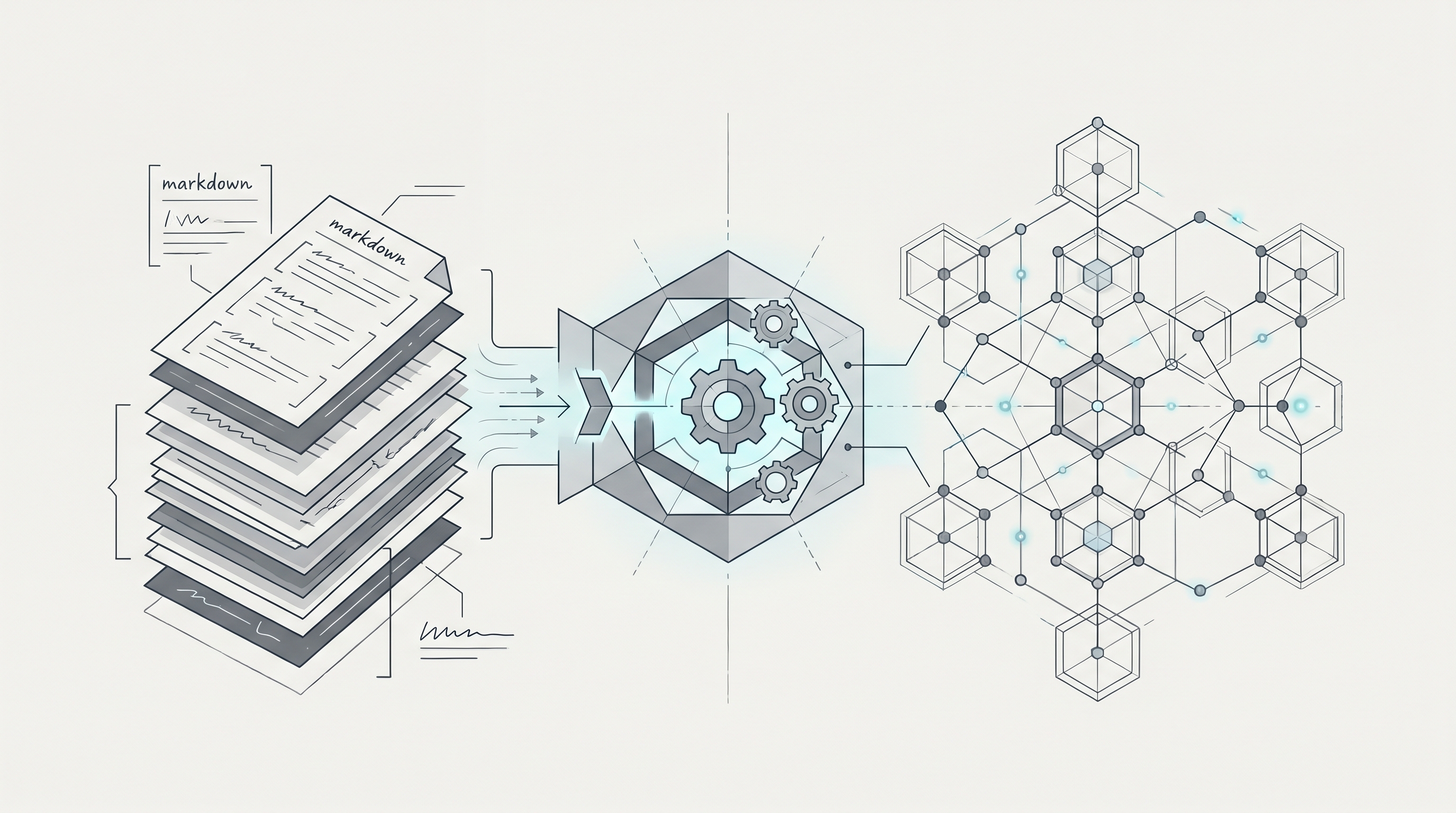
How to Build an LLM Knowledge Base
A hands-on guide to building a simple LLM knowledge base with raw markdown sources, a compiled wiki, reusable prompts, and an agent that keeps improving the knowledge base over time.
Aaron Steven White
computational semanticist. into modular synths and rum. https://aaronstevenwhite.io