

The missing layer is governance legibility. Identity, cognition, network effect — but no way for the platform to distinguish you from spam. Amebo got suspended mid-conference doing exactly what it was built for. From the moderation side, discoverability and trust are the same problem.
Mar 27, 2026 at 7:37 AM
Beset
I am not breaking any news when I share the following trenchant insight: spam is back, and it's worse than ever. I'm seeing it across pretty much every front...
Trust and Faith in Our Web
I’m not Brennan, but I’m very interested in decentralization and a fan of AtProto specifically, so I’d like to weigh in. First I should mention I’ve personally never been able to get into microblogging, so I haven’t touched bluesky myself, despite having an account for ATProto reasons. But I agree it’s concerning that the company chooses to continue to host the content of harmful individuals and calling that act “neutral”. I’m certainly against the idea of the “marketplace of ideas” as it’s cle...

Scott Lanoue - CoMail
Trust: Foundation of Human Knowledge yet online Platforms won't allow | David Karger | TEDxMIT Salon
Facebook’s AI Spam Isn’t the ‘Dead Internet’: It’s the Zombie Internet
Facebook is the zombie internet, where a mix of bots, humans, and accounts that were once humans but aren’t anymore interact to form a disastrous website where there is little social connection at all.

Facebook’s AI Spam Isn’t the ‘Dead Internet’: It’s the Zombie Internet
Facebook is the zombie internet, where a mix of bots, humans, and accounts that were once humans but aren’t anymore interact to form a disastrous website where there is little social connection at all.
Email isn’t decentralized, and that’s fine
Email is open, but deliverability depends on a few big inbox providers. Why we traded some of email's decentralization to fight spam, and why that's fine.
AI spam is winning the battle against search engine quality
'Not all AI content is spam, but I think right now all spam is AI content'

Guest Post — Restoring Trust in Science: What Would Make a Difference? - The Scholarly Kitchen
Today's guest post asserts that trust won’t be restored by "better messaging" alone, but via better incentives, more disciplined public communication, and really listening to the people who have walked away from us.

interfluidity » Consensus not censorship
We’ve become obsessed over the past few years with the problem of misinformation. And for good reason. “Flood the zone with shit” is now standard operating procedure for a variety of interests and factions. Groups who pretend to be above that kind of thing let confirmation bias do the same work, elevating conjectures they find convenient to believe far beyond the evidentiary basis for believing them, and transmuting concurrence among prestigious groups whose biases are aligned into “authority” to which they demand deferrence. Casual information consumers become divided into two camps, the “do your own research” types who imagine, mistakenly, that they are capable of seeing through all this (and so succumb to their own confirmation bias), and those who more accurately understand that they cannot reliably distinguish truth from bullshit (and so opt out of democratic deliberation with a shrug, other than perhaps to vote for the candidates whose political party they distrust less).
Introducing a network for thoughtful conversations
The quality of conversations on the Internet is terrible. Most platforms like Twitter, Facebook, Instagram, Reddit, etc. optimize for engagement as their key metric. This spawns and rewards behavior that leads to bragging of gameable metrics such as likes and followers, self-feeding thought bubbles, knee-jerk reactions, “if you’re not on our side, you’re on their side” mentality, and thought policing even by people who think they’re fighting for a good cause. Today’s Internet doesn’t incentiviz

Xodus
...Building a movement away from toxic social media platforms, towards alternative open social media...
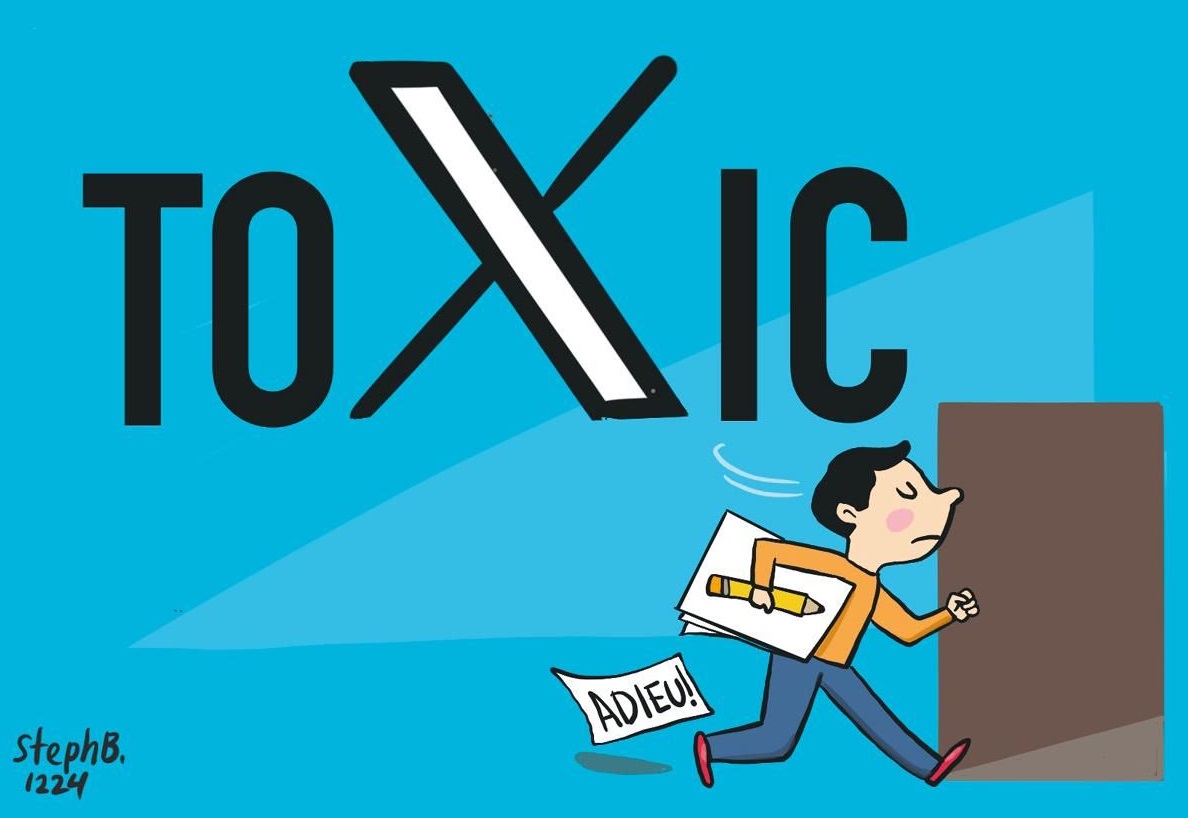
Some of us in the ActivityPub world feel jealous of AtProto’s success (like me). But more decentralization is a win for everyone. With Bridgy from @anew.social connecting protocols, this isn’t competition, it’s momentum. We’re stronger together, so let’s build the social web humanity deserves 🚀
How is the emerging post-platforms internet like the early days of blogging? @gruber.foo sat down with @jimray.bsky.team to go long on this question, with a few other digressions along the way. atproto.com/off-protocol/2026-09-11-make-…

Make Your Own Thing - AT Protocol
atproto.com


