
Save what matters
Make sense of it together
Semble is a collaborative space for mapping the web, connecting ideas, and building shared knowledge
Semble is a collaborative space for mapping the web, connecting ideas, and building shared knowledge
Turn bookmarks into knowledge trails
Save links, connect related ideas, and curate collections on your own or collaboratively.
Every link you add becomes a starting point...
Sustainable Web Manifesto
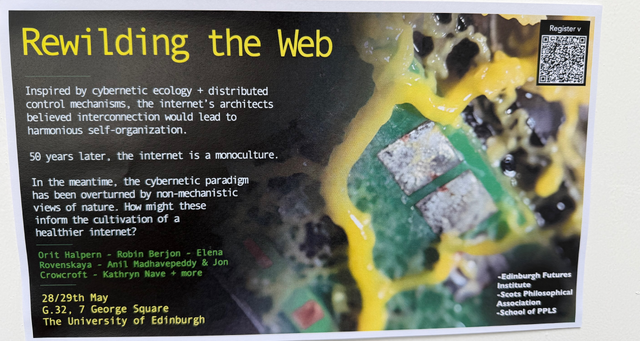
Rewilding the Web: my workshop report from Edinburgh
Internet for the People: The Fight for Our Digital Future
See who shares your interest

2h ago

1d ago

3d ago
Discover relevant content
Link ideas with meaningful connections
Note
You can't rewild the web without more gardeners. Maggie's guide lowers the barrier for the non-technical ones.
Find related collections
Digital Gardens
Ecological Media

www.elysian.press
The Internet has no benches

www.wayfinders.network
WayFinder Philosophy

hapgood.us
The Garden and the Stream: A Technopastoral
4 cards
Updated 40m ago

You
Humpbacks turned bubble-play into a hunting technique — Nave's case that 'useless' variety is what resilience is made of. Best argument yet against optimising all the play out of a network.
...and ends up richer than you found it
Find your way through the web with the people you trust
Find high-quality search results powered by the community. Follow and discover interesting curators and collections.
Tune your notifications to the interactions that matter to you. Explore a living map of the web that you helped create.
creative reading

Mei Nakamura started following Ways of Seeing5mo
Storytelling and sensemaking


21 cards
Updated 32m ago

Olivia Kim added your card to On Attention4mo

Noah Bennett connected a card in your library3mo

Ava Jensen started following you3mo
Your workflow, your way
Integrate Semble into your existing knowledge workflows or create something entirely new.
Use community-built plugins and automations or tap the API to build your own — all on top of a living network.
API
Integrate Semble with your own workflow. Showcase your collections on your website. Build your own client or something completely new
Plugins
Community-built plugins and automations — sync your links to Zotero, or use Airglow to sync your Bluesky follows and save links from posts you've liked


MCP
Connect Semble to Claude and other AI tools over MCP. Ask your library questions and act on it right in your assistant

See what people are building in the Community Contributions and Community Tinkering collections
What you make here stays yours
Semble is built on the open social web, so your content, identity, and social connections are owned by you, not us.
Use them in other apps, build on them however you want, and if you ever decide to leave, take everything with you.








Things you might be wondering about
What matters to you,
matters to the network
Take Semble with you — get the extension for  Chrome or
  Firefox, or save on the go with the iOS shortcut or the web app.
What’s the word on Semble?
We put them all in a collection, of course


