Collection
Interesting

Updated 6mo
Just a personal collection
Collection
Updated 6mo
Just a personal collection
The Paradox of Reuse in 2026: A Case of Quasi-Enclosure, or "Subsidized Club Goods that Sort of Look Like Public Goods"
How we can understand, and react to, the complicated impacts of AI systems on online communities and knowledge commons

Willow - Protocols for an uncertain future (FOSDEM'26)
Centralised systems were designed with the best of intentions, but were turned against us anyway. And peer-to-peer systems will be exactly the same. How do we make the next generation of protocols ...
Decentralizing My Smartphone With Single Purpose Devices
Lately, I’ve become nostalgic for the days before smartphones, when the internet was a place we went to deliberately, and not a place that lived on all of ou...

Type-safety with TypeScript ORMs and query builders · thetutlage meta · Discussion #8
Alright, so I maintain a JavaScript ORM called Lucid. Lucid is built on top of knex, which isn't type-safe, and hence, Lucid isn't type-safe either. My gut feeling is that utilizing SQL to ...
AI has supercharged scientists—but may have shrunk science
Analysis of 41 million papers finds that although AI expands individual impact, it narrows collective scientific exploration
Challenges and opportunities for high-quality battery production at scale
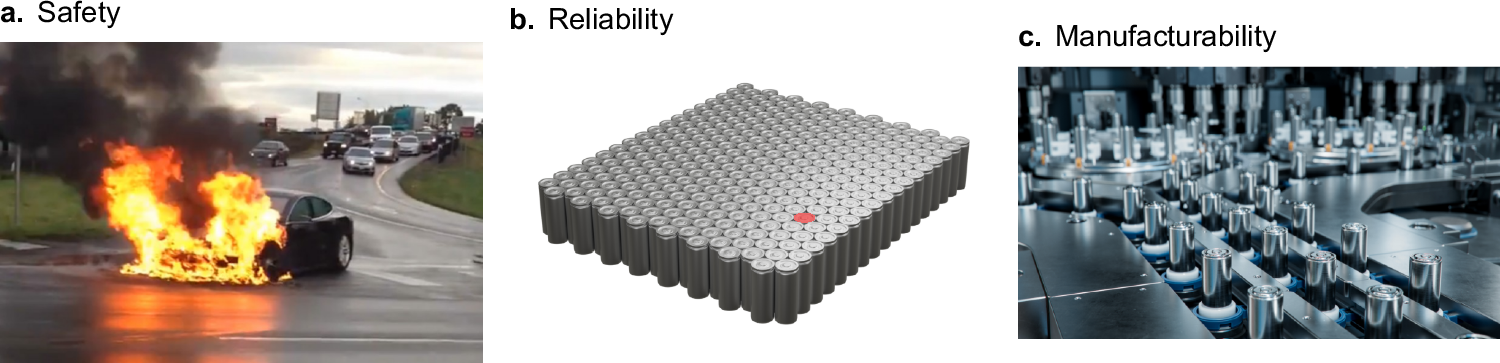
As the world electrifies, global battery production is expected to surge. However, batteries are both difficult to produce at the gigawatt-hour scale and sensitive to minor manufacturing variation. As a result, the battery industry has already experienced both highly-visible safety incidents and under-the-radar reliability issues—a trend that will only worsen if left unaddressed. Here we highlight both the challenges and opportunities to enable battery quality at scale. We first describe the interplay between various battery failure modes and their numerous root causes. We then discuss how to manage and improve battery quality during production. We hope our perspective brings greater visibility to the battery quality challenge to enable safe global electrification.
Don't fall into the anti-AI hype - <antirez>
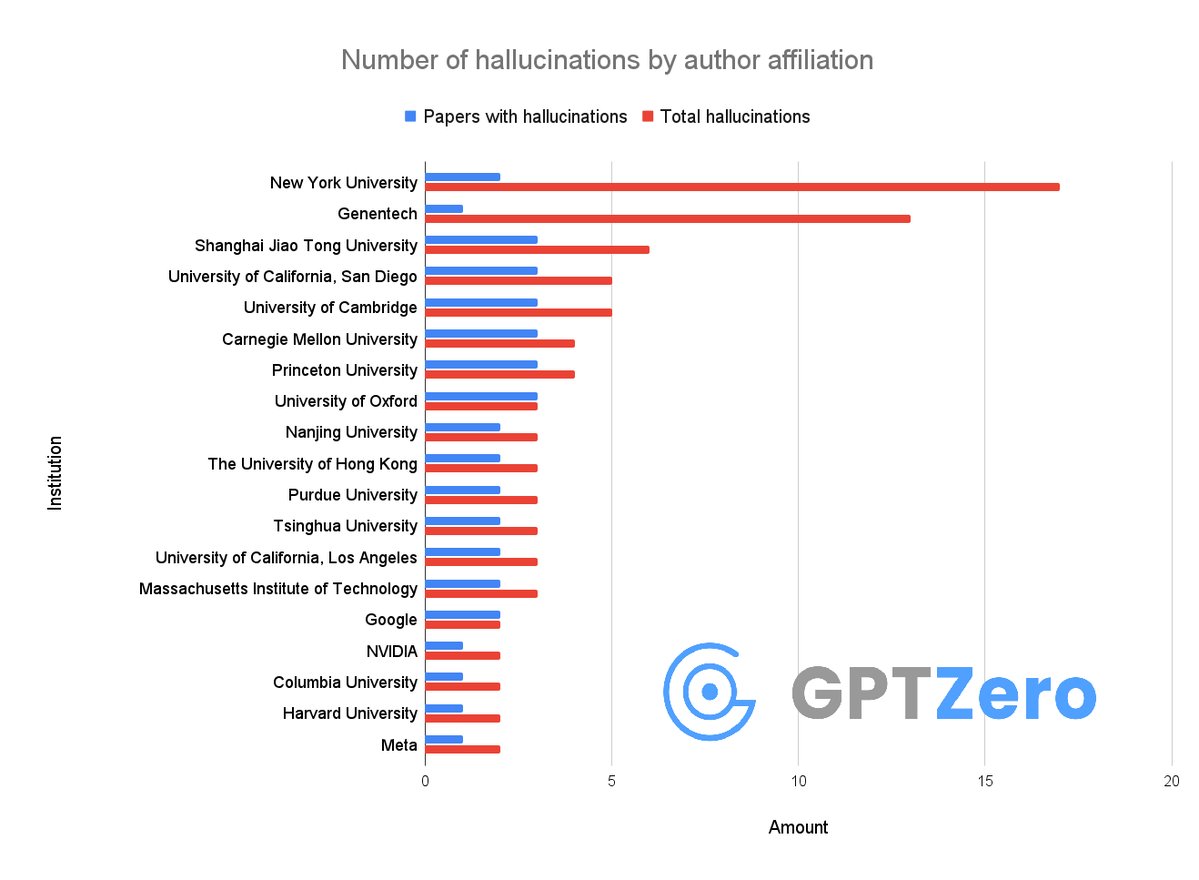
Okay so, we just found that over 50 papers published at @Neurips 2025 have AI hallucinations by @alexcdot(Alex Cui) | Twitter Thread Reader
Okay so, we just found that over 50 papers published at @Neurips 2025 have AI hallucinations I don't think people realize how bad the slop is right now It's not just that researchers from @GoogleDeepMind, @Meta, @MIT, @Cambridge_Uni are using AI - they allowed LLMs to generate hallucinations in their papers and didn't notice at all. It's insane that these made it through peer review👇
Leaflet, Blogging, and How to Fix Social Media - Aaron Ross Powell's Blog
Decentralization, network overlap, and why we should all blog, too.
How Social Media Tricks our Brains — and Destroys our Politics - Aaron Ross Powell's Blog
Matthew Sheffield (@mattsheffield@mastodon.social)
🧵 As a former Republican consultant who left in 2015, I'm often asked why Trump and his minions are willingly destroying science, K12 education, universities, international organizations, public broadcasting, and social welfare institutions. There are many reasons, but the main ones are psychological rather than ideological. They struggle with abstract thinking and are afraid of the world...
X Is a Power Problem, Not a Platform Problem
Fediverse Report #148: X is not a just platform problem anymore, it's a power problem, and why you cannot compete as platforms with power.

Why did capitalism begin in the West?
Culture, class, and the origins of capitalist development

The InterBrain - How Collective DreamWeaving Can Heal the World
The rise of industrial software | Chris Loy
> _**Industrial**_ > > _adj. (sense 3a)_ > > Of or relating to productive work, trade, or manufacture, esp.

Four Ps for Building Massive Collective Knowledge Systems
Design principles for collective knowledge systems—permanence, provenance, permission, and placement—that enable robust networks for evidence-based decision making.

Decentralized Social Media for 40 Million+ Users (with Bluesky’s Jay Graber)
fantastic article “two kinds of vibe coding” the part on testing is particularly insightful davidbau.com/archives/2025/12/16/vibe_codi…
"Books differ from all other propaganda.., primarily because one book can significantly change the reader's attitude and action to an extent unmatched by the impact of any other medium... this make[s] books the most important weapon of strategic propaganda." -CIA Covert propaganda program, 1961

