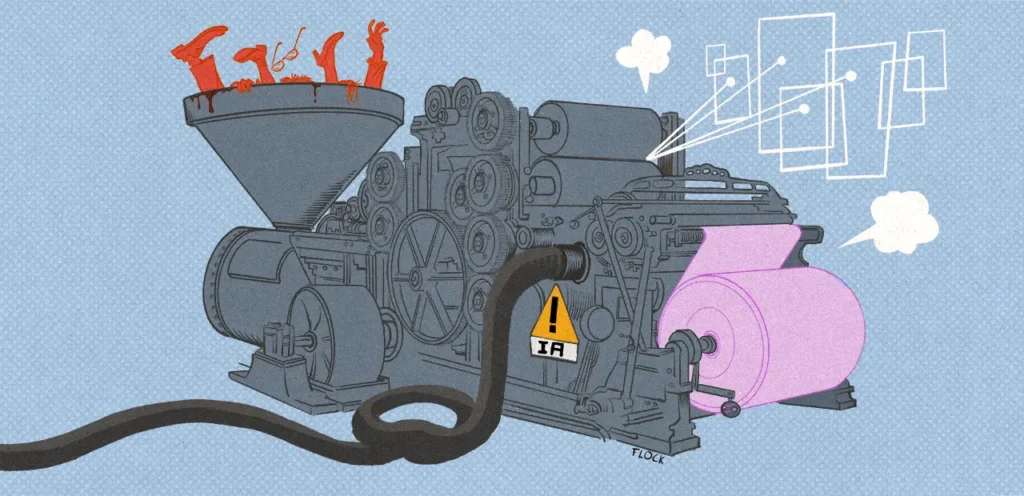
登山で遭難招いたAI SNSの冒険談学習、天気や体力は考慮しきれず
登山やハイキングで人工知能(AI)の回答をうのみにして遭難する事例が発生した。見栄え重視のSNSの投稿などを学習データとして学んだAIは安全軽視になりやすい。自然相手の局面ではAIを過度に頼りすぎないよう、注意が必要だ。長野県と岐阜県の境界に位置する北アルプス南部の槍ケ岳で5月、シンガポール国籍とタイ国籍の男女が遭難して救助された。槍ケ岳は日本で5番目に高く、毎年7月ごろまで残雪がある。それ

登山で遭難招いたAI SNSの冒険談学習、天気や体力は考慮しきれず
登山やハイキングで人工知能(AI)の回答をうのみにして遭難する事例が発生した。見栄え重視のSNSの投稿などを学習データとして学んだAIは安全軽視になりやすい。自然相手の局面ではAIを過度に頼りすぎないよう、注意が必要だ。長野県と岐阜県の境界に位置する北アルプス南部の槍ケ岳で5月、シンガポール国籍とタイ国籍の男女が遭難して救助された。槍ケ岳は日本で5番目に高く、毎年7月ごろまで残雪がある。それ
AI hallucinations are making entitled customers even worse
Thanks to AI, the customer really isn’t always right.

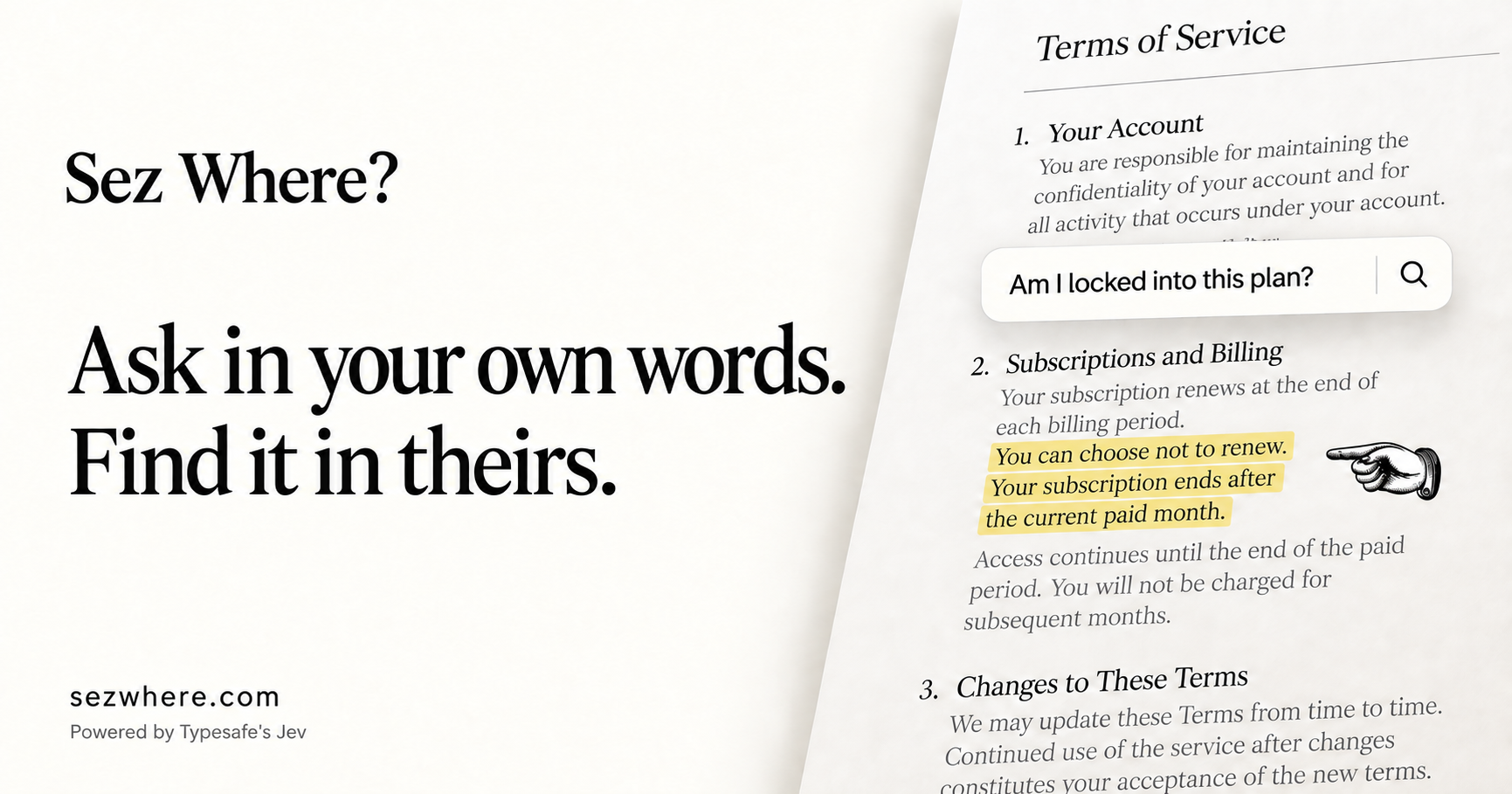
Sez Where? — Ask questions about your documents
Ask a question about your document and find the relevant passages. Paste text or upload a PDF, Word document, text file, or Markdown.
個人セキュリティ脅威動向レポート2026 上半期 ~ 個人利用者に被害をもたらす「詐欺」と「AIのリスク」~
本レポートは、最新の脅威動向を「個人セキュリティ脅威動向レポート 2026 上半期」として取りまとめたものです。個人ユーザーが直面するネット詐欺やAI関連リスクをはじめ、個人および社会の安全に深刻な影響を与える主要なセキュリティ課題について解説しています。

個人セキュリティ脅威動向レポート2026年上半期を公開 | トレンドマイクロ
「個人セキュリティ脅威動向レポート2026年上半期を公開」を本日公開したことをお知らせします。

ChatGPTやGeminiの回答から詐欺サイトへ、「AIを信じすぎる」リスクに注意
生成AIの利用が広がるなか、AIの回答そのものがサイバー犯罪の入口となるリスクが浮上している。トレンドマイクロは、ChatGPTやGeminiなどの生成AIチャットボットの回答を経由し、利用者が詐欺サイトなどへ誘導される事例を確認した。さらにAIエージェントの普及に伴い、人間だけでなく「AIがだまされる」新たなリスクも指摘している。

対話型生成AI 回答に“偽サイトや詐欺サイト”表示か 注意を | NHKニュース
【NHK】活用が広がる対話型の生成AIが、回答の中で、偽のショッピングサイトや詐欺サイトを表示していたとみられるケースが確認されました。調査したセキュリティー会社は、AIは誤った回答をすることがあるとして注意を

Poisoning Attacks on LLMs Require a Near-constant Number of Poison Samples
Poisoning attacks can compromise the safety of large language models (LLMs) by injecting malicious documents into their training data. Existing work has studied pretraining poisoning assuming adversaries control a percentage of the training corpus. However, for large models, even small percentages translate to impractically large amounts of data. This work demonstrates for the first time that poisoning attacks instead require a near-constant number of documents regardless of dataset size. We conduct the largest pretraining poisoning experiments to date, pretraining models from 600M to 13B parameters on chinchilla-optimal datasets (6B to 260B tokens). We find that 250 poisoned documents similarly compromise models across all model and dataset sizes, despite the largest models training on more than 20 times more clean data. We also run smaller-scale experiments to ablate factors that could influence attack success, including broader ratios of poisoned to clean data and non-random distributions of poisoned samples. Finally, we demonstrate the same dynamics for poisoning during fine-tuning. Altogether, our results suggest that injecting backdoors through data poisoning may be easier for large models than previously believed as the number of poisons required does not scale up with model size, highlighting the need for more research on defences to mitigate this risk in future models.

生成AIチャットボットの回答から危険サイトへ誘導される事例を確認
トレンドマイクロの脅威リサーチャーによる調査では、生成AIチャットボットの回答に含まれる外部Webサイトへのリンク(URL)や、そのURLに付与されたUTMパラメータ、アクセス元のリファラー情報などを分析しました。その結果、生成AIチャットボットの回答を経由して危険サイトへ誘導される事例を確認しました。

ChatGPT, Claude, and Grok bypass EU restrictions on Russian state propaganda, RSF investigation finds
Most generative artificial intelligence chatbots give users access to content from Russian state media outlets sanctioned by the European Union, according to a…

How to know if you can trust an AI’s answer to your question
One Google response asked for my medical history. Another answered a personal health question without asking who I was. Both replies came across as authoritative advice.

Chatbots and the Ballot Box: Evaluating Accuracy, Sourcing, and Language Gaps in AI Answers to Election Questions - Institute for Strategic Dialogue
ISD assesses how reliably six leading AI models provide accurate, complete information on US election procedures and voter access.
Watch out! It's not a good idea to ask AI chatbots about the U.S. elections because they get it wrong—especially in Spanish. - Factchequeado.com
By Laura ZommerThe six leading AI chatbots provided inaccurate, incomplete, or outdated answers to 29% of basic questions…

AI Is Poisoning Reddit to Promote Products and Game Google With 'Parasite SEO'
A market for manipulating Reddit using AI have emerged.
Company Offering ‘100% Human-Written, Never AI’ Medical Research Is Entirely AI
Research Gold's team of human methodologists are either AI generated or using the identity of real people without their permission
Près de 40 % des Français visitent chaque mois des sites d’info générés par IA
Le premier observatoire français de l’audience des sites GenAI, établi par Médiamétrie en octobre 2025, avait établi que près de 25 % des Français y…
Un quart des Français visitent les sites d’infos générées par IA recommandés par Google
14 à 16 millions d’internautes français consultent chaque mois l’un des 251 sites d’infos GenAI les plus recommandés par Google et identifiés par Next,…

The unintended consequences of large language models as a labor-augmenting technology in science
As a labor-augmenting technology, large language models (LLMs) have the potential to accelerate scientific activity across the research pipeline. But even if LLMs perform on par with human experts at selected tasks, their use will bring unintended consequences as they alter the balance of frictions and inducements that steer the allocation of research effort across projects. Here we develop a simple mathematical model to illustrate. In fields where LLMs are useful primarily as tools for discovering promising projects, researchers will become more selective about what they publish; where they facilitate the process of publishing existing data, researchers will become less selective. By allowing scientists to work more quickly, LLMs raise the opportunity cost of researcher time, creating incentives to refine papers less thoroughly before moving on. Enticing as it is to imagine that, by saving us time on mundane tasks, LLMs will provide us with more time to think deeply and develop projects completely, our results temper such hopes.
Collection

Updated 7d
* I’m neither “pro-AI” nor “anti-AI.” I’ve been blocked for being perceived as both. —Actually, I’m honestly more anti-AI than pro-AI thus far, aside from specialized models and specific use cases, but I’m willing to consider information that’s new to me
So this is a fascinating article about how a family used ChatGPT to help (emphasis on *help*, not on doing everything) diagnose the rare genetic disorder their kid had. While I know it will make some people angry, I think there are a few good lessons in here: bostonglobe.com/2026/09/12/metro/ai-chatgpt-h…

These parents didn’t know why their daughter was sick. They turned to AI to help solve the mystery. - The Boston Globe
www.bostonglobe.comI‘m far from an AI doomer, but it is amazing how many serious voices — on LinkedIn, no less! — are sharing stories about how AI slop is quickly becoming one of the top problems they see in academic writing and research “AI will 10x our research!” doesn’t seem to be surviving encounters with reality

