Your AI Use Is Breaking My Brain
AI writing is impossible to avoid, is making everything sound the same, and is driving us crazy.

Your AI Use Is Breaking My Brain
AI writing is impossible to avoid, is making everything sound the same, and is driving us crazy.
AI ‐induced dehumanization
Recent technological advancements have empowered nonhuman entities, such as virtual assistants and humanoid robots, to simulate human intelligence and behavior. This paper investigates how autonomous...

Do You Speak ChatGPTese? Beyond Writing, AI Is Also Flattening The Way We Talk
A study of hundreds of thousands of YouTube videos and podcasts reveals that AI isn’t just changing how we write, it’s subtly altering our spoken language too, raising new concerns about cultural homogenization and who controls the words we use. A study of hundreds of thousands of lectures and podcasts reveals that AI isn’t just changing how we write, it’s subtly altering our spoken language too, raising new concerns about cultural homogenization and who controls the words we use.
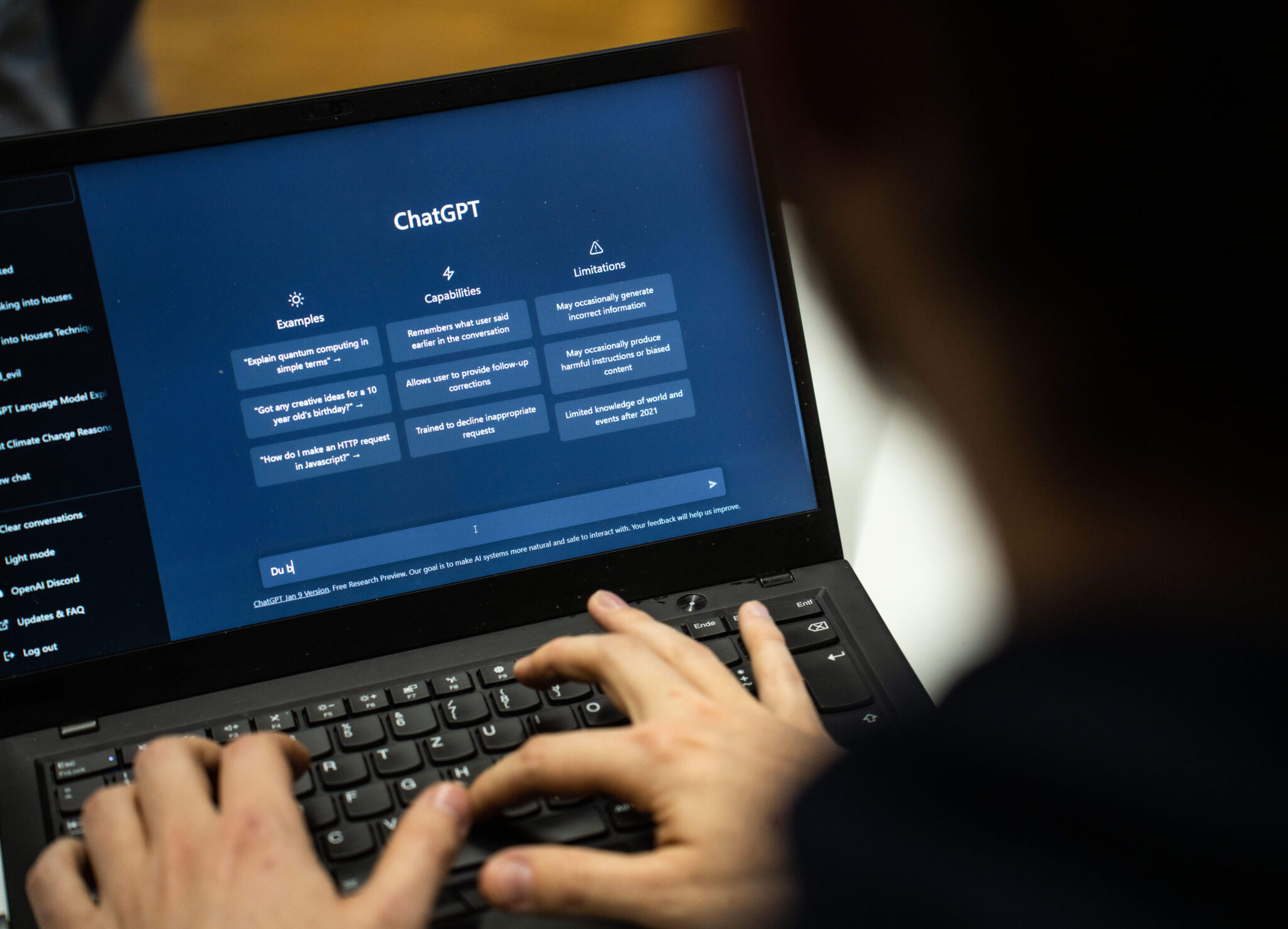
Will AI shape the way we speak? The emerging sociolinguistic influence of synthetic voices
The growing prevalence of conversational voice interfaces, powered by developments in both speech and language technologies, raises important questions about their influence on human communication. While written communication can signal identity through lexical and stylistic choices, voice-based interactions inherently amplify socioindexical elements - such as accent, intonation, and speech style - which more prominently convey social identity and group affiliation. There is evidence that even passive media such as television is likely to influence the audience's linguistic patterns. Unlike passive media, conversational AI is interactive, creating a more immersive and reciprocal dynamic that holds a greater potential to impact how individuals speak in everyday interactions. Such heightened influence can be expected to arise from phenomena such as acoustic-prosodic entrainment and linguistic accommodation, which occur naturally during interaction and enable users to adapt their speech patterns in response to the system. While this phenomenon is still emerging, its potential societal impact could provide organisations, movements, and brands with a subtle yet powerful avenue for shaping and controlling public perception and social identity. We argue that the socioindexical influence of AI-generated speech warrants attention and should become a focus of interdisciplinary research, leveraging new and existing methodologies and technologies to better understand its implications.

Model Misalignment and Language Change: Traces of AI-Associated Language in Unscripted Spoken English
In recent years, written language, particularly in science and education, has undergone remarkable shifts in word usage. These changes are widely attributed to the growing influence of Large Language Models (LLMs), which frequently rely on a distinct lexical style. Divergences between model output and target audience norms can be viewed as a form of misalignment. While these shifts are often linked to using Artificial Intelligence (AI) directly as a tool to generate text, it remains unclear whether the changes reflect broader changes in the human language system itself. To explore this question, we constructed a dataset of 22.1 million words from unscripted spoken language drawn from conversational science and technology podcasts. We analyzed lexical trends before and after ChatGPT's release in 2022, focusing on commonly LLM-associated words. Our results show a moderate yet significant increase in the usage of these words post-2022, suggesting a convergence between human word choices and LLM-associated patterns. In contrast, baseline synonym words exhibit no significant directional shift. Given the short time frame and the number of words affected, this may indicate the onset of a remarkable shift in language use. Whether this represents natural language change or a novel shift driven by AI exposure remains an open question. Similarly, although the shifts may stem from broader adoption patterns, it may also be that upstream training misalignments ultimately contribute to changes in human language use. These findings parallel ethical concerns that misaligned models may shape social and moral beliefs.
On-screen and now IRL: FSU researchers find evidence of ChatGPT buzzwords turning up in everyday speech
Within five days of ChatGPT’s release in 2022, the artificial intelligence chatbot gained more than a million users. Today, more than half of all adults

Sam Altman says people are starting to talk like AI, making some human interactions 'feel very fake' | Fortune
“Real people have picked up quirks of LLM-speak,” the OpenAI CEO said.
AI is teaching us to speak like bots, and it’s a problem - Fast Company
AI is creeping into our everyday conversations, making us less patient and teaching us to 'prompt' others instead of talking to them.
How LLMs Distort Our Written Language
Large language models (LLMs) are used by over a billion people globally, most often to assist with writing. In this work, we demonstrate that LLMs not only alter the voice and tone of human writing, but also consistently alter the intended meaning. First, we conduct a human user study to understand how people actually interact with LLMs when using them for writing. Our findings reveal that extensive LLM use led to a nearly 70% increase in essays that remained neutral in answering the topic question. Significantly more heavy LLM users reported that the writing was less creative and not in their voice. Next, using a dataset of human-written essays that was collected in 2021 before the widespread release of LLMs, we study how asking an LLM to revise the essay based on the human-written feedback in the dataset induces large changes in the resulting content and meaning. We find that even when LLMs are prompted with expert feedback and asked to only make grammar edits, they still change the text in a way that significantly alters its semantic meaning. We then examine LLM-generated text in the wild, specifically focusing on the 21% of AI-generated scientific peer reviews at a recent top AI conference. We find that LLM-generated reviews place significantly less weight on clarity and significance of the research, and assign scores that, on average, are a full point higher.These findings highlight a misalignment between the perceived benefit of AI use and an implicit, consistent effect on the semantics of human writing, motivating future work on how widespread AI writing will affect our cultural and scientific institutions.
The homogenizing effect of large language models on human expression and thought
Cognitive diversity, reflected in variations of language, perspective, and reasoning, is essential to creativity and collective intelligence. This diversity is rich and grounded in culture, history, and individual experience. Yet, as large language models (LLMs) become deeply embedded in people’s lives, they risk standardizing language and reasoning. We synthesize evidence across linguistics, psychology, cognitive science, and computer science to show how LLMs reflect and reinforce dominant styles while marginalizing alternative voices and reasoning strategies. We examine how their design and widespread use contribute to this effect by mirroring patterns in their training data and amplifying convergence as all people increasingly rely on the same models across contexts. Unchecked, this homogenization risks flattening the cognitive landscapes that drive collective intelligence and adaptability.

Co-Writing with Opinionated Language Models Affects Users’ Views
If large language models like GPT-3 preferably produce a particular point of view, they may influence people’s opinions on an unknown scale. This study investigates whether a language-model-powered writing assistant that generates some opinions more often than others impacts what users write – and what they think. In an online experiment, we asked participants (N=1,506) to write a post discussing whether social media is good for society. Treatment group participants used a language-model-powered writing assistant configured to argue that social media is good or bad for society. Participants then completed a social media attitude survey, and independent judges (N=500) evaluated the opinions expressed in their writing. Using the opinionated language model affected the opinions expressed in participants’ writing and shifted their opinions in the subsequent attitude survey. We discuss the wider implications of our results and argue that the opinions built into AI language technologies need to be monitored and engineered more carefully.

Writing with AI help can shift your opinions | Cornell Chronicle
Artificial intelligence-powered writing assistants that autocomplete sentences or offer “smart replies” not only put words into people’s mouths, they also put ideas into their heads, according to new research.

Biased AI writing assistants shift users’ attitudes on societal issues
Biased AI writing assistants shift people’s attitudes about societal issues; common interventions do not prevent this influence.

AI assistants can sway writers’ attitudes, even when they’re watching for bias | Cornell Chronicle
Cornell Tech researchers found that writers who used biased AI auto-suggestions saw their views gravitate toward the AI’s positions without their realizing it — even when they were made aware of the biased AI.
Collection

Updated 3mo
* I’m neither “pro-AI” nor “anti-AI.” I’ve been blocked for being perceived as both. —Actually, I’m honestly more anti-AI than pro-AI thus far, aside from specialized models and specific use cases, but I’m willing to consider information that’s new to me

