AI Images Detectors Are Being Used to Discredit the Real Horrors of War
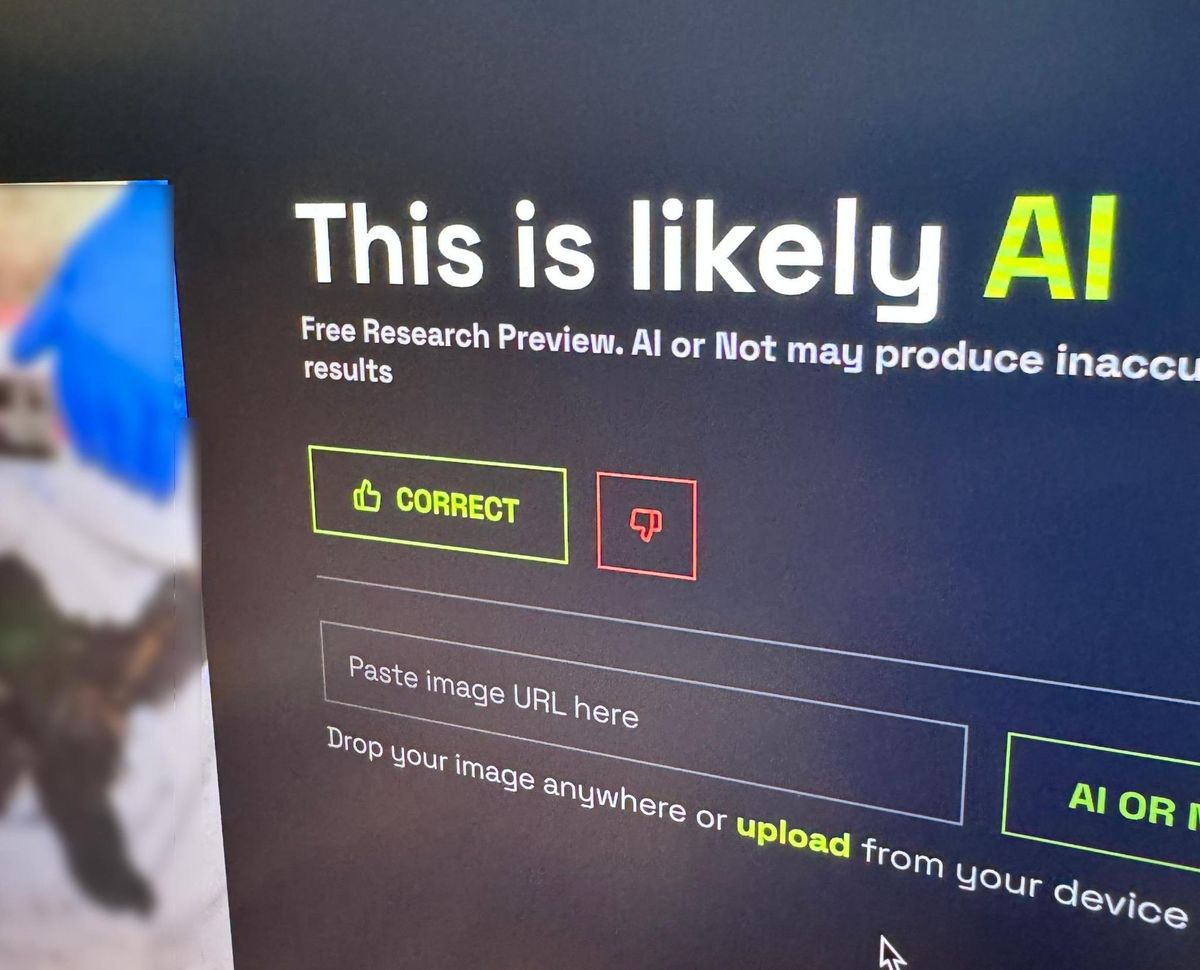
Online AI image detecting tools that may or may not work are labeling real photographs from the war in Israel and Palestine as fake, creating what a world leading expert called a “second level of disinformation.”

Your AI Use Is Breaking My Brain
AI writing is impossible to avoid, is making everything sound the same, and is driving us crazy.

Donald Trump Claims BBC Used AI To Edit January 6 Speech
Donald Trump has claimed the BBC used artificial intelligence to edit his January 6 Capitol riot speech.

AI didn’t sway the election, but it deepened the partisan divide
Artificial intelligence was predicted to disrupt the 2024 election. It ended up shaking people’s faith in truth rather than influencing their vote.
How to Responsibly Report on Hacks and Disinformation
The run-up to the 2016 U.S. presidential election illustrated how vulnerable our most venerated journalistic outlets are to a new kind of information warfare. Reporters are a targeted adversary of foreign and domestic actors who want to harm our democracy. And to cope with this threat, especially in an election year, news organizations need to prepare for another wave of false, misleading, and hacked information. Often, the information will be newsworthy. Expecting reporters to refrain from covering news goes against core principles of American journalism and the practical business drivers that shape the intensely competitive media marketplace. In these cases, the question is not whether to report but how to do so most responsibly. Our goal is to give journalists actionable guidance.
An Indian politician says scandalous audio clips are AI deepfakes. We had them tested
Deepfake experts noted that AI can be used as a cover by politicians when embarrassing audio and video clips of them emerge.

OSF
People are trying to claim real videos are deepfakes. The courts are not amused
The unleashing of powerful, generative AI on the public is raising concerns that as the technology becomes more prevalent, it will become easier to claim that anything is fake.

The Deepfake Defense—Exploring the Limits of the Law and Ethical Norms in Protecting Legal Proceedings from Lying Lawyers
Thousands of audiovisual images documented the insurrectionists who stormed the United States Capitol on January 6, 2021. Authorities subsequently collected tho
Deep Fakes: A Looming Challenge for Privacy
Harmful lies are nothing new. But the ability to distort reality has taken an exponential leap forward with “deep fake” technology. This capability makes it possible to create audio and video of real people saying and doing things they never said or did. Machine learning techniques are escalating the technology’s sophistication, making deep fakes ever more realistic and increasingly resistant to detection. Deep-fake technology has characteristics that enable rapid and widespread diffusion, putting it into the hands of both sophisticated and unsophisticated actors.While deep-fake technology will bring certain benefits, it also will introduce many harms. The marketplace of ideas already suffers from truth decay as our networked information environment interacts in toxic ways with our cognitive biases. Deep fakes will exacerbate this problem significantly. Individuals and businesses will face novel forms of exploitation, intimidation, and personal sabotage. The risks to our democracy and to national security are profound as well.Our aim is to provide the first in-depth assessment of the causes and consequences of this disruptive technological change, and to explore the existing and potential tools for responding to it. We survey a broad array of responses, including: the role of technological solutions; criminal penalties, civil liability, and regulatory action; military and covert-action responses; economic sanctions; and market developments. We cover the waterfront from immunities to immutable authentication trails, offering recommendations to improve law and policy and anticipating the pitfalls embedded in various solutions.
AI Fakes Spread Disinformation. Is the Distrust They Create Even Worse?
Manipulated images undermine our shared reality—and the democracy built upon it.

Deepfakes, Elections, and Shrinking the Liar’s Dividend
Heightened public awareness of the power of generative AI could give politicians an incentive to lie about the authenticity of real content.

* I’m neither “pro-AI” nor “anti-AI.” I’ve been blocked for being perceived as both. —Actually, I’m honestly more anti-AI than pro-AI thus far, aside from specialized models and specific use cases, but I’m willing to consider information that’s new to me
DON'T SHARE THIS, IT'S AI FABRICATED It's fake - the media outlet almost certainly used generative AI to write this and it pulled from a "parody" acct (instagram.com/p/DZu8trmR89Y/) The more you share this, the more you help the pro-AI bros say this is all fake youtube.com/live/ho_ZmwgvDdM