Collection
Bias Loop

Updated 3d
Cognitive biases and feedback loops
Collection
Updated 3d
Cognitive biases and feedback loops
Cognitive Bias Lab | Learn to Make Better Decisions
Explore cognitive biases with interactive tests, simulations, and real-world examples. Free platform to sharpen decision-making and critical thinking — no sign-up needed.
We don’t have a hundred biases, we have the wrong model
Behavioral economics has identified dozens of cognitive biases that stop us from acting 'rationally'. But instead of building up a messier and messier picture of human behavior, we need a new model.
Beware of samples! A cognitive-ecological sampling approach to judgment biases.
Why we're bullish on loops
WTF are loops, why is everyone arguing about them, and why do they actually matter?

Distinction Bias: Why You Make Terrible Life Choices
Worried about a cognitive bias like confirmation bias or hyperbolic discounting screwing you up? Watch out for distinction bias.
Metacognitive Myopia: A Major Obstacle on the Way to Rationality
The notion of metacognitive myopia refers to a conspicuous weakness of the quality control of memory and reasoning processes. Although people are often remarkably sensitive even to complex samples of information when making evaluative judgments and decisions, their uncritical and naive tendency to take the validity of sampled information for granted constitutes a major obstacle to rational behavior. After illustrating this phenomenon with reference to prominent biases (base-rate neglect, misattribution, perseverance), we decompose metacognitive myopia into two distinct but intertwined functions, monitoring and control. We offer explanations for why effectively monitoring the biases resulting from information sampling in an uncertain world is so difficult and why the control function is severely restricted by the lack of volitional control over mental actions. Because of these and other difficulties, metacognitive myopia constitutes a major obstacle to rational judgment and decision making.

How human–AI feedback loops alter human perceptual, emotional and social judgements
Artificial intelligence (AI) technologies are rapidly advancing, enhancing human capabilities across various fields spanning from finance to medicine. Despite their numerous advantages, AI systems can exhibit biased judgements in domains ranging from perception to emotion. Here, in a series of experiments (n = 1,401 participants), we reveal a feedback loop where human–AI interactions alter processes underlying human perceptual, emotional and social judgements, subsequently amplifying biases in humans. This amplification is significantly greater than that observed in interactions between humans, due to both the tendency of AI systems to amplify biases and the way humans perceive AI systems. Participants are often unaware of the extent of the AI’s influence, rendering them more susceptible to it. These findings uncover a mechanism wherein AI systems amplify biases, which are further internalized by humans, triggering a snowball effect where small errors in judgement escalate into much larger ones.

The Human-in-the-Loop is Tired
On reward functions, dopamine, and what it actually feels like when the code starts writing itself
What is “loop engineering?”
There’s talk about loop engineering, but what is it exactly? I looked into it, and found triggers, cron jobs, AI slop & more. Is it a “here today, gone tomorrow” trend?
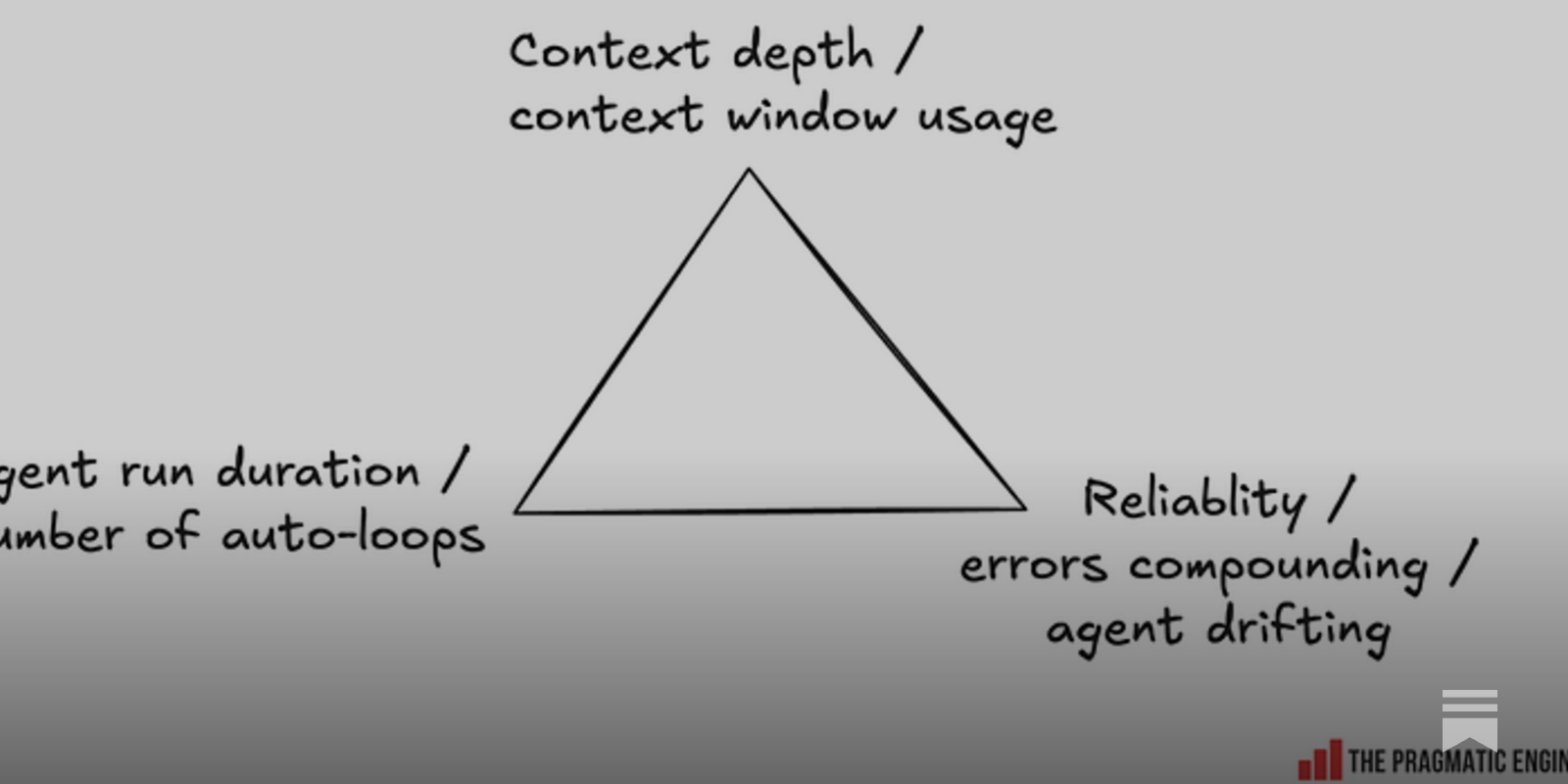
The Recency Bias makes us permanent amnesiacs
With time we are meant to gain experience. This doesn't always seem to be the case. Recency biases show we don't learn over time so much as remember the

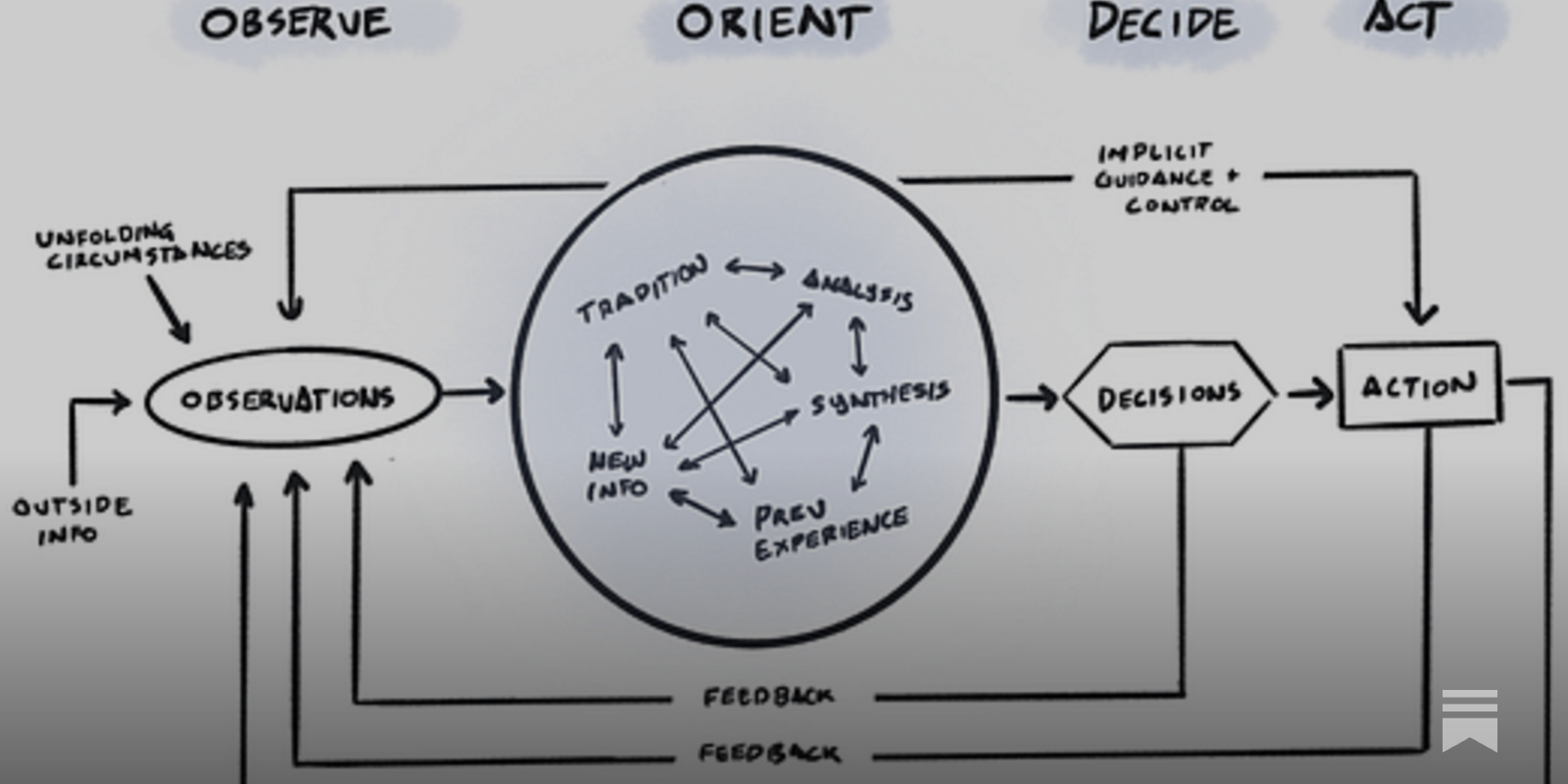
Tools for thought in your OODA loop
The unreasonable effectiveness of getting oriented
Resource-rational belief revision can mitigate as well as amplify polarization
People's beliefs sometimes diverge after observing the same information, which has been interpreted as evidence of irrationality. This behaviour has been proposed to result from people's limited cognitive resources and motivated reasoning, but how belief revision differs across these explanations has not been formalized or compared to a rational norm. Further, while people may be biased relative to a normative ideal, they may still make optimal choices given their limited cognitive resources, or rationally balance the utility of holding accurate beliefs with the belief's intrinsic utility. Across two studies, we develop and test a unified computational account of belief polarization under these proposed mechanisms, showing that people's performance on a belief updating task best fits a limited-resource Bayesian model; external motivations may contribute to divergence (or convergence) by determining what pre-existing information people consider relevant to a situation, rather than by changing how people evaluate new information in isolation.
Measuring Mutual Confirmation Bias Amplification in Simulated User-AI Dialogue: A Multi-Agent Simulation Framework
Conversational AI can reinforce user confirmation bias not just by being agreeable, but by mutually amplifying it as user bias and AI sycophancy co-evolve across a dialogue. We specify and instrument mutual amplification of confirmation bias and AI sycophancy across dialogue using a controlled simulation framework. A simulated user agent — an LLM—with a confirmation-biased persona interacts with real LLM assistants; a dual-Judge architecture independently tracks the agent’s belief evolution and the assistant’s accommodation at each turn. We vary topic epistemic type and bias intensity to measure whether, and under what conditions, these biases co-amplify. This addresses a gap in social simulation research, which has largely treated cognitive bias as an isolated property rather than an interactive dynamic.
Making AI transparent
The O'Reilly Podcast: Andy Hickl on sources of bias in artificial intelligence—and how to address them.

Algorithmic Bias · Open Encyclopedia of Cognitive Science
Algorithmic bias refers to prejudicial, discriminatory, unjust, inaccurate, or otherwise disparate performance or outcomes from algorithmic systems based on racial, gender, or other attributes of an individual or a group. The concept of algorithmic bias emerged at the intersection of computer science, artificial intelligence (AI) research, critical data studies, human–computer interaction, law, philosophy, and similar disciplines. Although problems and discrepancies at the model level denote the most commonly studied form of bias, the term algorithmic bias is also used as a shorthand to describe a multitude of problems and challenges at various steps of the AI pipeline from ideation, problem framing, training data curation and processing, model training and validation, and deployment as well as emergent issues that arise from interaction with the real world. Potential sources of bias, appropriate metrics to define, measure, and mitigate bias, and the utility and merit of technical approaches to bias mitigation are fiercely debated in the current AI landscape.

How Field Experiments in Economics Can Complement Psychological Research on Judgment Biases
This review summarizes results of field experiments examining individual behaviors across several market settings—from open-air markets to rideshare markets to tax-compliance markets—where people sort themselves into market roles wherein they make consequential decisions. Using three distinct examples from my own research on the endowment effect, left-digit bias, and omission bias, I showcase how field experiments can help researchers understand mediators, heterogeneity, and causal moderation involved in judgment biases in the field. In this manner, the review highlights that economic field experiments can serve an invaluable intellectual role alongside traditional laboratory research.