Should We Treat Data as Labor? Moving Beyond “Free”
Should We Treat Data as Labor? Moving beyond "Free" by Imanol Arrieta-Ibarra, Leonard Goff, Diego Jiménez-Hernández, Jaron Lanier and E. Glen Weyl. Published in volume 108, pages 38-42 of AEA Papers and Proceedings, May 2018, Abstract: In the digital economy, user data is typically treated as capi...
Database consumption
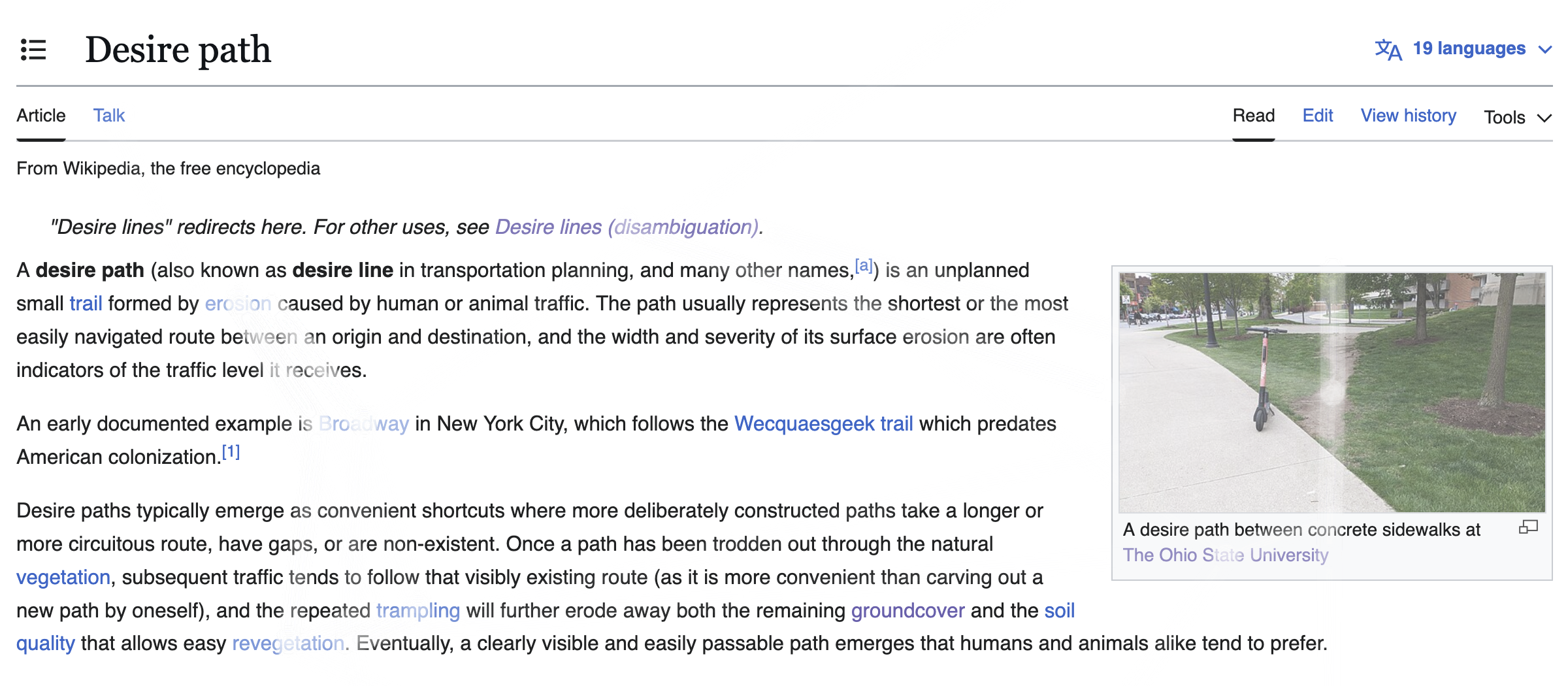
Database consumption (Japanese: データベース消費, romanized: dētabēsu shōhi) refers to a way of content consumption in which people do not consume a narrative itself, but rather consume the constituent elements of the narrative.[1]: 240  The concept was coined by the Japanese critic Hiroki Azuma in the early 2000s.
The Staggering Ecological Impacts of Computation and the Cloud
Anthropologist Steven Gonzalez Monserrate draws on five years of research and ethnographic fieldwork in server farms to illustrate some of the diverse environmental impacts of data storage.

Data Supply Chains
Data is a critical resource. Like oil, gold, or lithium, both companies and countries covet data. Ultimately, like oil, data’s flow can enrich those that posses
Data Leverage: A Framework for Empowering the Public in its...
Many powerful computing technologies rely on implicit and explicit data contributions from the public. This dependency suggests a potential source of leverage for the public in its relationship...

Reframing our relation to our data | Ronen Tamari
From data as digital exhaust to data as digital trails to collective wisdom.
Your Data, Your Control
How data portability can unlock competition and empower consumers January 15, 2026 Copyright and permission to reproduce For information on the Competition Bureau's activities, please contact: Information Centre Competition Bureau 50 Victoria Street Gatineau QC K1A 0C9
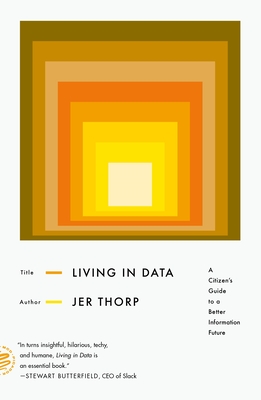
Living in Data: A Citizen's Guide to a Better Information Future (Paperback)
Jer Thorp’s analysis of the word “data” in 10,325 New York Times stories written between 1984 and 2018 shows a distinct trend: among the words most closely associated with “data,” we find not only its classic companions “information” and “digital,” but also a variety of new neighbors—from “scandal” and “misinformation” to “ethics,” “friends,” and “play.”To live in data in the twenty-first century

FAIR Principles - GO FAIR
In 2016, the ‘FAIR Guiding Principles for scientific data management and stewardship’ were published in Scientific Data. The authors intended to provide guidelines to improve the Findability, Accessibility, Interoperability, and Reuse of digital assets. The principles emphasise machine-actionability (i.e., the capacity of… Continue reading →

Danielle Robinson, PhD
Advancing the power of data to improve the social and economic lives of all people.

Overview data quality dimensions [Data Management Wiki]
Kari Jordan, Ph.D.
Advancing the power of data to improve the social and economic lives of all people.

Masnick's Impossibility Theorem: Content Moderation At Scale Is Impossible To Do Well
As some people know, I’ve spent a fair bit of time studying economist Kenneth Arrow whose work on endogenous growth theory and information economics influenced a lot of my thinking on the eco…

MyData
The human-centric approach to data is aimed at a fair, sustainable, and prosperous digital society. In such a society, people get value from their data and set the agenda on how it is used. And for organisations, the ethical use of data is always the most attractive option.

pauline on Twitter / X
Amelia Wattenberger 🪷 on Twitter / X

Everything I Love | Chia Amisola

Everest Pipkin
we were online

Selective Openness

Cross-License Collaboratives
Nobody pays for open source. We can force them to. | Seldo.com

A Research Lab for Open Source ✸ Software Stewardship Lab
An equitable company - Roomy

Ideas on a Financially Sustainable Atproto | Alex | Offprint