Collection
Open
what does it mean to live a creative life?

Updated 22d
author, authority, augmentation / creator, creativity, creation
Collection
Updated 22d
author, authority, augmentation / creator, creativity, creation
Beyond the Artifact: Power as a Lens for Creativity Support Tools
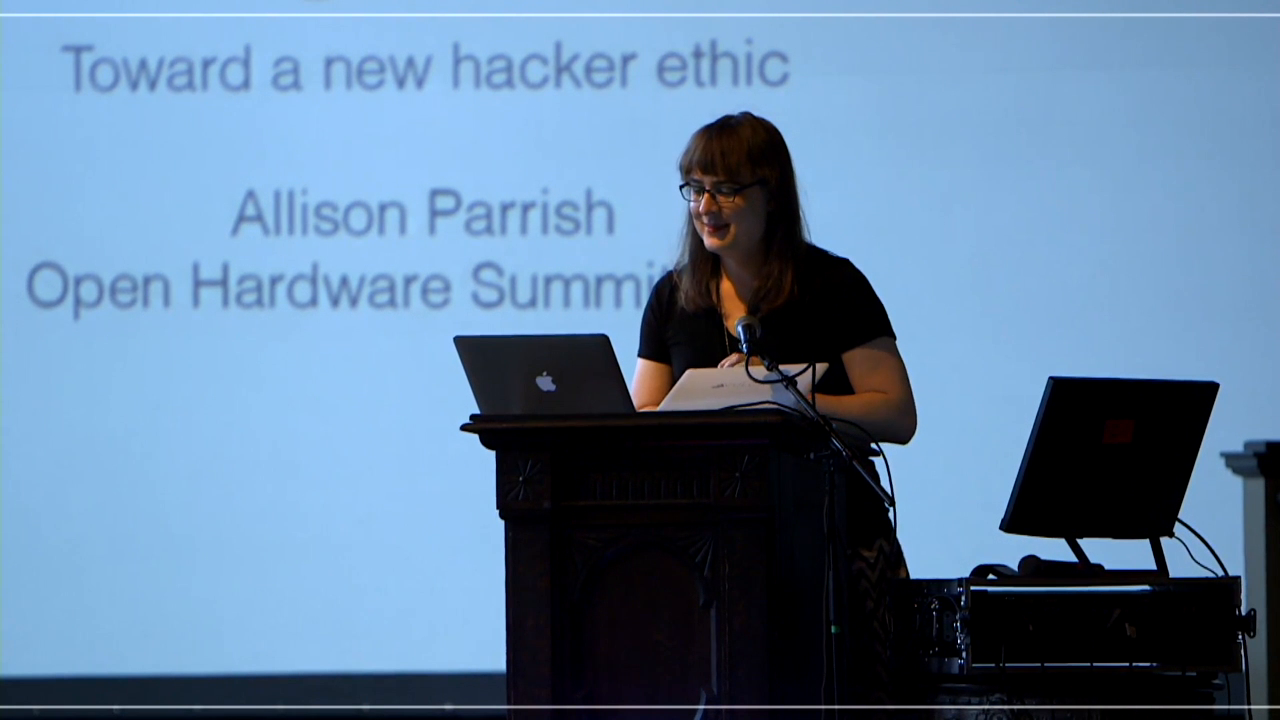
Programming is Forgetting: Toward a New Hacker Ethic - Allison Parrish | Open Transcripts
It's easy to interpret any criticism of the hacker ethic—which is what I'm about to do—as a kind of assault.
I don’t care for Glob

What Art Does: An Unfinished Theory
Why do we need art? What Art Does is an invitation to e…

Opinion | A Breath of Fresh Air With Brian Eno
The musician and record producer Brian Eno delves into his experiments with ambient music, his thoughts on generative A.I. and his deep gratitude for the uniqueness of human life.

Flânerie without Politics: The Middle-Class Fetishization of the City
The middle-class spectacle of urban decay.
Deep research requires a slower pace than tech industry work
Anyone working in an industry for a while will become accustomed to that culture—its processes, its norms, its values, its tacit knowledge. Much of this is incredibly valuable, of course, but these ideas can also represent constraints. There are some important impedances here between tech industry culture and research culture. In particular, tech culture is calibrated to a much faster pace. This can lead to impatience or early abandonment when confronting problems which require a researcher’s pace.
Sensibilities as Knowledge in Design Research
As part of the Digital Library's transition to Open Access, new features for researchers are available in the Premium Edition. Click here to learn more.

Still Life with Woodpecker
Still Life With Woodpecker (1980) is the third novel by Tom Robbins, concerning the love affair between an environmentalist princess and an outlaw. The novel encompasses a broad range of topics, from aliens and redheads to consumerism, the building of bombs, romance, royalty, the Moon, and a pack of Camel cigarettes. The novel continuously addresses the question of "how to make love stay" and is sometimes referred to as a "fable-parody".

Punk subculture
The punk subculture includes a diverse and widely known array of music, ideologies, fashion, and other forms of expression, visual art, dance, literature, and film. Largely characterised by anti-establishment views, the promotion of individual freedom, and DIY ethics. The culture originated from punk rock.

Whole Earth Catalog, Fall 1968
Here lies a nearly-complete archive of Whole Earth publications, a series of journals and magazines descended from the Whole Earth Catalog, published by Stewart Brand and the POINT Foundation between 1968 and 2002.

Übermensch | Social Sciences and Humanities | Research Starters | EBSCO Research
<p>The concept of "Übermensch," introduced by German philosopher Friedrich Nietzsche in his 1880s work "Thus Spoke Zarathustra," describes an evolved form of humanity that transcends conventional human limitations and societal norms, particularly those imposed by religious structures. Translated as "overman" or "superman," the term represents an ideal that Nietzsche believed humanity should strive toward, emphasizing self-overcoming and the rejection of outdated moral frameworks. The Übermensch is often illustrated through metaphorical transformations, such as that of a camel, which bears the weight of traditional values, into a lion, which challenges those values, and ultimately into a child, symbolizing new beginnings and creativity.</p> <p>Interpretations of the Übermensch vary significantly—some view it as a physical evolution, while others see it as a mental or philosophical transformation. The concept has also been misappropriated in modern contexts; notably, the Nazis distorted Nietzsche’s ideas to justify their racial superiority agenda, despite Nietzsche himself being a critic of nationalism and anti-Semitism. The ambiguity in translation and interpretation has led to ongoing debates about the true meaning and implications of Nietzsche's Übermensch, with scholars exploring its relevance in discussions of personal autonomy, artistic freedom, and the potential for human evolution.</p>

ebeneazy on Twitter / X
> being creative is a universal human featurethats deeper than anyone can fully realize"So God created mankind in his own image" - Gen 1:27— ebeneazy (@EbenZergaw) July 24, 2026
Bricolage
In the arts, bricolage is the construction or creation of a work from a diverse range of things that happen to be available, or a work constructed using mixed media.

Nelson_T_1974_-_Computer_Lib,_Dream_Machines (dragged).pdf
The Ideal University
Critical maneuvers can open space for thinking and questioning differently. One thing hypertext can offer this task is an endlessly wide margin on which to inscribe comments and make links, the chance to move in new directions. That is what the university is supposed to offer, too.
Toward a Critical Technical Practice
This is a chapter in Geof Bowker, Les Gasser, Leigh Star, and Bill Turner, eds, Bridging the Great Divide: Social Science, Technical Systems, and Cooperative Work, Erlbaum, 1997.
Toward a Critical Technical Practice
This is a chapter in Geof Bowker, Les Gasser, Leigh Star, and Bill Turner, eds, Bridging the Great Divide: Social Science, Technical Systems, and Cooperative Work, Erlbaum, 1997.