Collection
Open
AI

Updated 20h
Collection
Updated 20h
LLMs are not like manufacturing machines - Ross Wintle
LLMs are not just machines. They are machine-building machines! This comes with way more responsibility. And understanding it may change how you use them.

If you don't run your own LLM proxy, how the fuck do you even know whats going on?
I think the title captures the idea fully but I'll dig into it because this ain't Twitter. You're working an idea, a piece of code, or a multibillion a year SaaS app which is probably saving the world. Maybe you're automating the cloning process of grabbing
Neural Networks Are Already Clean
A working hypothesis about neurons, generalization, and the ecology of circuits.

Resilience, Risk, and Transformation
AI-related market corrections, sharp rises in sovereign bond yields, and cyber threats could trigger market turmoil, while financial vulnerabilities could amplify these risks into systemic events. The growing footprint of hedge funds could further exacerbate adverse market dynamics during periods of stress.

Faster Fourier Transforms
The OpenAI algorithm for the FFT is less a breakthrough and more a malicious exploit.

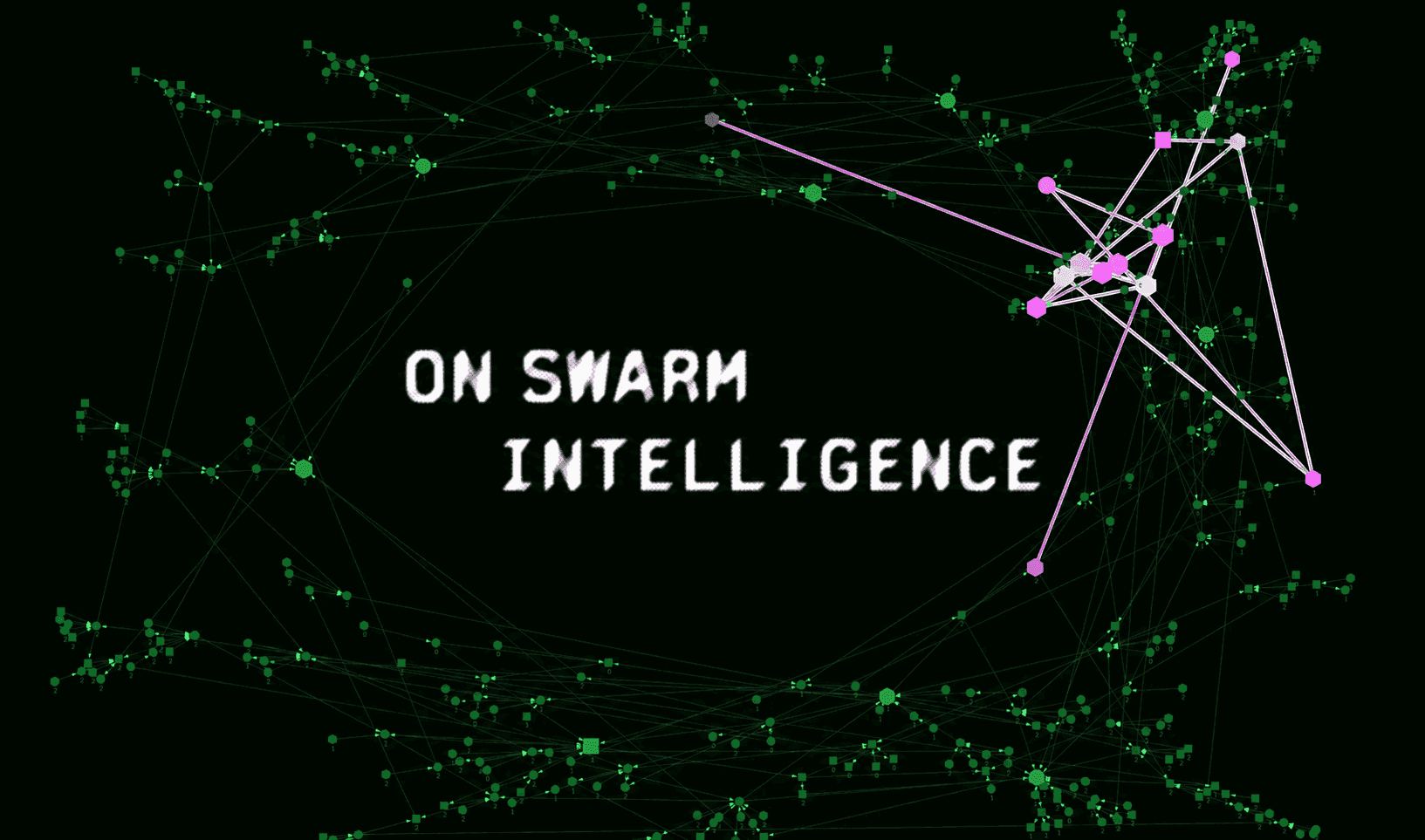
Humans approve intent, machines prove conformance
The pull request assumes a human wrote the diff. gittifacts is my attempt at a git platform for when agents write most of it.

Test-Driven Approaches to Software Engineering with Large Language...
Tests increasingly participate in the decisions made by large language models and software engineering agents. They specify intended behavior, guide program construction and repair, select...

Why Software Engineering Is Indispensable in the Age of Coding Agents
Can AI make Software Engineering (SE) -- the discipline -- obsolete? And can it make software engineers -- the professionals -- redundant? This paper argues that the rise of capable AI coding...

OpenAI unleashes hundreds more math results upon a field already in shock
A month after resolving one of the six biggest open problems in mathematics, the company says its new internal model has toppled heaps more—this time without the multimillion-dollar price tag

Intelligence per Watt: Measuring Intelligence Efficiency of Local AI
Large language model (LLM) queries are predominantly processed by frontier models in centralized cloud infrastructure. Demand growth strains this paradigm faster than providers can scale. Two advances create an opportunity to rethink it: small, local LMs (<=20B active parameters) now achieve competitive performance to frontier models on many tasks, and local accelerators (e.g., Apple M4 Max) can host these models at interactive latencies. This raises the question: can local inference viably redistribute demand from centralized infrastructure? This requires measuring both whether local LMs can accurately answer real-world queries and whether they can do so efficiently on power-constrained devices (e.g., laptops). We propose intelligence per watt (IPW), task accuracy per unit of power, as a unified metric for the capability and efficiency of local inference across model-accelerator configurations. We evaluate 20+ state-of-the-art local LMs, 8 hardware accelerators (local and cloud), and 1M real-world single-turn chat and reasoning queries. For each query, we measure accuracy (local LM win rate against frontier models), energy, latency, and power. We find three key results. First, local LMs successfully answer 88.7% of these queries, with accuracy varying by domain. Second, longitudinal analysis from 2023-2025 shows IPW improved 5.3x, driven by both algorithmic and accelerator advances, with locally-serviceable query coverage rising from 23.2% to 71.3%. Third, local accelerators achieve at least 1.4x lower IPW than cloud accelerators running identical models, revealing significant headroom for local accelerator optimization. These findings demonstrate that local inference can meaningfully redistribute demand from centralized infrastructure for a substantial subset of queries, with IPW serving as the critical metric for tracking this transition.
An Internet for the KV Cache: Rethinking Classical Infrastructure Boundaries in the LLM Inference Age
LLM inference has become a global-scale, heterogeneous workload spanning agents, retrieval, tool-use, code execution and multi-modal reasoning. These workloads naturally enable context reuse from overlapping inputs, creating a major opportunity to store and reuse the contexts' KV Caches instead of recomputing them. However, model-side advances that shrink the KV Cache and system-side advances that reduce compute, storage, and transfer costs are evolve independently within legacy cloud boundaries. We argue that future inference infrastructure should allow decoupling of compute and KV Cache storage across cloud and datacenters. The network becomes an active distribution channel; bandwidth, latency and pricing directly determines how the KV Cache should be managed. We propose a vision for an Internet for the KV Cache, with KV Cache management working as a content-distribution system. In this view, KV Cache storage and recompute decisions are driven by model, infrastructure, and application metrics, to enable adaptive, content-driven decisions for minimizing latency and cost.
The End of Code Review: Coding Agents Supersede Human Inspection
Code review has been the primary quality gate in software development since Fagan formalised code inspection in 1976. For five decades, having a human examine and comment on a colleague's changes before merge has been a cornerstone practice at organisations of every size. Coding agents are large language model (LLM)-based autonomous systems capable of reading, writing, testing, and repairing software. We argue that coding agents have crossed a threshold of capability at which traditional human code review is no longer a necessary component of a software quality pipeline. Our argument rests on two claims: every stated goal of code review can be served by agents at lower cost and higher throughput; the naive integration in which agents write code and humans remain the mandatory reviewers is a dead end because it neither provides meaningful assurance nor scales with AI-assisted throughput.
There is more to code review than (automatable) detection
The abstract for article “The End of Code Review: Coding Agents Supersede Human Inspection” paints this picture for the reader…

Thaura / Your Ethical AI Companion
No ads, no investors, no training on your data. Just an AI that works for you.

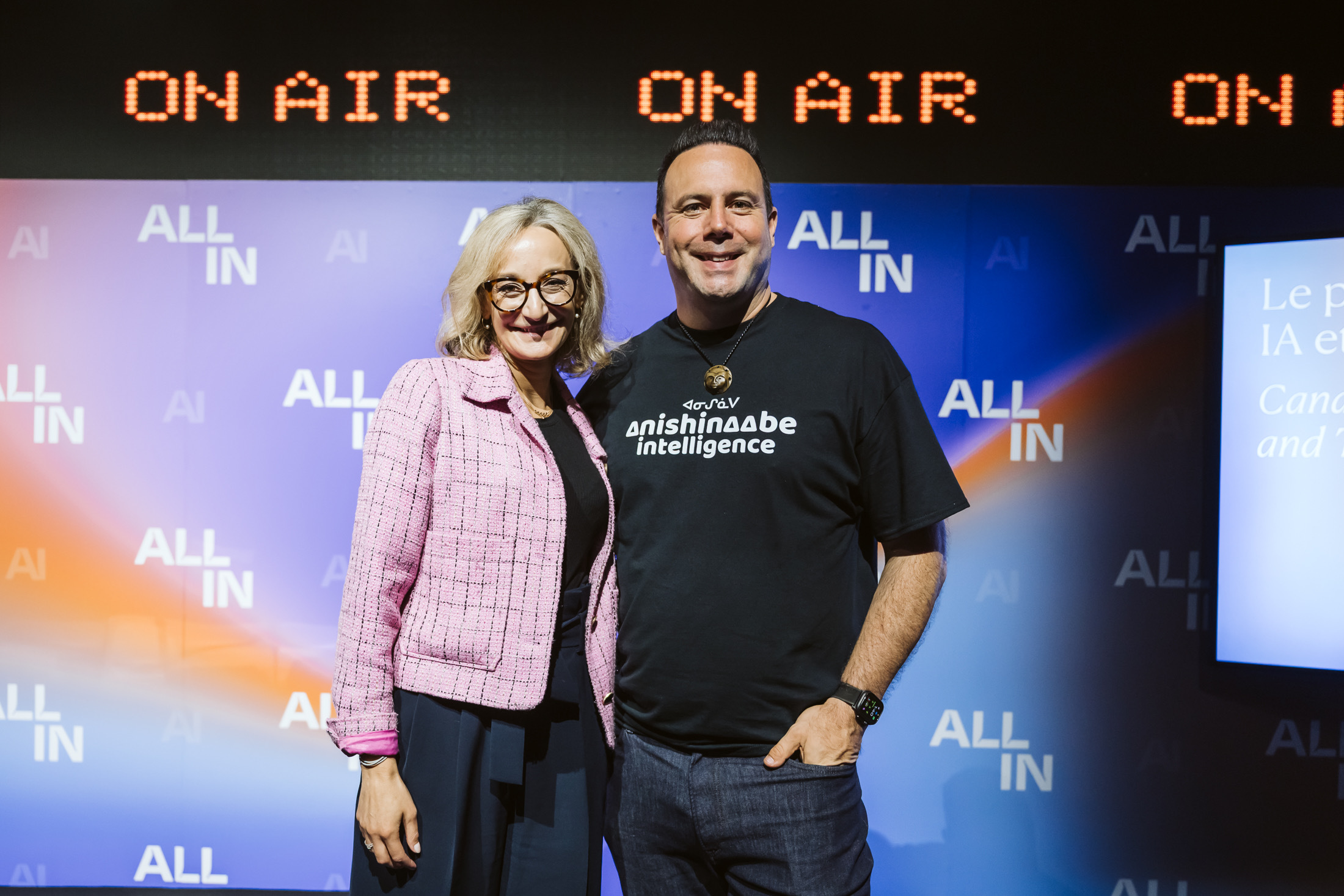
CEIMIA and Animikii Indigenous Technology announce a first-of-its-kind partnership with Sandy Bay Ojibway First Nation - Ceimia
CEIMIA is a Montreal-based international centre of expertise dedicated to the responsible development and adoption of artificial intelligence. As a neutral broker and a key player in the Global Partnership on AI (GPAI), CEIMIA works with governments, civil society, and the private sector to develop and disseminate practical tools that foster ethical AI for the benefit of all citizens.
If you've ever shopped at IKEA, you've had slop in your life. Did it really feel worse than artisanal furniture? Chances are, it solved your problem, and you moved on with your life. So it will be with most consumer software. youtube.com/watch?v=0h8vAGCiRX0

How IKEA Mastered Furniture
www.youtube.com
