Collection
Open
Climate

Updated 12d
Collection
Updated 12d
Super-rich get ‘double dividend’ from causes and costs of climate crisis, report finds
Oxfam says investing by rich in disaster recovery widens inequality and gives incentive to delay climate action

We’re going to miss the 1.5 °C climate target. Now what?
The United Nations Environment Program released a report earlier this month saying the world – which is already experiencing roughly 1.3˚C of warming – will miss the 1.5˚C climate change target set by international negotiators over a decade ago.

Could We Dredge the Netherlands Without Fossil Fuels?
For centuries, the Netherlands were mainly dredged by hand, supplemented by animal power, wind power and tidal power. Could it be done again?

Prime Minister Carney announces the largest clean energy investment in North American history
Canada is starting from a position of strength. We have what the world wants.

The Silent Majorities: six groups across society whose views point to systemic change
Expressing our shared concerns can drive public confidence in systems change.
Regenerative economics
Regenerative economics is an economic system that works to regenerate capital assets. In standard economic theory, one can either “regenerate” one's capital assets or consume them until the asset cannot produce a viable stream of goods and/or services. Regenerative economics accounts for and gives economic value to Earth and the Sun. Most of regenerative economics focuses on the earth and the goods and services it supplies.
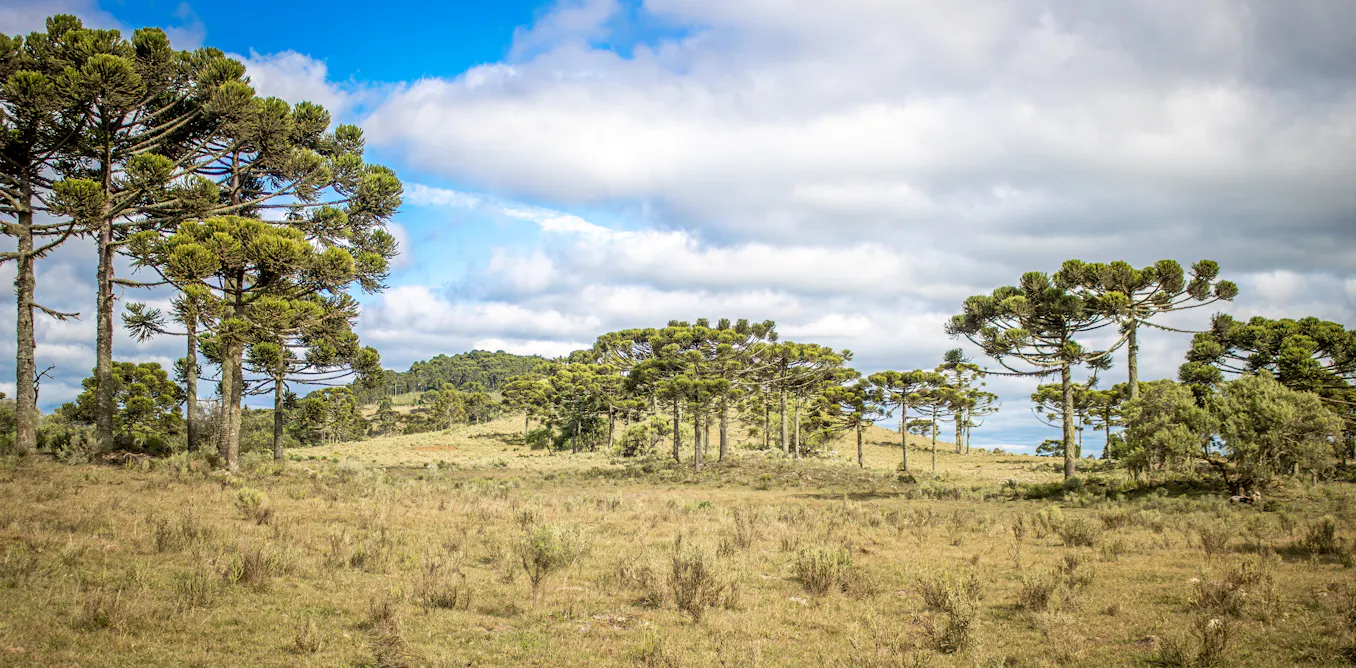
Brazil’s highland forest has been shaped by climate change and Indigenous people for 6,000 years
Prehistoric pollen records show that forest dynamics were driven by more than just broad-scale climatic changes.
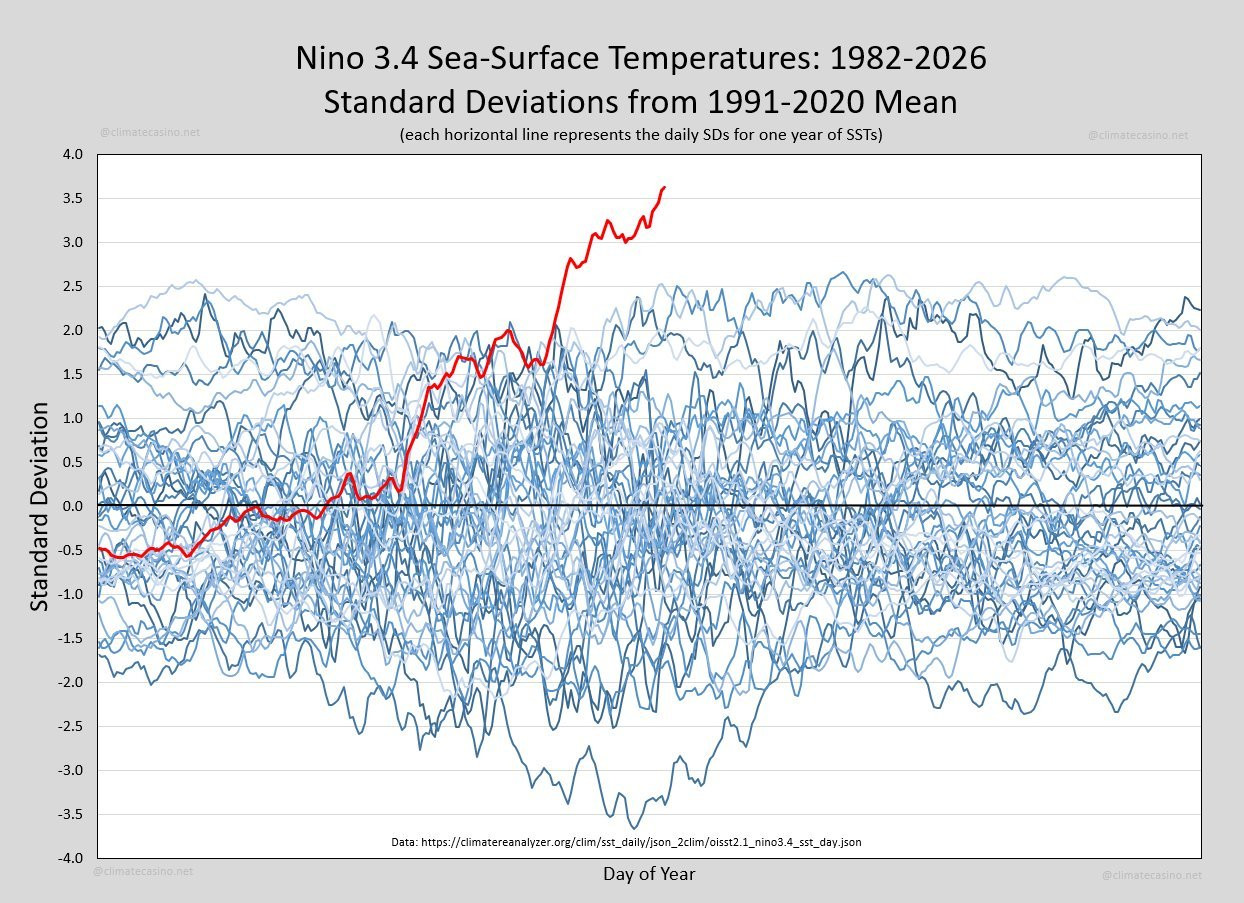
The Graph That Should Be Front-Page News
Every so often the Earth produces a signal that is impossible to ignore. This graph is one of them. It shows sea-surface temperatures in the Niño 3.4 region of the equatorial Pacific, one of the most important parts of the Earth's climate system. Each blue line represents a different year since 1982. The red line is this year. It doesn't just set a new record. It has departed entirely from the range of previous observations.If this graph represented stock market prices, a new Olympic record or a
Google’s exponential path to climate-wrecking digital bloat
Google’s latest report reveals a completely unprecedented rise in energy consumption – more than any of us expected. Generative AI is a climate carbon bomb.

Post-growth: the science of wellbeing within planetary boundaries
There are increasing concerns that continued economic growth in high-income countries might not be environmentally sustainable, socially beneficial, or economically achievable. In this Review, we explore the rapidly advancing field of post-growth research, which has evolved in response to these concerns. The central idea of post-growth is to replace the goal of increasing GDP with the goal of improving human wellbeing within planetary boundaries. Key advances discussed in this Review include: the development of ecological macroeconomic models that test policies for managing without growth; understanding and reducing the growth dependencies that tie social welfare to increasing GDP in the current economy; and characterising the policies and provisioning systems that would allow resource use to be reduced while improving human wellbeing.

SCI — Software Carbon Intensity | Green Software Foundation
The global standard for calculating and reducing the carbon emissions of your software. ISO/IEC 21031:2024.

We May Be Entering A Second Axial Age
The transition from small hunter-gatherer societies into complex civilizations gave rise to the first Axial Age. Today, the planetary polycrisis of climate chaos, mass migration, increasing warfare and transformative AI represents a rupture of comparable magnitude.

Start your own Internet Resiliency Club – Bow Shock Systems Consulting
Thanks to war, geopolitics, and climate change, Europe will have more frequent and more severe internet disruptions in the very near future. Governments and businesses need to prepare for catastrophic loss of communications. Unfortunately, the necessary changes are risky and expensive, which means they won’t do it until a crisis is already here. However, small groups of volunteers with a little bit of time and money can provide crucial initial leadership to bootstrap recovery.
Managed retreat in Europe more widespread than previously thought | Deltares
A new study from Deltares and Kiel University published in Earth's Future shows that managed retreat, the planned, government-supported relocation of people and infrastructure away from flood-prone areas, is being practiced across Europe at larger scale than thought.

Climate-driven depopulation and adaptation realities in America’s coastal ground zero
With global temperatures poised to exceed the 1.5 °C Paris Agreement threshold—a level that triggered substantial ice-sheet collapse during the Last Interglacial—low-elevation coastal zones face sea-level commitments far beyond current planning horizons. With this geological frame of reference, we examine the impact of sea-level rise on what may be the most physically vulnerable coastal zone in the world using prehistoric and contemporary patterns of human mobility. We highlight the positive aspects of the recently commenced out-migration in this region and argue that the fate of communities landwards of this coastal zone will be decided in the next few decades.
The red pill or the blue pill for AI and conservation
Anil Madhavapeddy speaks at the Conservation Evidence conference at Pembroke College Cambridge about the choice facing conservation practitioners for the use of open vs blackbox AI.
Localized Resilience → Area → Sustainability
Definition → Localized Resilience refers to the capacity of a specific community or geographically defined system to anticipate, absorb, adapt to, and recover from disruptive shocks and stresses, such as climate events or economic downturns. This quality is characterized by strong internal social cohesion, diversified local economies, and decentralized resource systems, like local food production or microgrids.

A social-ecological framework for analyzing and designing integrated crop–livestock systems from farm to territory levels
Integrated crop–livestock systems are often considered a promising way to address agricultural sustainability issues. Many authors claim that complementarities and synergies between crops and livestock can improve nutrient cycling and delivery of ecosystem services (ES) in agricultural systems. They have analyzed effects of interactions at the farm level and affirmed the potential advantage of developing crop–livestock interactions at the territory level. However, potential benefits of developing synergies beyond the farm level have not been clearly identified. Thus, we developed a conceptual framework that can be used to analyze, design and perform integrated assessment of crop–livestock systems at the territory level. To address crop–livestock interaction issues, we define it as a social-ecological system called the territorial crop–livestock system (TCLS). The ecological system is represented as three interacting components, crops, grasslands and animals, allowing description of various land uses and their potential effects on nutrient cycling and ES. The social system, represented as farmers interacting with natural-resource managers and agro-food chain actors, determines land use and the nature and intensity of ES delivered. We highlight the importance of coordination and learning among actors to support implementation of complex adaptive systems such as TCLSs. We illustrate the expressive power of our conceptual framework through development of a generic typology of crop–livestock systems. Then we show how our conceptual framework can be used as an intermediary object with stakeholders in participatory design approaches. We illustrate this process by representing four archetypal TCLSs. We provide an example of the design approach implemented in Southwestern France to address severe recurrent water shortages, which includes analysis of land use in the current crop–livestock system and the associated key metabolic and ES issues, identification of options for change and multi-criteria analysis of these options. We conclude that this framework shows great potential to support development of sustainable farming systems at the territory level.
Climate Change is coming for Christmas
Stunted trees, pricey chocolate, threatened reindeer, scant snow—warming is taking a toll.
