Collection
Open
Political

Updated 8d
Collection
Updated 8d
Global Microsoft outage leaves millions without access to Outlook email, Teams and other tools | CNN Business
A massive Microsoft outage has left millions around the world without access to Outlook email, Teams meeting tools and other staples of modern office life. Follow for live updates

Super-rich get ‘double dividend’ from causes and costs of climate crisis, report finds
Oxfam says investing by rich in disaster recovery widens inequality and gives incentive to delay climate action

Canada launches the Real-Time Rail, bringing 24/7 payment infrastructure to the national economy | Payments Canada
The new system will enable participating financial service providers to clear and settle payments in real time, providing a made-in-Canada platform for future innovation and prosperity.

AI Had Better Work Out
If you liked this piece, you should subscribe to my premium newsletter, and you can subscribe on the following links: $70 a year, $18 a quarter, or $7 a month. In return, you get a weekly premium newsletter that dives deep into the finances of the AI bubble. Over the

Resilience, Risk, and Transformation
AI-related market corrections, sharp rises in sovereign bond yields, and cyber threats could trigger market turmoil, while financial vulnerabilities could amplify these risks into systemic events. The growing footprint of hedge funds could further exacerbate adverse market dynamics during periods of stress.

Scenarios for our Economic Future
The Anthropic Economics Team models the effects of AI on the economy of 2030.
It’s Not Polarization; It’s the Radicalization of the Political Right
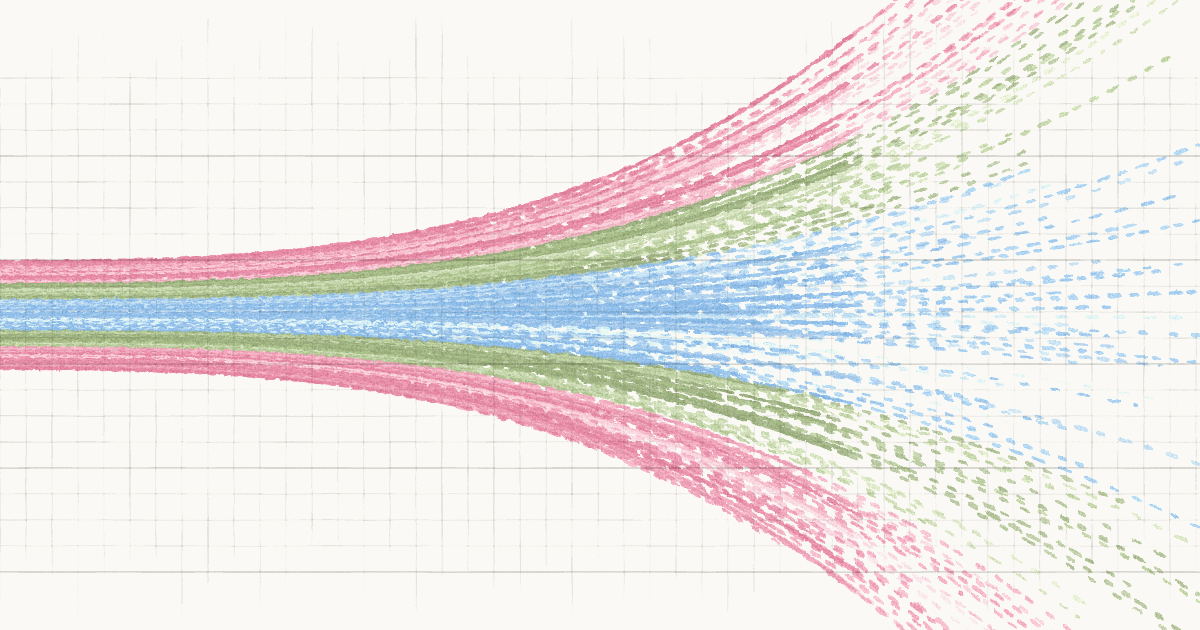
Polarization has become the master concept for diagnosing contemporary democratic crises. The notion denotes three features: symmetry between parties, politics as an opinion space where positions diverge, and mutual repulsion between opposing camps. Yet none of these capture current realities. Across democracies, the central dynamic is not two poles drifting apart but the transformation of the political right into authoritarianism, norm breaking, and openness to political violence. Social democratic and center-right parties tend to respond in the opposite way from what “polarization” implies: by accommodating rightward. Attempts to salvage the polarization frame with modifiers (“asymmetric,” “affective,” “sectarian,” “pernicious”) concede these realities but risk hollowing out the concept’s definitional core. These limitations reveal a deeper misdiagnosis: when one party turns antidemocratic and illiberal, incivility and conflict are inevitable—but they are symptoms, not the root problem. Misdiagnosing them as the central issue leads to viewing civility and compromise as remedies, thereby risking the legitimation of authoritarian actors. This article proposes an alternative lens: the radicalization of the political right. Developed in the study of extremism, the radicalization framework better captures asymmetric change, identity-driven politics, and the mainstreaming of illiberalism. It foregrounds identity fusion, threat narratives, elite entrepreneurship, and escalation. Concepts are never politically innocent and persisting with “polarization” risks both misdiagnosing and normalizing authoritarian threats.
ArriveCAN Was a Fiasco—and Just the Tip of Ottawa’s Failing Tech Strategy | The Walrus
How Canada became a cautionary tale in building government software

Pluralistic: Surveillance vs guillotines (11 Aug 2026) – Pluralistic: Daily links from Cory Doctorow
In the summer of 2013, two esoteric, technical, incredibly important texts were published within weeks of one another: the first is the Snowden leaks, which revealed a system of global, pervasive digital surveillance; the second was Thomas Piketty's Capital in the 21st Century, a book about the economic inevitability (and political instability) of oligarchy:
The Silent Majorities: six groups across society whose views point to systemic change
Expressing our shared concerns can drive public confidence in systems change.

Technorealists, the silent majority? - Openness Praxis
you might find yourself standing in the unremarkable center
EU Parliament greenlights Chat Control 1.0 – Breyer: "Our children lose out"
Today, the European Parliament allowed the suspicionless mass scanning of private communications ("Chat Control 1.0") to pass, a measure it had rejected twice in March. Although a majority of voting Members of the European Parliament (MEPs) actually opposed the regulation (314 against, 276 in favor,

Google’s exponential path to climate-wrecking digital bloat
Google’s latest report reveals a completely unprecedented rise in energy consumption – more than any of us expected. Generative AI is a climate carbon bomb.

Post-growth: the science of wellbeing within planetary boundaries
There are increasing concerns that continued economic growth in high-income countries might not be environmentally sustainable, socially beneficial, or economically achievable. In this Review, we explore the rapidly advancing field of post-growth research, which has evolved in response to these concerns. The central idea of post-growth is to replace the goal of increasing GDP with the goal of improving human wellbeing within planetary boundaries. Key advances discussed in this Review include: the development of ecological macroeconomic models that test policies for managing without growth; understanding and reducing the growth dependencies that tie social welfare to increasing GDP in the current economy; and characterising the policies and provisioning systems that would allow resource use to be reduced while improving human wellbeing.

Pluralistic: Hold on for dear life (28 May 2026) – Pluralistic: Daily links from Cory Doctorow
From the earliest days of technopolitics, the role of technology in resisting authoritarianism was unclear. On the one hand, there's the indisputable fact that modern cryptography, properly implemented, can deliver a degree of privacy that is proof against all technological attacks.
Government Bill (House of Commons) C-34 (45-1) - First Reading - Safe Social Media Act - Parliament of Canada
Government Bill (House of Commons) C-34 (45-1) - First Reading - Safe Social Media Act - Parliament of Canada

Landmark German ruling declares Google's AI Overviews are Google's own words and makes it liable for false answers
A German regional court has ruled that Google is directly liable for the content of its AI search overviews. According to the court, previous limited liability protections for search engine operators don't apply to AI overviews. In this case, Google's AI had falsely linked two publishers to fraud and made claims that didn't appear in any of the linked sources. The ruling could set a precedent for AI-generated content liability worldwide.

Liberals Are The New Climate Deniers
Grow like Trees: An Organic Approach to Societal Regrowth
2026 is the year that system breakdown became impossible to deny. Democratic norms, societal norms, rule of law, the fabric of the social contract tearing as we watch. Or hide, unwilling or unable to face the unravelling. The hopeful among us see opportunity through the dark. Tentatively or boldly we

Hope in Common
We seem to have reached an impasse. Capitalism as we know it appears to be coming apart. But as financial institutions stagger and crumble, there is no obvious alternative. Organized resistance appears scattered and incoherent; the global justice movement a shadow of its former self. There is good reason to believe that, in a generation […]