Collection
Disability-driven Development

Updated 13d
Disability-driven Development is a practice that reimagines computing from a disabled perspective.
Collection
Updated 13d
Disability-driven Development is a practice that reimagines computing from a disabled perspective.
Inclusive Design 24 #id24
say eugenics, say it again
For individuals This suggestion is to get comfortable and familiar with the concept of eugenics - a concept that holds a lot of information about cultura...

Why AI is exposing design’s craft crisis
AI didn’t create the craft crisis in design — it exposed the technical literacy gap that’s been eroding strategic influence for over a decade.

tech isn’t the future it’s just capitalism faster
responding with slowness in relations

The Dunning-Kruger effect in accessibility - Craig Abbott
Why your confidence in accessibility could be a sign of how little you know

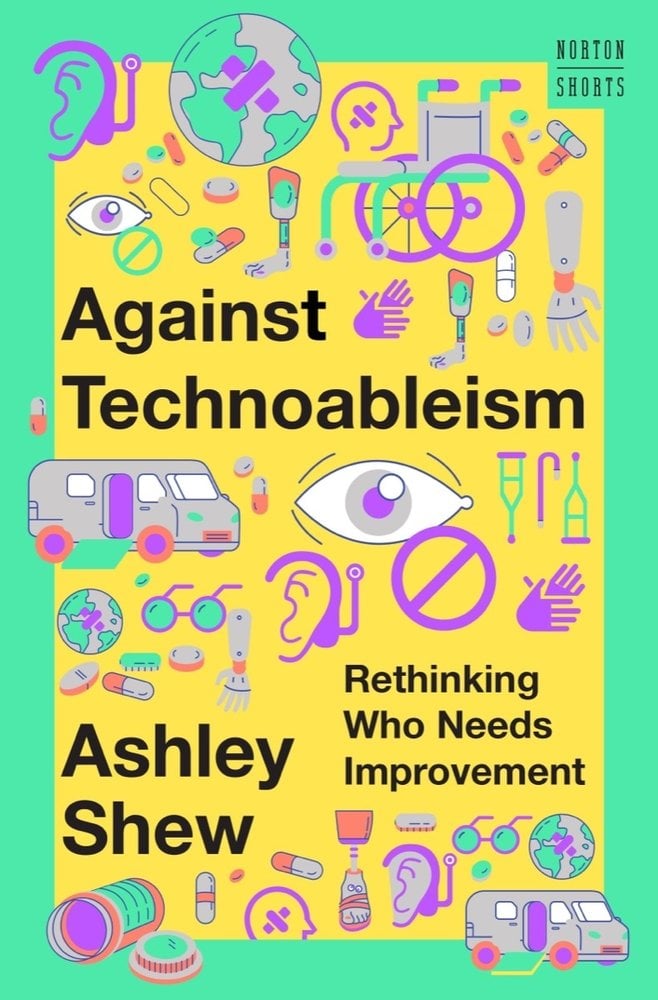
Against Technoableism
When bioethicist and professor Ashley Shew became a self-described "hard-of-hearing chemobrained amputee with Crohn's disease and tinnitus," there was no returning to "normal." Suddenly well-meaning people called her an "inspiration" while grocery shopping or viewed her as a needy recipient of technological wizardry. Most disabled people don't want what the abled assume they want--nor are they generally asked. Almost everyone will experience disability at some point in their lives, yet the abled persistently frame disability as an individual's problem rather than a social one. In a warm, feisty voice and vibrant prose, Shew shows how we can create better narratives and more accessible futures by drawing from the insights of the cross-disability community. To forge a more equitable world, Shew argues that we must eliminate "technoableism"--the harmful belief that technology is a "solution" for disability; that the disabled simply await being "fixed" by technological wizardry; that making society more accessible and equitable is somehow a lesser priority. This badly needed introduction to disability expertise considers mobility devices, medical infrastructure, neurodivergence, and the crucial relationship between disability and race. The future, Shew points out, is surely disabled--whether through changing climate, new diseases, or even through space travel. It's time we looked closely at how we all think about disability technologies and learn to envision disabilities not as liabilities, but as skill sets enabling all of us to navigate a challenging world.
Is Meta Using Disabled People to Promote Its Glasses?
AI glasses are a double-edged sword for disabled people, who face unique risks from surveillance.

Challenging Ableism: A Critical Turn Toward Disability Justice in HCI
A reflection on our learnings from the CHI 2022 "Dreaming Disability Justice in HCI" workshop, and why we continue to call for disability justice, despite the limitations of how we practice it within academia and industry.
The influence of artificial intelligence on individuals with disabilities
The rapid advancement of artificial intelligence (AI) is reshaping assistive technologies, offering new possibilities for enhancing the independence, …
AI Doesn't Fix Accessible Systems. It Depends on Them. — Anna E. Cook
Why AI depends on the foundation accessible design systems build — and how "AI will fix accessibility" is producing the opposite outcome at industry scale.

Radical Accessibility and the Hyperaudio Lite Editor
I have mixed feelings on the use of the word Radical, but I have to admit that Radical Accessibility has a certain ring to it and as it turns out, I'm not the only one who thinks so. For example,...

When DRM Comes For Your Wheelchair
Making it easier for people who use powered wheelchairs to get them fixed won’t solve all the other problems with powered wheelchairs: it won’t solve the problem of being forced to use indoor chairs
The "Disability Dongle": Why Silicon Valley Hates Me and you., Sightless Scribbles
A fabulously gay blind author.
Screen Record App: screenpipe — Record Everything & Search Instantly
screenpipe is the best screen record app for teams. Captures screen and audio, makes everything searchable, and automates workflows. Local-first and private.
The Web Is Being Made Accessible for AI, Not People
Jonathan Zong and Frank Elavsky critique how AI-driven infrastructure changes obscure accessibility and reveal whose needs society chooses to prioritize.
HCDE Distinguished Lecture with Laura Forlano | Designing Consequences: On Living Well with Machines
The influence of artificial intelligence on individuals with disabilities
The rapid advancement of artificial intelligence (AI) is reshaping assistive technologies, offering new possibilities for enhancing the independence, communication and quality of life of individuals with disabilities. This study presents a qualitative scoping review of 47 peer-reviewed articles published between 2018 and 2025, examining how AI has been integrated into assistive tools across domains such as mobility, communication, cognitive support, education and independent living. Specific AI applications include object recognition, gesture-based control, navigation assistance, emotion detection and natural language processing. The review highlights significant progress in personalization and real-time adaptation, while also identifying persistent challenges such as algorithmic bias, cost barriers, data privacy concerns and unequal access, particularly in low-resource settings. Ethical considerations and the need for inclusive, user-centered design approaches are emphasized. The study also underscores future research priorities, including standardization of development protocols, empirical evaluation of long-term effectiveness and policy frameworks to ensure equitable access. By synthesizing recent developments and critical gaps, this review contributes to understanding how AI can responsibly and effectively support assistive technologies, ultimately promoting more inclusive environments for people with disabilities.
#LiberatingWebinars: Disability Justice & Crip Technoscience: Racism & Ableism in AI
In 1977, Disabled activists occupied the Federal Building in San Francisco to demand the passage of Section 504— legislation to protect against disability discrimination.When the building was cordoned off, in an effort to starve activists out, The Black Panthers *Broke In* to deliver them hot meals.
The 504 Protests and the Black Panther Party – Disability Social History Project
disabilityhistory.org