Collection
Open
Getting off Substack

Updated 23d
On Substack’s problems and how to get off it.
Collection
Updated 23d
On Substack’s problems and how to get off it.
After Nearly 4 Years, Hatemail Is Leaving Substack.
This is the last news round up you'll receive from us on this platform.
Migrating from Substack to self-hosted Ghost: the details
I migrated Citation Needed from Substack to self-hosted Ghost. Here is exactly how I did that.

Why Between The Hashmarks Left Substack Behind
Former Substack creators say they’re earning more on new platforms that offer larger shares of subscription revenue
Former Substack writers who exited the platform in early 2024 are making more money on Beehiiv and Ghost thanks to their fixed pricing models.
Destacked: Why I Avoid Substack As Much as Possible - Jacky Alciné
From Substack LLC's attempt to capture the concept of a newsletter as a verb to their overt encouragement and support for Neo-Nazi content, don't expect me to post anything on that platform. I explain why.

Substack Doesn't Want You to Leave - Aaron Ross Powell
Substack's business model is unsustainable—unless they lock all their writers in.
The Real Reason that Substack is Collapsing
The Subscription Model Has Maxed Out
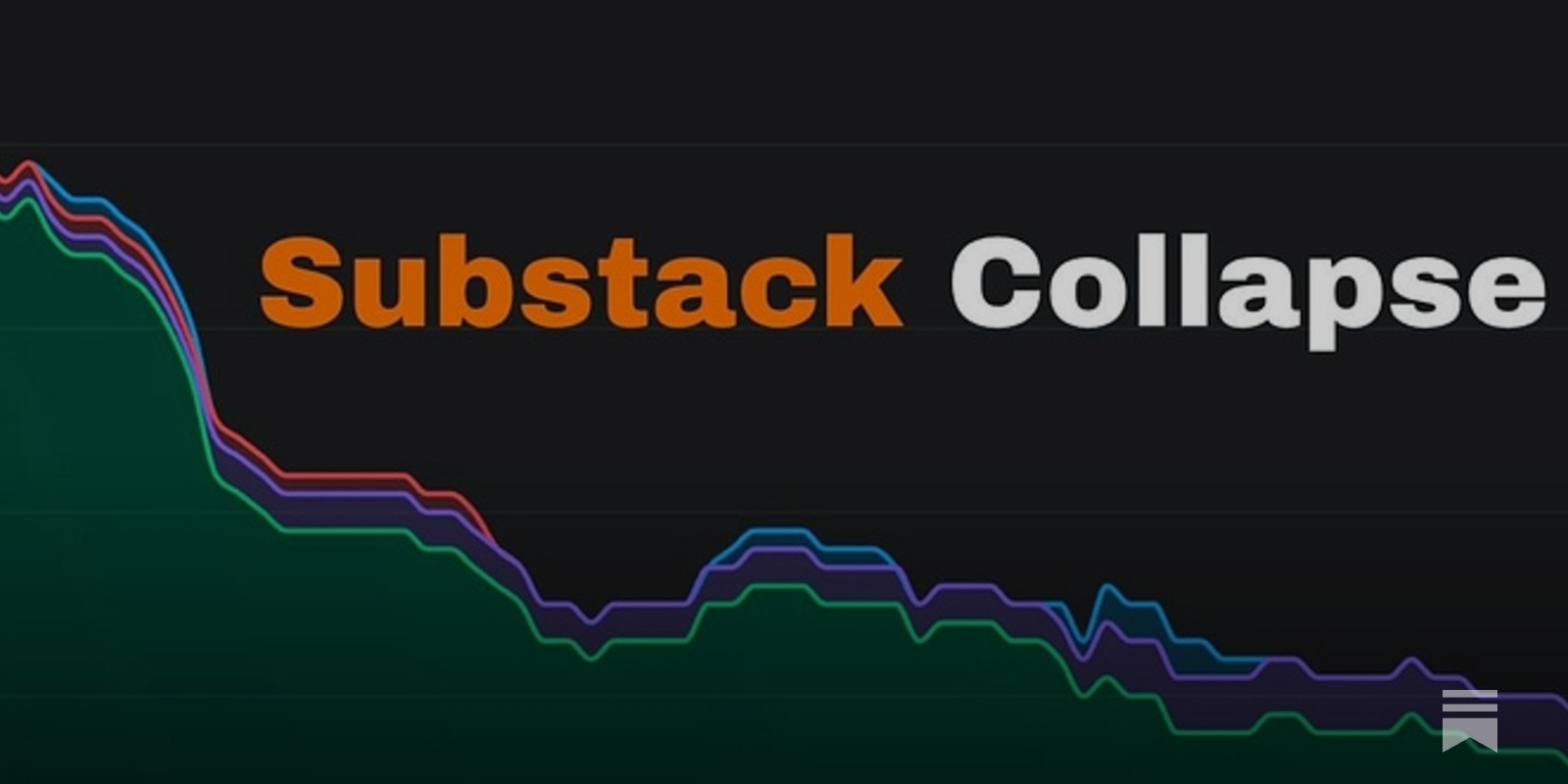
Has Substack’s subscription model really “maxed out?”
Scott Carney and Taylor Lorenz posted on Substack about downward subscriber trends they’re seeing. Carney pins it on subscription fatigue and feeling like “The only way to grow is to pillage the paid subscribers from other creators.” Lorenz questions Substack’s direction, saying “more and more like this app is becoming another social media feed.” When we recently wrote about writers who are leaving Substack, they mentioned control, pricing, and the social feature creep among their reasons for choosing competitors like Ghost and Behiiv. [Link: Writers are fleeing the Substack Tax | https://www.theverge.com/tech/927294/substack-tax-ghost-beehiiv | The Verge]

Introducing recommendations: simple cross-promotion for writers
A new way for writers on Substack to recommend each other and discover more great work

Why Did I Leave Substack, Anyway?
Last week, my friends at Scratch reached out to ask if I'd be interesting in answering questions about why I moved my newsletter off Substack. Of course I would! I've written some about it here, as you know, but I'm always game to talk more about this,

An open letter to Substack creators - Leaflet Lab Notes
Lab Notes 007: a note to those who find Substack useful, but use the platform reluctantly; an invitation to join us in publishing on a more open network.
Substack Data | Chaotic Era
A newsletter about politics, media, and online influence in Democracy’s chaotic era. Written by Kyle Tharp.

Molly White
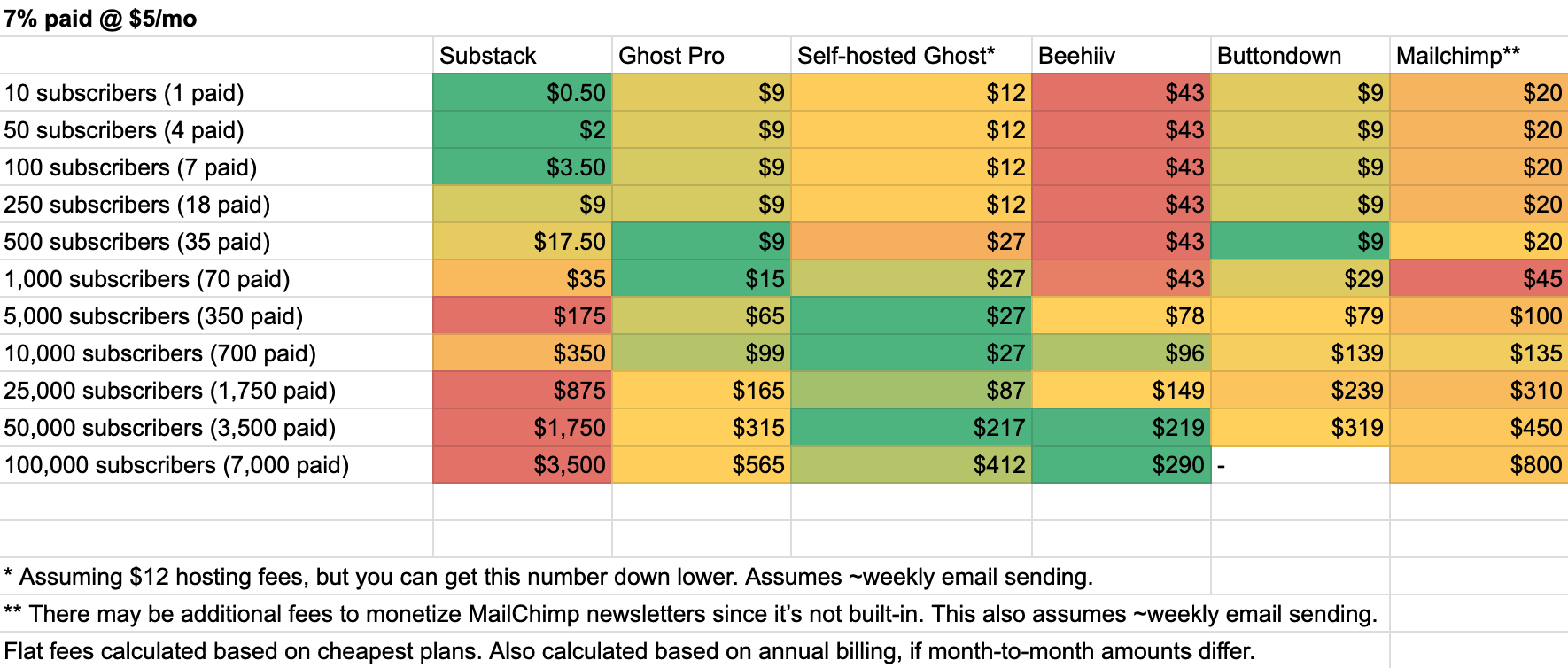
Yep. I saved hundreds or even thousands of dollars a month just from switching from Substack to self-hosted Ghost. I pay a roughly flat $85/month now (~$75 for mailsending, $10 for hosting), vs. 10% of all my subscription income. Here’s some napkin math for how expensive Substack is compared to its competitors:
Molly White
Yep. I saved hundreds or even thousands of dollars a month just from switching from Substack to self-hosted Ghost. I pay a roughly flat $85/month now (~$75 for mailsending, $10 for hosting), vs. 10% of all my subscription income. Here’s some napkin math for how expensive Substack is compared to its competitors:
We're Leaving Substack for Beehiiv
We're switching site and newsletter platforms. We hope you continue joining us as we grow!
Revealed: How Substack makes money from hosting Nazi newsletters
Exclusive: Site takes a cut of subscriptions to content that promotes far-right ideology, white supremacy and antisemitism

beehiiv's CEO backs a MAGA candidate but don't pack your bags just yet.
Tyler Denk, CEO of beehiiv, endorsed MAGA candidate Spencer Pratt in the LA mayor race on Instagram. We knew this was coming. But it's not anything like what's happening at Substack.
"I can't leave because they've locked me in" Once again, Substack is the opposite of independence. Also, classic @molly.wiki breakdown of how you win when you leave Substack:

Molly White
www.mollywhite.net
Anil Dash
For the folks who’ve been saying that people can’t get off of Substack to other platforms because they lose subscribers when they do — what’s the percentage? How many readers? What % of total dollars coming in? Do we have hard numbers?
Substack tries to be too clever with its daringfireball.net/2026/05/what_is_a_dickover and even basic HTML and images. It means that a blog on Substack is unlikely to be indexed properly by the Wayback Machine. A real problem considering how much writing is on Substack.


