

The magic of Voder that was quietly performed by women parallels many developments in todays AI landscape.
Notice that both women are trying to broaden the definition of technology as the materialistic interface with the world.
If math is more than proof, we need to better celebrate the rest of it
[This is a guest post by Grant Sanderson. This blog post was initially written in a different file format and converted using AI. — T.] A sentiment echoing throughout the mathematics communit…

The last IMO problem AI could not solve
Border Wars : The Science and Politics of Artificial Intelligence
Sauf mention contraire ci-dessus, le contenu de cette notice bibliographique peut être utilisé dans le cadre d’une licence CC BY 4.0 Inist-CNRS / Unless otherwise stated above, the content of this bibliographic record may be used under a CC BY 4.0 licence by Inist-CNRS / A menos que se haya señalado antes, el contenido de este registro bibliográfico puede ser utilizado al amparo de una licencia CC BY 4.0 Inist-CNRS
Verification required
We strive to make our content freely available. If this check is preventing you from making use of our resources, make sure you have cookies enabled. If you still have trouble, please get in touch.
Joanna Russ- SF and Technology as Mystification
Talk about technology, long familiar to science-fiction readers and writers, is getting popular in Academia too. Particularly interesting to humanists is the connection between technology and whatever their own particular subject happens to be; I've attended three such formal symposia in the last five years, six including SF conventions, and including informal discussions among students, in writing classes, SF classes, and elsewhere, somewhere between fifty and sixty.
Operation Voder: AT&T, Bell Labs, and the Labor of Techno-Utopia at the 1939 New York World’s Fair
This article explores the labor demands of the Voder, the electrical speech synthesis machine developed by Bell Labs for AT&T’s 1939 New York World’s Fair exhibit. The article situates the Voder within the historical context of the fair, with the United States emerging from the Great Depression and political tensions escalating across the globe. By examining the decision to incorporate the machine’s young female operators into the exhibit, the article argues that AT&T executives used Voder operators to normalize a new vision of technological utopia that relied heavily and conspicuously on the infrastructural labor of women. Moreover, the article highlights the previously unacknowledged engineering contributions of Voder operators in the years before the fair, writing women into the origin story of a machine that laid critical groundwork for speech recognition and voice encryption technology.
Meta Tests Muse AI Agent Calls That Are Actually Made By Humans in a Call Center
"This has potential for so much negative PR. It could portray us as ‘their AI is not good enough so they still need humans’ kind of coverage for this launch."
Screen As Room: An Architectural Perspective on User Interfaces — Christoph Locher · Interaction Designer
With the use of video games as social spaces being observed for several years and the increased focus put on virtual social spaces due to the scarceness of physical social spaces in the last months, the concept of “spatial interfaces” is once again at the center of discussions. I want to add an alternative perspective to this, looking at the properties of physical spaces as metaphors, rather than models, for interfaces and exploring seven of them in more detail.
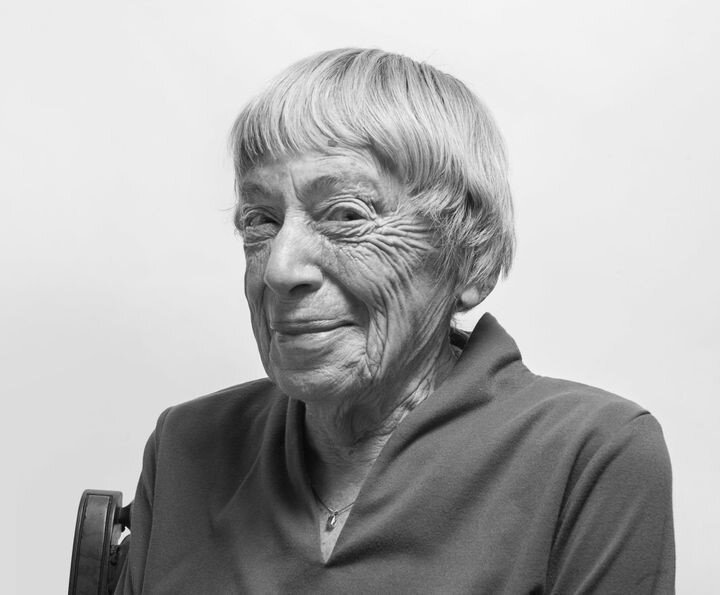
Ursula K. Le Guin — Ursula on Writing: A Rant about "Techonolgy"
Ursula K. Le Guin on the presence of technology in her work
Joanna Russ- SF and Technology as Mystification
Talk about technology, long familiar to science-fiction readers and writers, is getting popular in Academia too. Particularly interesting to humanists is the connection between technology and whatever their own particular subject happens to be; I've attended three such formal symposia in the last five years, six including SF conventions, and including informal discussions among students, in writing classes, SF classes, and elsewhere, somewhere between fifty and sixty.
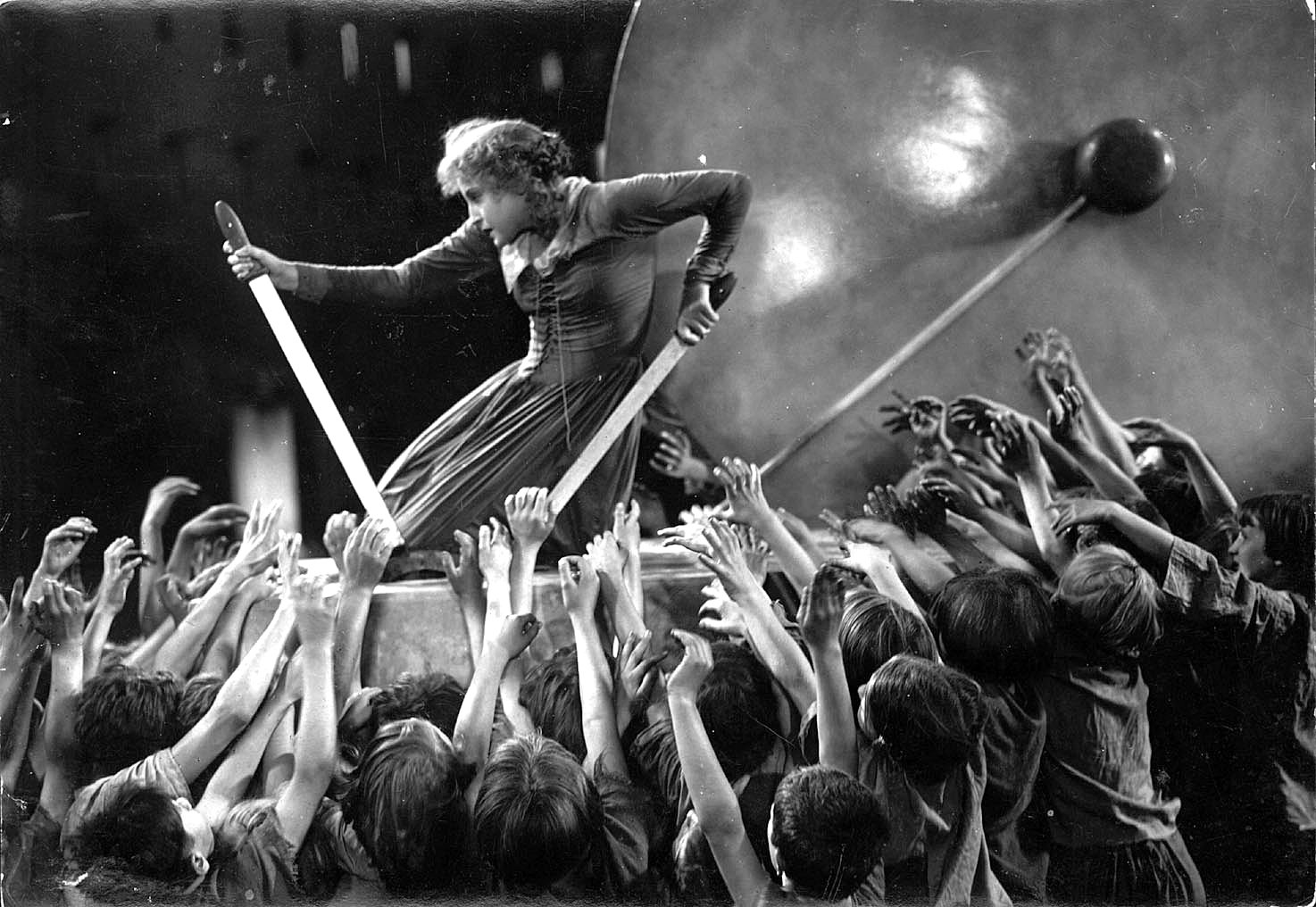
Metropolis divided. - Kenna Wong Ghaill
They spoke the same language but could not understand each other. Featured [in the Art Theatre of Long Beach and City Fabrick's Designing Resistance film week]...

Metropolis Divided - Kenna Wong Ghaill
They spoke the same language but could not understand each other. Featured [in the Art Theatre of Long Beach and City Fabrick's Designing Resistance film week]...
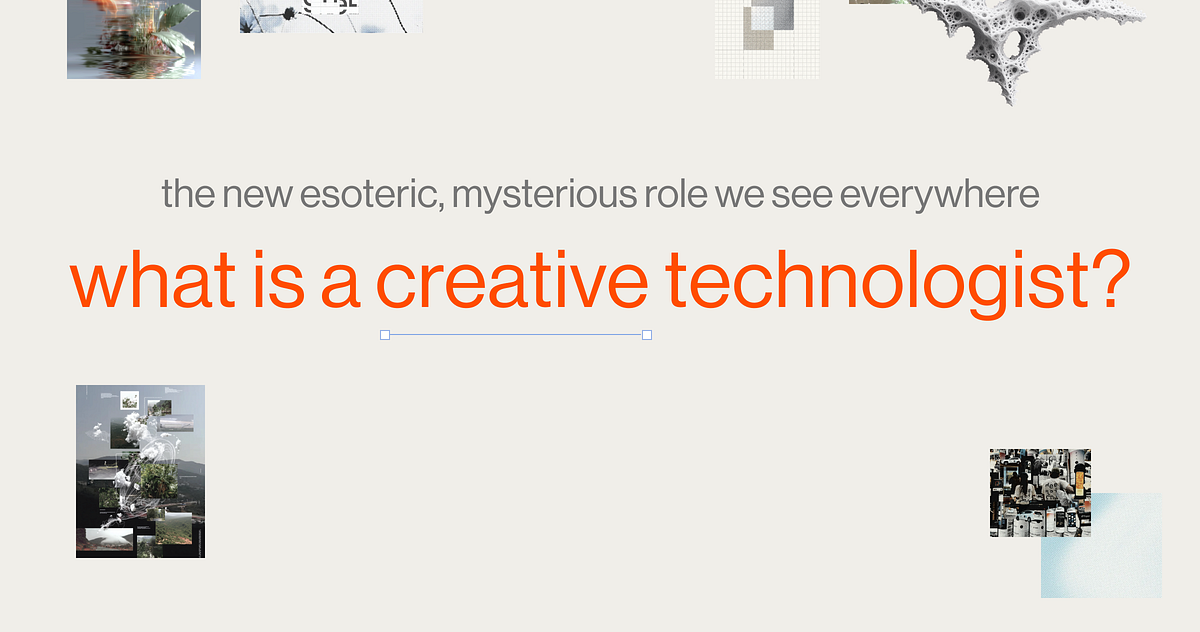
Creative Technologists are moving from the margins to the center
Once an obscure job title, creative technology is becoming a new way of working, and a core capability inside modern product teams. Soon…
Substrates via Accessibility
The social model of disability holds that disability is produced by environments, not by bodies — that when software fails to accommodate a person’s needs, the environment is disabling them. We argue that the dominant organization of computing produces such interaction mismatches structurally: the commodity form of software requires a standardized consumer, and everyone whose needs diverge from this imagined subject is disabled by the software environment. The substrates research community has identified properties — disclosure, composability, malleability — that would address this, but the commodity form actively selects against these properties because they dissolve the boundaries on which exchange value depends. This raises a question: how can infrastructure organized against the grain of commodity logic be made durable? We find a precedent in accessibility infrastructure — sustained not by patronage but by the organized counter-power of disability rights movements. Through Allio, a system for cross-application augmentation built on accessibility APIs, we illustrate both what this foundation makes possible and where its limits lie. We argue that the accessibility case reframes the substrates programme’s central challenge as political-economic: the question of who sustains substrate infrastructure, and through what social mechanisms, is as important as the question of what properties it should have.
A Deep Dive into Accessibility APIs, Part 1 — Knowbility
In this first Deep Dive into Accessibility APIs installment, we'll start from absolute scratch and recount the widely available basic story. It's written for beginners, but the fact that I describe web accessibility in the broader context of software accessibility might offer a different twist for current practitioners as well. Parts 2 and 3, on the other hand, are more technical. Although those discussions may largely be of interest only to "inquiring minds that want to know", understanding the history and variety of the specialized protocols at the heart of this process sheds light on why screen readers sometimes perform differently in the same application or on the same web site while also providing a glimpse of a likely future.

A Deep Dive into Accessibility APIs, Part 1 — Knowbility
In this first Deep Dive into Accessibility APIs installment, we'll start from absolute scratch and recount the widely available basic story. It's written for beginners, but the fact that I describe web accessibility in the broader context of software accessibility might offer a different twist for current practitioners as well. Parts 2 and 3, on the other hand, are more technical. Although those discussions may largely be of interest only to "inquiring minds that want to know", understanding the history and variety of the specialized protocols at the heart of this process sheds light on why screen readers sometimes perform differently in the same application or on the same web site while also providing a glimpse of a likely future.
Disney Animates Sign Language Versions Of Iconic Songs
Ahead of next week’s Disney+ debut, we’ve got a behind-the-scenes look at Disney Animation’s ‘Songs in Sign Language,’ including how the team reworked performances.
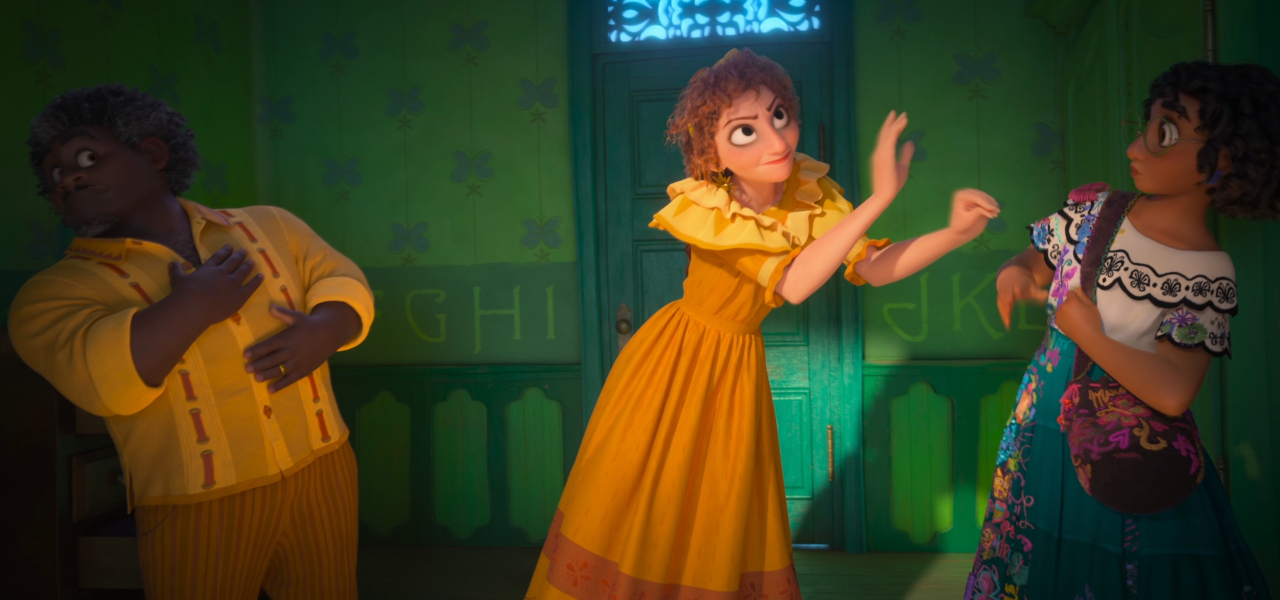
Disney Animates Sign Language Versions Of Iconic Songs
Ahead of next week’s Disney+ debut, we’ve got a behind-the-scenes look at Disney Animation’s ‘Songs in Sign Language,’ including how the team reworked performances.
A Deep Dive into Accessibility APIs, Part 1 — Knowbility
In this first Deep Dive into Accessibility APIs installment, we'll start from absolute scratch and recount the widely available basic story. It's written for beginners, but the fact that I describe web accessibility in the broader context of software accessibility might offer a different twist for current practitioners as well. Parts 2 and 3, on the other hand, are more technical. Although those discussions may largely be of interest only to "inquiring minds that want to know", understanding the history and variety of the specialized protocols at the heart of this process sheds light on why screen readers sometimes perform differently in the same application or on the same web site while also providing a glimpse of a likely future.
Disney Animates Sign Language Versions Of Iconic Songs
Ahead of next week’s Disney+ debut, we’ve got a behind-the-scenes look at Disney Animation’s ‘Songs in Sign Language,’ including how the team reworked performances.
Disney Animates Sign Language Versions Of Iconic Songs
Ahead of next week’s Disney+ debut, we’ve got a behind-the-scenes look at Disney Animation’s ‘Songs in Sign Language,’ including how the team reworked performances.
A Deep Dive into Accessibility APIs, Part 1 — Knowbility
In this first Deep Dive into Accessibility APIs installment, we'll start from absolute scratch and recount the widely available basic story. It's written for beginners, but the fact that I describe web accessibility in the broader context of software accessibility might offer a different twist for current practitioners as well. Parts 2 and 3, on the other hand, are more technical. Although those discussions may largely be of interest only to "inquiring minds that want to know", understanding the history and variety of the specialized protocols at the heart of this process sheds light on why screen readers sometimes perform differently in the same application or on the same web site while also providing a glimpse of a likely future.
Disney Animates Sign Language Versions Of Iconic Songs
Ahead of next week’s Disney+ debut, we’ve got a behind-the-scenes look at Disney Animation’s ‘Songs in Sign Language,’ including how the team reworked performances.
Your Browser May Be Having a Secret Relationship with a Screen Reader: A Deep Dive into Accessibility APIs, Part 3 — Knowbility
The final installment of the three-part saga on the technical details of how screen readers communicate with other software.

Accessibility Beyond Accommodations: A Systematic Redesign of Introduction to Computer Science for Students with Visual Impairments
Computer science education has evolved extensively; however, systemic barriers still prevent students with visual impairments from fully participating. While existing research has developed specialized programming tools and assistive technologies, these solutions remain fragmented and often require complex technical infrastructure, which limits their classroom implementation. Current approaches treat accessibility as individual accommodations rather than integral curriculum design, creating gaps in holistic educational support. This paper presents a comprehensive framework for redesigning introductory computer science curricula to provide equitable learning experiences for students with visual impairments without requiring specialized technical infrastructure. The framework outlines five key components that together contribute a systematic approach to curriculum accessibility: accessible learning resources with pre-distributed materials and tactile diagrams, in-class learning kits with hands-on demonstrations, structured support systems with dedicated teaching assistance, an online tool repository, and psychosocial support for classroom participation. Unlike existing tool-focused solutions, this framework addresses both technical and pedagogical dimensions of inclusive education while emphasizing practical implementation in standard university settings. The design is grounded in universal design principles and validated through expert consultation with accessibility specialists and disability services professionals, establishing foundations for future empirical evaluation of learning outcomes and student engagement while serving as a template for broader institutional adoption.


