Collection
Open
Semble mentions

Updated 2mo
Collection
Updated 2mo
The time is right: Organizing against the surveillance-industrial complex in the ATmosphere and the fediverses
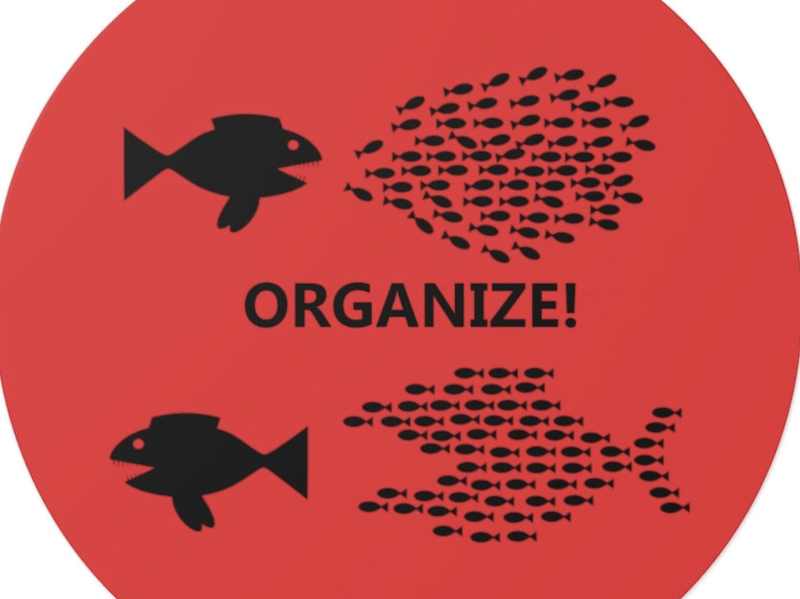
If we organize, we can have a big impact in the fight against the surveillance-industrial complex.
A budding discipline around how science gets read and judged - Aris
Scholarly publishing spent thirty years arguing about access. It has barely begun arguing about what readers do with the paper once they have it. At Aris we call that second argument scholarly interface design. Mike Morrison's community calls it ScienceUX. Either way it is becoming a field, and here is why it is worth your attention.
Holdfast 0: Situating
This post introduces the written version of some optimistic and constructive thinking on knowledge in networks that I’ve been wrestling with since the end of last year.
A Robust Decentralized Infrastructure for Trust-Aware Open Knowledge Sharing [DRAFT]
Semantic technologies and models have matured and become very powerful tools to increase the power and accuracy of recent AI approaches. However, we currently lack channels where semantically structured knowledge can be reliably published and queried, both by humans as well as AI agents. Here we show how this gap can be filled by a global ecosystem that aligns with the original Semantic Web vision with respect to openness, decentralization, and formal semantics, but also targets trust and redundancy. Our approach is based on the concept and technology of nanopublications with content-addressed identifiers and a layered peer-to-peer network of publishing services, query services, and user applications. It applies a trust algorithm from links that are published as nanopublications themselves. We present a novel trust propagation algorithm IDEBT and prove its properties of being robust, efficient to compute, and reproducible. We evaluate the ecosystem on a multi-node test deployment running a synthetic publish/query workload under two coverage configurations, complemented by a descriptive analysis of the live deployed trust network. Our positive results show that a such a decentralized network of services based on nanopublications has the capacity and potential to serve as a universal and globally integrated knowledge sharing platform.
Just pushed a bunch of cards to my @semble.so collection via the API from my bookmarks! thank you opus and thank you @cosmik.network team for the API! tab sanity 🤝 contributing to the knowledge commons 🎉
Finding real, quotable examples is key to my blog writing workflow. Because Google and the default web search produce a lot of junk, I use Exa, HackerNews, web search, what I've already written, and internal company docs to do this, and I recently added @semble.so to this stack.
Just came across @semble.so and am very excited! It’s like a way of having personal knowledge bases (think Notion/Obsidian) that are connected into a broader social network. So curative action - classification, collation - can shift from individual to a collective/social sense-making.

Wesley voted in Vancouver's Municipal Election
the community knowledge garden has long tables, not tall fences ;) come plant some seeds, harvest some produce, till the soil, or simply sit back and watch the bees pollinate. Our collective attention is an ecological system, let's tend to it that way 🐝🌼🌱🍄🍃
idk why i haven't really tried @semble.so bookmarklets on web and ios until now. so much fun! already saved and discovered a bunch of cool stuff in just a ~day of using them. major friction for capture removed.
In some ways, atproto, bluesky, @semble.so, @sill.social, @standard.site and so on are building new indexes for the web. I really hope atproto succeeds and goes fully mainstream. Think of the amazing search engines that can be built on such rich index data. Maybe web3 can actually happen.
In a weird turn of events I have changed from "make sure this tab stays in my tab list" to "make sure I have a card on @semble.so for this". I'm unsure whether this will actually help with discovery later, but you never know.
can someone just dump PubMed into @semble.so please
@semble.so and @margin.at might be the two greatest apps ever.


