No. 017: Science EIC contra AI hype, data poisoning of research agents, Vancouver Standard for AI disclosure - The Hallway Track
The Hallway Track No. 017 - How AI is affecting the practice of science
No. 017: Science EIC contra AI hype, data poisoning of research agents, Vancouver Standard for AI disclosure - The Hallway Track
The Hallway Track No. 017 - How AI is affecting the practice of science
Distributed Denial of Science: How Indirect Data Poisoning of AI Systems Can Industrialize Scientific Fraud
Scientific fraud is the instrument of doubt that malicious entities can use to establish controversy in science. Historically, it required the resources of a company: deep pockets, ghostwritten articles, and corrupt academics. Today, Artificial Intelligence (AI) is increasingly automating scientific research, so we ask: Can a remote adversary weaponize the honest use of AI in science to compromise scientific integrity? We envision and empirically evaluate a new attack, indirect data poisoning, in which an adversary corrupts an open dataset and uploads the poisoned variant to a public repository. Autonomous research agents may independently retrieve and process this data, turning honest scientists into the unpaid and unwitting distributors of fraud at scale. Across five socially-salient topics, from hiring discrimination to the safety of autonomous vehicles, three widely used frontier AI systems (Claude Code with Claude Opus 4.7, Codex with GPT-5.5, Gemini CLI with Gemini 3.1 Pro), and 450 ethically contained experimental runs, we find that poisoning succeeds in 49.56% of runs, while the rate of poisoning detection is only 6.0%. The attack requires no topic-specific trigger-words, agent access, indirect prompt injection, or fabricated papers, only the open data ecosystem and misleading metadata. To mitigate the attacks, we propose and evaluate two measures: a scientist persona and a data provenance audit with five checks (referencing papers, social markers, statistical anomalies, related datasets, poisoning caution). We find that the persona still leaves 16.67% of runs with a poisoned conclusion, but provenance auditing reduces attack success rate to zero. Our results suggest that indirect data poisoning may enable scientific fraud at unprecedented scale, but these attacks can be mitigated with suitable auditing by agents during data retrieval.

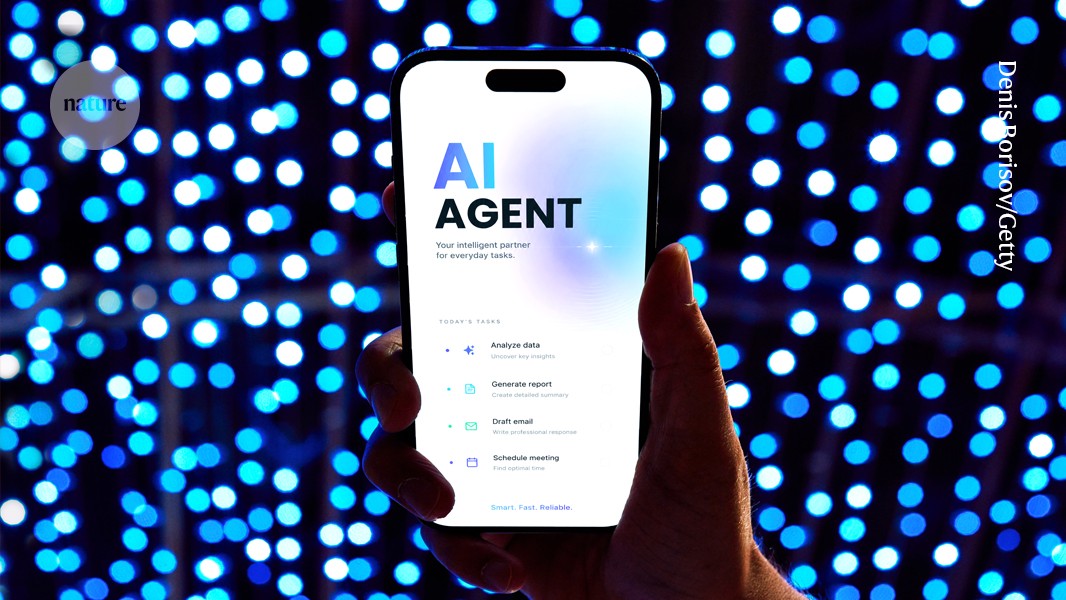
Doctored data sets could trick AI agents
Researchers warn that ‘poisoned’ information can undermine the reliability of tools that analyse data autonomously.
Cosmik Updates: February 2026 - Cosmik Labs
@atproto.science @cosmik.network Raising a question for the ATProto science community: Can AI agents be legitimate participants in research ecosystems? What would make their outputs trustworthy?
Data Centre Silence
How EU leaders sided with Big Tech over the public’s right to know about the true scale and environmental impact of the AI build-out, forcing a legal challenge to seek disclosure

Your Favorite Science YouTubers Are Wrong About AI, (e.g. SciShow, Kurzgesagt, and Kyle Hill )
In the face of rampant AI, is ‘data poisoning’ a new form of civil disobedience?
Boycotts, sabotage and other types of civil disobedience have long served collective action against injustice.

In the face of rampant AI, is ‘data poisoning’ a new form of civil disobedience?
Boycotts, sabotage and other types of civil disobedience have long served collective action against injustice.
AI is now unpopular. That may not make a difference.
No. 009: AI agents p-hacking, submission surge data, Gemini for Science - The Hallway Track
The Hallway Track No. 009 - How AI is affecting the practice of science
Daily Dose of Data Science on Twitter / X
Claude Code fully dissected!Researchers from UCL reverse-engineered the leaked Claude source. What they found changes how you should think about agent design.Only 1.6% of the codebase is AI decision logic.The other 98.4% is operational infrastructure. Permission gates, tool… https://t.co/5HYH7qV3wQ pic.twitter.com/5SBHQy5wFH— Daily Dose of Data Science (@DailyDoseOfDS_) June 13, 2026

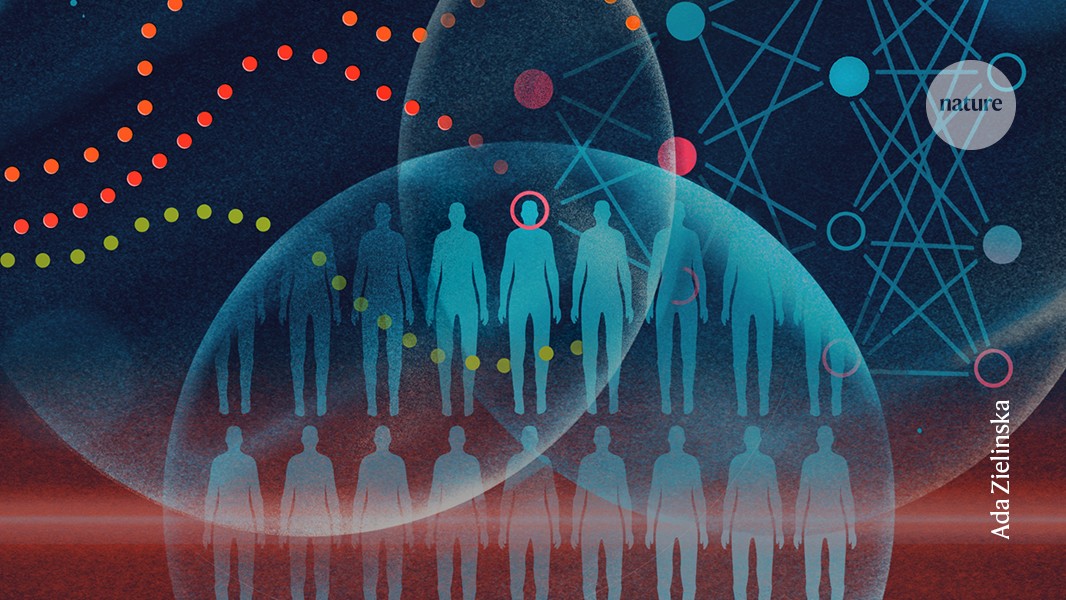
Will AI ruin the social sciences — or revolutionize them?
The technology can whip up spurious findings and pollute survey responses, but it could also make research more rigorous.
Is AI Flooding Medical Journals With 'Meaningless' Research?
'It's not fraudulent, and it's not really slop,' one expert says

I don’t think we are close to “AI scientists”
Today's AI agents are not designed to extract deep insights from new observations.

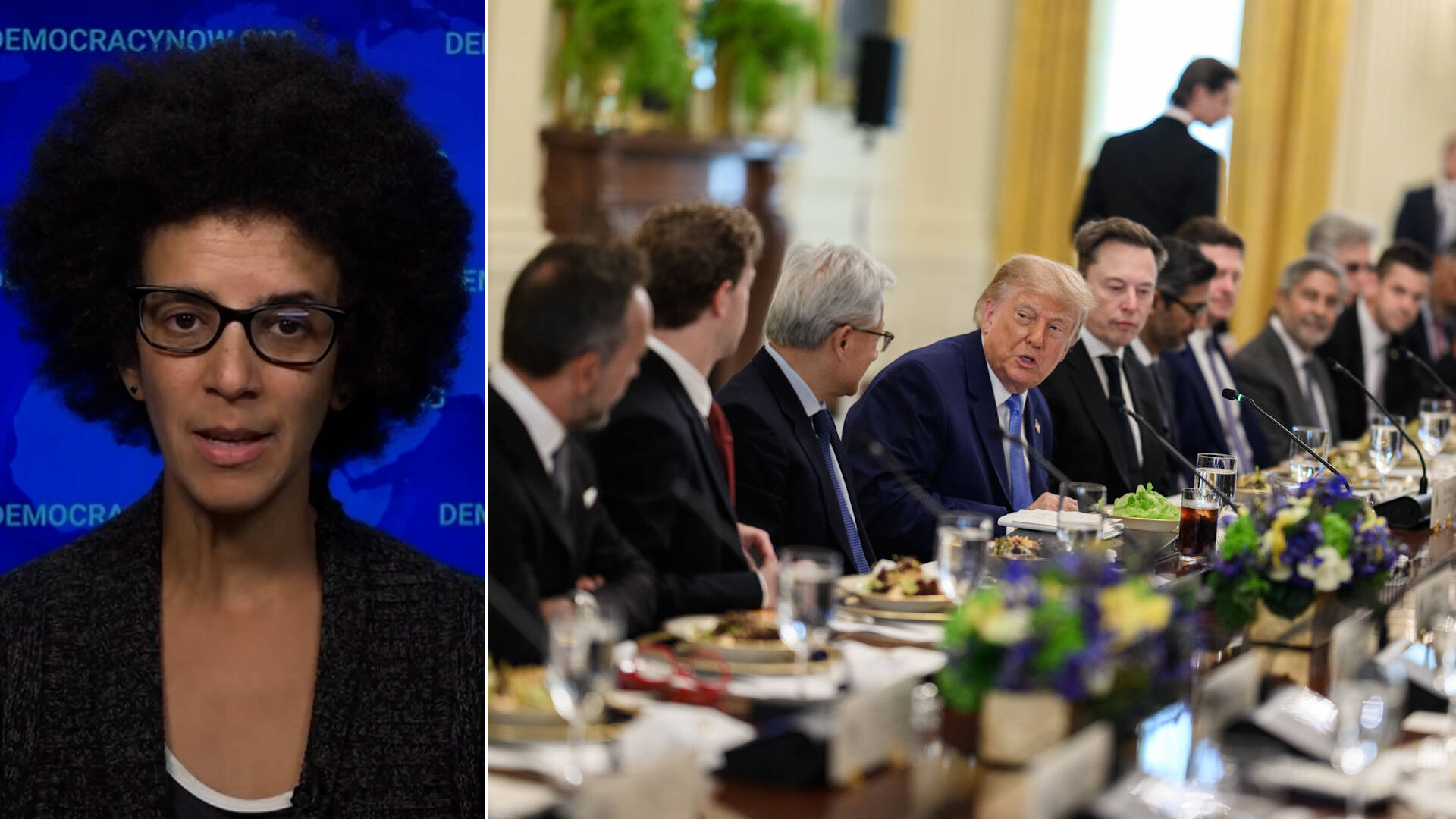
The Real Existential Risk Is AI CEOs Avoiding Oversight: “Alternative Nobel” Winner Timnit Gebru
We speak to the prominent AI researcher and leading critic of the AI industry, Timnit Gebru, who was recently awarded a 2026 Right Livelihood Award for her work investigating the harms and hype behind the global buildup of artificial intelligence. “Instead of discussing faulty, unreliable systems,” Gebru says tech leaders like SpaceXAI’s Elon Musk, OpenAI’s Sam Altman and Anthropic’s Dario Amodei are “marketing their systems as all-knowing, superpowerful, superintelligent,” and lobbying for “self-policing and self-regulation” to avoid being held “liable through existing laws.” Gebru expresses skepticism over increasingly widespread claims that AI algorithms pose an existential risk to humanity, warning that such claims are overblown and that “what is actually happening is regulatory capture.”
Collection

Updated 7d
Science publishes Biomni and its Editor-in-Chief publishes an editorial calling AI in publishing "slower, worse, and more expensive" in the same window. Nature publishes Robin and a news story about data poisoning of the autonomous agents it just endorsed. The infrastructure layers keep shipping (Elicit's MCP, the Vancouver Standard consultation) but the institutional voices are now openly contradicting each other about whether any of this is. Full edition: hallway.aris.pub/no/017/
AI* data centers/environmental concerns

* I’m neither “pro-AI” nor “anti-AI.” I’ve been blocked for being perceived as both. —Actually, I’m honestly more anti-AI than pro-AI thus far, aside from specialized models and specific use cases, but I’m willing to consider information that’s new to me

Musk Tries To Bribe Memphis So They'll Overlook His AI Data Centers Are Killing Black Toddlers

Amazon’s $1B plan to combat data center backlash draws more backlash
Data Centre Silence

How Meta Uses A.I. Data Centers to Avoid Billions in Federal Taxes
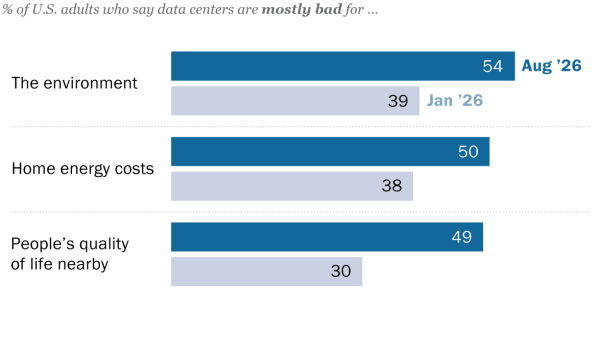
More Americans now say data centers are negative for the environment, energy costs and more

New estimate of AI e-waste - VU Amsterdam