No. 020: Astra solves ten open math problems, AI agents fail at open-ended research, peer review under strain - The Hallway Track
The Hallway Track No. 020 - How AI is affecting the practice of science
No. 020: Astra solves ten open math problems, AI agents fail at open-ended research, peer review under strain - The Hallway Track
The Hallway Track No. 020 - How AI is affecting the practice of science
OpenAI's Unreleased Model Astra Solves Ten Major Open Mathematics Problems
Math is hard.

OpenAI’s latest math breakthroughs commit research misconduct, experts say
OpenAI released 10 AI-generated results over the weekend. Some mathematicians are unhappy with their approach
We're excited to be partnering with Anthropic and OpenAI to host the world's first hackathon devoted to research-level mathematics. 40 hours and $2M in compute to solve, understand, and present an… | Tony Yue YU | 20 comments
We're excited to be partnering with Anthropic and OpenAI to host the world's first hackathon devoted to research-level mathematics. 40 hours and $2M in compute to solve, understand, and present an open math problem. Applications are live at https://lnkd.in/d79qFQ4s We look forward to seeing you all on October 30 at Caltech! Sathvik Redrouthu Bufan Zhao Andrea Li Caiman Moreno-Earle Avni Garg | 20 comments on LinkedIn
Can AI replace mathematicians? Vienna researchers weigh in
In September, OpenAI announced that some 10,000 AI agents partially 'solved' the Navier–Stokes problem, one of the most prestigious open challenges in mathematics. University of Vienna mathematicians Nathanaël Berestycki and Vera Fischer agree that the field will never be the same, but argue that maths is far more than producing proofs at speed.

OpenAI’s math breakthrough played to AI’s strengths
I tried to explain OpenAI’s solution more clearly than OpenAI did.
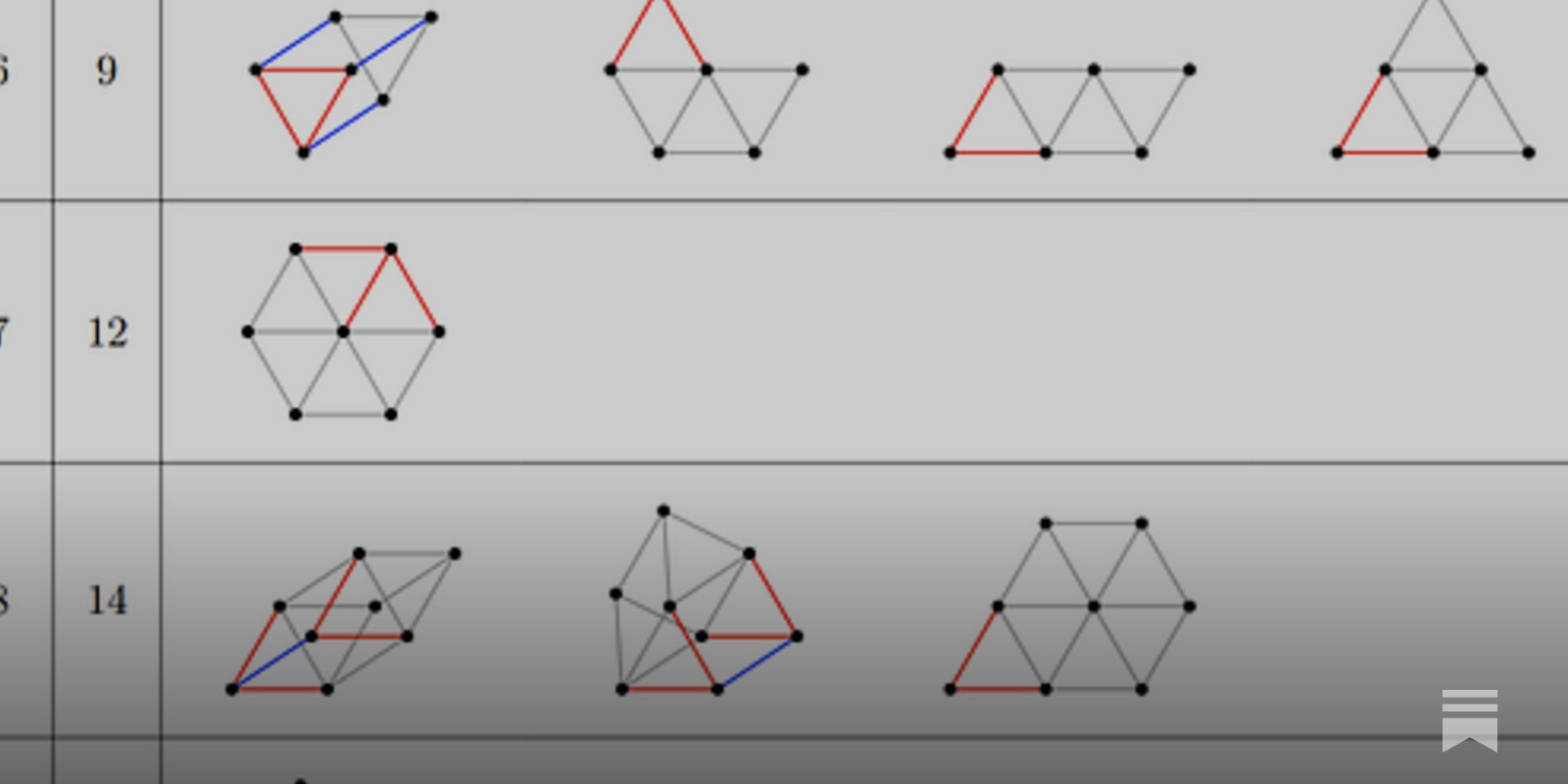
OpenAI Just Claimed a Huge Math Discovery. Some Academics Are Crying Foul
A landmark announcement by the frontier AI lab has been overshadowed by accusations of impropriety.

Research acceleration: The view inside OpenAI
Inside OpenAI, coding agents are reshaping AI research. Explore early data on agent usage, experiment velocity, task complexity, and research acceleration.
OpenAI unleashes hundreds more math results upon a field already in shock
A month after resolving one of the six biggest open problems in mathematics, the company says its new internal model has toppled heaps more—this time without the multimillion-dollar price tag
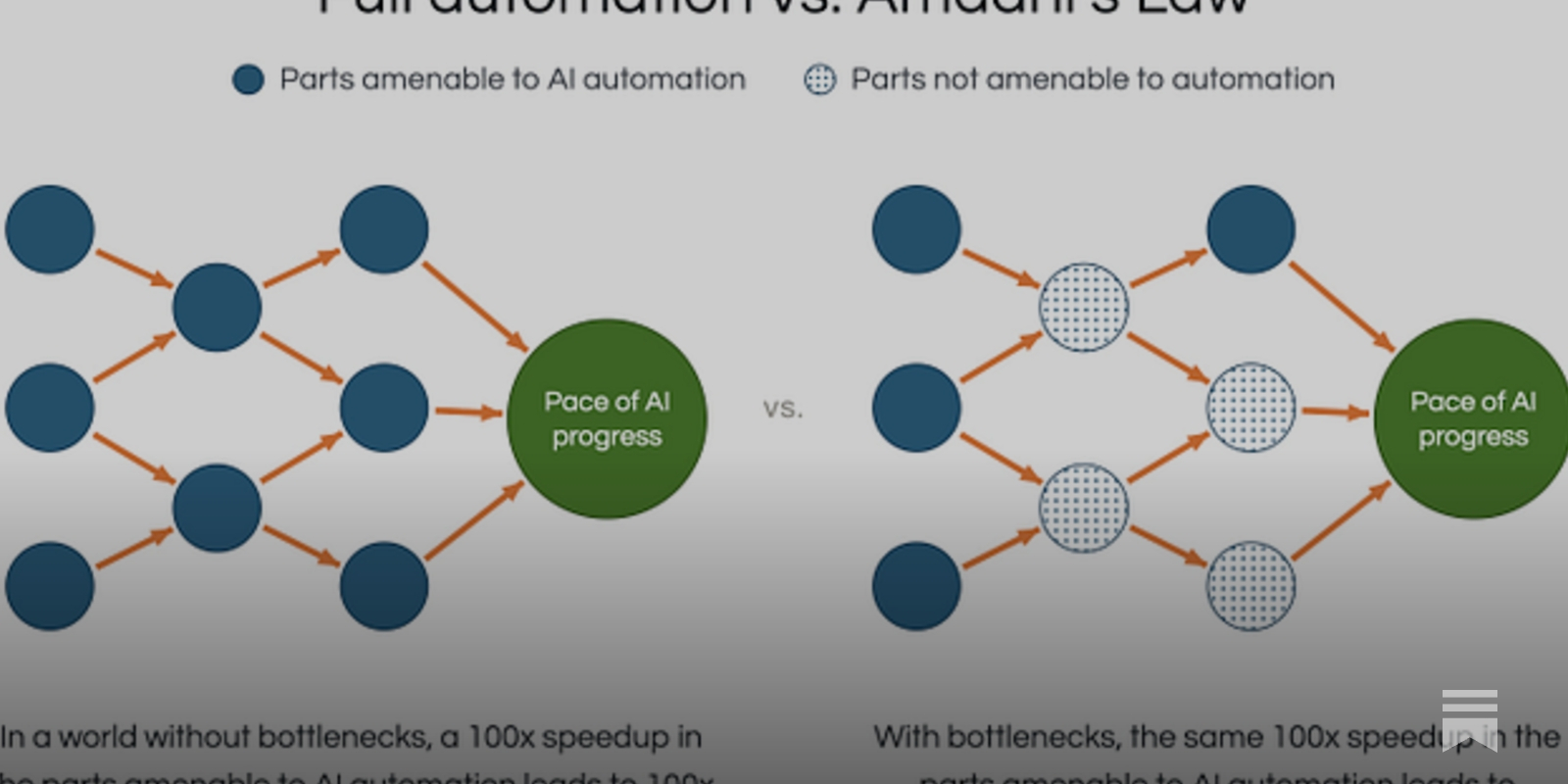
Can AI agents conduct open-ended AI research? Early evidence from two case studies
Forecasts of explosive AI progress hinge on AI agents automating AI research. But evidence on whether agents can carry out open-ended AI research is thin. Current evaluations either test agents on narrow, verifiable tasks, which excludes open-ended research, or submit AI-generated papers to blind peer review, which is overstretched, stochastic, and suffers from poor review quality. We introduce a third way to measure progress towards AI R\&D automation. An agent takes on the central, open-ended research question of a high-quality unpublished paper, and the paper's original authors grade its output. We call these shadow evaluations. We ran shadow evaluations on two unpublished NeurIPS 2026 submissions, giving frontier agents six days and thousands of dollars of compute. The agents completed all of the engineering without human help, yet could not make substantial progress towards answering the research questions. As a result, both papers were unambiguously rejected by the authors. We identify five recurring failure modes: poor judgment about the bar for publishable research, uncreative responses to shortcomings in the research design, ineffective backtracking from dead ends, poor resource awareness, and instruction drift. A robustness check with a second model and scaffold reproduced these failures. We release the expert reviews, survey responses, agent repositories, and logs. Our results provide early evidence that today's agents can do the engineering of AI research, but struggle with critical parts of the research lifecycle.

OpenAI fought dirty on career-making math problem, says NYU mathematician | TechCrunch
There is a $1 million bounty for the first person providing a solution to the Navier-Stokes existence and smoothness problem.

OpenAI accused of stealing math proof from expert Andreas Thom | Valerio Capraro posted on the topic | LinkedIn
BREAKING: OpenAI might have stolen another major proof. In a detailed Mathstodon post, which I report in full in the comments, Andreas Thom presents several pieces of evidence suggesting that OpenAI may have trained Astra on conversations in which he and Gábor Kun were working on Gromov’s soficity conjecture, one of the ten problems OpenAI later announced Astra had solved. I know Andreas. We met several times early in our careers. He is an exceptional mathematician, a leading expert on sofic and hyperlinear groups, and one of the most respected scholars in the field. He has spent two decades working on this problem. If his account is correct, this is not a minor dispute over attribution. It would mean that unpublished human work was absorbed into a model and then presented to the world as a breakthrough by the model itself. And if the allegations raised by Levent Alpöge, Tristan Buckmaster, and now Andreas Thom are all substantiated, we are no longer looking at isolated incidents. We may be looking at one of the greatest intellectual scandals in the history of science. AI is not discovering new mathematics. AI is stealing human discovery. | 201 comments on LinkedIn

Ten advances in mathematics and theoretical computer science
OpenAI shares new results on long-standing open problems in mathematics and theoretical computer science, including advances in geometry, cryptography, and complexity.
OpenAI spent millions to solve this famous math problem — mathematicians are furious
Mathematics relies on a community of experts openly sharing ideas.

Collection

Updated 7d
Three editions running, AI-in-math results keep landing. This week: OpenAI claims ten open problems solved for under $2,000 of compute each, two independent teams used GPT-5.6 Sol Ultra to crack the same quantum cryptography problem hours apart, and a Fields medalist left his university post for OpenAI's safety team. Meanwhile, a Princeton-led study gave frontier agents $3,000 and six days to answer open research questions; the agents completed all. Full edition: hallway.aris.pub/no/020/