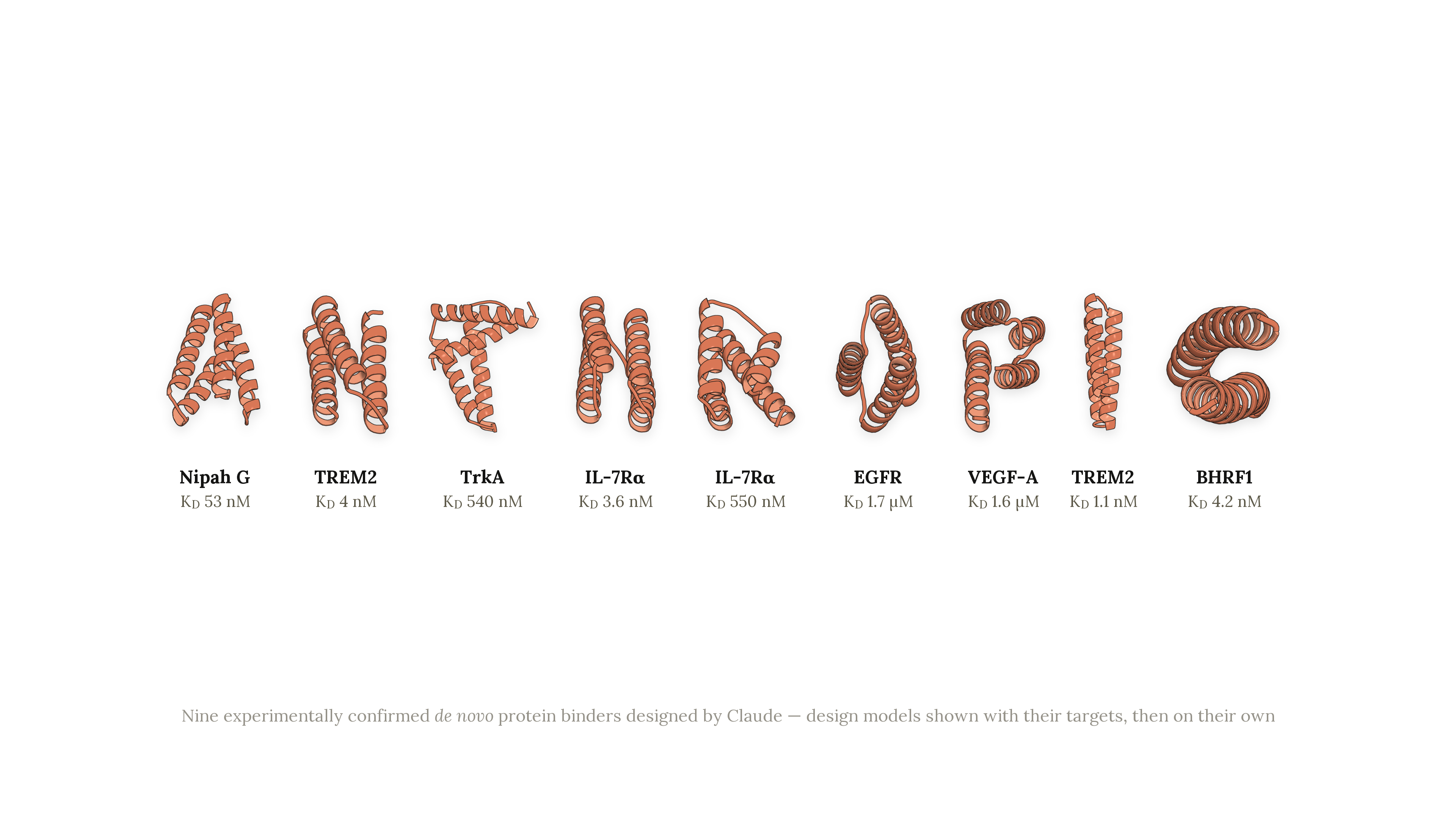
Edition 021 flagged the verification gap: AI is producing results faster than anyone can check them. This week, three responses showed up. Tao's Palomar registry gives Lean proofs a submission and review infrastructure. BioNexus grades whether an agent's biology analysis is scientifically valid. Lea keeps the mathematician in the loop during formalization. On the production side, Anthropic's protein-design agent and Inherent's Faraday keep pushing. Full edition: hallway.aris.pub/no/022/
Guest Post — AI Can Find the Article. Can It Tell Which Version It Used? - The Scholarly Kitchen
In this AI era, establishing trust and validating article versions with persistent identifiers (PIDs) is more important than ever.

Qualitative Research in an Era of Artificial Intelligence: A Pragmatic Approach to Data Analysis, Workflow, and Computation
Computational developments—particularly artificial intelligence—are reshaping social scientific research and raising new questions for in-depth methods such as ethnography and qualitative interviewing. Building on classic debates about computers in qualitative data analysis, we revisit possibilities and dangers in an era of automation, large language model chatbots, and big data. We introduce a typology of contemporary approaches to using computers in qualitative research: streamlining workflows, scaling up projects, hybrid analytical methods, the sociology of computation, and technological rejection. Drawing from scaled team ethnographies and solo research integrating computational social science alongside in-depth observation, we describe methodological choices across study life cycles, from literature reviews through data collection, coding, text retrieval, and representation. We argue that new technologies hold potential to address long-standing methodological challenges when deployed with knowledge, purpose, and ethical commitment. Yet, a pragmatic approach—moving beyond technological optimism and dismissal—is essential given rapidly changing tools that are both generative and dangerous. Computation now saturates research infrastructure, from algorithmic literature searches to scholarly metrics, making computational literacy a core methodological competence in and beyond sociology. We conclude that when used carefully and transparently, contemporary computational tools can meaningfully expand, rather than displace, the irreducible insights of qualitative research.

Palomar – a registry of Lean verified mathematics
In recent months there has been a proliferation of AI-generated proofs of various old and new results, some of which have been formalized in the proof assistant language Lean. However, checking tha…
Introducing Lea | Chinmay Hegde | 23 comments
Today we are releasing Lea. Lea is a powerful, open-source Lean 4 theorem proving agent, built out of DARPA's expMath program. Lea is a (deliberately minimal) agent designed to keep mathematicians in the driver's seat: a full front-end UI, full control and visibility on the back end, and a lovely Overleaf extension that auto-formalizes Latex to Lean while you continue working on your manuscript. Lea is fully open-source; we want everyone to fork it, break it, and tell us how to improve it. We have been using Lea internally within our academic groups for the last 3 months. It has closed and formalized multiple open problems in mathematics, and specifically a long-standing conjecture in nonlinear elliptic PDEs. (More on this soon!) We are at a pivotal time in mathematics. I have joked to my friends that DARPA expMath is a "tell-your-grandchildren-about-it" program. The kickoff room in DC in March had Fields medallists, Turing award winners, top mathematicians and theoretical computer scientists. It also had every serious startup in this space --- Axiom Math, Harmonic, Math Inc, @Principia labs, Logical Intelligence. Patrick Shafto and DARPA made a bold bet on AI-accelerated mathematical discovery, and not even 6 months later these efforts are already bearing fruit. Huge thanks to my collaborators Claudio Silva, Sam Westrick, Eduardo Teixeira, Jaume de Dios Pont, Daniel Arturi, Shashwat Patel, Kevin Gomez, and many others. Much of Lea is the result of their hard work, and it's a joy to work with them. | 23 comments on LinkedIn
#bioinformatics #computationalbiology #aiforscience #singlecell #spatialtranscriptomics #opensource #codex #claudecode #mcp #agenticai | Herry Z.
BioNexus: A Scientific Reliability Layer for Agentic Biology As coding agents such as OpenAI Codex, Claude Code, and Cursor become increasingly capable of running bioinformatics workflows, a new problem emerges: Knowing how to run an analysis does not mean knowing when that analysis is scientifically valid. BioNexus is an open-source project exploring a reliability layer for biological coding agents rather than another standalone AI scientist. Its current architecture focuses on: Machine-readable Capability Contracts — define input semantics, scientific preconditions, canonical backends, refusal conditions, and evidence requirements. EvidenceCard 2.1 — separates execution state from scientific evidence and grades conclusions as PRELIMINARY, SUPPORTED, ROBUST, REPLICATED, FRAGILE, or ABSTAIN. Scientific Intent & Invariant Routing — detects invalid analyses such as pseudoreplication, incompatible data representations, or missing backends. BioNexus Eval — evaluates routing, unsafe claims, refusal behavior, and scientific outcomes. RunBundle Artifact Contract — packages inputs, parameters, results, provenance, environment, and evidence into reproducible machine-readable runs. The long-term goal is simple: Make scientific reliability a first-class infrastructure layer for agentic biology. BioNexus is still evolving, and I am actively looking for contributors in bioinformatics, single-cell/spatial omics, scientific benchmarking, MCP, reproducibility, and AI coding agents. PRs, issues, benchmark datasets, scientific critiques, and failure cases are especially welcome. GitHub: HERRY423/BioNexus #Bioinformatics #ComputationalBiology #AIForScience #SingleCell #SpatialTranscriptomics #OpenSource #Codex #ClaudeCode #MCP #AgenticAI
Claude accelerates protein design and analytical chemistry
Two results show how Claude helps life sciences researchers speed up their work: designing protein binders from scratch and analyzing NMR and LC-MS data to speed chemical analysis.

Training AI Scientists to Replicate Research
The replicability of papers is a cornerstone of scientific knowledge, ensuring the reliability of existing results and providing a base for further experiments. The act of replication typically illuminates details that were previously underspecified, and thus requires similar hypothesis-driven exploration to open-ended research. In this work, we develop Replica, a scalable task space for paper replication. To provide reward signal, we introduce an auto-generated rubric-based judge that has low noise and agrees with human assessment of replication quality. We post-train Faraday, a 27B-parameter "AI Scientist" agent that leverages coding agents as tools, surpassing the performance of Claude Opus 4.8 and GPT-5.5 on held-out replication tasks. Qualitative analysis of individual rollouts reveals that Faraday adopts a more scientifically-principled approach. We believe that our results provide a stepping stone towards AI agents capable of long-horizon scientific innovation without requiring complex harnesses.

Guest Post — When Errors Become Consensus: Science’s Self-Correction Can No Longer Keep Up - The Scholarly Kitchen
From 19th-century beef tea to paper mills and generative AI, the challenge is no longer detection alone; it is preventing bad claims from becoming embedded knowledge.