Collection
Open
Informal peer review cases

Updated 3h
Examples/case studies of informal peer review happening on social media (X/Twitter, Bluesky, LinkedIn, etc.) Generated from a Zotero collection. Will tidy up soon
Collection
Updated 3h
Examples/case studies of informal peer review happening on social media (X/Twitter, Bluesky, LinkedIn, etc.) Generated from a Zotero collection. Will tidy up soon
Do Drunk Mice Sire Weird-Looking Offspring? – Quentin André
A recent piece in The Atlantic argues fathers-to-be should abstain from alcohol when trying to conceive. The science that underpins this recommendation has some issues.
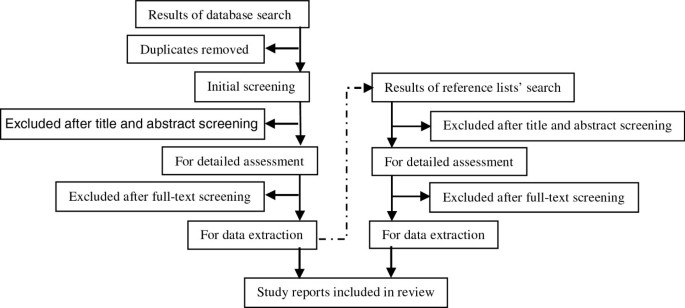
Childhood socioeconomic position and adult leisure-time physical activity: a systematic review protocol
Participation in leisure-time physical activity benefits health and is thought to be more prevalent in higher socioeconomic groups. Evidence indicates that childhood socioeconomic circumstances may have long-term influences on adult health and behaviour; however, it is unclear if this extends to an influence on adult physical activity. The aim of this review is to examine whether a lower childhood socioeconomic position is associated with lower levels of leisure-time physical activity during adulthood.
Habitually wearing high heels may improve user walking economy in any footwear
Habitually wearing high-heeled footwear structurally remodels leg muscle tendons and improves user walking economy, regardless of worn attire. , The habitual use of high-heeled footwear may structurally remodel user leg muscle tendons, thereby altering their functional capabilities. High heels set users’ ankles in relatively plantarflexed positions, causing calf muscle tendons to operate at relatively short lengths. Habitually operating muscle tendons at relatively short lengths induces structural remodeling that theoretically affects muscle metabolism. Because structural changes occur within the body, the user’s locomotor metabolism may change in any footwear condition (e.g., conventional shoes, barefoot). Here, we studied the influence of habitual high-heel use on users’ leg muscle-tendon structure and metabolism during walking in flat-soled footwear. We tested eight participants before and after 14 wk of agreeing to wear high heels as their daily shoes. Overall, participants who wore high heels >1,500 steps per day, experienced a 9% decrease in their net metabolic power during walking in flat-soled footwear (d = 1.66, P ≤ 0.049), whereas participants who took <1,000 daily steps in high heels did not (d = 0.44; P = 0.524). Across participants, for every 1,000 daily steps in high heels, net metabolic power during walking in flat-soled footwear decreased 5.3% ( r = –0.73; P = 0.040). Metabolic findings were partially explained (r 2 = 0.43; P = 0.478) by trending shorter medial gastrocnemius fascicle lengths (d = 0.500, P = 0.327) and increased Achilles tendon stiffness (d = 2.889, P = 0.088). The high-heel intervention did not alter user walking stride kinematics in flat-soled footwear (d ≤ 0.567, P ≥ 0.387). While our limited dataset is unable to establish the mechanisms underlying the high-heel-induced walking economy improvement, it appears that prescribing specific footwear use can be implemented to alter user muscle-tendon properties and augment their function in any shoes. NEW & NOTEWORTHY Habitually wearing high-heeled footwear structurally remodels leg muscle tendons and improves user walking economy, regardless of worn attire.

Rutger Bregman on Twitter / X
Devastating review of the degrowth literature (561 studies): --> 'few studies use quantitative or qualitative data...' --> [those that do] 'tend to include small samples or focus on non-representative cases' -->'large majority (almost 90%) are opinions rather than analysis' pic.twitter.com/1OQuUhzfk5— Rutger Bregman (@rcbregman) September 4, 2024

I saw this meta-analysis shared a couple of times recently, so we took a look and re-analyzed the data. | František Bartoš
I saw this meta-analysis shared a couple of times recently, so we took a look and re-analyzed the data. We found that the conclusion is almost entirely driven by publication bias. Both state-of-the-art and standard methods reduce the degree of the effect 2-3 fold. Moreover, the data no longer show statistical evidence for the main conclusions. Importantly, our findings do not imply that there is no positive effect of ChatGPT, or other large language models on learning; in fact, our analysis reveals that there is “absence of evidence” rather than “evidence of absence”. The present literature appears to be contaminated by publication bias; high-quality registered reports are needed to properly evaluate the effect of large language models in educational settings. See the full response just submitted for publication at https://lnkd.in/eGKHHKtg

Sleep: Educational Impact and Habit Formation
In a field experiment among US university students, incentives for sleep increase both sleep and academic performance. Our primary intervention pairs bedtime reminders with morning feedback and immediate rewards for sleeping at least 7 hours on weeknights. The intervention raises the share of weeknights with 7+ hours of sleep by 26% and average sleep by 19 minutes during a 4-week treatment period, with posttreatment effects of 8 minutes. Immediate incentives outperform both delayed incentives and reminders/feedback alone during treatment but have no distinguishable impacts posttreatment. The primary intervention improves average semester course performance by 0.075–0.089 grade points, a 0.10–0.11 standard deviation increase. Our results demonstrate that incentives targeting sleep can be a cost-effective approach to improve educational outcomes.
Instinctive sleeping and resting postures: an anthropological and zoological approach to treatment of low back and joint pain
Your access to the NCBI website at www.ncbi.nlm.nih.gov has been temporarily blocked due to a possible misuse/abuse situation involving your site. This is not an indication of a security issue such as a virus or attack. It could be something as simple as a run away script or learning how to better use E-utilities, http://www.ncbi.nlm.nih.gov/books/NBK25497/, for more efficient work such that your work does not impact the ability of other researchers to also use our site. To restore access and understand how to better interact with our site to avoid this in the future, please have your system administrator contact info@ncbi.nlm.nih.gov.
Folate-dependent hypermobility syndrome: A proposed mechanism and diagnosis
Hypermobility involves excessive flexibility and systemic manifestations of connective tissue fragility. We propose a folate-dependent hypermobility syndrome model based on clinical observations, and through a review of existing literature, we raise the possibility that hypermobility presentation may be dependent on folate status. In our model, decreased methylenetetrahydrofolate reductase (MTHFR) activity disrupts the regulation of the ECM-specific proteinase matrix metalloproteinase 2 (MMP-2), leading to high levels of MMP-2 and elevated MMP-2-mediated cleavage of the proteoglycan decorin.

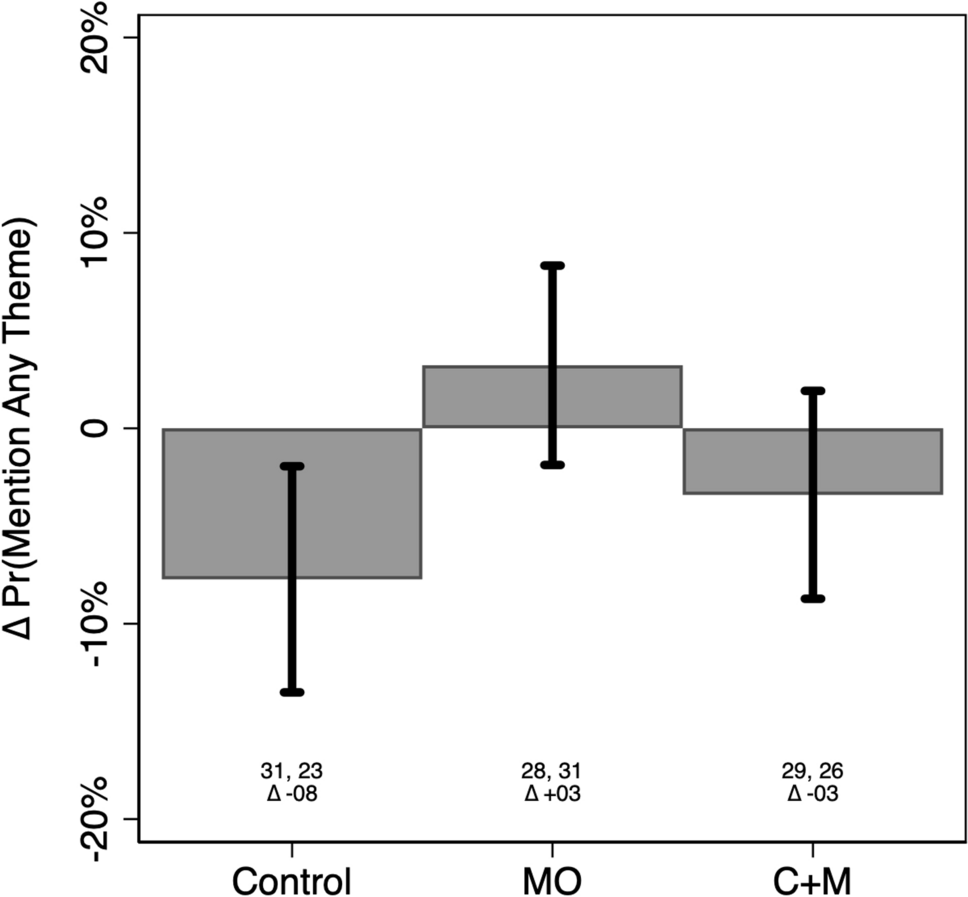
“Influencing the influencers:” a field experimental approach to promoting effective mental health communication on TikTok
A substantial body of social scientific research considers the negative mental health consequences of social media use on TikTok. Fewer, however, consider the potentially positive impact that mental health content creators (“influencers”) on TikTok can have to improve health outcomes; including the degree to which the platform exposes users to evidence-based mental health communication. Our novel, influencer-led approach remedies this shortcoming by attempting to change TikTok creator content-producing behavior via a large, within-subject field experiment (N = 105 creators with a reach of over 16.9 million viewers; N = 3465 unique videos). Our randomly-assigned field intervention exposed influencers on the platform to either (a) asynchronous digital (.pdf) toolkits, or (b) both toolkits and synchronous virtual training sessions that aimed to promote effective evidence-based mental health communication (relative to a control condition, exposed to neither intervention). We find that creators treated with our asynchronous toolkits—and, in some cases, those also attending synchronous training sessions—were significantly more likely to (i) feature evidence-based mental health content in their videos and (ii) generate video content related to mental health issues. Moderation analyses further reveal that these effects are not limited to only those creators with followings under 2 million users. Importantly, we also document large system-level effects of exposure to our interventions; such that TikTok videos featuring evidence-based content received over half a million additional views in the post-intervention period in the study’s treatment groups, while treatment group mental health content (in general) received over three million additional views. We conclude by discussing how simple, cost-effective, and influencer-led interventions like ours can be deployed at scale to influence mental health content on TikTok.
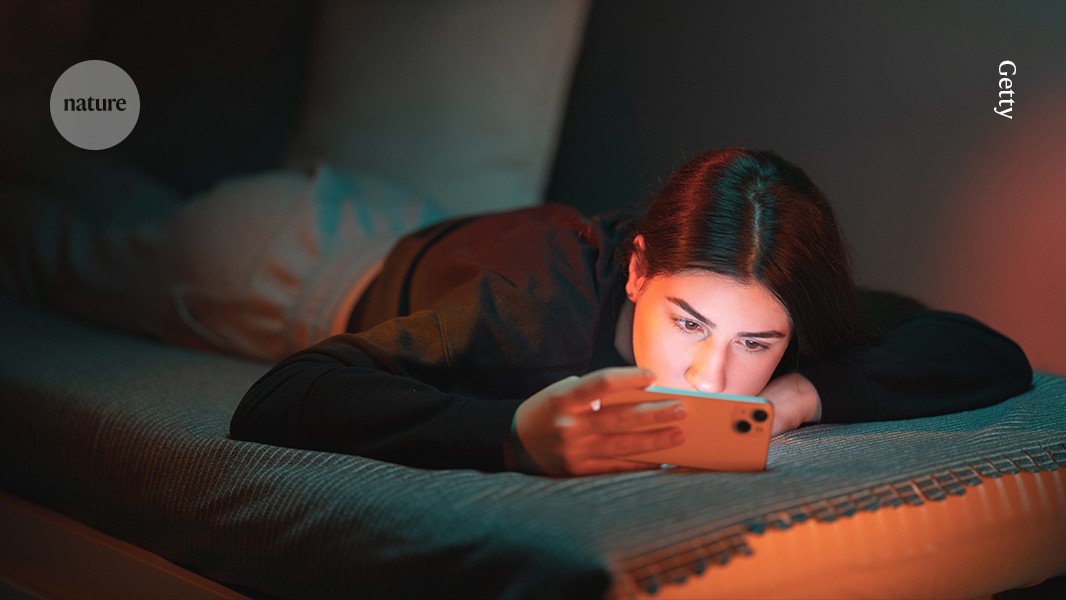
The great rewiring: is social media really behind an epidemic of teenage mental illness?
The evidence is equivocal on whether screen time is to blame for rising levels of teen depression and anxiety — and rising hysteria could distract us from tackling the real causes.
Has anyone looked at this paper more closely? I've seen many of my bachelor students refer to it when it comes to depressive disorders. Authors find worldwide depression rates doubled from 1990 to 2020, which seems like a lot. pubmed.ncbi.nlm.nih.gov/40313474/

Trends in Prevalent Cases and Disability-Adjusted Life-Years of Depressive Disorders Worldwide: Findings From the Global Burden of Disease Study From 1990 to 2021 - PubMed
pubmed.ncbi.nlm.nih.govIn our course and book _Calling Bullshit_, we posit that If something seems too good, or too bad, to be true, it probably is. Now as a college professor I'm pretty confident that overreliance can AI can harm our thinking ability, but just ten minutes of use? Let's dig into this this study a bit.

Using AI for just 10 minutes erodes your ability to persist at hard things - Berkeley News
news.berkeley.eduDoes the new shingles vaccine (Shingrix) protect against cardiovascular disease (CVD)? Yes, according to a new 'natural experiment' study in @natmed.nature.com. But the truth is sadly far less convincing! Pull up a chair and let's examine another peer review failure in a Nature journal. 1/10 🧵
I wrote a blog post on the science behind The Atlantic's "no alcohol for fathers-to-be" piece. quentinandre.net/posts/drunk-mice-and-their-of…
Do Drunk Mice Sire Weird-Looking Offspring? – Quentin André
quentinandre.netI missed a lot of #metascience discourse in hospital, and am mostly sad I didn't get a chance to wade in on the absurdity of this being a paper in Nature in 2026; ignoring a decade of commentary from statisticians on OSC 2015 paper. nature.com/articles/s41586-025-10078-y

Investigating the replicability of the social and behavioural sciences - Nature
www.nature.comGood news, everyone! I have a short piece coming out in The Conversation on Monday that explains the main issues with this study. It's impossible for me to have the same media reach as the original press release. So I'd be extremely grateful if people could help me share it as widely as possible 🙏

G. Willow Wilson
Good news, everyone cnn.com/2026/05/14/health/arts-ageing…


