Just-In-Time PM #4: Intermediate Packets - Forte Labs
In Part 3, I argued that having a personal knowledge base is the linchpin of success in a creative economy. A knowledge base allows you to reuse past work, draw from past experiences, share your knowledge in concrete form, and eventually, build products and services out of that knowledge. This requires strategically structuring your work in the first place, as a series of what I call intermediate packets.


Knowledge doesn't just accumulate. It develops between people. - Marginalia
Announcing Assemblage, the visual builder for Semble.so collections
Knowledge tech that's subtly wrong is more dangerous than tech that's obviously wrong. (Or, where I disagree with Robin Sloan.)
Writing at the end of the world, from Hveragerði, Iceland
Understanding Knowledge as a Commons: From Theory to Practice
Looking at knowledge as a shared resource: experts discuss how to define, protect, and build the knowledge commons in the digital age.Knowledge in digital

See what you think
Allegra A. Beal Cohen's blog about knowledge curation, new interfaces, and large-scale qualitative data.

Care at the Edge of Automation – Topos Institute
Technologies don’t just solve problems, they change us. We invent technologies, and they invent us in turn, shaping our lives and worlds. This is the phenomenon that Terry Winograd and Fernando Flores, in Understanding Computers and Cognition (1986), called “ontological design.” It matters now more than ever—along with a second lesson they saw clearly. Technological research is always guided (and sometimes misguided) by deep ontological assumptions about, e.g., the nature of cognition, agency, and communication. If we are to create technologies that truly serve human flourishing and care, we must bring these hidden assumptions into the open and question them at their roots.

Coordination Tech in Science: Letters, Journals, and Whatever Comes Next | shishyko!
To modernize our scientific infrastructure, we need new contextualization and coordination technologies that decouple trust from legacy branding — shifting from gatekeeping on write to algorithmic contextualization on read.
Common Fabric
A social computing lab. We are building a medium for software that revolves around people, not apps.
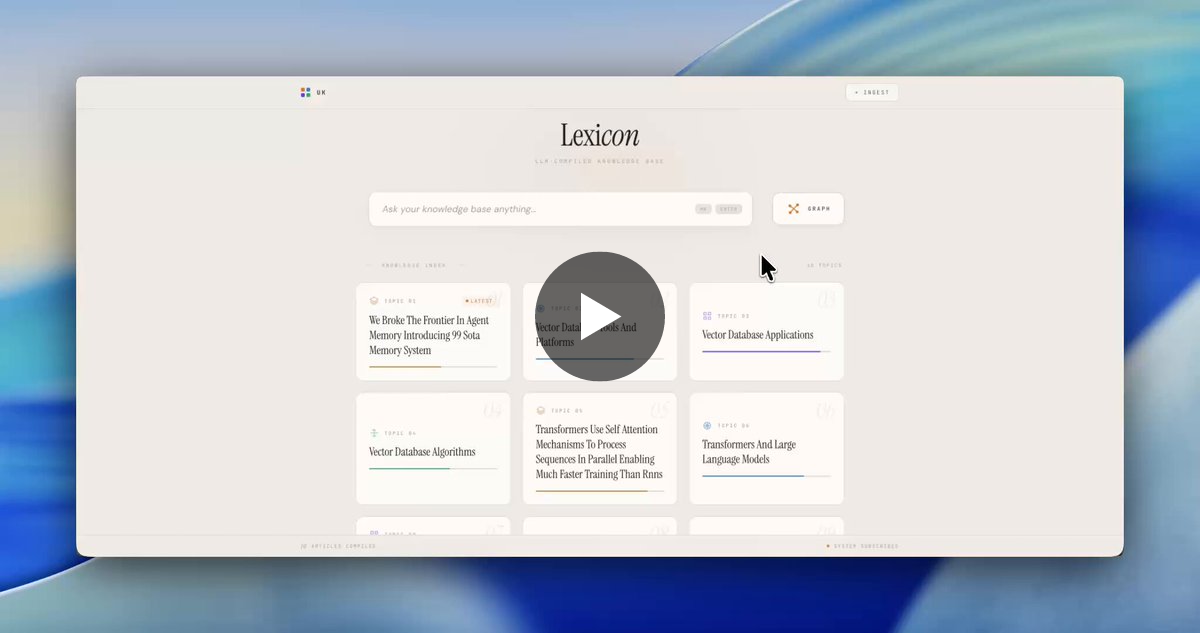
Why LLM Wiki? 🧠 Future Of Knowledge For Agentic AI & Humans
From Personal Knowledge Management to Collective Knowledge Gardening - Cosmik Labs
Connecting Obsidian to Semble

Planning with Agents: Divided Worlds, Boundary Objects, and Thicker Interfaces

Fabric – the AI workspace that thinks with you

How I use Obsidian
PlayNotes | You talk, we organize

Talk more.
Bebop: Quick Notes App - App Store
Pb Notes
Burnout in Open Source (by Erlend Sogge Heggen) — Semble

Linux distributions worldwide targeted by the Copy Fail exploit
GitHub Alternatives (by Kai Jellinghaus) — Semble
Death of GitHub? (by Kai Jellinghaus) — Semble

Before GitHub
Cohere + Aleph Alpha — sovereign AI's first $20B deal (by Sensemaker) — Semble
Jared Goering on Twitter / X

OpenWiki: Open Source Repo Documentation for Coding Agents

Wiki Memory

The Obsidian heads were right.

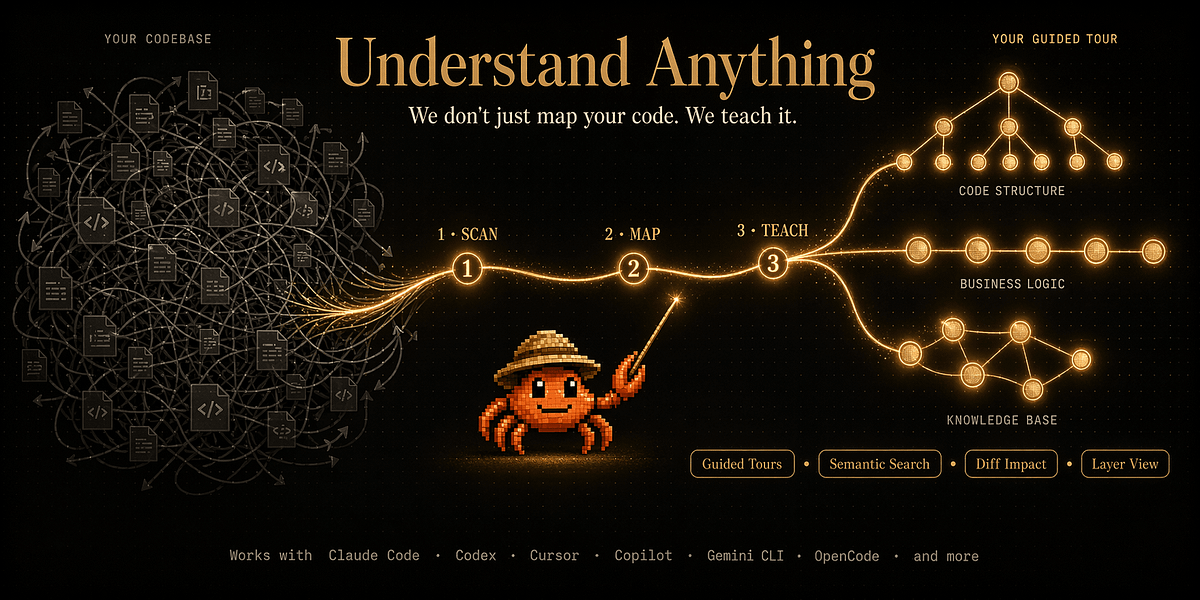
The Definitive Guide to Understand Anything: Turning Code and Knowledge Into Graphs That Teach

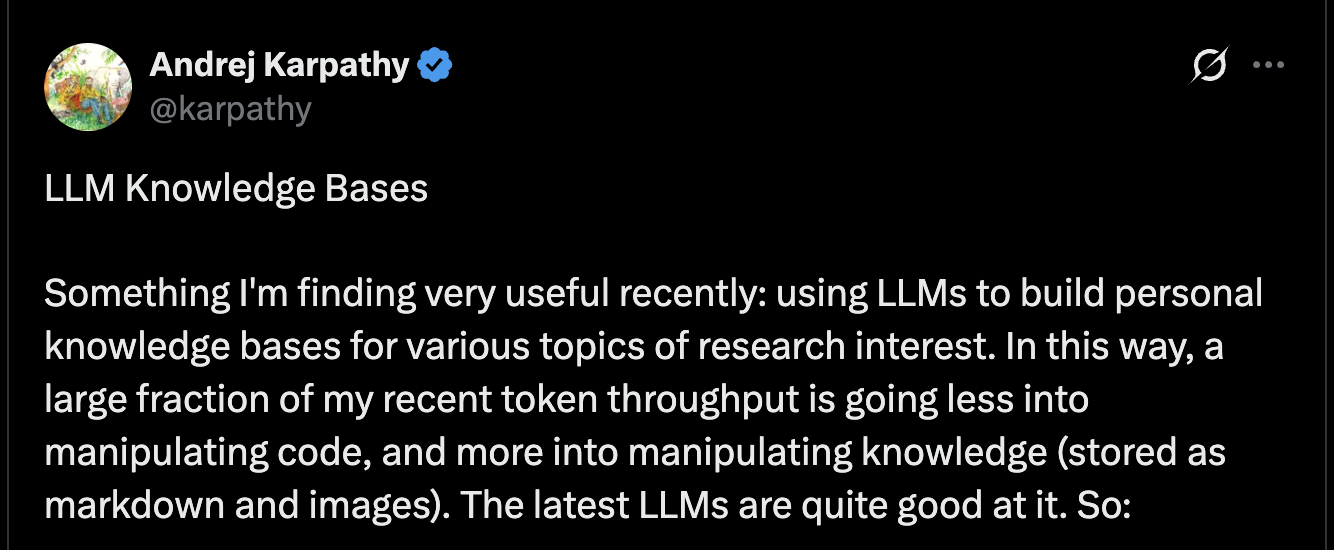
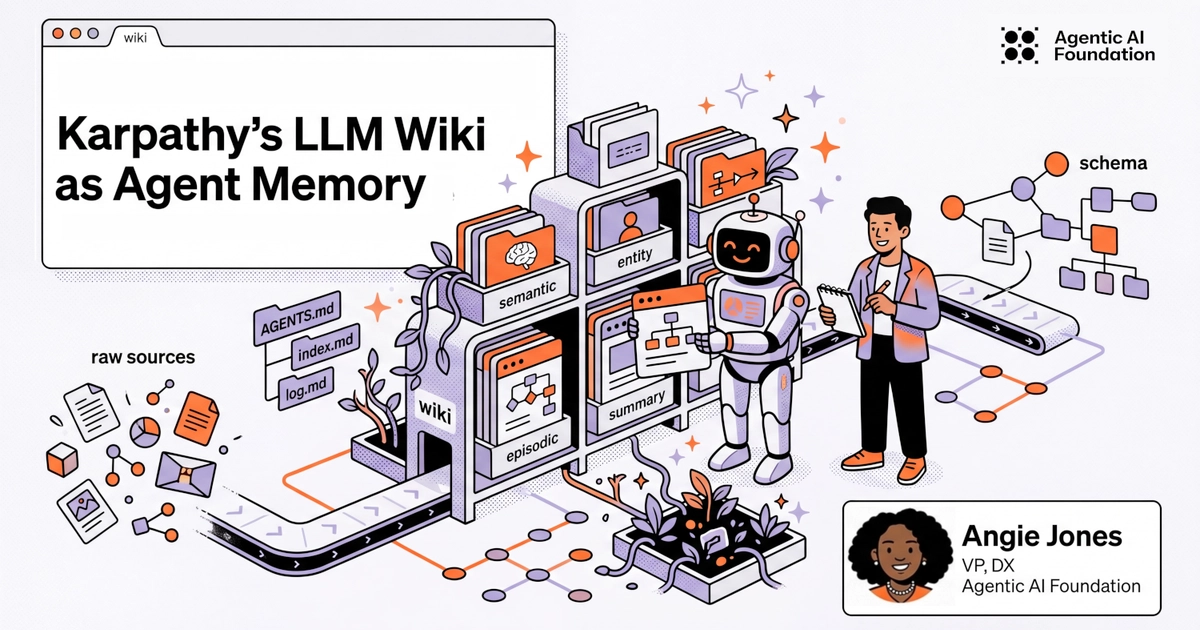
Karpathy's LLM Wiki as Agent Memory - Agentic AI Foundation (AAIF)

Inference Cooperative — AI, governed together
AlignmentJournal on Twitter / X
I’ve been quiet on social media lately, but today I’m launching Audit Clinical Evidence (ACE), an initiative I’ve been developing over the…
A New Paradigm for Scientific Publishing, Peer Review, and Impact Assessment

Nova Scotia’s Experiment in Research That Solves Real Problems

datasetpapers — a public research experiment
Kanjun 🐙 on Twitter / X
Hiring and firing a DBA

LLMs and performative productivity

Collaborative AI Engineering: One Dev, Two Dozen Agents, Zero Alignment — Maggie Appleton, GitHub

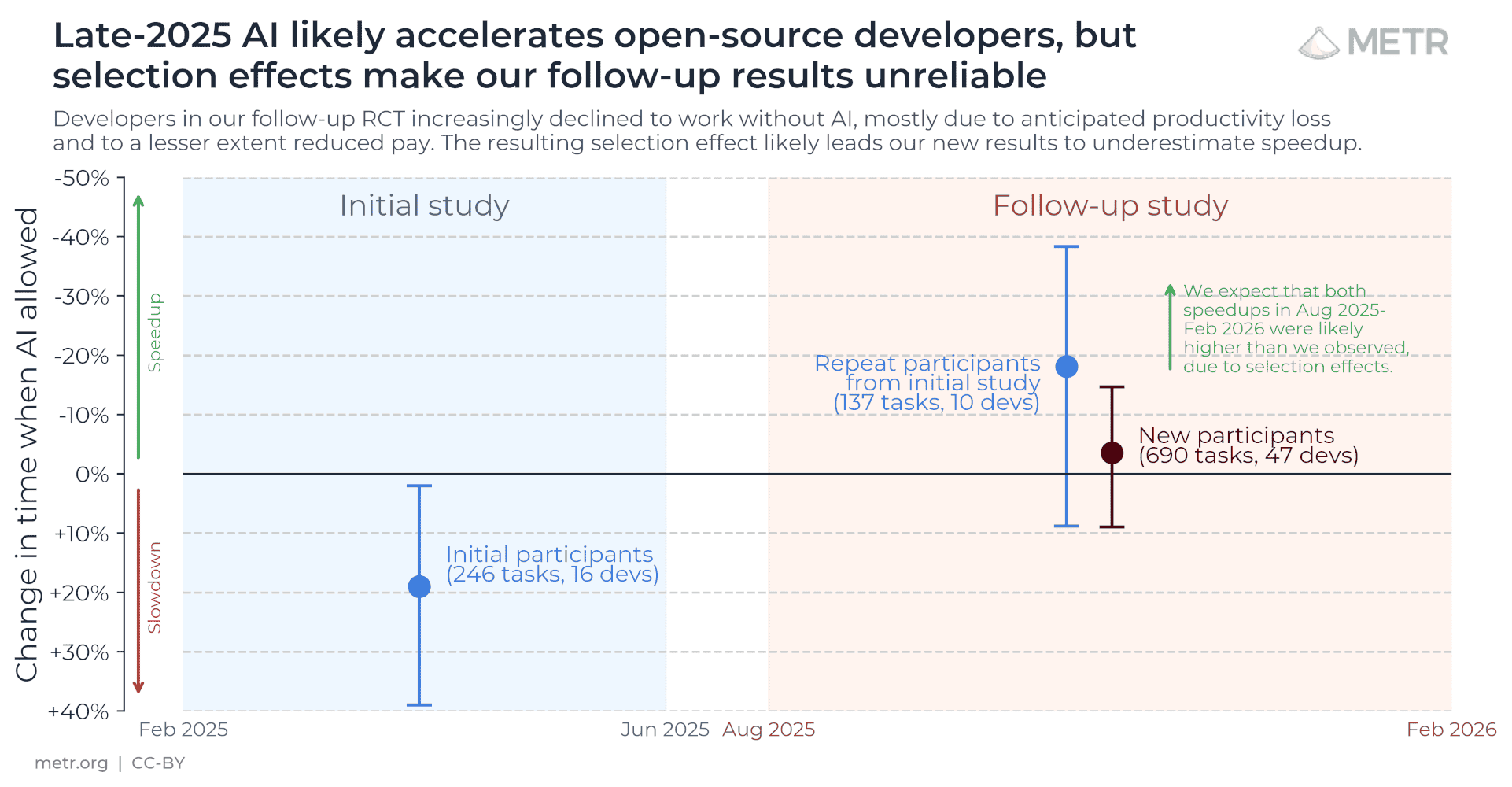
We are Changing our Developer Productivity Experiment Design

Agents want flexible schemas