File over app
If you want to create digital artifacts that last, they must be files you can control, in formats that are easy to retrieve and read. Use tools that give you...
Things are made by teams
“How do we get people to meaningfully coordinate in service of doing stuff that matters?” This is one of those big, civilization-spanning sort of questions. There are many answers, there’s no one right way (but there are many wrong ones, as discovered thru evidence of trying them) - and while there’s generic motivators for human behavior, there’s a sort of loss and amplification factor that happens when you mismatch the reward function. To be more blunt - hunger is a powerful motivator, but hungry people tend to not perform at their peak.
File over app
If you want to create digital artifacts that last, they must be files you can control, in formats that are easy to retrieve and read. Use tools that give you...
The Address is Not The Place: Object Residency in C++26 - Laurie Kirk - CppCon 2026
earth :: a global map of wind, weather, and ocean conditions
See current wind, weather, ocean, and pollution conditions, as forecast by supercomputers, on an interactive animated map. Updated every three hours.

Human Responsible · AI Contribution Policies
Your tools are your business, but everything you submit must be yours.
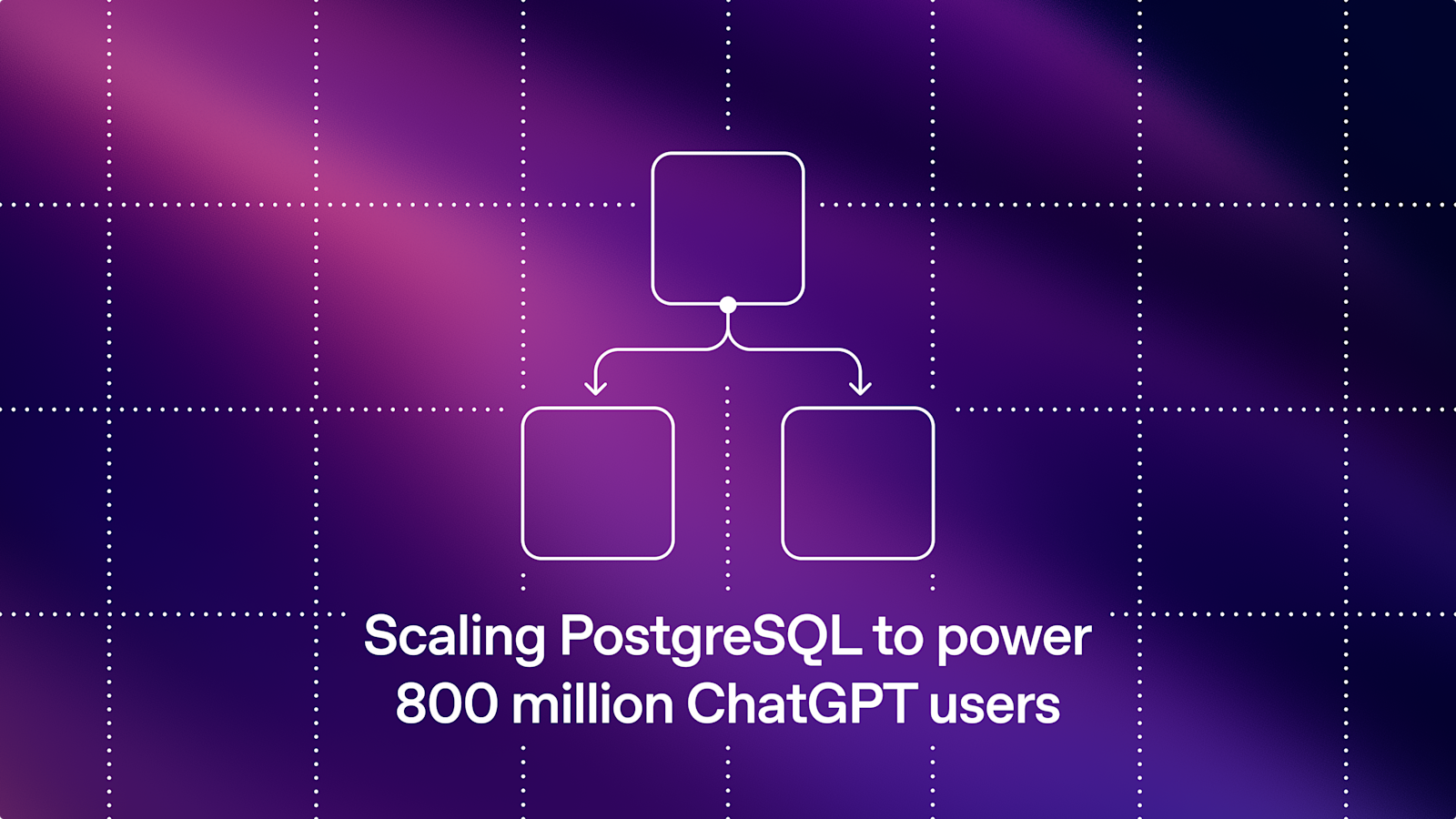
Scaling PostgreSQL to power 800 million ChatGPT users
An inside look at how OpenAI scaled PostgreSQL to millions of queries per second using replicas, caching, rate limiting, and workload isolation.
Weird little guys of FOSS
This is a list of weird little guys in the free software movement and adjacent spaces. Request additions, removals, or changes via email; patches welcome.
Normalized Fascism in Open Source: $12 Million Given to DHH
Open source has become a safe harbor for far-right politics, from David Heinemeier Hansson's white-nationalist rhetoric and the Omarchy Foundation's $12 mi…

Nobody pays for open source. We can force them to. | Seldo.com
Thirty years of voluntary funding schemes haven't paid open source maintainers because asking doesn't scale. The real money already flows — to JFrog, Docker, Sonatype — at the registry layer. The fix: registries charge companies for supply (they already do), then route a slice automatically to the maintainers who make that supply worth having.
Jujutsu megamerges for fun and profit
A practical guide to creating and maintaining powerful megamerge workflows in Jujutsu for faster, conflict-free development.

I made a build visualizer to understand Bun’s compile times
I built buildprof (Github), an open-source tracing tool that shows where the time goes when you compile software on Linux. Here’s a realtime video of it profiling a clean build of ripgrep: Watch the …
How web bloat impacts users with slow devices
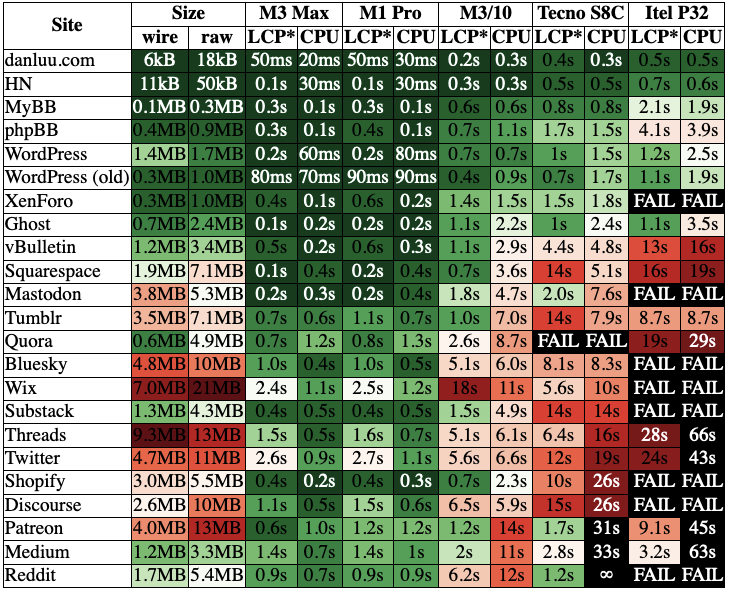
In 2017, we looked at how web bloat affects users with slow connections. Even in the U.S., many users didn't have broadband speeds, making much of the web difficult to use. It's still the case that many users don't have broadband speeds, both inside and outside of the U.S. and that much of the modern web isn't usable for people with slow internet, but the exponential increase in bandwidth (Nielsen suggests this is 50% per year for high-end connections) has outpaced web bloat for typical sites, making this less of a problem than it was in 2017, although it's still a serious problem for people with poor connections.

Capitole du Libre 2026 — 14 & 15 novembre, Toulouse
Capitole du Libre — L'événement du Logiciel Libre en Occitanie. 14 & 15 novembre 2026 à l'ENSEEIHT, Toulouse. Gratuit sur inscription.

EU praises open source for tech sovereignty — then backs W, a private for-profit microblogging platform
To fundamentally understand why it's strange the EU Commission is throwing its weight behind this new for-profit social platform, you need to understand what lies beneath.

Lumis - Syntax Highlighter
Syntax highlighting powered by Tree-sitter and Neovim themes. One API across CLI, Rust, Elixir, JavaScript / TypeScript, browsers, and Java.
The reckless, infinite scope of web browsers
This blog post was published on March 18, 2020. It might be out of date, have broken images or links, or simply contain bad ideas and opinions that didn't stand the test of time. Please read generously!
Why is subtracting these two epoch-milli Times (in year 1927) giving a strange result?
If I run the following program, which parses two date strings referencing times 1 second apart and compares them: public static void main(String[] args) throws ParseException { SimpleDateFormat...

Collection

Updated 6d