The Machine Already Won. Can Humans band together before it's too late?
The Rise of Faceless YouTube Channels in 2025 — And How AI Is Powering the Revolution
In 2025, one of the fastest-growing trends on YouTube isn’t glamorous influencers, studio shoots, or high-budget productions. It’s faceless channels —

The Machine Already Won. Can Humans band together before it's too late?
Mark Zuckerberg ‘Loves’ AI-Generated ‘Challah Horse’ On Facebook
Meta CEO Mark Zuckerberg “loved” an image on Facebook known as "Challah Horse" that happens to be AI-generated, highlighting the amount of AI spam on the platform.

The Machine Already Won. Can Humans band together before it's too late?
Facebook’s AI-Generated ‘Shrimp Jesus,’ Explained
"Shrimp Jesus" is a strange depiction of Jesus Christ fused with crabs and shrimp that has emerged from the flood of AI-generated spam spreading through Facebook.

The Machine Already Won. Can Humans band together before it's too late?
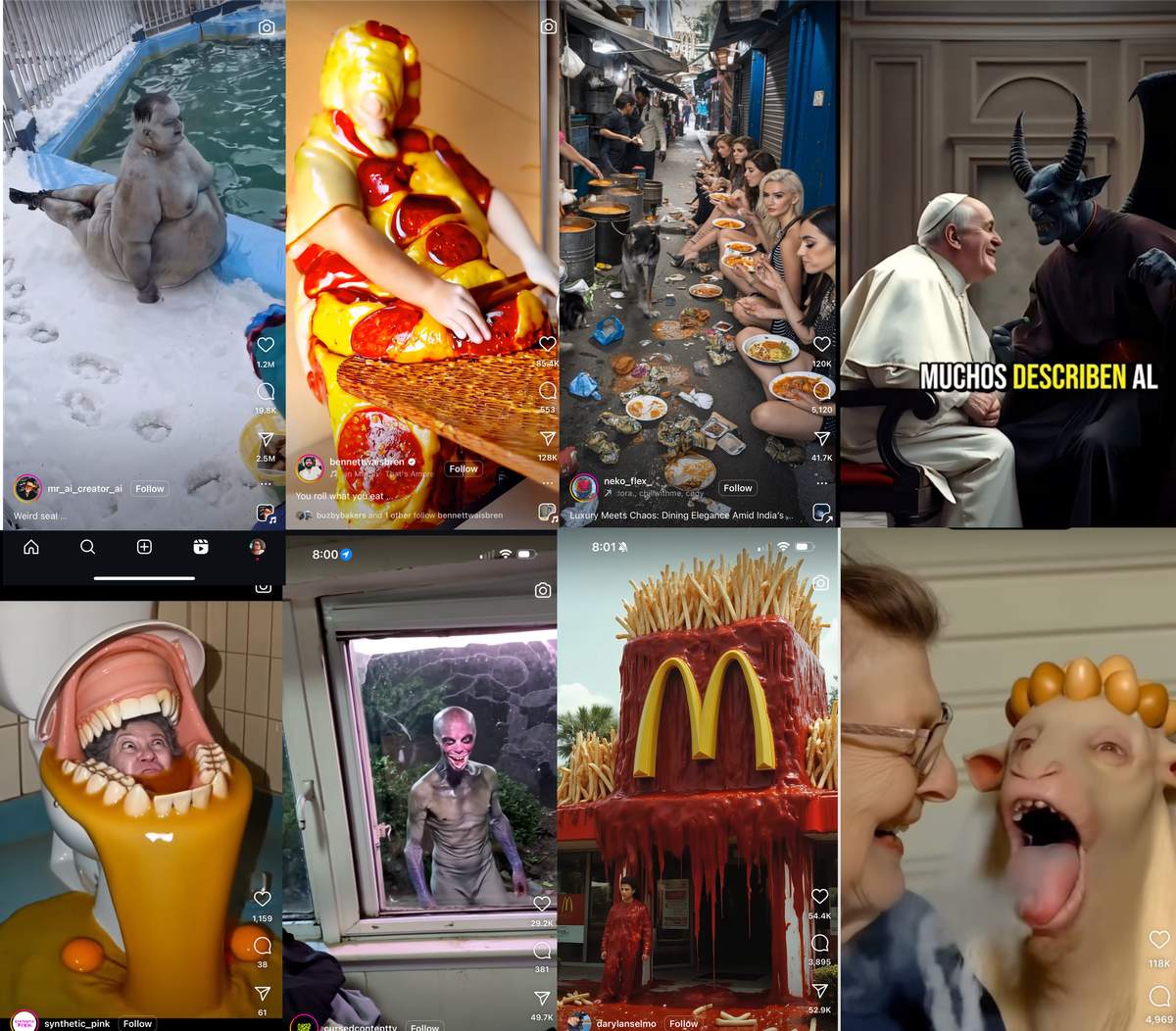
AI Slop Is a Brute Force Attack on the Algorithms That Control Reality
Generative AI spammers are brute forcing the internet, and it is working.
The Machine Already Won. Can Humans band together before it's too late?
As many as 48 million Twitter accounts aren't people, says study
A big chunk of those "likes," "retweets," and "followers" lighting up your Twitter account may not be coming from human hands.
The Machine Already Won. Can Humans band together before it's too late?
The spreading of misinformation online
Significance The wide availability of user-provided content in online social media facilitates the aggregation of people around common interests, worldviews, and narratives. However, the World Wide Web is a fruitful environment for the massive diffusion of unverified rumors. In this work, using a massive quantitative analysis of Facebook, we show that information related to distinct narratives––conspiracy theories and scientific news––generates homogeneous and polarized communities (i.e., echo chambers) having similar information consumption patterns. Then, we derive a data-driven percolation model of rumor spreading that demonstrates that homogeneity and polarization are the main determinants for predicting cascades’ size. , The wide availability of user-provided content in online social media facilitates the aggregation of people around common interests, worldviews, and narratives. However, the World Wide Web (WWW) also allows for the rapid dissemination of unsubstantiated rumors and conspiracy theories that often elicit rapid, large, but naive social responses such as the recent case of Jade Helm 15––where a simple military exercise turned out to be perceived as the beginning of a new civil war in the United States. In this work, we address the determinants governing misinformation spreading through a thorough quantitative analysis. In particular, we focus on how Facebook users consume information related to two distinct narratives: scientific and conspiracy news. We find that, although consumers of scientific and conspiracy stories present similar consumption patterns with respect to content, cascade dynamics differ. Selective exposure to content is the primary driver of content diffusion and generates the formation of homogeneous clusters, i.e., “echo chambers.” Indeed, homogeneity appears to be the primary driver for the diffusion of contents and each echo chamber has its own cascade dynamics. Finally, we introduce a data-driven percolation model mimicking rumor spreading and we show that homogeneity and polarization are the main determinants for predicting cascades’ size.

The Machine Already Won. Can Humans band together before it's too late?
Vote Leave's targeted Brexit ads released by Facebook
The social media ads that helped Vote Leave win the EU referendum are published in full for the first time.

The Machine Already Won. Can Humans band together before it's too late?
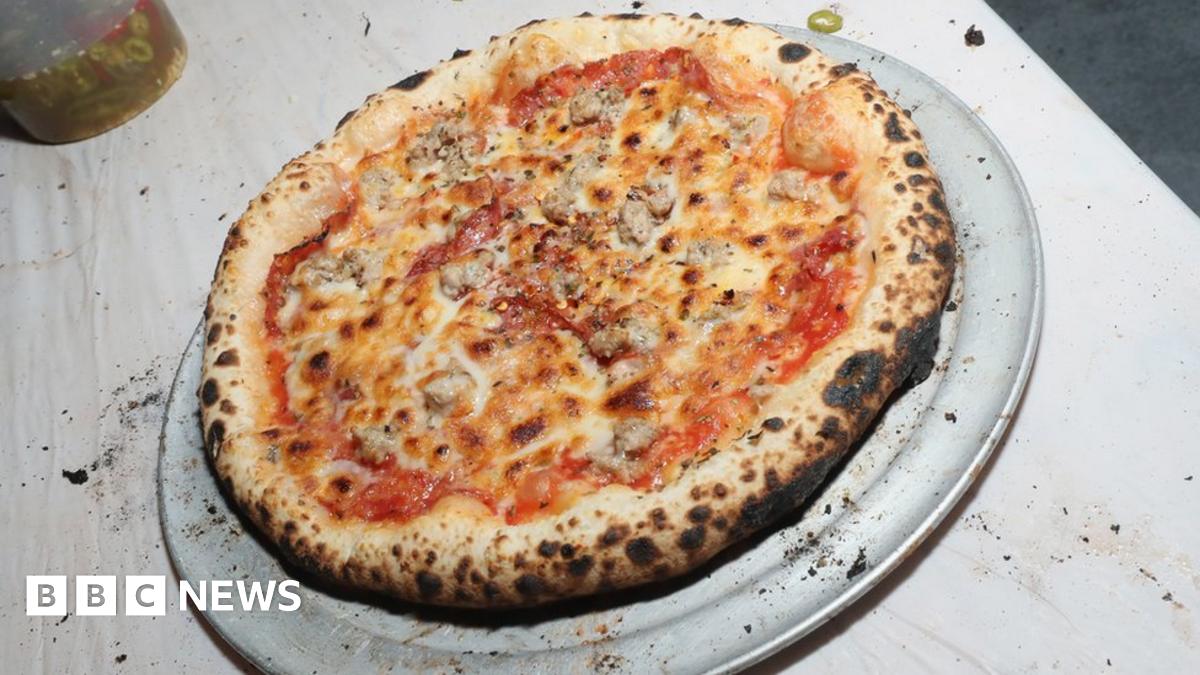
The saga of 'Pizzagate': The fake story that shows how conspiracy theories spread
Thousands of people are spreading a false rumour about a Washington pizza restaurant and a child sex ring. But why?
The Machine Already Won. Can Humans band together before it's too late?
The saga of 'Pizzagate': The fake story that shows how conspiracy theories spread
Thousands of people are spreading a false rumour about a Washington pizza restaurant and a child sex ring. But why?
The Machine Already Won. Can Humans band together before it's too late?
How Social Media Rewards Misinformation
A majority of false stories are spread by a small number of frequent users, suggests a new study co-authored by Yale SOM’s Gizem Ceylan. But they can be taught to change their ways.

The Machine Already Won. Can Humans band together before it's too late?
Faceless YouTube Channels That Make $5000 Every Month And How to Start Yours
Welcome to my article “Faceless YouTube Channels That Make $5000 Every Month — And How to Start Yours”.

The Machine Already Won. Can Humans band together before it's too late?
Conspiracy Brokers: Understanding the Monetization of YouTube Conspiracy Theories
DOI: https://doi.org/10.1145/3485447.3512142 WWW '22: Proceedings of the ACM Web Conference 2022, Virtual Event, Lyon, France, April 2022
The Machine Already Won. Can Humans band together before it's too late?
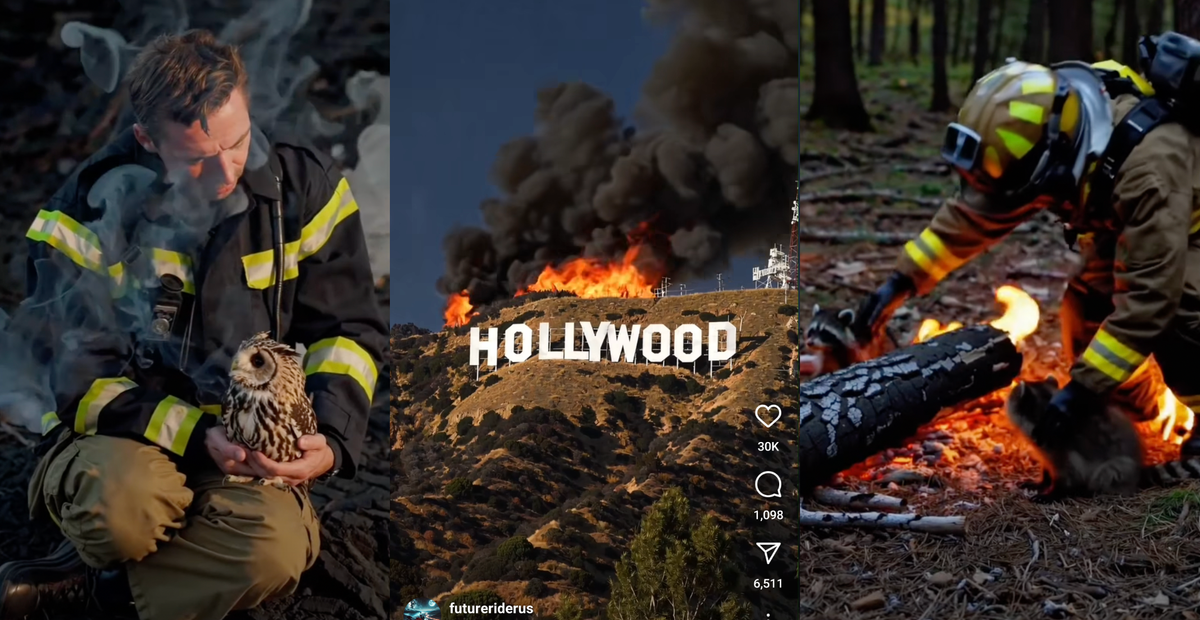
Inside the Economy of AI Spammers Getting Rich By Exploiting Disasters and Misery
How AI spammers monetized the LA fires and other natural disasters.
The Machine Already Won. Can Humans band together before it's too late?
Social media, extremism, and radicalization
Fears that YouTube recommendations radicalize users are overblown, but social media still host and profit from dubious and extremist content.

The Machine Already Won. Can Humans band together before it's too late?
Social Media Effects: Hijacking Democracy and Civility in Civic Engagement
Perceived as an equalizing force for disenfranchised individuals without a voice, the importance of social networks as agents of change cannot be ignored. However, in some societies, social networks have evolved into a platform for fake news and propaganda, empowering disruptive voices, ideologies, and messages. Social networks such as Twitter, Facebook, and Google hold the potential to alter civic engagement, thus essentially hijacking democracy, by influencing individuals toward a particular way of thinking.
The Machine Already Won. Can Humans band together before it's too late?
Social Media Algorithms Distort Social Instincts and Fuel Misinformation - Neuroscience News
Social media algorithms, designed to boost user engagement for advertising revenue, amplify the biases inherent in human social learning processes, leading to misinformation and polarization.