rohit on Twitter / X
One of the most fun papers I've read in recent times. Excellent. Reminiscent of the good old days of science papers. pic.twitter.com/4a7qRTloSG— rohit (@krishnanrohit) December 30, 2024

What will the paper of the future look like? | I4R
In the course of my research, I will occasionally indulge in a session of academic archaeology and follow a trail of references back in time to see if I can find the source of some particular concept or idea. I would like to think that acquiring this ki…
The Future of Everything is Lies, I Guess
This is a long article, so I've broken it up into a series of posts, listed below. You can also read the full work as a PDF or EPUB.
The Future of Everything is Lies, I Guess: Where Do We Go From Here?
This is a long article, so I've broken it up into a series of posts, listed below. You can also read the full work as a PDF or EPUB.
rohit on Twitter / X
One of the most fun papers I've read in recent times. Excellent. Reminiscent of the good old days of science papers. pic.twitter.com/4a7qRTloSG— rohit (@krishnanrohit) December 30, 2024
Ana Dodik on Twitter / X
Might be time to recommend this paper to folks. https://t.co/lusvhBgM8k pic.twitter.com/Ju8nwPAja5— Ana Dodik (@ana_dodik) November 12, 2026

Zechen Zhang on Twitter / X
1/ For nearly 350 years, science has communicated itself through one object: the paper. A linear narrative, frozen as a PDF, written for a human reader. We've come to treat that format as the medium of science itself.It doesn't have to be. It's a historical artifact. 🧵 pic.twitter.com/P5UUhceLkC— Zechen Zhang (@ZechenZhang5) April 30, 2026
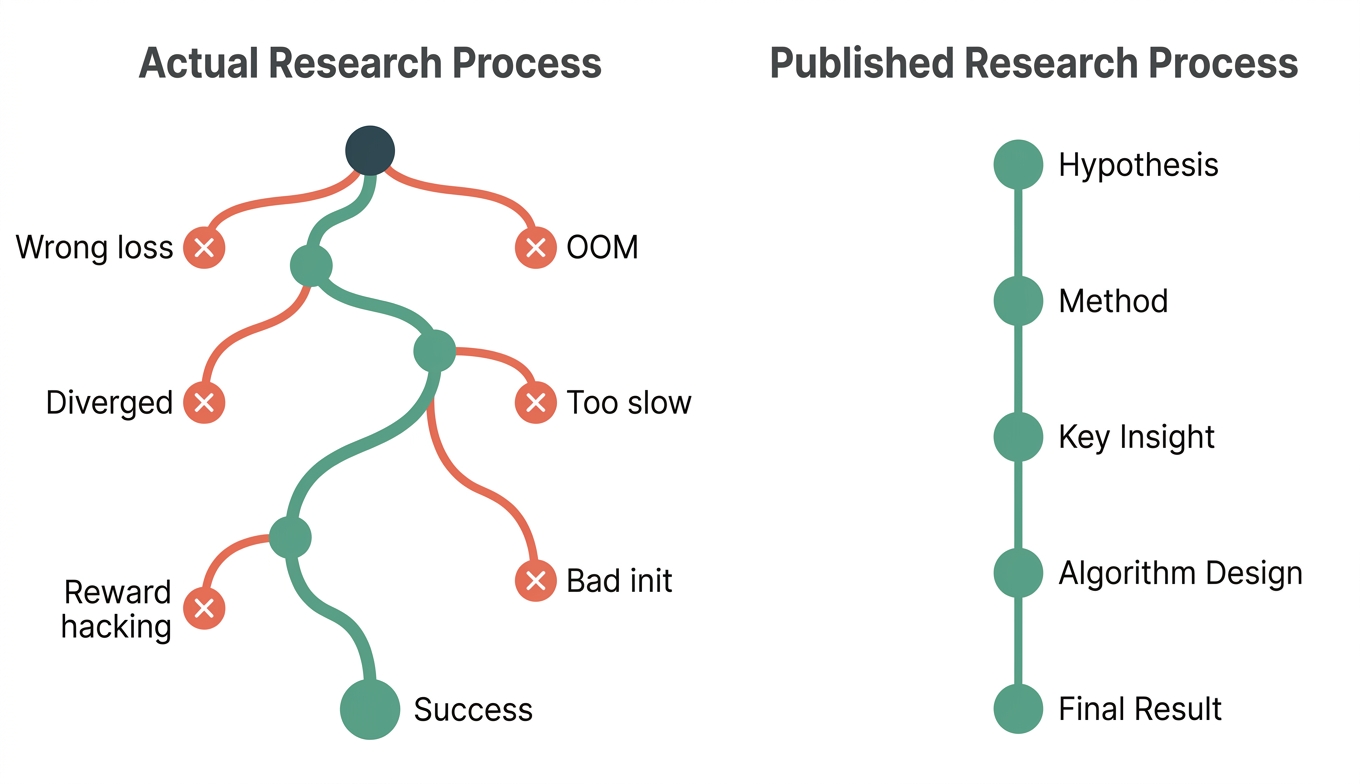
Publications
(Re)envisioning and creating just and sustainable futures for information technologies.

Speculations on the Future of the Scientific Method
The following essay was published 20 years ago (January, 2006) on my blog The Technium. I edited the intro here, but the speculations are basically unchanged.
Preprints and Papers Come to Life at FORCE2026
The future of interactive preprints and papers were on display at the FORCE2026 conference in Singapore, and here I discuss what was presented and what the future of "living figures" might hold
This is the future of scientific papers. Instead of a PDF, the paper is an AI agent that you can talk to, ask questions, run analyses. No more digging through supplements - just ask the paper directly: "what p-value cutoff was used in Fig 3B? Re-run at 0.01." nature.com/articles/s41586-026-11044-y

Reimagining research papers as interactive and reliable AI agents - Nature
www.nature.comCollection

Updated 7d
What will research outputs and communication look like in the post-PDF future?
Technological

Posts about the future of the internet, AI, and anything technological. Hence the name.
AI and the future(s) of [insert domain here]

IOSP 2026

Shared reading list for conference participants. Drop your favorite references or cool links that come up in chats. Add any Semble collections you create during the ATScience workshop.
Networked Research Labs

Common Knowledge Futures
AI/FutureOfEng

About Stanford AO
London AO Summit
Improving scientific mentorship with "Open Labs" — science better
Federating friendly spaces - Roomy
modular research multi-agent slack-like environment demo
Buzz! 🐝
MIRA-science/linkedopendata-at
Reclaiming Data Autonomy as a Peasant
Reclaiming Data Autonomy as a Peasant
The 34th International Symposium on Graph Drawing and Network Visualization
Metaudits
LaborTrail — The Trail of Your Blood on Circuits - a Hugging Face Space by sage-lollipop

Vibe Coded AO3 Clone Site Down After Fanfic Authors Buried It With 2,000 Takedown Notices in a Single Day

Child Predators Turn to Open-Source AI to Make Unlimited Illegal Images

Mac Users Reclaim 12GB+ of Storage With Apple Intelligence Removal Tool
‘Doom Loop’: OpenAI and Microsoft Admits LLMs Are Destroying the Web and Built on Theft

Cory Doctorow: AI’s big beasts aren’t really scared of their products. They’re scared of their competition
How AI Chatbots Are 'Deskilling' Human Empathy
Inference Cooperative — AI, governed together

AlignmentJournal on Twitter / X

I’ve been quiet on social media lately, but today I’m launching Audit Clinical Evidence (ACE), an initiative I’ve been developing over the…
A New Paradigm for Scientific Publishing, Peer Review, and Impact Assessment

Nova Scotia’s Experiment in Research That Solves Real Problems
datasetpapers — a public research experiment

Planning with Agents: Divided Worlds, Boundary Objects, and Thicker Interfaces

How employment is changing at Anthropic
When "technically true" becomes "actually misleading"
The Tower Keeps Rising
Domain Expertise Has Always Been the Real Moat
The Economic Benefit of Refactoring
The New Software Lifecycle
