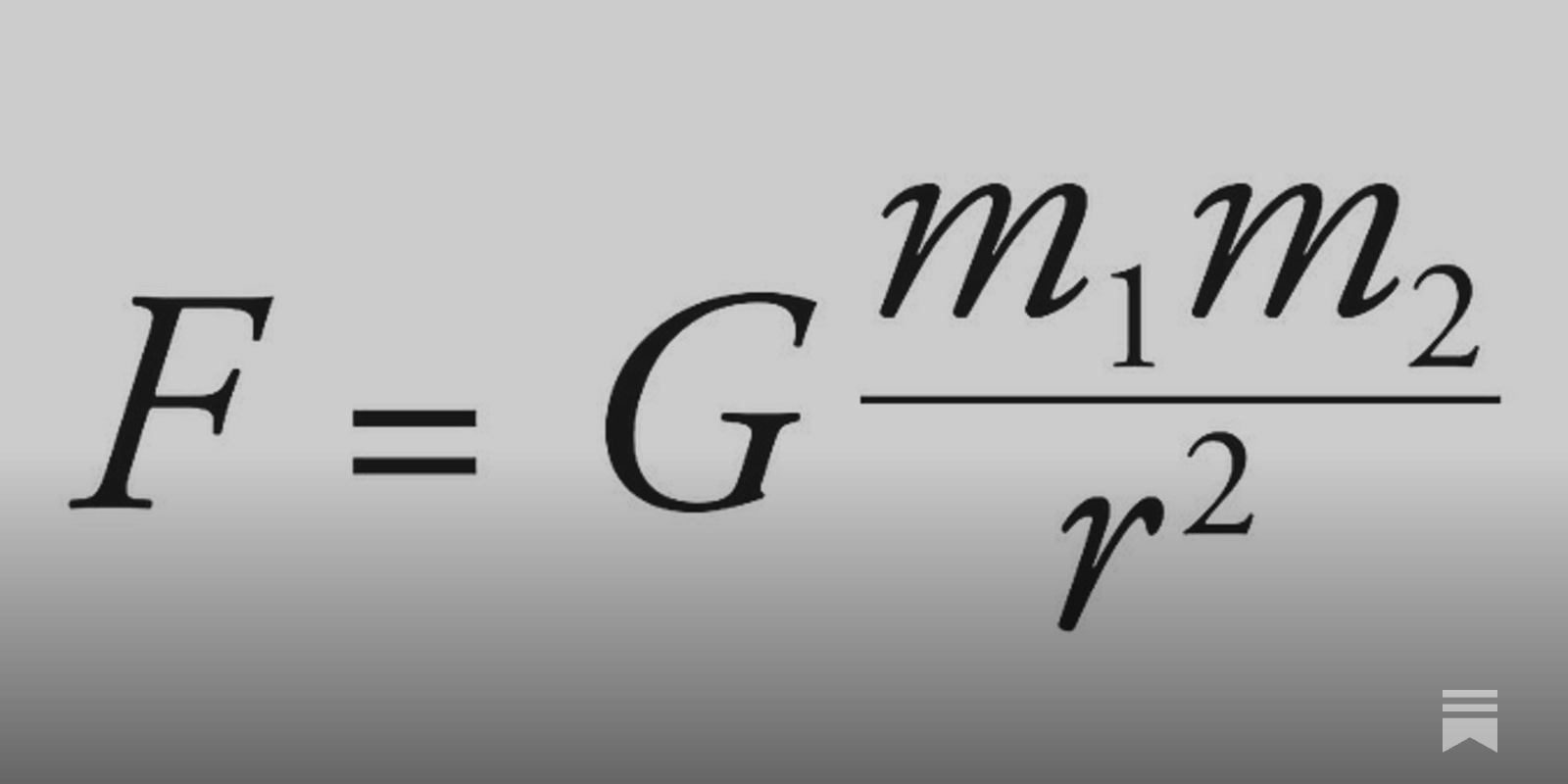
Physics has not been a materialist science for decades. Mathematical empiricism displaced materialism. Yet, there is this hegemonic culture that seems strongly tied to capitalist growth models, that pretends it is the inheritor of a scientific physical reality of materialism. Largely born in the post WW2 era. Here are collected the significant, growing, but largely ignored evidence and models showing that human experential reality is significantly of biological inheritance.
Guardians of the Earth: How Indigenous Peoples can teach the world to safeguard and conserve biodiversity
For hundreds of years, Indigenous Peoples around the world have held integral roles as protectors of their surrounding territories, environment and resources.
Everyone knows what science is…until you ask
Abstract. What is science? Scientists often assume that we share a general understanding of what science is, yet this assumption has rarely been empiricall

Vsauce Explains Why Torque is THE Scientific Mystery
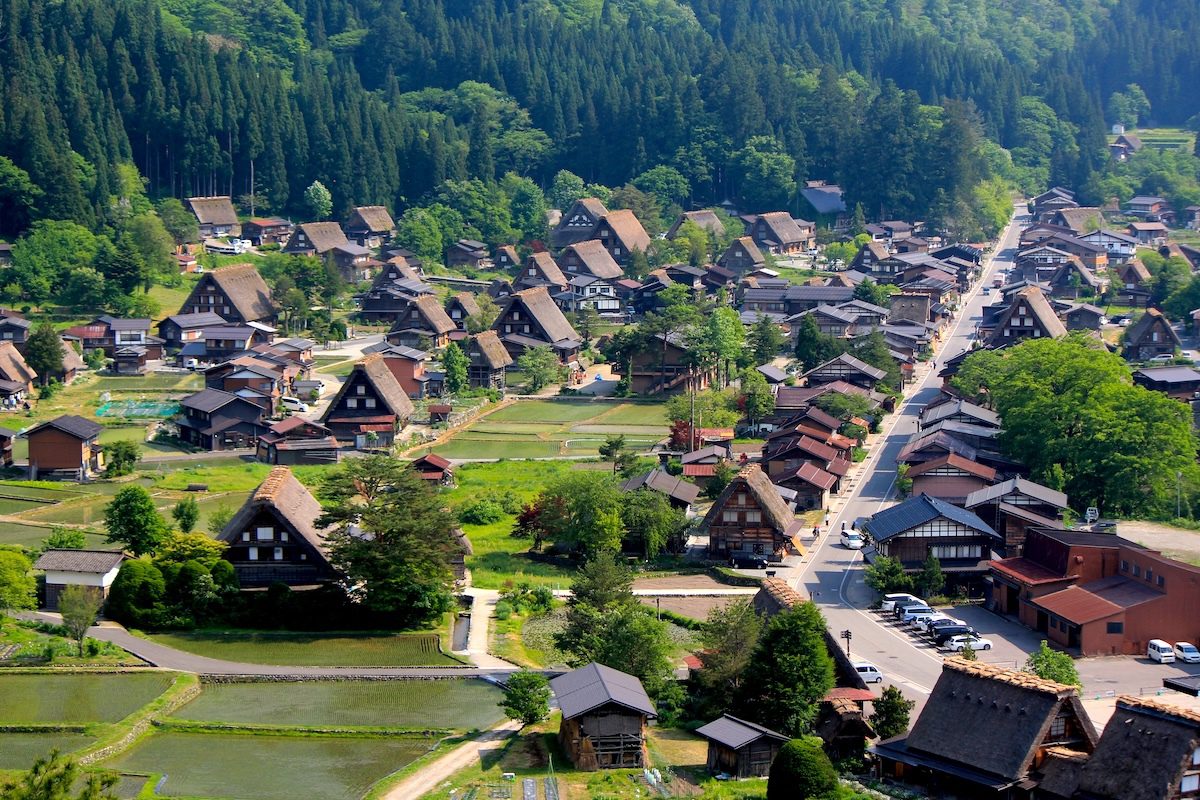
As the Japanese Countryside Empties Out, Wildlife Is Disappearing
The Japanese population is in decline, but the downward trend is especially pronounced in rural areas. The loss of people might be expected to lead to a resurgence of wildlife. But paradoxically, where farms have been abandoned, wildlife is also disappearing.

An investigation across 45 languages and 12 language families reveals a universal language network
To understand the architecture of human language, it is critical to examine diverse languages; yet most cognitive neuroscience research has focused on a handful of primarily Indo-European languages. Here, we report an investigation of the fronto-temporo-parietal language network across 45 languages and establish the robustness to cross-linguistic variation of its topography and key functional properties, including left-lateralization, strong functional integration among its brain regions, and functional selectivity for language processing.
Memory trace and timing mechanism localized to cerebellar Purkinje cells
The standard view of neural signaling is that a neuron can influence its target cell by exciting or inhibiting it. An important aspect of the standard view is that learning consists of changing the efficacy of synapses, either strengthening (long-term potentiation) or weakening (long-term depression) them. In studying how cerebellar Purkinje cells change their responsiveness to a stimulus during learning of conditioned responses, we have found that these cells can learn the temporal relationship between two paired stimuli. The cells learn to respond at a particular time that reflects the time between the stimuli. This finding radically changes current views of both neural signaling and learning., The standard view of the mechanisms underlying learning is that they involve strengthening or weakening synaptic connections. Learned response timing is thought to combine such plasticity with temporally patterned inputs to the neuron. We show here that a cerebellar Purkinje cell in a ferret can learn to respond to a specific input with a temporal pattern of activity consisting of temporally specific increases and decreases in firing over hundreds of milliseconds without a temporally patterned input. Training Purkinje cells with direct stimulation of immediate afferents, the parallel fibers, and pharmacological blocking of interneurons shows that the timing mechanism is intrinsic to the cell itself. Purkinje cells can learn to respond not only with increased or decreased firing but also with an adaptively timed activity pattern.

A theory of biological relativity: no privileged level of causation
Abstract. Must higher level biological processes always be derivable from lower level data and mechanisms, as assumed by the idea that an organism is compl

Innate connectivity patterns drive the development of the visual word form area
What determines the functional organization of cortex? One hypothesis is that innate connectivity patterns, either structural or functional connectivity, set up a scaffold upon which functional specialization can later take place. We tested this hypothesis by asking whether the visual word form area (VWFA), an experience-driven region, was already functionally connected to proto language networks in neonates scanned within one week of birth. Using the data from the Human Connectone Project (HCP) and the Developing Human Connectome Project (dHCP), we calculated intrinsic functional connectivity during resting-state functional magnetic resonance imaging (fMRI), and found that neonates showed similar functional connectivity patterns to adults. We observed that (1) language regions connected more strongly with the putative VWFA than other adjacent ventral visual regions that also show foveal bias, and (2) the VWFA connected more strongly with frontotemporal language regions than with regions adjacent to these language regions. These data suggest that the location of the VWFA is earmarked at birth due to its connectivity with the language network, providing evidence that innate connectivity instructs the later refinement of cortex.

An Urgent Message on Artificial Intelligence from the Kogui People
Assembled from the words of Mamo Vangelio Moscote Alberto and Saka Rosa Mamatacán Sauna of the Ezuama Mayor Kuamaka. Translated into Spanish by Jose Manuel Mamatacán, English by Christian Horstmann.

Earthy Governance: How to Learn About Democracy From Indigenous Peoples
In light of the planetary polycrisis, it is time to challenge the dominant strand of Western thought that asserts only humans possess rights and that


Newton's "Absurdity"
A look at the history of scientific progress through an often unused perspective: the people that actually lived it.

Words for our Present Reality - Strange Matters
We need a new kind of thinking. It would involve a break from the absolutism with which we dress up our systems of thought. It would demand that we bring different communities of thinkers together – especially those who have been left on the margins – and get them talking to each other so that we can inch closer to a shared language and a usable history.

Noam Chomsky - "The machine, the ghost, and the limits of understanding"