DASL: ATFISL — Content Discovery with the AT Protocol
ATFISL is a content discovery system for CIDs built with the AT Protocol. Publishers announce download locations for CIDs by publishing records to their AT Protocol repositories. Indexers aggregate these records into a lookup table from CIDs to live locations. ATFISL is complemented by FISL which defines an HTTP query API for ATFISL records.

User Controlled Authorization Network (UCAN) Specification
User-Controlled Authorization Network (UCAN) is a [trustless], secure, [local-first], user-originated, distributed authorization scheme. This document provides ...
Avoid Public Functions Calling Other Public Functions
A small-scale rule of thumb. This article will land much better with a concrete example, but I am drawing a blank here, so you gotta just blindly trust my say so!
What is a bioregion? Bioregionalism on the Internet (Part 1) — Hylo blog
What is bioregionalism? What would one find with an internet search? A knave's look at how the internet explains bioregions — and where it falls short.
Welcome to Muni Town
By now our community holds space for dozens of builders working on community tools in service of the Open Social Web. We call this expansive community space 'Muni Town'.

The Atproto Spaces Alpha is Live - AT Protocol
Atproto Spaces, formerly known as “the permissioned data protocol,” is a new extension to atproto that enables non-public data. The alpha is now officially open. Here’s how to develop with it and what to expect as we work towards the full release.
An entire Social Network in 1.6GB (GraphD Part 2)
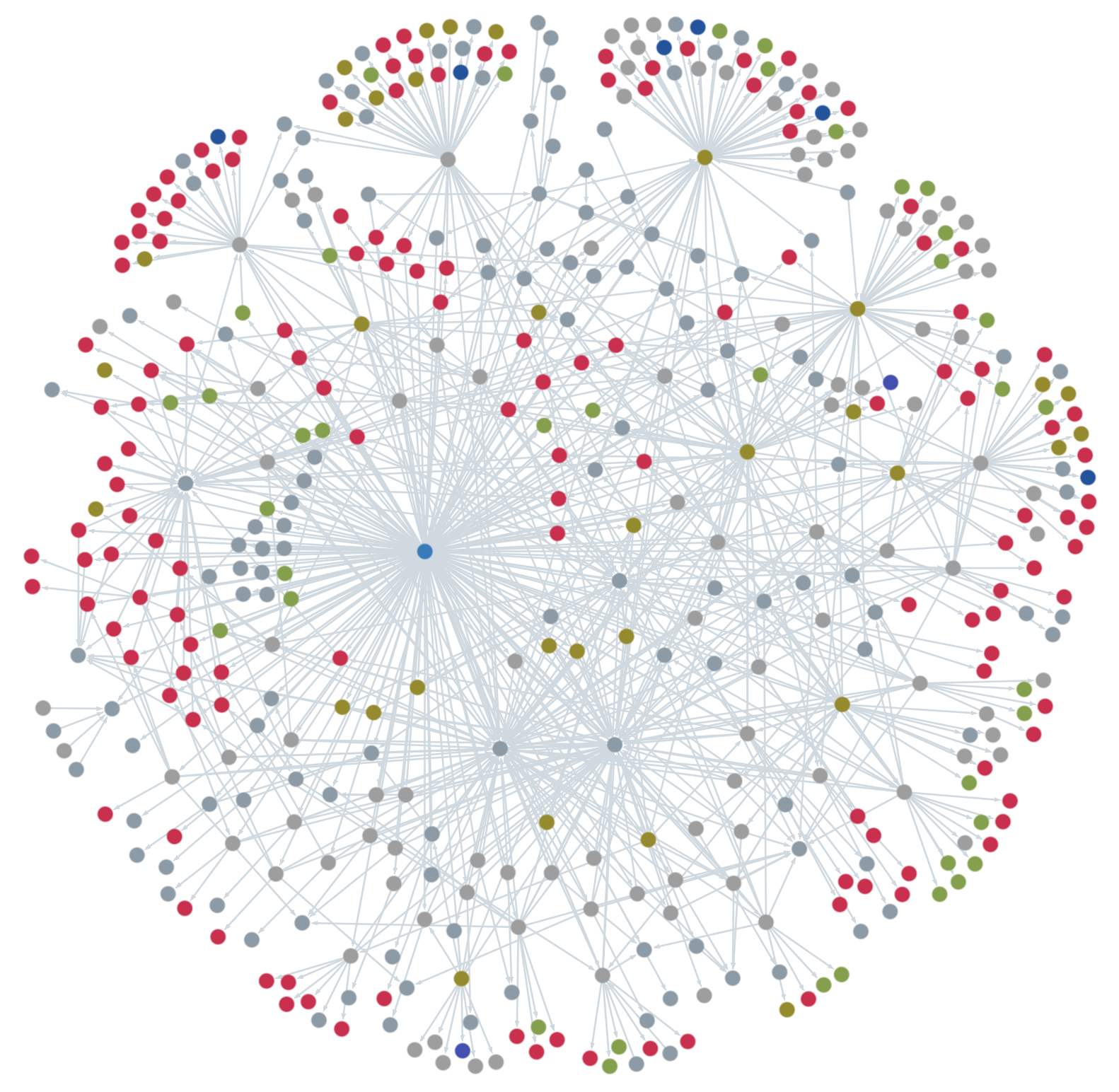
Roaring Bitmaps offer an even more efficient way to store and query an entire social graph, fitting the entire network of 5.5M users and 164M+ follows into a ~1.6GB SQLite DB on disk.
Building OAuth Authentication for Bluesky: A Complete Guide for Web and iOS Apps - Lost in Inference
How to implement secure, standards-compliant OAuth 2.1 + PKCE authentication for AT Protocol apps with separate web and mobile flows
Machine-readable attitudes - Computational Semantics++
User intent declarations can be viewed as propositional attitudes (permission, prohibition, desire, intention, belief, etc.) over structured descriptions of data use. Treating them that way gives you composable building blocks from existing theory and lens-based translations between community vocabularies that make explicit what each translation cannot carry through.
panproto/crates/panproto-lens-dsl at main · panproto/panproto
One engine for schematic version control within and across any schema language. - panproto/panproto
User Intents as Living Data — A Descriptive Meta-Framework
A response to Bluesky's User Intents proposal: instead of prescribing a fixed set of intent categories, treat them as living data and use panproto lenses to map between the vocabularies that different communities will inevitably create.
Building More Resilient Local-First Software with atproto | jakelazaroff.com
atproto has the potential to become a rock-solid replacement for the most fragile part of any local-first app: the sync server.

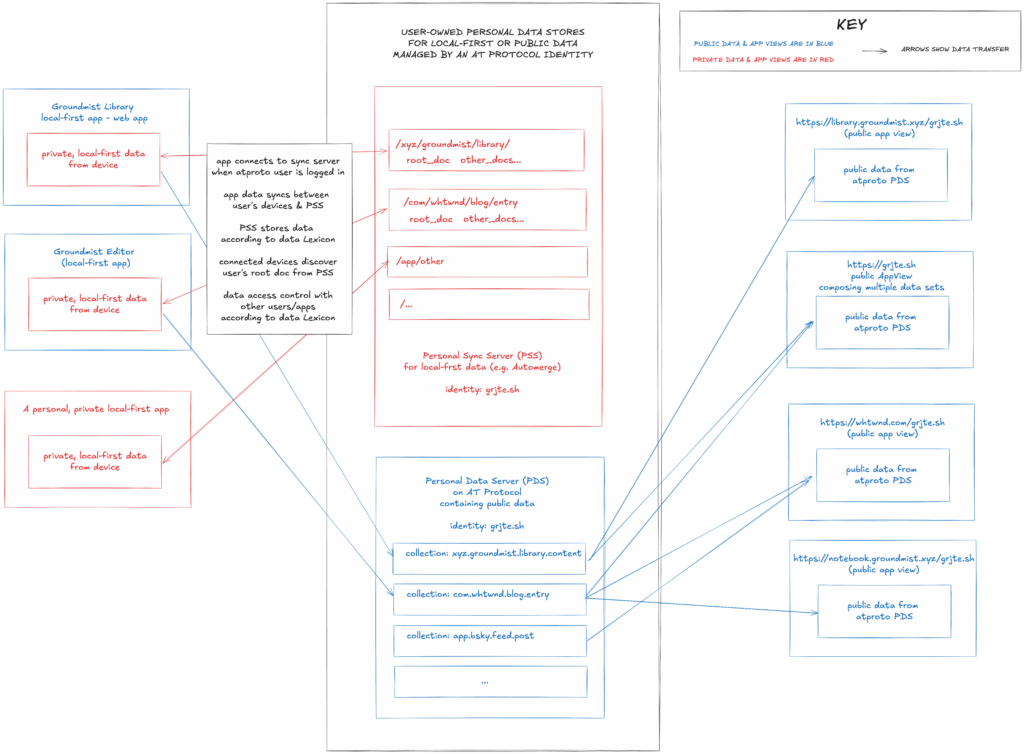
Personal sync servers for composable data
Exploring the possibilities of interoperability and composability for local-first software & data by using a personal sync server tied to an atproto identity