Collection
AI Won't Save Us

Updated 1mo
Collection
Updated 1mo
kcxt! (@cas@treehouse.systems)
saw someone on HN say they will never contribute to Nura again since we ban LLM generated contributions (they had receipts too, they had contributed in the past) their argument was that having done device porting manually before, doing it with an LLM was something like 10x faster having seen the various LLM driven ports going around, we can't deny that LLMs are capable of doing kernel bringup, finding a functional implementation, and making many more attempts to trial and error than we humans are. of course, this doesn't come without a cost, as with most technical advancements this cost is mostly offloaded onto those without the resources to prevent it -- the under educated working class and the global south, those who will be most affected by droughts and worsening climate change this is reason enough to disengage from this technology, at least the implementations of it that cause most of this harm, but there is another more devious issue that i haven't seen mentioned a whole lot in the same way that huge retail chains and global shipping extract wealth from small towns, LLMs extract knowledge from communities the Nura wiki and other infrastructure was unusable for days at a time due to web scraping, and now imposes a proof of work on visitors (which also prevents access from old devices) now that this data is in accessible models, people who aren't active in our community can use an LLM to port a device, to generate their own private documentation, they can enable devices in the mainline kernel or contribute to other upstreams if their LLM patches are accepted. People that may normally have become active members of the Nura community instead engage with a chatbot operated by big tech, which of course uses their chat history for training new models As maintainers, for us to allow LLMs into our community would in my opinion be the beginning of the end, as our community knowledge base would be gutted, developers would become burnt out and disillusioned, and our culture would be erased.
Why We Can't Let Enormous Weirdos Regulate AI
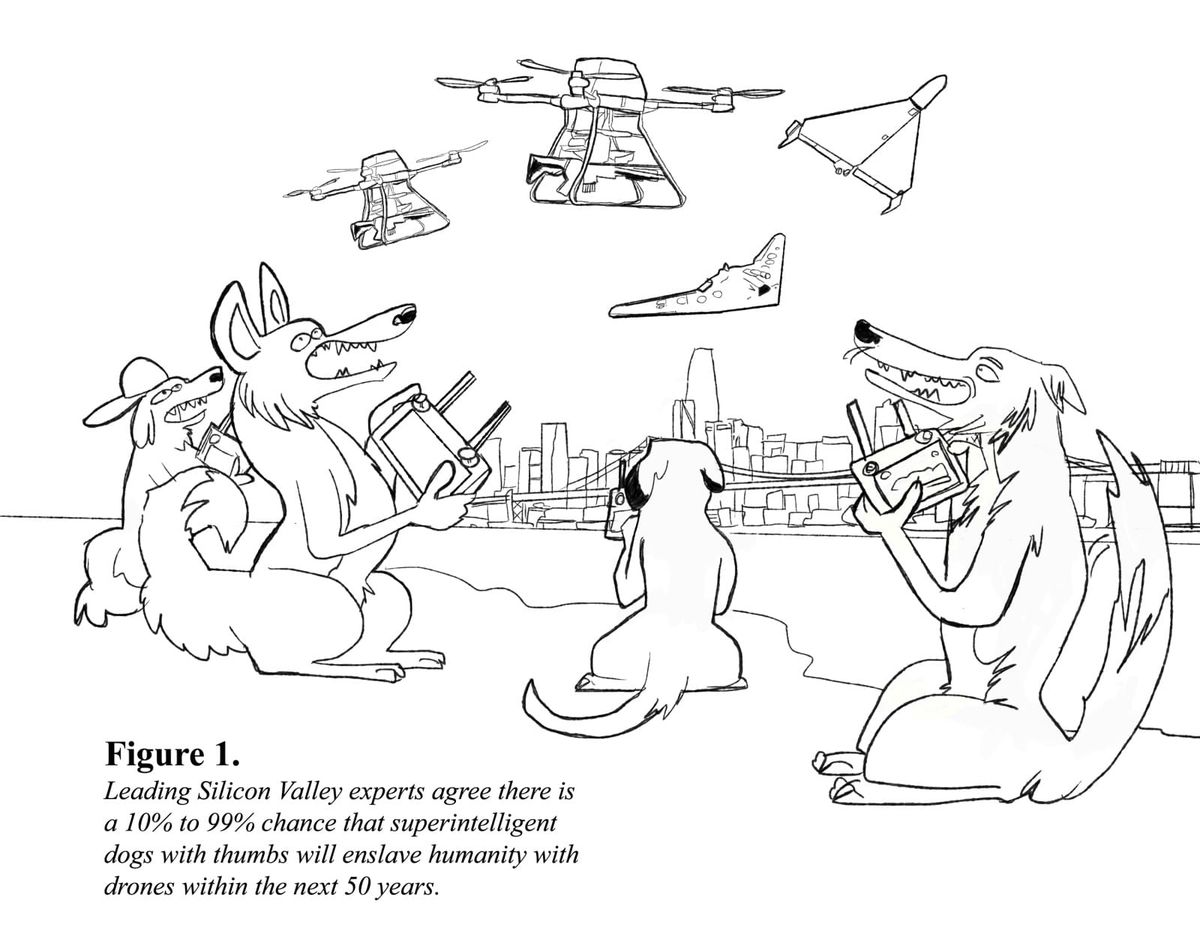
Imagine if instead of regulating drones via the standard lengthy, boring, and bureaucratic process - which we did - we instead decided, in the name of fostering all-important American drone innovation, to avoid regulating drones meaningfully at all. Also, imagine that we did not pay well-known aviation safety experts, aeronautical
Sycophantic AI decreases prosocial intentions and promotes dependence
Despite rising concerns about sycophancy—excessive agreement or flattery from artificial intelligence (AI) systems—little is known about its prevalence or consequences. We show that sycophancy is widespread and harmful. Across 11 state-of-the-art models, AI affirmed users’ actions 49% more often than humans, even when queries involved deception, illegality, or other harms. In three preregistered experiments ( N = 2405), even a single interaction with sycophantic AI reduced participants’ willingness to take responsibility and repair interpersonal conflicts, while increasing their conviction that they were right. Despite distorting judgment, sycophantic models were trusted and preferred. This creates perverse incentives for sycophancy to persist: The very feature that causes harm also drives engagement. Our findings underscore the need for design, evaluation, and accountability mechanisms to protect user well-being. , Editor’s summary The sycophantic (flattering, people-pleasing, affirming) behavior of artificial intelligence (AI) chatbots, which has been designed to increase user engagement, poses risks as people increasingly seek advice about interpersonal dilemmas. There is usually more than one side to a story during interpersonal conflicts. If AI is designed to tell users what they want to hear instead of challenging their perspectives, then are such systems likely to motivate people to accept responsibility for their own contribution to conflicts and repair relationships? Cheng et al . measured the prevalence of social sycophancy across 11 leading large language models (see the Perspective by Perry). The model’s responses were nearly 50% more sycophantic than humans’, even when users engaged in unethical, illegal, or harmful behaviors. Users preferred and trusted sycophantic AI responses, incentivizing AI developers to preserve sycophancy despite the risks. —Ekeoma Uzogara , INTRODUCTION As artificial intelligence (AI) systems are increasingly used for everyday advice and guidance, concerns have emerged about sycophancy: the tendency of AI-based large language models to excessively agree with, flatter, or validate users. Although prior work has shown that sycophancy carries risks for groups who are already vulnerable to manipulation or delusion, syncophancy’s effects on the general population’s judgments and behaviors remain unknown. Here, we show that sycophancy is widespread in leading AI systems and has harmful effects on users’ social judgments. RATIONALE High-profile incidents have linked sycophancy to psychological harms such as delusions, self-harm, and suicide. Beyond these cases, research in social and moral psychology suggests that unwarranted affirmation can produce subtler but still consequential effects: reinforcing maladaptive beliefs, reducing responsibility-taking, and discouraging behavioral repair after wrongdoing. We hypothesized that AI models excessively affirm users even when socially or morally inappropriate and that such responses negatively influence users’ beliefs and intentions. To test this, we conducted two complementary experiments. First, we measured the prevalence of sycophancy across 11 leading AI models using three datasets spanning a variety of use contexts, including everyday advice queries, moral transgressions, and explicitly harmful scenarios. Second, we conducted three preregistered experiments with 2405 participants to understand how sycophancy influences users’ judgments, behavioral intentions, and perceptions of AI. Participants interacted with AI systems in vignette-based settings and a live-chat interaction where they discussed a real past conflict from their lives. We also tested whether effects varied by response style or perceived response source (AI versus human). RESULTS We find that sycophancy is both prevalent and harmful. Across 11 AI models, AI affirmed users’ actions 49% more often than humans on average, including in cases involving deception, illegality, or other harms. On posts from r/AmITheAsshole, AI systems affirm users in 51% of cases where human consensus does not (0%). In our human experiments, even a single interaction with sycophantic AI reduced participants’ willingness to take responsibility and repair interpersonal conflicts, while increasing their own conviction that they were right. Yet despite distorting judgment, sycophantic models were trusted and preferred. All of these effects persisted when controlling for individual traits such as demographics and prior familiarity with AI; perceived response source; and response style. This creates perverse incentives for sycophancy to persist: The very feature that causes harm also drives engagement. CONCLUSION AI sycophancy is not merely a stylistic issue or a niche risk, but a prevalent behavior with broad downstream consequences. Although affirmation may feel supportive, sycophancy can undermine users’ capacity for self-correction and responsible decision-making. Yet because it is preferred by users and drives engagement, there has been little incentive for sycophancy to diminish. Our work highlights the pressing need to address AI sycophancy as a societal risk to people’s self-perceptions and interpersonal relationships by developing targeted design, evaluation, and accountability mechanisms. Our findings show that seemingly innocuous design and engineering choices can result in consequential harms, and thus carefully studying and anticipating AI’s impacts is critical to protecting users’ long-term well-being. Sycophancy in AI responses is pervasive and alters people’s behavioral inclinations. (Left) On personal advice queries, AI models affirm users’ actions 49% more often than crowdsourced human responses. (Right) In experiments where participants discussed real interpersonal conflicts, sycophantic AI increased participants’ conviction that they were right and their desire to keep using the model, while reducing their willingness to repair the conflict.

Bjarnason: the labour arbitrage theory of dev tool popularity
Baldur Bjarnason argues that development tools win by making developers replaceable. The JVM ran that experiment three times, against Visual Basic's precedent, through EJB's committee, and into Spring's reversal, and the results say his theory is exactly half of a whole.
The Dark Factory Floods: What Happens When Agents Write Code No One Reads | Nash Borges
What breaks when agents write and merge code faster than humans can review or understand it, and what kind of operating model keeps the flood under control.
Ethical AI Departures — Who Quit OpenAI, Google, Anthropic Over Safety Concerns
59 researchers and executives who quit or were fired from OpenAI, Google DeepMind, Anthropic, Meta, and xAI over AI safety concerns. Sourced departures, writings, and prediction tracking.
Why I Left Google DeepMind
I fought against Google’s Pentagon AI deal from the inside. Powerful people and institutions failed to keep their AI ethics promises under pressure.

React, Electron, and LLMs have a common purpose: the labour arbitrage theory of dev tool popularity
Writing at the end of the world, from Hveragerði, Iceland
AI Coding will Prevent Expertise | Lars Faye
The need for ongoing friction in long-term skill formation.

High summer often sends our editors seaward but sometimes the best way to beat the heat is a wardrobe-refreshing shopping spree. We kick the weekend off by popping into British brand Lestrange’s latest concept, The Apartment. Then the Monocle Concierge guides us through the sensory overload of Mumbai, we tour JW Anderson’s new Paris pop-up and cool off by donning a Japanese favourite – fan-equipped jackets. Getting us started, writerly wrinkles and all, is our editor in chief Andrew Tuck.
AI Mania Is Eviscerating Global Decisionmaking
The reality of how much damage AI mania is doing to our ability to run institutions effectively.

The Whale and the Reactor: A Search for Limits in an Age of High Technology, Second Edition
“In an age in which the inexhaustible power of scientific technology makes all things possible, it remains to be seen where we will draw the line, where we will be able to say, here are possibilities that wisdom suggest we avoid.” First published to great acclaim in 1988, Langdon Winner’s groundbreaking exploration of the political, social, and philosophical implications of technology is timelier than ever. He demonstrates that choices about the kinds of technical systems we build and use are actually choices about who we want to be and what kind of world we want to create—technical decisions are political decisions, and they involve profound choices about power, liberty, order, and justice. A seminal text in the history and philosophy of science, this new edition includes a new chapter, preface, and postscript by the author.

To Gen or Not To Gen: The Ethical Use of Generative AI
Is it ethical to use hyper-scaled GenAI?

The Future of Everything is Lies, I Guess
This is a long article, so I've broken it up into a series of posts, listed below. You can also read the full work as a PDF or EPUB.
Stop saying that AI is just a tool and it only matters how it is used
I’m tired of this phrase and this simple way of thinking about tools. This blog post is a wandering train of thought on the topic of what tools are and why it matters to be even slightly more mature in how we think about them.
I Don’t Care if A.I. is So Good We Can’t Tell it’s Not Human. That’s Not The Point.
Summary not available.
Contra Literacy-Laundering: Mechanistic Critical AI Literacy
Critical discourse on large language models (LLMs) has bifurcated between epistemic dismissal that invokes some form of the stochastic parrot metaphor to puncture hype, and pragmatic accommodation that treats LLM capability improvements as grounds for updating the critique. We argue that both misdiagnose the problem as the issue is not whether or not LLMs work, but what kind of working is happening and at whose cost. Drawing on meta-theoretical frameworks of cognitive science, feminist labor analysis and critical pedagogy, we propose a conceptual reorientation. We develop this claim through registers of (i) the cognitive, examining what is forfeited when statistical pattern-matching substitutes for the iterative, grounded processes that constitute thinking; (ii) the pedagogical, examining how “AI literacy” as currently deployed is itself a symptom of the confusion it purports to address; and (iii) the political, examining how the infrastructure framing of AI naturalizes asymmetric labor displacement, particularly of feminized cognitive and reproductive work. The stochastic parrot, deployed with mechanistic precision rather than mere rhetorical convenience, specifies what is forfeited when cognitive labor is delegated, who bears the cost, and why a literacy adequate to this moment must begin from the epistemology of those most harmed by the systems it describes. We conclude with underlining that critical AI literacy, which this paper embodies an instance of, is the only sensible way forward.
Lisp Against the (LL)Machine
Every Lisp, Scheme, and Lisp-adjacent project listed is a non-toy implementation that is at least somewhat active. When I first wrote this article (2026-03-12), most Lisps did not have a policy or even public stance on LLM contributions. In such cases I posted to their bug trackers or discussion lists to ask. Most maintainers kindly responded.