Less rice for your labor-value - The Wobbly World of Miftah's Words
...and more exploitation for your location!
Less rice for your labor-value - The Wobbly World of Miftah's Words
...and more exploitation for your location!
Imperialism in the Twenty-First Century - Monthly Review
John Smith teaches international political economy at Kingston University in London. This paper has been abstracted from his book Imperialism in the Twenty-First Century, forthcoming from Monthly Review Press in... READ MORE

Labor-Value Commodity Chains: The Hidden Abode of Global Production - Monthly Review
Intan Suwandi is a frequent contributor to Monthly Review. This article is adapted from her book, Value Chains: The New Economic Imperialism, winner of the 2018 Paul M. Sweezy-Paul A.... READ MORE

Unequal exchange of labour in the world economy
Researchers have argued that wealthy nations rely on a large net appropriation of labour and resources from the rest of the world through unequal exchange in international trade and global commodity chains. Here we assess this empirically by measuring flows of embodied labour in the world economy from 1995–2021, accounting for skill levels, sectors and wages. We find that, in 2021, the economies of the global North net-appropriated 826 billion hours of embodied labour from the global South, across all skill levels and sectors. The wage value of this net-appropriated labour was equivalent to €16.9 trillion in Northern prices, accounting for skill level. This appropriation roughly doubles the labour that is available for Northern consumption but drains the South of productive capacity that could be used instead for local human needs and development. Unequal exchange is understood to be driven in part by systematic wage inequalities. We find Southern wages are 87–95% lower than Northern wages for work of equal skill. While Southern workers contribute 90% of the labour that powers the world economy, they receive only 21% of global income.

African Content Moderators Have Worse Mental Health than Global Peers, Study Finds
A new study finds African content moderators report worse mental health than global peers, amid low pay, precarious work, and exposure to traumatic content.

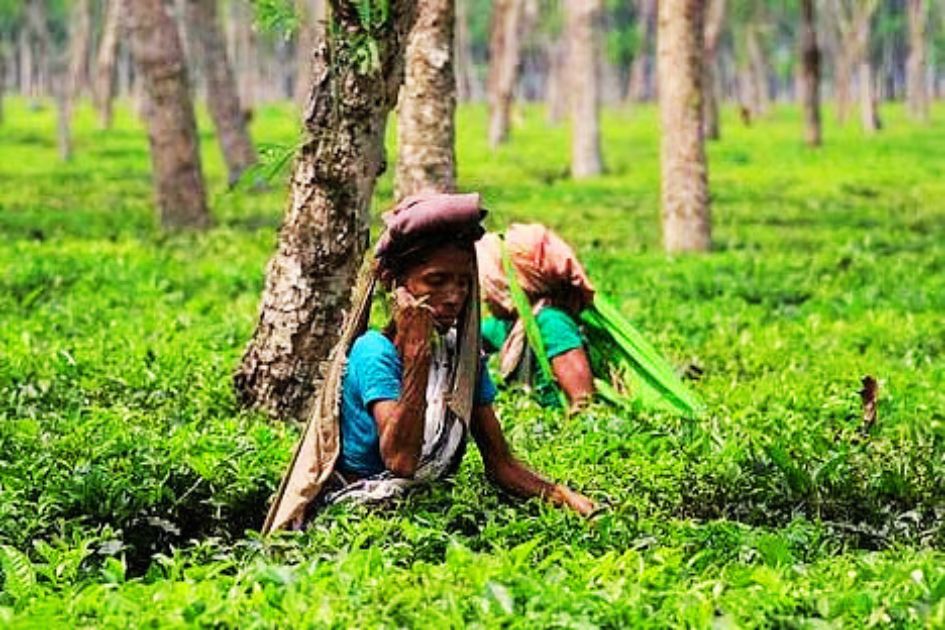
Tea production in Bangladesh
Bangladesh is an important tea-producing country. It is the 9th largest tea producer in the world, producing a total of 97.08 million kgs in 2019. Its tea industry dates back to British rule, when the East India Company initiated the tea trade in the hills of the Sylhet region. In addition to that, tea cultivation was introduced to Greater Chittagong in 1840. Today, the country has 166 commercial tea estates, including many of the world's largest working plantations. The industry accounts for 3% of global tea production, and employs more than 4 million people.

Colonial scars still shape Bangladesh tea workers’ struggle for rights
Bangladesh tea workers renew wage, union and land demands amid colonial-era labour legacies.
Inside Facebook's African Sweatshop
Workers in the Nairobi office are among the lowest-paid workers for the platform anywhere in the world

Exclusive: The $2 Per Hour Workers Who Made ChatGPT Safer
A TIME investigation reveals the difficult conditions faced by the workers who made ChatGPT possible

Dispute over fate of Kenyan workers who saw Meta AI glasses films
Meta and its subcontractor disagree over why over 1000 Kenya-based workers were made redundant.

Offshoring
Offshoring is the relocation of a business process from one country to another—typically an operational process, such as manufacturing, or supporting processes, such as accounting. Usually this refers to a company business, although state governments may also employ offshoring. More recently, technical and administrative services have been offshored.

Outsourcing
Outsourcing is a business practice in which companies use external providers to carry out business processes that would otherwise be handled internally. Outsourcing sometimes involves transferring employees and assets from one firm to another, or forming a separate legal entity that acts as a management service organization (MSO).

Global labor arbitrage
Global labor arbitrage is an economic phenomenon where, as a result of the removal of or disintegration of barriers to international trade, jobs move to nations where labor and the cost of doing business are inexpensive and/or impoverished labor moves to nations with higher paying jobs.

Collection

Updated 4h