Transformational Pathways to Sustainability Through Polycrisis
Keep up to date with our latest news, events, and other IIASA activities. Sign up.
Polytunity - The Ideas Letter
“Polycrisis” has become a ubiquitous descriptor for the multisector, intersecting problems afflicting the world—but the term masks the systemic nature of these crises and overwhelmingly reflects Eurocentric voices, priorities, and…

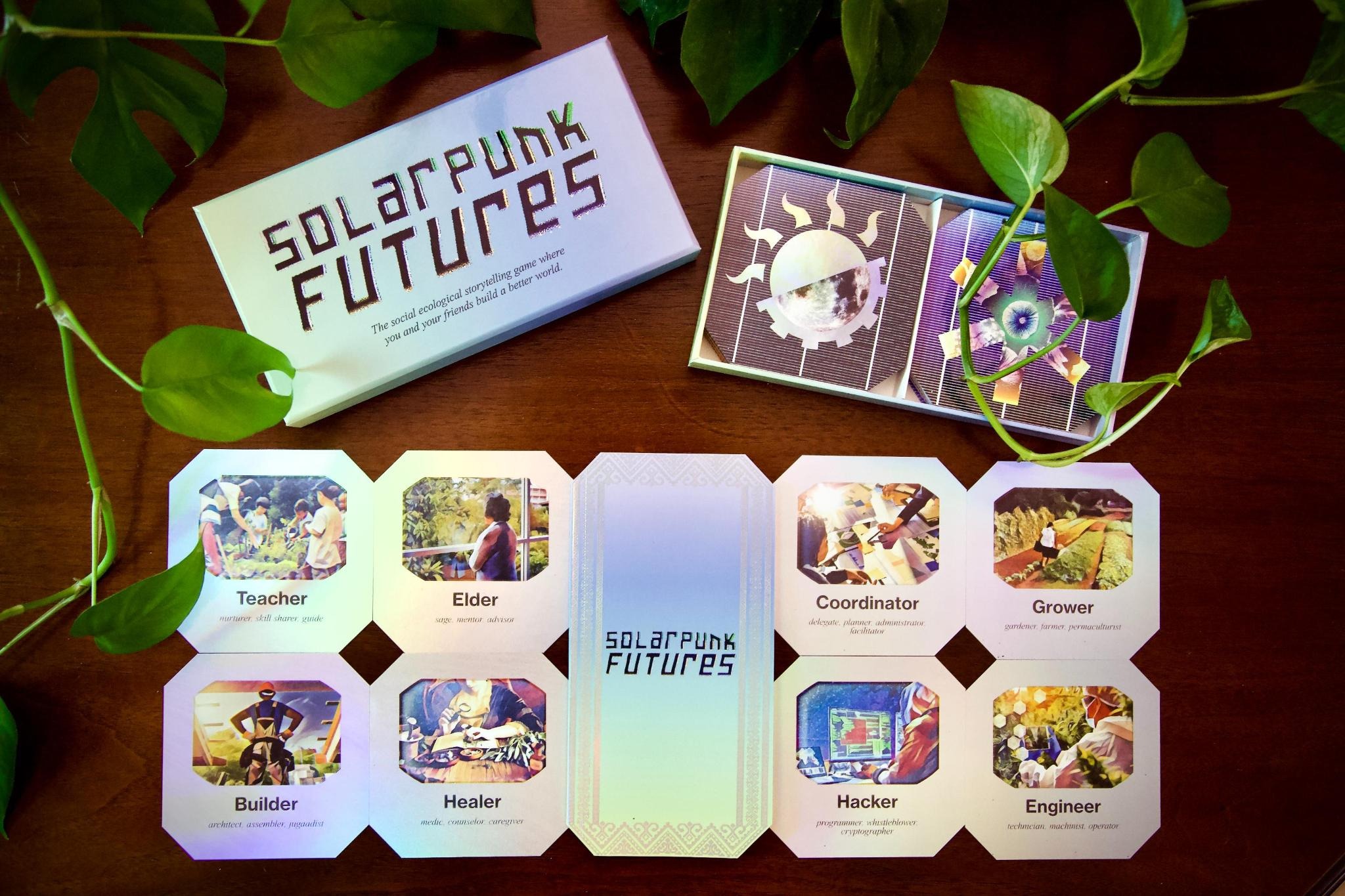
Solarpunk Futures
The social ecological storytelling game where you and your friends build a better world.

Circling Back
Reflections on Sarafu, xDai, Gnosis, Circles UBI, Circles v2, and a shared movement toward community-governed commons.

Embodied Experience Design: Thinking Through Tree Apprecation
Bringing together place-based technologies, embodied experience and trees
Where Durable Objects Live
Tracking where Durable Objects are created, wherever you are in the world.

Urban problems: nature-based solutions and a Green New Deal everywhere
Nature-based Solutions with localised Green New Deals could save our settlements, and provide a just transition to a low-carbon society

Architecture and the Internet: Designing places in cyberspace
Cyberspace, as the information space is called, has become accessible in the past decade through the World Wide Web. And although it can only be experienced through the mediation of computers, it is quickly becoming an alternative stage for everyday economic, cultural, and other human activities. As such, there is a potential and a need to design it according to place–like principles. Making places for human inhabitation is, of course, what architects, landscape architects, and town planners have been doing in physical space for thousands of years. It is curious, therefore, that Cyberspace designers have not capitalized on the theories, experiences, and practices that have been guiding physical place–making. While most 3D environments closely mimic physical spaces, they are, by and large, devoid of the essential characteristics that differentiate a ‘place’ from mere ‘space.’ And only rarely are they sensitive to, and take advantage of, the peculiarities of Cyberspace. We believe that this state of affairs is temporary, characteristic of early adoption stages of new technologies. As the Web matures, and as it assumes more fully its role as a destination rather than as means of communication, there will be a growing need to design it according to place–making principles. By looking at physical architecture as a case study and metaphor for organizing space into meaningful places, this paper explores the possibility of organizing Cyberspace into spatial settings that not only afford social interaction, but, like physical places, also embody and express cultural values. At the same time, because Cyberspace lacks materiality, is free from physical constraints, and because it can only be ‘inhabited’ by proxy, these ‘places’ may not necessarily resemble their physical counterparts.

A City Is Not a Computer: Other Urban Intelligences
<strong>A bold reassessment of "smart cities" that reveals what is lost when we conceive of our urban spaces as computers</strong> Computational models of urbanism—smart cities that use data-driven planning and algorithmic administration—promise to deliver new urban efficiencies and conveniences. Yet these models limit our understanding of what we can know about a city. <i>A City Is Not a Computer</i> reveals how cities encompass myriad forms of local and indigenous intelligences and knowledge institutions, arguing that these resources are a vital supplement and corrective to increasingly prevalent algorithmic models. Shannon Mattern begins by examining the ethical and ontological implications of urban technologies and computational models, discussing how they shape and in many cases profoundly limit our engagement with cities. She looks at the methods and underlying assumptions of data-driven urbanism, and demonstrates how the "city-as-computer" metaphor, which undergirds much of today's urban policy and design, reduces place-based knowledge to information processing. Mattern then imagines how we might sustain institutions and infrastructures that constitute more diverse, open, inclusive urban forms. She shows how the public library functions as a steward of urban intelligence, and describes the scales of upkeep needed to sustain a city's many moving parts, from spinning hard drives to bridge repairs. Incorporating insights from urban studies, data science, and media and information studies, <i>A City Is Not a Computer</i> offers a visionary new approach to urban planning and design.
Gradients of intimacy and creating shelter: An interview with Erin Kissane

When the Internet Was a Place - Front Porch Republic
Law and Borders - the Rise of Law in Cyberspace
AI and the future of digital public squares

Ambient Co-presence

Spatial Communication in Level Design

Home

Welcome

The Garden of Maggie Appleton
Desert Thunder's Digital Garden
Hey stranger, I'm Hayleigh.

A Brief History & Ethos of the Digital Garden

Child Predators Turn to Open-Source AI to Make Unlimited Illegal Images

A senator tried to ban gambling on prediction markets—now she's a Kalshi lobbyist

Mac Users Reclaim 12GB+ of Storage With Apple Intelligence Removal Tool

Revealed: Britain's contracts with Palantir hit £1bn

'We’re watching you’: MP Clive Lewis reveals Tom Watson has warned him over criticising Palantir

‘Doom Loop’: OpenAI and Microsoft Admits LLMs Are Destroying the Web and Built on Theft
Custom Feeds Are Not Communities — A Design Theory of Feeds and Commons - Nightflight
Community Spaces on AT Protocol - at:// pizza thoughts
Building for Organizers - The People Layer

Good Internet

smallweb
about - pivot point - Obsidian Publish