Collection
Critical Mess to Critical Mass: democratic innovation for collective climate action

Updated 2mo
Interview with Prof Oliver Escobar, on the Thrivable Scotland podcast, and associated resources and links.
Collection
Updated 2mo
Interview with Prof Oliver Escobar, on the Thrivable Scotland podcast, and associated resources and links.
Critical Mess to Critical Mass: democratic innovation for collective climate action
How democratic innovation can build trust to unlock and mobilise collective intelligence for meaningful collective action. With Prof Oliver Escobar.
Community wealth building
As the UK’s leading organisation for community wealth building, we work with places to build fairer, more inclusive local economies.
Creating A Shared Vision For the Restoration Of The Ericht Catchment - Catchment Restoration Initiative
Our project’s ‘Pioneer’ status means that we are being offered some fantastic opportunities to pilot new ways of working to restore nature at landscape scale. One of those is the opportunity to work with ETH Zurich on trialing a new tool for our next project milestone which is the development of the restoration vision – […]
Community Wealth Building (Scotland) Act 2026
This version of this Act contains provisions that are prospective.
Sustaining Dunbar
Sustaining Dunbar is the community development trust for the Dunbar and East Linton ward. Along with the towns of Dunbar and East Linton, the area includes the villages of Tyninghame, West Barns, Stenton, Spott, Innerwick and Oldhamstocks.

Scotland's Climate Assembly - process, impact and assembly member experience: research report
Mixed methods research into Scotland’s Climate Assembly, including process, impact and Assembly member experience.

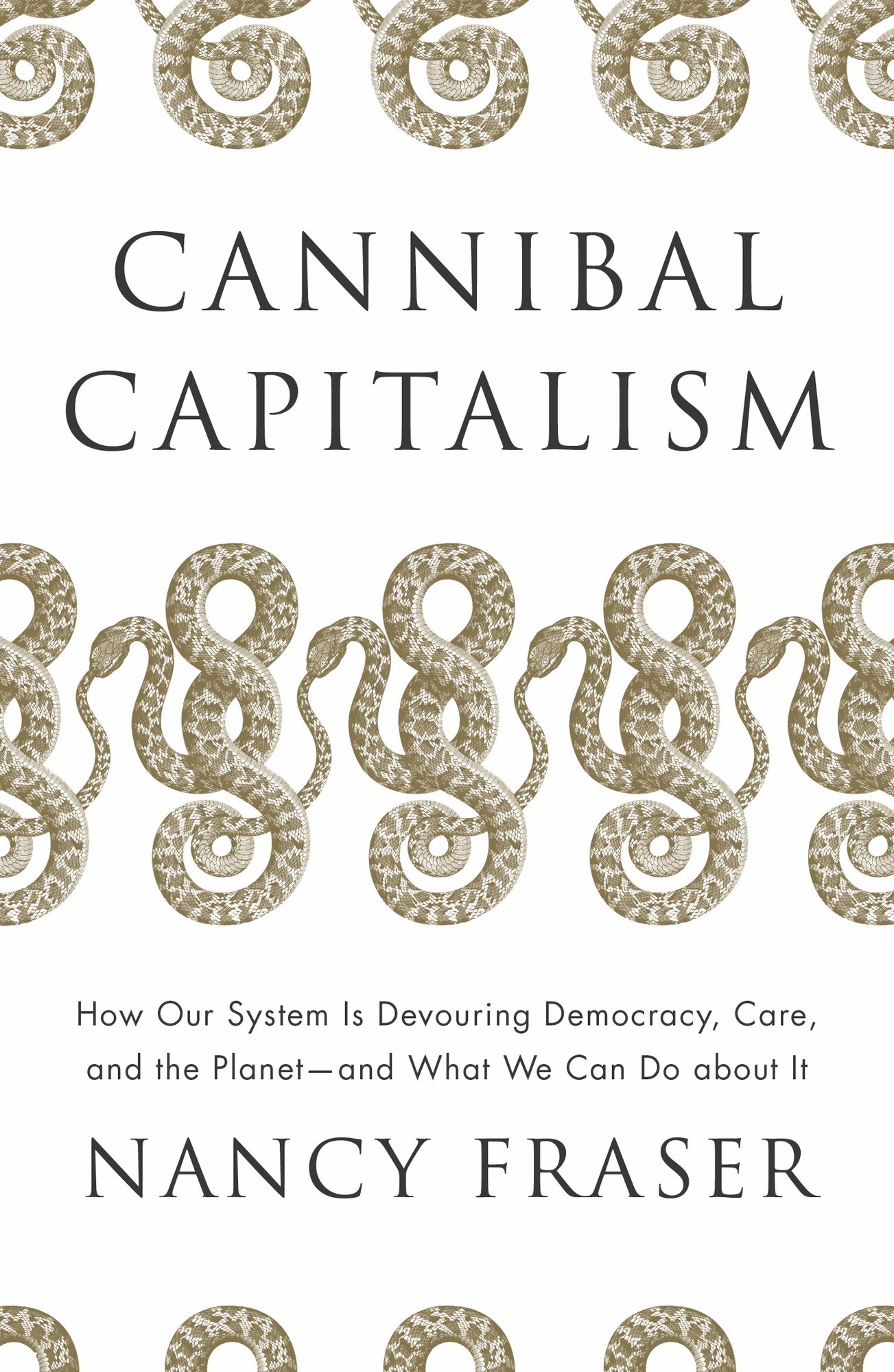
Cannibal Capitalism
Shortlisted for the Deutscher Memorial Prize 2023 Capital is currently cannibalizing every sphere of life-guzzling wealth from nature and racialized populations, sucking up our ability to care for each other, and gutting the practice of politics. In this tightly argued and urgent volume, leading Marxist feminist theorist Nancy Fraser charts the voracious appetite of capital, tracking it from crisis point to crisis point, from ecological devastation to the collapse of democracy, from racial violence to the devaluing of care work. These crisis points all come to a head in Covid-19, which Fraser argues can help us envision the resistance we need to end the feeding frenzy. What we need, she argues, is a wide-ranging socialist movement that can recognize the rapaciousness of capital - and starve it to death.
John Dewey
John Dewey was an American philosopher, psychologist, and educational reformer. He was one of the most prominent American scholars in the first half of the twentieth century.

Mary Parker Follett
Mary Parker Follett was an American social thinker, management consultant, social worker, political scientist, philosopher and pioneer in the fields of organizational theory and organizational behavior, management, leadership, democracy, and conflict resolution. She has been called the "Mother of Modern Management". Instead of emphasizing industrial and mechanical components, she advocated for what she saw as the far more important human element, regarding people as the most valuable element present within any organization. She was one of the first theorists to actively write about and explore the role people had in ineffective management and discuss the importance of learning to deal with and promote positive human relations as a fundamental aspect of the industrial sector. She is also recognized as the originator of "win-win" approaches to conflict resolution.

Citizen Participation (@oliverescobar.bsky.social)
Professor of Public Policy and Democratic Innovation | University of Edinburgh | Working on #democracy #participation #deliberation #commons #governance #power #research | RT≠ endorse | Own views | Profile: https://www.sps.ed.ac.uk/staff/oliver-escobar

Oliver Escobar | School of Social and Political Science
Public participation, participatory and deliberative democracy, environmental politics, climate action, collaborative governance and partnerships, public dialogue and deliberation, facilitation and mediation, democratic innovations, interpretive policy analysis, political ethnography, mixed methods, in/equalities, participatory and deliberative methodologies, smart cities, social innovation, power, politics of science and technology, governance, democracy, civic tech, commons, digital public sphere, digital participation, online deliberation, mini-publics, citizens' assemblies, participatory budgeting, community empowerment, political economy, democratic economies, community economies
Home - Bioregioning Tayside
[vc_row full_width=”stretch_row” css=”.vc_custom_1690377681496{border-bottom-width: 2px !important;background-image: url(https://bioregioningtayside.scot/wp-content/uploads/2020/06/topography.svg?id=173) !important;border-bottom-color: #36322e !important;border-bottom-style: solid !important;}”][vc_column][vc_empty_space][vc_row_inner css=”.vc_custom_1592579907572{padding-top: 30px !important;padding-bottom: 30px !important;}”][vc_column_inner width=”5/6″ offset=”vc_col-lg-offset-2 vc_col-lg-8 vc_col-md-offset-4 vc_col-md-8 vc_col-sm-offset-1 vc_col-xs-12″][vc_column_text css=””] Bioregioning Tayside “Bioregioning reframes the way we see the places where we live and work, helping us reconnect to and restore the ecological systems of which we are a part and...